


"24-Hour Market" Gains Popularity Due to Middle East Conflict; Crude Oil and Gold Contracts Become the New Weekend Safe Havens
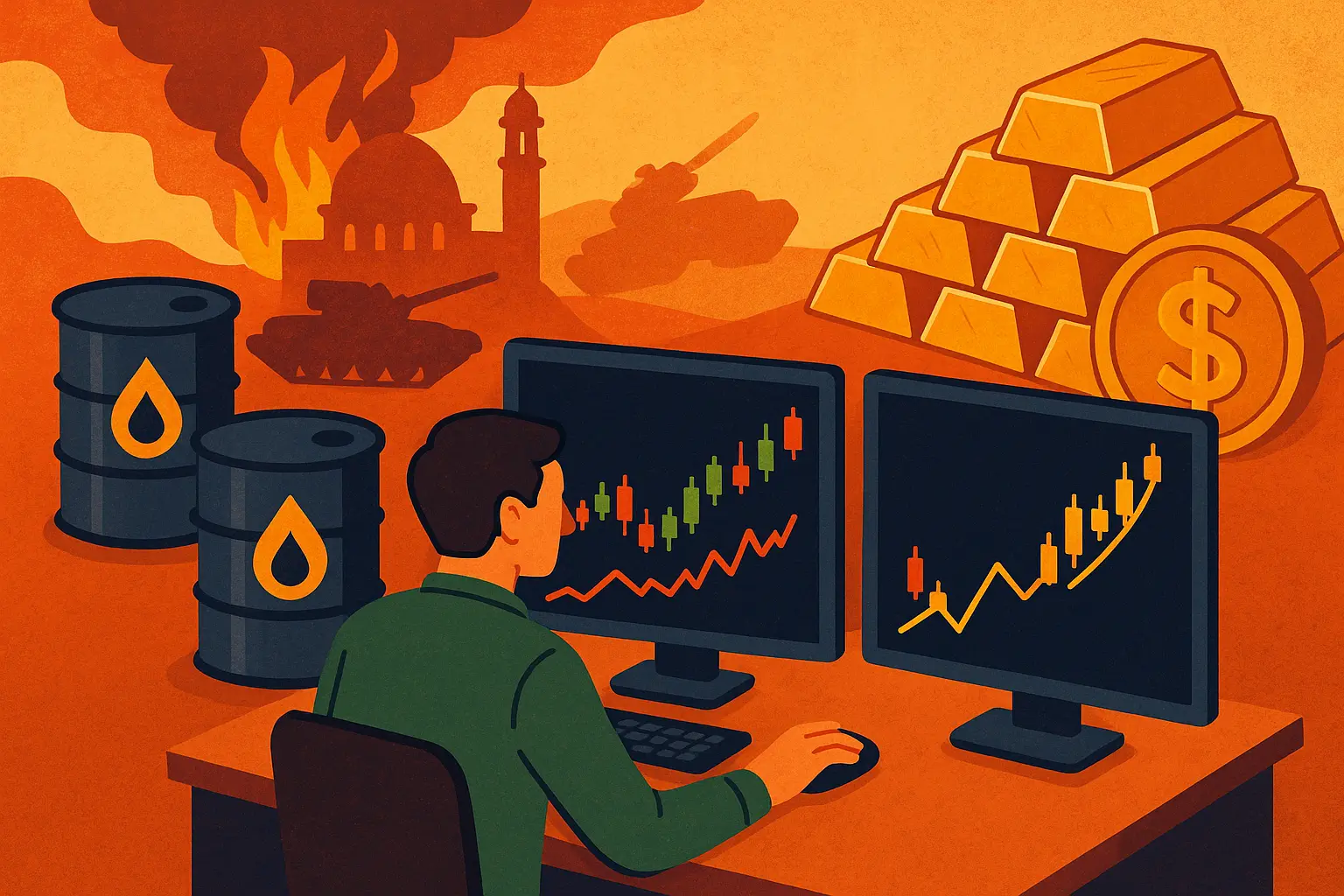
This weekend, as the US and Israel jointly carried out military strikes on Iran, crypto exchanges unexpectedly became a safe haven for commodities and traditional assets. Since traditional financial markets are closed on weekends, traders flocked to crypto platforms like Hyperliquid, seeking around-the-clock hedging tools through perpetual contracts linked to real-world assets. This once again proves the irreplaceable role of “24-hour markets” during geopolitical shocks.
Weekend Crypto Hedging Wave Triggered by Middle East Conflict
After the US and Israel targeted sites inside Iran, Iran responded with missile strikes on locations in Israel, Qatar, the UAE, and Bahrain, and threatened further attacks on US military bases in Iraq. Trump called on Iranians to overthrow their government, further fueling concerns about regional spillover.
On the Hyperliquid platform, the immediate pricing of this geopolitical impact is clearly visible: crude oil perpetual contracts rose about 5% to $70.6 per barrel; gold contracts increased approximately 1.3% to $5,323 per ounce; silver contracts rose about 2% to $94.9 per ounce. US stock index perpetual contracts declined between 0.4% and 0.75%. Bitcoin and Ethereum reversed earlier declines, rising by 2.3% to around $67,000 and 2.4% to $1,968, respectively.
Key Weekend Data for Hyperliquid Commodities Perpetual Contracts
Silver Perpetual Contract: Over $227 million in trading volume in the past 24 hours, most active
Gold Perpetual Contract: About $173 million in volume
Crude Oil Perpetual Contract: Largest gain, up about 5%
US Stock Index Perpetuals: Down 0.4% to 0.75%
Functionality: Provides the only macro hedging channel tradable during traditional market closures
Structural Significance of 24-Hour Markets: More Than Just Crisis Proxy
Wintermute OTC head Jake Ostrovskis accurately highlighted the role of 24/7 markets in this event: “Because Bitcoin is the only open market, traders naturally turn to it when they need hedging or want to express their views. That’s why more asset classes—including commodities—are moving toward 24/7 trading.” He further pointed out that around-the-clock price discovery is a structural upgrade in market efficiency.
Last year, Hyperliquid upgraded its platform to allow users to create perpetual futures linked to assets beyond cryptocurrencies, including stocks and commodities, establishing itself as a “macro position alternative outside standard trading hours.” QFEX CEO Annanay Kapila described this weekend as a wake-up call for skeptics questioning the need for 24/7 trading: “Price volatility never sleeps.”
A broader trend is that major financial institutions and fintech firms are accelerating asset tokenization—recording traditional assets on the blockchain—laying the foundation for future around-the-clock trading. For crypto advocates, this weekend’s market activity further confirms a macro trend: all asset classes moving onto the chain for 24-hour markets is inevitable, and the pace of migration from traditional exchanges to blockchain may surpass many on Wall Street’s expectations.
FAQs
Q: Why does Middle East conflict boost the popularity of 24-hour markets?
Traditional markets are closed on weekends, so when local geopolitical conflicts erupt during this time, traders cannot hedge risks through conventional channels. Crypto exchanges’ continuous trading makes them the only liquidity market where immediate hedging or macro views can be expressed during weekends—an inherent structural advantage over traditional markets.
Q: What are Hyperliquid’s commodity perpetual contracts?
Perpetual contracts are crypto-native derivatives similar to futures but without expiry dates, allowing traders to hold leveraged positions around the clock. Last year, Hyperliquid expanded its perpetual offerings to include commodities and stocks, enabling traders to express macro views on-chain anytime without waiting for traditional clearing processes.
Q: What does the trend toward 24-hour markets mean for traditional finance?
Major financial institutions are accelerating asset tokenization, potentially paving the way for around-the-clock trading beyond traditional market hours. The industry generally expects the speed of asset migration from traditional exchanges to blockchain to be faster than anticipated, but whether it can reach institutional scale remains to be seen.
Related Articles
Kyber Network surges 23%, as the cross-chain DEX upgrade triggers a surge in trading volume
Ethereum Price Analysis: ETH Approaching $1950, Whales Continue to Reduce Holdings for 90 Consecutive Days
Solana price consolidates for nearly four weeks, ETF capital inflows spark market attention
Bitcoin and Ethereum ETFs have seen over $9 billion outflow in four months! Institutional funds are withdrawing, shaking confidence in the crypto market?
Bitcoin "dead" search volume soars! BTC remains in the $62,000 range after dropping 50%, data reveals the real signal
The stock market soars, while crypto heats up slowly? Koreans' all-in bets have never cooled down