


NYDIG: AI is regarded as a general-purpose technology, benefiting Bitcoin in a loose monetary environment
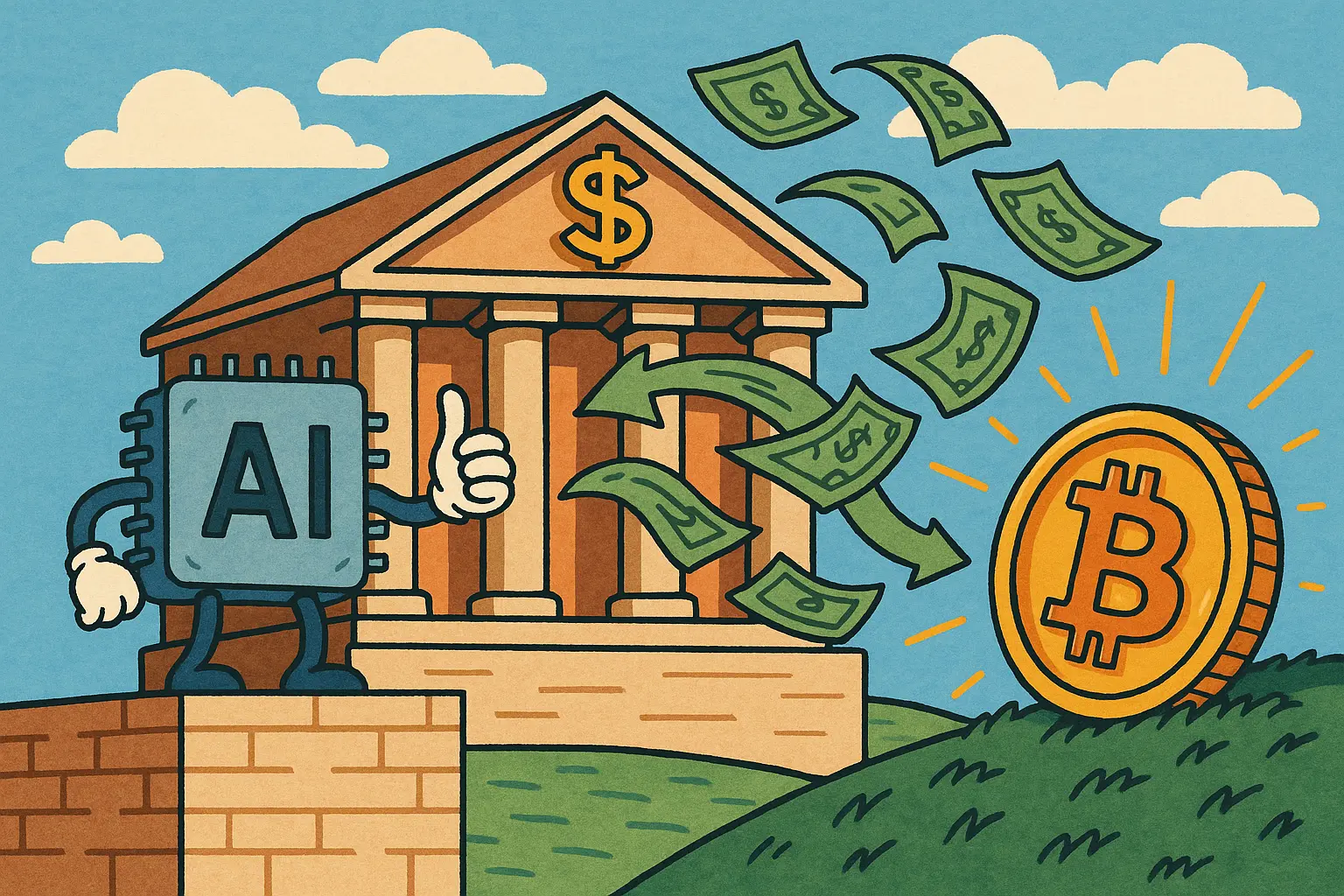
Crypto services company NYDIG research director Greg Cipolaro suggests that artificial intelligence (AI) could be positioned as a general-purpose technology similar to electricity, with profound macroeconomic impacts on employment markets, economic growth, and risk appetite that could significantly influence Bitcoin. Cipolaro points out that if AI triggers labor market turbulence, prompting central banks worldwide to adopt fiscal expansion and monetary easing policies, the resulting liquidity stimulus could create favorable conditions for Bitcoin.
NYDIG’s Two Scenarios: Bullish and Bearish Paths for Bitcoin in AI’s Impact
Cipolaro’s report outlines two very different paths through which AI could affect Bitcoin:
Bullish Scenario 1: If AI causes labor market disruptions and widespread unemployment, prompting central banks to implement monetary easing, the resulting liquidity expansion and low real interest rate environment would benefit Bitcoin.
Bullish Scenario 2: If AI-driven growth is accompanied by liquidity expansion and controlled real interest rates, this environment could also provide positive support for Bitcoin.
Bearish Scenario: Conversely, if AI-driven stronger growth pushes up real yields, tightens monetary policy, and reduces easing demand, Bitcoin could face resistance.
Key Indicators for These Scenarios
Monetary Policy Direction: Whether AI triggers rising unemployment is a key variable influencing central bank easing.
Real Interest Rate Levels: Liquidity expansion benefits most when accompanied by controlled real interest rates.
Quality of AI Growth: If strong growth raises inflation and real yields, it could be detrimental to Bitcoin.
Labor Market Turbulence: AI replacing jobs may trigger dual fiscal and monetary stimulus policies.
How AI Is Reshaping Macroeconomics: From Employment Impact to Technological Integration
In reality, AI’s employment impact is already beginning to show. Jack Dorsey’s payments company Block announced layoffs of about 40% due to AI influences, and Dorsey predicts more companies will follow suit. Goldman Sachs reported in August that widespread AI adoption could replace up to 7% of the U.S. workforce but also create new job opportunities.
Cipolaro admits that AI transformation will be “challenging,” requiring redesigning workflows, developing new skills, and increasing investments. However, he predicts AI development will follow the same “historical pattern” as previous technological advances—integrating rather than eliminating. “Companies that effectively integrate new technologies will expand profit margins and productivity gaps; workers who adapt to new tech will increase their value; those resisting new tech may fall behind,” he said.
In the cryptocurrency space, AI applications are also rapidly expanding. In October, Coinbase launched a new tool called “Payments MCP,” allowing AI agents to access on-chain financial tools similar to humans, further blending AI with blockchain infrastructure.
Frequently Asked Questions
Q: Why does NYDIG believe AI could be beneficial for Bitcoin?
A: NYDIG research director Cipolaro points out that if AI causes widespread employment shocks, forcing central banks to adopt monetary easing, the resulting liquidity expansion and low real interest rate environment have historically supported risk assets like Bitcoin.
Q: What does the “general-purpose technology” framework for AI mean?
A: Cipolaro compares AI to electricity or steam engines—transformative “general-purpose technologies” that broadly impact employment, productivity, and monetary policy. This systemic influence makes AI’s macroeconomic effects difficult to evaluate within traditional industry frameworks.
Q: What is NYDIG’s bearish scenario for Bitcoin?
A: If AI-driven strong growth pushes up inflation and real yields, prompting central banks to tighten monetary policy, risk assets like Bitcoin could face headwinds. Ultimately, whether AI becomes an opportunity or challenge for Bitcoin depends on its impact on monetary policy.
Related Articles
Geopolitical Shock Sends Markets and Crypto Reeling
ETH short-term surge of 1.30%: On-chain large transfers and concentrated liquidity drive price breakthrough of resistance
Schmidt: Need to focus on the macroeconomic situation and bring inflation down to 2%
BTC drops 0.99% in 15 minutes: Short-term selling driven by a sudden decline in macro risk appetite and on-chain fund withdrawals
70% of assets heavily invested in Bitcoin! Mexican billionaire urges "buy quickly during the dip," and the wealthy dad is also increasing his holdings
Gate CBO Kevin Lee: Oil prices move first, inflation follows, and the central bank's path is the ultimate variable