


The Russian Central Bank warns about crypto scams, with 84% of pyramid schemes using virtual currencies for fundraising.
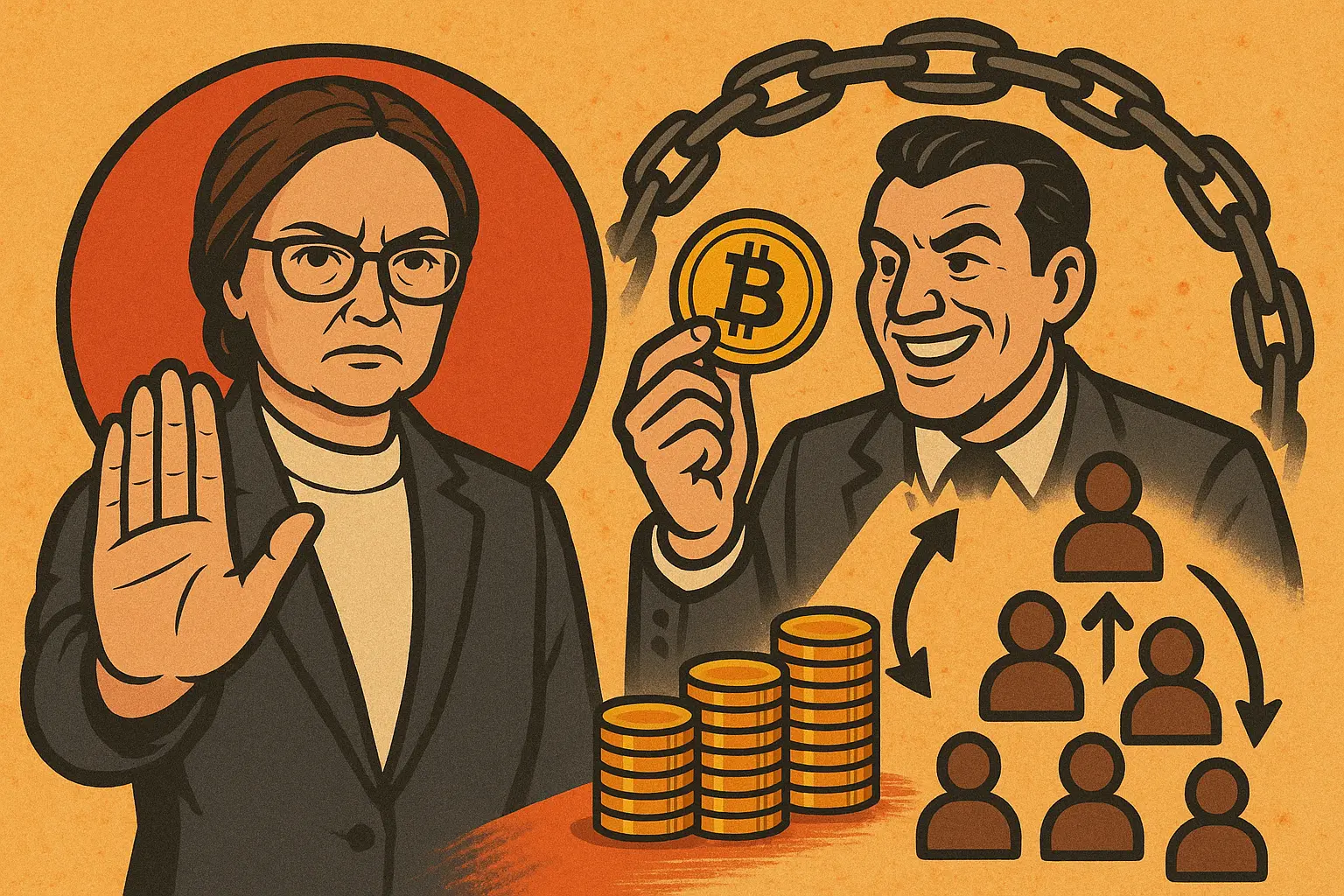
The Russian Central Bank recently issued a report warning that organizers of financial pyramid schemes are increasingly using cryptocurrencies as their main fundraising tool, with the proportion rising from 77% in 2024 to 84% in 2025. Last year, the central bank identified a total of 7,087 financial pyramid scams, disguised brokers, and other fraudulent schemes, of which 80% operated online, and most used cryptocurrencies and money mules for transferring funds.
Key Findings from the Russian Central Bank
According to the report, the scale and organizational structure of these scams demonstrate a clear trend of systemic transformation:
Scale of scams: Among the 7,087 scams identified last year, financial pyramids, fake legitimate brokers, and high-yield fraudulent crypto investment projects were involved.
Online operation rate: 80% of pyramid schemes operate entirely online, with no physical offices; they primarily contact potential victims through social media, messaging apps, and phone calls.
Cryptocurrency adoption rate: In 2025, 84% of scammers raise funds via cryptocurrencies, up from 77% in 2024.
Fake crypto investment projects: Approximately 1,500 companies sell false cryptocurrency investment schemes to potential clients.
Fund transfer tools: Mainly cryptocurrencies, supplemented by networks of money mules, to perform multi-layered, dispersed transfers that obscure the flow of funds.
Bank officials noted in the report that scammers “prefer cryptocurrencies because tokens allow them to remain anonymous and evade punishment,” making cryptocurrencies the top tool for pyramid schemes to avoid detection.
Countermeasures and Market Regulation Strengthening
In response to the rapid growth of crypto scams, the Russian Central Bank has taken specific actions:
Blocking measures: Ordered the blocking of 21,500 websites and social media posts related to crypto scammers and other financial frauds.
Consumer warnings: The central bank explicitly reminds the public that only companies with legitimate licenses are authorized to offer investment products to Russian retail investors. It also commits to continuously identifying increasingly complex financial pyramids and online scams, and to intensify efforts to publicly combat crypto fraud.
These regulatory actions occur amid a rapid increase in overall crypto adoption in Russia. According to the Russian Ministry of Finance, Russians spend up to $648 million daily on cryptocurrencies. The ministry is currently accelerating the development of new regulations, which may soon include blocking access to overseas crypto exchanges, indicating that Russia is tightening control over foreign platforms while expanding domestic crypto use.
Frequently Asked Questions
Q: Why are Russian pyramid schemes shifting heavily toward cryptocurrencies?
The Russian Central Bank explicitly states in the report that the main reason scammers prefer cryptocurrencies is their anonymity and difficulty to trace. Compared to traditional bank transfers, on-chain fund flows can be quickly dispersed through multiple intermediate addresses, and cross-border transfers are not directly regulated by traditional financial oversight, greatly increasing law enforcement challenges.
Q: How does the Russian Central Bank identify and track these fraudulent crypto wallets?
The central bank monitors abnormal fund flow patterns, analyzes wallet addresses reported by victims, and collaborates with on-chain data analysis firms to identify scam wallets. In this report, the bank marked over 4,600 addresses controlled by scammers, though specific technical methods for tracking are not fully disclosed, indicating that the monitoring system is still being improved.
Q: What impact might upcoming Russian crypto regulations have on foreign exchanges?
The Russian Ministry of Finance is accelerating the development of regulations that could block access to overseas crypto exchanges. If enacted, foreign platforms not licensed within Russia may be blocked, potentially forcing Russian crypto users to turn to domestic regulated platforms, further shrinking existing offshore trading channels.
Related Articles
Senate Advances Housing Bill With CBDC Ban, Draws White House Backing
The U.S. Senate housing bill includes a ban on central bank digital currencies.
Sacks, Garlinghouse Push for Progress in Stablecoin Compromise Under CLARITY Act
Trump’s CFTC Appoints Crypto Lawyer to Lead Shrinking Enforcement Team
Mt. Gox Bankruptcy Case May See Resolution with Proposed Bitcoin Hard Fork
Chinese banks freeze accounts due to memos related to cryptocurrency