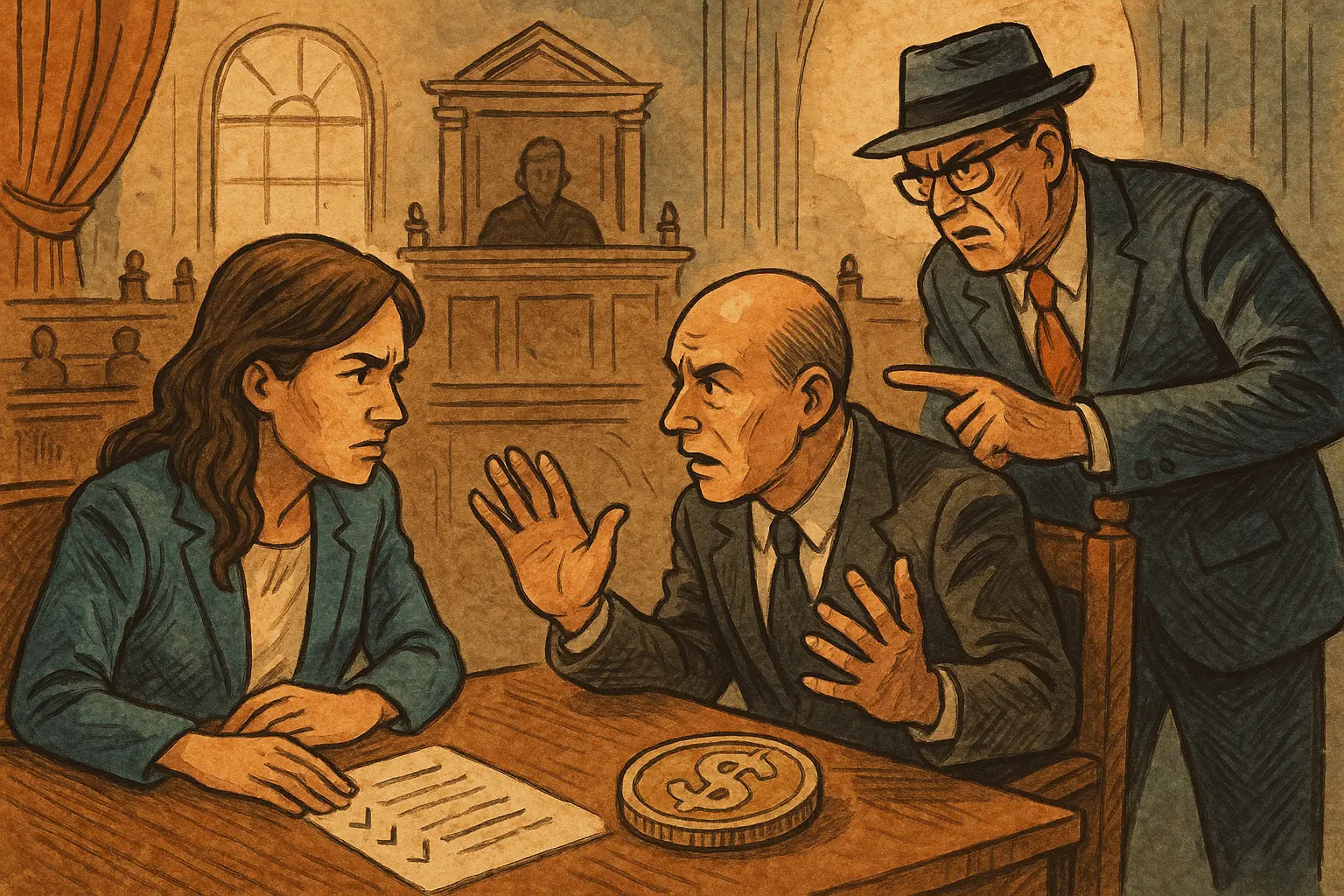
The U.S. “CLARITY Act” was passed by bipartisan support in the House of Representatives and then referred to the Senate Banking Committee. However, as of the end of February 2026, it remains stalled with no progress in hearings or voting schedules. Major disagreements center on whether stablecoins can pay yields to holders; the banking industry supports strict restrictions, while cryptocurrency companies strongly oppose.
Current Status of the Bill: Stalled in the Senate after House Passage
 (Source: BeInCrypto)
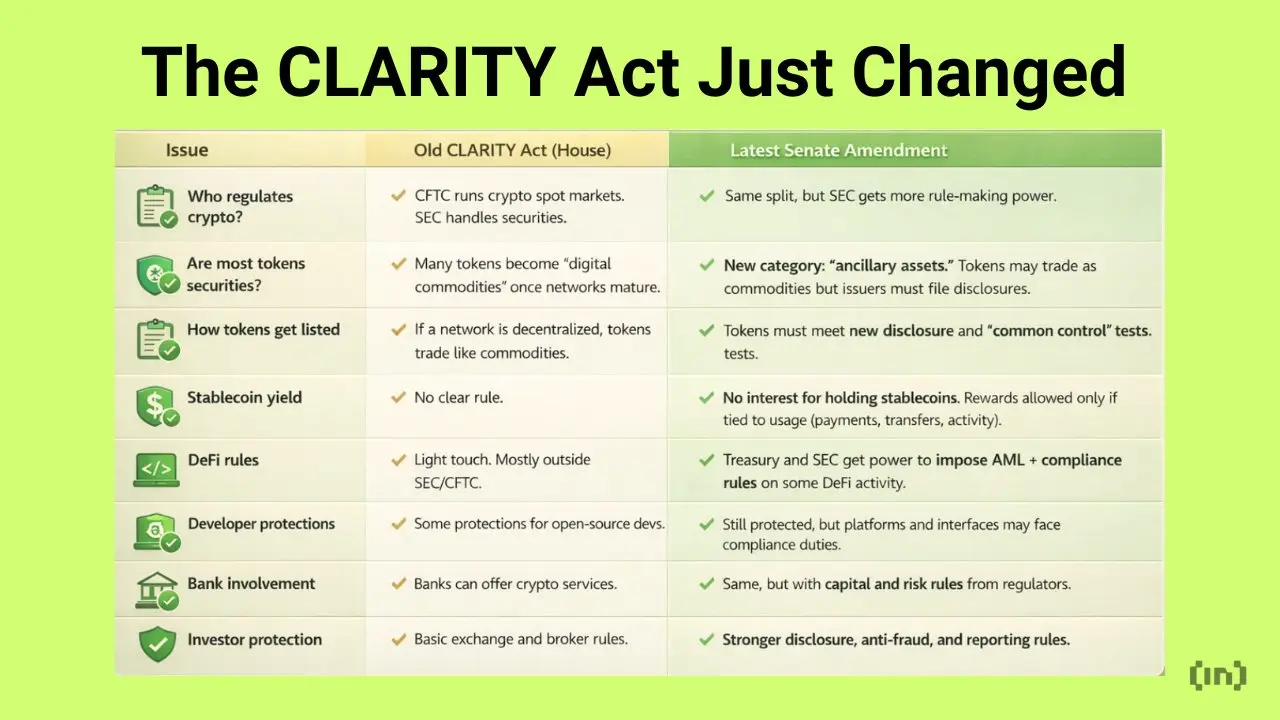
The CLARITY Act was passed in the House in July 2025 with bipartisan consensus. Its main goal is to clarify when digital assets are regulated by the U.S. Securities and Exchange Commission (SEC), when they fall under the Commodity Futures Trading Commission (CFTC), and to establish unified registration rules for crypto exchanges, brokers, and custodians.
However, after being referred to the Senate Banking Committee, progress has nearly come to a halt—no hearings have been held, the draft text is far from finalized, and no committee votes are scheduled. Insider sources close to negotiations say the parties are “still far from reaching an agreement.” While the American Bankers Association and the Independent Community Bankers of America deny that negotiations have broken down and say discussions are ongoing, disagreements over the wording of the draft persist.
Key Dispute: Who Controls the Definition of Stablecoin Yields
In early 2026, the focus of CLARITY Act negotiations shifted from SEC and CFTC regulatory boundaries to the issue of stablecoin yields. The banking industry argues that stablecoins with yield mechanisms essentially function as unregulated bank deposits and should be strictly restricted. Crypto companies take the opposite stance; Coinbase CEO Brian Armstrong publicly stated that stablecoins can responsibly generate yields, and banning reward mechanisms would harm innovation and weaken competitiveness.
In recent weeks, the White House has organized multiple meetings with banks and crypto firms. Officials reportedly hope to reach an agreement on yield issues by March, but as of February 28, no substantial breakthroughs have been achieved on key language.
Four Major Unresolved Core Issues of the CLARITY Act
- Stability of Stablecoin Rewards: Whether stablecoin reward mechanisms constitute a legal “interest” prohibition remains unclear, hindering overall progress.
- Scope of Transaction Incentive Restrictions: How to set compliant limits and applicable scope for transaction rewards still needs clarification.
- SEC and CFTC Jurisdiction Boundaries: The final division of regulatory authority over specific digital asset categories remains undecided.
- Obligations of DeFi Developers: Clear boundaries of compliance responsibilities for decentralized finance (DeFi) protocol developers are a point of significant disagreement.
If these issues cannot be substantively advanced soon, the bill may become further entangled in the political swirl of the 2026 midterm elections, making its passage timeline even more uncertain.
Frequently Asked Questions
Q: What are the main goals of the CLARITY Act, and why is it important for the crypto industry?
A: The CLARITY Act aims to clarify the regulatory boundaries of digital assets under the SEC and CFTC and to establish unified registration standards for crypto exchanges, brokers, and custodians. It is the first significant legislation attempting to create a comprehensive regulatory framework for the U.S. crypto market. If passed, it would provide long-needed regulatory certainty for the industry.
Q: Why does the banking industry oppose allowing stablecoins to pay yields?
A: Banks worry that if yield-bearing stablecoins are not subject to the same regulations as bank deposits, it would create unfair competition and lead to a flow of funds from regulated savings accounts to crypto platforms. The Independent Community Bankers of America (ICBA) estimates that allowing platforms to pay stablecoin yields could reduce community bank deposits by over $1.3 trillion.
Q: What is the current timeline for the CLARITY Act’s passage, and what risks does the election year pose?
A: The bill is still stuck in the Senate Banking Committee, with no hearing or voting schedule set. If negotiators can narrow key disagreements by March, the committee might advance the bill that month. Otherwise, delays could push the bill into the political priorities of the election year, with passage potentially postponed until mid-2026 or later.
Disclaimer: The information on this page may come from third parties and does not represent the views or opinions of Gate. The content displayed on this page is for reference only and does not constitute any financial, investment, or legal advice. Gate does not guarantee the accuracy or completeness of the information and shall not be liable for any losses arising from the use of this information. Virtual asset investments carry high risks and are subject to significant price volatility. You may lose all of your invested principal. Please fully understand the relevant risks and make prudent decisions based on your own financial situation and risk tolerance. For details, please refer to
Disclaimer.
Related Articles
OCC, Fed, and FDIC Clarify Capital Rules for Tokenized Securities
Regulators equalize capital rules for tokenized securities.
Permissionless and permissioned blockchains treated the same.
Tokenized securities qualify as financial collateral.
US banking agencies have clarified that tokenized securities should be treated similarly to the capital treatment
Blockzeit9m ago
Bank of America: February CPI report is not expected to alter the Federal Reserve's short-term policy stance
Gate News Announcement, March 9, US Bank stated in its latest report that the February CPI report is unlikely to change the Federal Reserve's short-term policy stance. The bank expects the February CPI report to continue showing moderate growth in consumer prices, with both the overall CPI and core CPI expected to increase by 0.3% month-over-month.
GateNews37m ago
Morgan Stanley: S&P 500 correction nearing its end, oil prices and the dollar's movement will determine the duration of volatility
Morgan Stanley Chief Investment Officer Michael Wilson stated that the S&P 500 correction is nearing its end, and profit growth and market breadth are expected to improve over the next 6-12 months. He believes that oil prices and the dollar's movement will influence market volatility, and short-term weakness could present buying opportunities, especially in the financial, industrial, and small-cap sectors.
GateNews2h ago
Oil prices rise to $119, reaching a new high since 2022, Bitcoin remains at $67,000, and the Federal Reserve has a 99% probability of maintaining interest rates in March.
On March 9th, WTI crude oil prices rose to $119 per barrel, reaching a new high since 2022. Due to threats from Iran, global crude oil supply losses approached 20 million barrels. Bitcoin remained at $67,000, with no signs of panic selling. The probability that the Federal Reserve will keep interest rates unchanged is approximately 99%.
GateNews3h ago
Wall Street Expert Warns of 35% Stock Crash Amid US-Iran War
Ed Yardeni predicts a 35% crash in U.S. and crypto stocks amid escalating tensions in the U.S.-Iran war, with rising oil prices and changing investor sentiment. Crypto firms are adjusting strategies as the economic outlook becomes more uncertain.
TheNewsCrypto4h ago
U.S. financial industry job openings drop to 13-year lows, with 92,000 jobs lost nationwide in February
According to data from the Federal Reserve Bank of St. Louis, by the end of 2025, job vacancies in the U.S. finance and insurance industry will drop to 134,000, a 13-year low, down 75% from 2022. Analysts warn that more layoffs may occur, while the U.S. Bureau of Labor Statistics reports that employment unexpectedly decreased in February, but financial activities defied the trend by adding 10,000 net jobs, which could influence the Federal Reserve's interest rate cut policy.
GateNews7h ago


