ABShaheen

vip
Age 1 Yıl
Peak Tier 0
No content yet
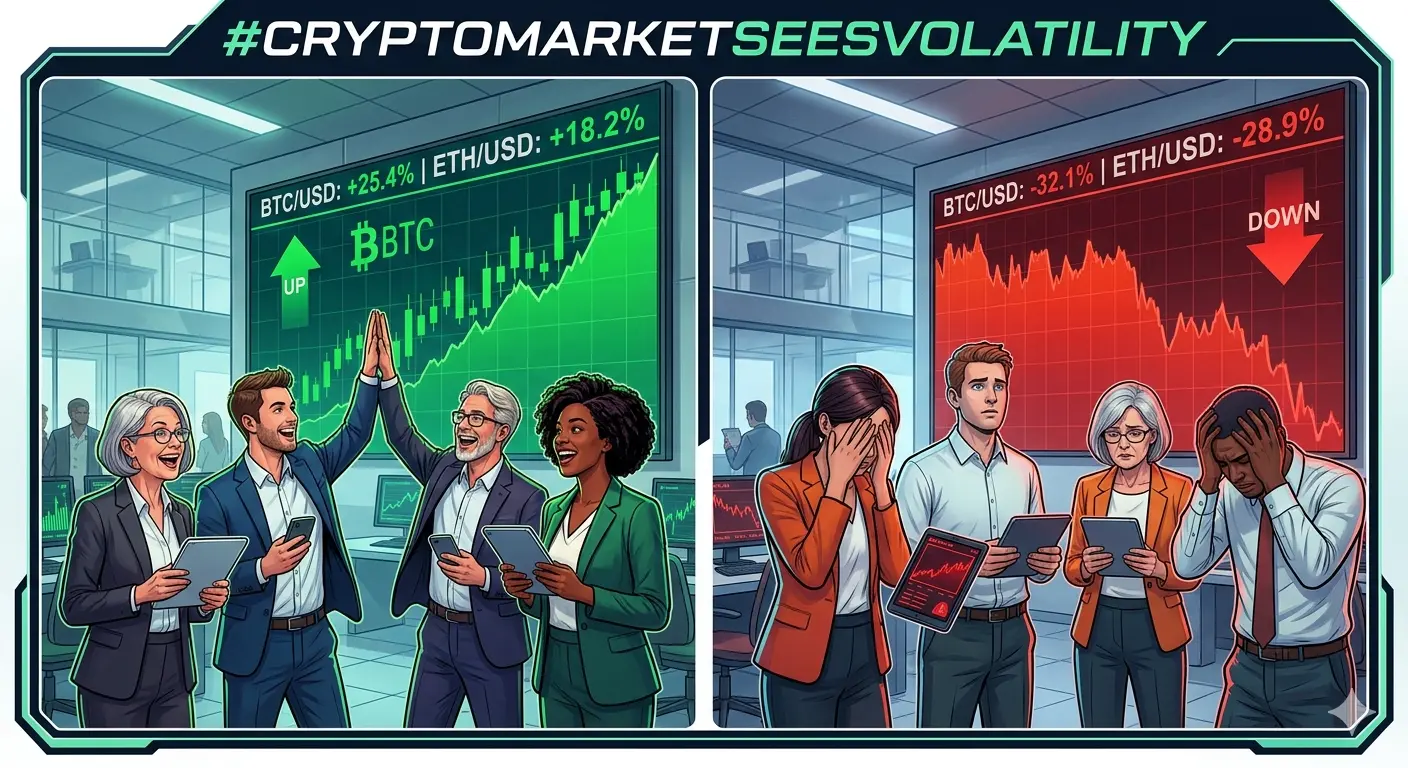
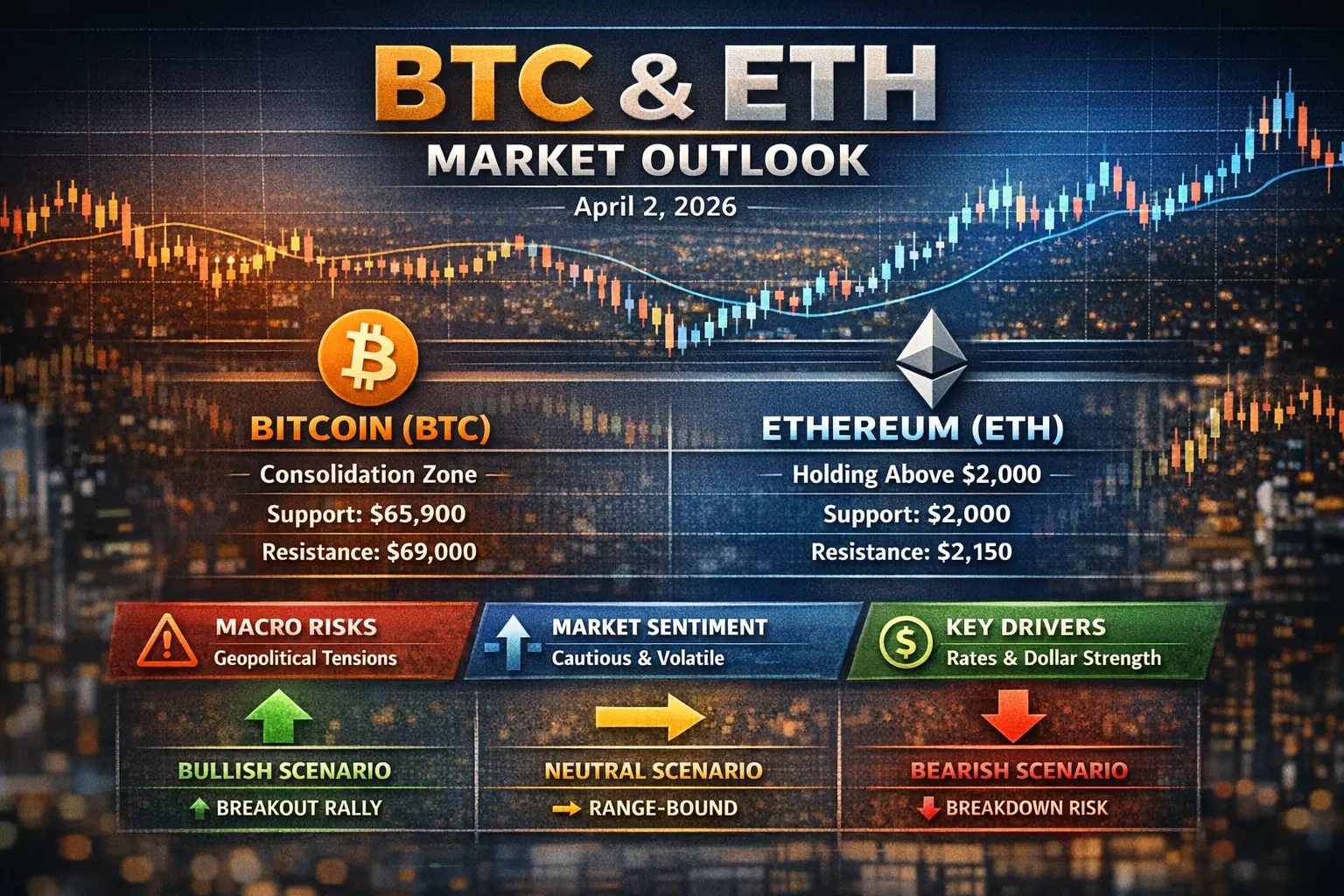
#AprilMarketOutlook April arrives with a mix of cautious optimism and underlying volatility across global financial markets. After a turbulent Q1 marked by macro uncertainty, geopolitical tensions, and shifting monetary policies, investors are entering April with sharper focus and more selective strategies.
The crypto market, in particular, is showing early signs of structural strength. Bitcoin continues to hold key support levels, suggesting that institutional demand remains intact. Ethereum and major altcoins are also stabilizing, hinting at a potential rotation phase where capital flows fro
BTC-1,73%
ETH-3,33%
DEFI-7,27%
ShainingMoonvip
#AprilMarketOutlook April arrives with a mix of cautious optimism and underlying volatility across global financial markets. After a turbulent Q1 marked by macro uncertainty, geopolitical tensions, and shifting monetary policies, investors are entering April with sharper focus and more selective strategies.
The crypto market, in particular, is showing early signs of structural strength. Bitcoin continues to hold key support levels, suggesting that institutional demand remains intact. Ethereum and major altcoins are also stabilizing, hinting at a potential rotation phase where capital flows from large caps into mid- and low-cap projects. This type of movement often signals the early stages of a broader bullish cycle, but confirmation is still needed.
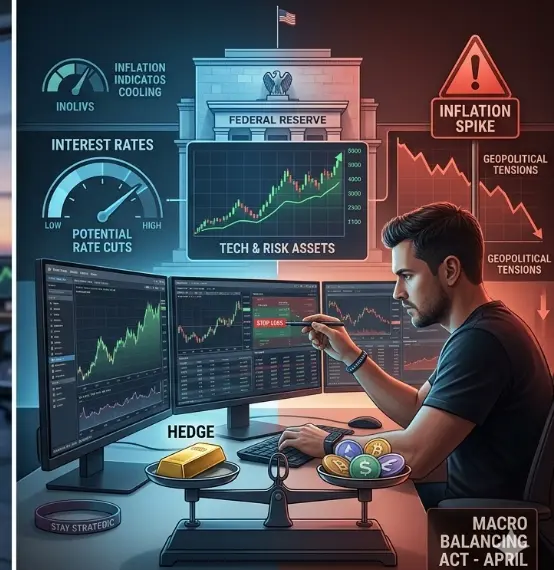
From a macro perspective, central bank policies remain the biggest driver. The Federal Reserve’s stance on interest rates will heavily influence liquidity conditions. If inflation continues to cool, markets could price in rate cuts, which historically act as a strong catalyst for risk assets including crypto. However, any unexpected inflation spike could quickly reverse sentiment and trigger short-term corrections.
Another key theme this month is regulation. Governments worldwide are accelerating their approach toward crypto frameworks. While stricter regulations may create short-term fear, they also bring long-term legitimacy. Smart money often positions itself ahead of regulatory clarity, not after it.
In equities, the rebound seen in late March has carried some momentum into April. Tech stocks remain dominant, especially those tied to artificial intelligence and cloud infrastructure. However, valuations are becoming stretched, and any earnings disappointments could lead to sharp pullbacks. This creates a delicate balance between growth expectations and risk management.
Commodities are also worth watching. Gold has maintained its strength as a hedge against uncertainty, while oil prices are reacting to geopolitical developments. These movements indirectly impact crypto by influencing inflation expectations and investor behavior.
For traders and investors, April is not about blind bullishness or fear-driven selling. It is about precision. Market conditions favor those who can adapt quickly, manage risk effectively, and identify high-probability setups. Overleveraging in such an environment remains one of the biggest risks.
On-chain data and market sentiment indicators suggest that accumulation is still ongoing. Whales are not exiting aggressively, which is a positive sign. Retail participation, however, remains relatively low compared to previous bull cycles. This gap could provide room for further upside if momentum builds.
One important factor to consider is narrative rotation. Markets are no longer driven by a single trend. Instead, multiple narratives such as AI, Real World Assets, Layer 2 scaling, and DeFi innovation are competing for attention. Identifying which narrative gains traction in April could be the key to outperforming the market.
Risk management remains critical. Setting stop losses, avoiding emotional trading, and maintaining a diversified portfolio can make the difference between long-term success and short-term losses. In uncertain markets, survival is just as important as profit.
Looking ahead, April could act as a transitional month. It may not deliver explosive gains immediately, but it can lay the groundwork for the next major move. Whether that move is upward or downward will depend on macro data, liquidity flows, and investor confidence.
The smartest approach right now is patience combined with preparation. Build positions gradually, stay informed, and avoid chasing hype. Markets reward discipline far more than impulsive decisions.
April is not just another month. It is a potential turning point.
Stay sharp. Stay strategic. Stay ahead.
SHAININGMOON 🚀
repost-content-media
  • Reward
  • Comment
  • Repost
  • Share
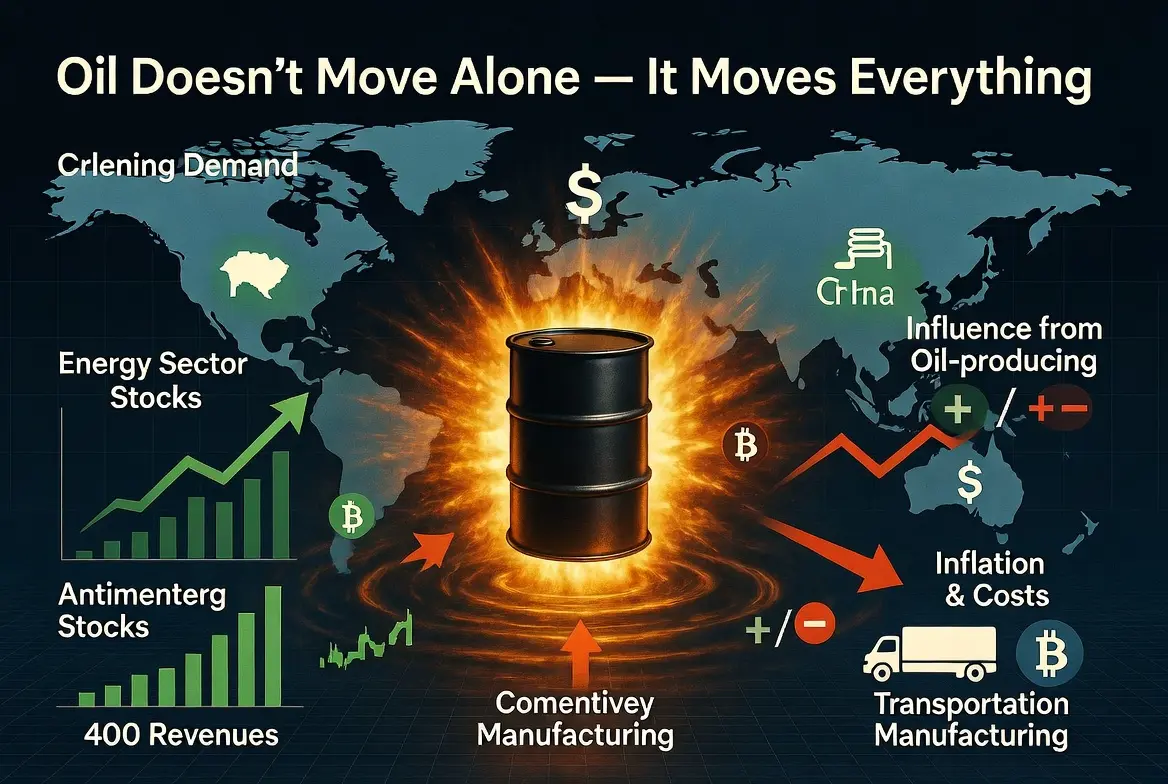
#OilPricesRise Global energy markets are heating up once again as oil prices push higher, driven by a mix of tightening supply, geopolitical uncertainty, and resilient demand. From traders to long-term investors, everyone is watching this move closely because oil often acts as a leading indicator for broader economic momentum.
At the center of the rally is the influence of OPEC and its allies, who continue to maintain disciplined production cuts. This strategy is designed to stabilize prices and protect revenue, but it also creates upward pressure when global demand remains steady. Countries l
BTC-1,73%
ShainingMoonvip
#OilPricesRise Global energy markets are heating up once again as oil prices push higher, driven by a mix of tightening supply, geopolitical uncertainty, and resilient demand. From traders to long-term investors, everyone is watching this move closely because oil often acts as a leading indicator for broader economic momentum.
At the center of the rally is the influence of OPEC and its allies, who continue to maintain disciplined production cuts. This strategy is designed to stabilize prices and protect revenue, but it also creates upward pressure when global demand remains steady. Countries like Saudi Arabia and Russia play a major role here, and any policy shift from them can quickly shake the market.
Another key factor is geopolitical tension. Conflicts and instability in oil-producing regions can disrupt supply chains, creating fear premiums in prices. Even the possibility of disruption is often enough to push oil higher, as markets price in risk ahead of time.
On the demand side, global consumption is proving more resilient than expected. Despite concerns about economic slowdowns, major economies like China and the United States continue to consume large amounts of energy. Industrial activity, transportation, and seasonal demand cycles are all supporting higher oil usage.
For financial markets, rising oil prices can have a ripple effect. Inflation pressures may increase, central banks could adjust policy expectations, and sectors like transportation and manufacturing might face higher costs. On the flip side, energy companies often benefit from stronger revenues and improved margins.
Crypto traders are also paying attention. Historically, energy price spikes can influence risk sentiment across markets. When oil rises sharply, it sometimes signals inflation concerns, which can impact liquidity flows into assets like Bitcoin and altcoins.
Looking ahead, the big question is whether this rally is sustainable. If supply remains tight and demand holds strong, oil could continue climbing. However, any signs of economic slowdown or policy shifts from major producers could quickly reverse the trend.
Stay alert, because in the world of global markets, oil doesn’t just move alone, it moves everything.
SHAININGMOON 🚀

repost-content-media
  • Reward
  • Comment
  • Repost
  • Share
#DriftProtocolHacked The crypto space has once again been shaken by alarming news as Drift Protocol, a well-known decentralized trading platform, reportedly faced a security breach. Incidents like these remind us that while Web3 offers freedom and innovation, it also comes with serious risks that users must not ignore.
Drift Protocol, built on the high-speed Solana ecosystem, has gained popularity for its decentralized perpetual futures trading. With low fees and fast execution, it attracted a large number of traders seeking efficiency and control over their assets. However, even the most prom
DRIFT17,41%
SOL-4,46%
ShainingMoonvip
#DriftProtocolHacked The crypto space has once again been shaken by alarming news as Drift Protocol, a well-known decentralized trading platform, reportedly faced a security breach. Incidents like these remind us that while Web3 offers freedom and innovation, it also comes with serious risks that users must not ignore.
Drift Protocol, built on the high-speed Solana ecosystem, has gained popularity for its decentralized perpetual futures trading. With low fees and fast execution, it attracted a large number of traders seeking efficiency and control over their assets. However, even the most promising platforms are not immune to vulnerabilities.
Early reports suggest that the exploit may be linked to a smart contract weakness or manipulation of the protocol’s liquidity mechanisms. While the full technical details are still unfolding, this situation highlights a recurring issue in decentralized finance—security is only as strong as the weakest line of code.
The immediate impact of such hacks is usually panic selling, liquidity withdrawal, and a drop in token value. Traders rush to secure their funds, and trust in the platform takes a major hit. In the broader market, events like this can create temporary bearish sentiment, especially among retail investors who are already cautious due to recent volatility.
However, it is important to look beyond the fear and understand the bigger picture. Every major hack in crypto history—from Mt. Gox to FTX—has ultimately pushed the industry toward better security standards, stricter audits, and improved transparency. While painful, these incidents often act as catalysts for long-term growth and maturity.
For users, this is a wake-up call. Never keep all your funds on a single platform. Always use hardware wallets when possible, verify smart contract interactions, and stay updated with official announcements. Diversification is not just about profit—it’s about survival in the crypto ecosystem.
For developers and platforms, the message is even clearer: security cannot be optional. Continuous auditing, bug bounty programs, and real-time monitoring must be prioritized. In a decentralized world, trust is earned through resilience and transparency, not promises.
The Drift Protocol team is expected to release a detailed report soon, outlining the cause of the breach and steps being taken to mitigate losses. The community will be watching closely, as the response to this crisis will determine whether the platform can regain its credibility.
In conclusion, while the incident is concerning, it is not the end of the road. Crypto has survived countless challenges and emerged stronger each time. The key lies in learning, adapting, and building a safer ecosystem for everyone.
Stay alert. Stay informed. And most importantly, stay in control of your assets.
SHAININGMOON 🚀
repost-content-media
  • Reward
  • Comment
  • Repost
  • Share
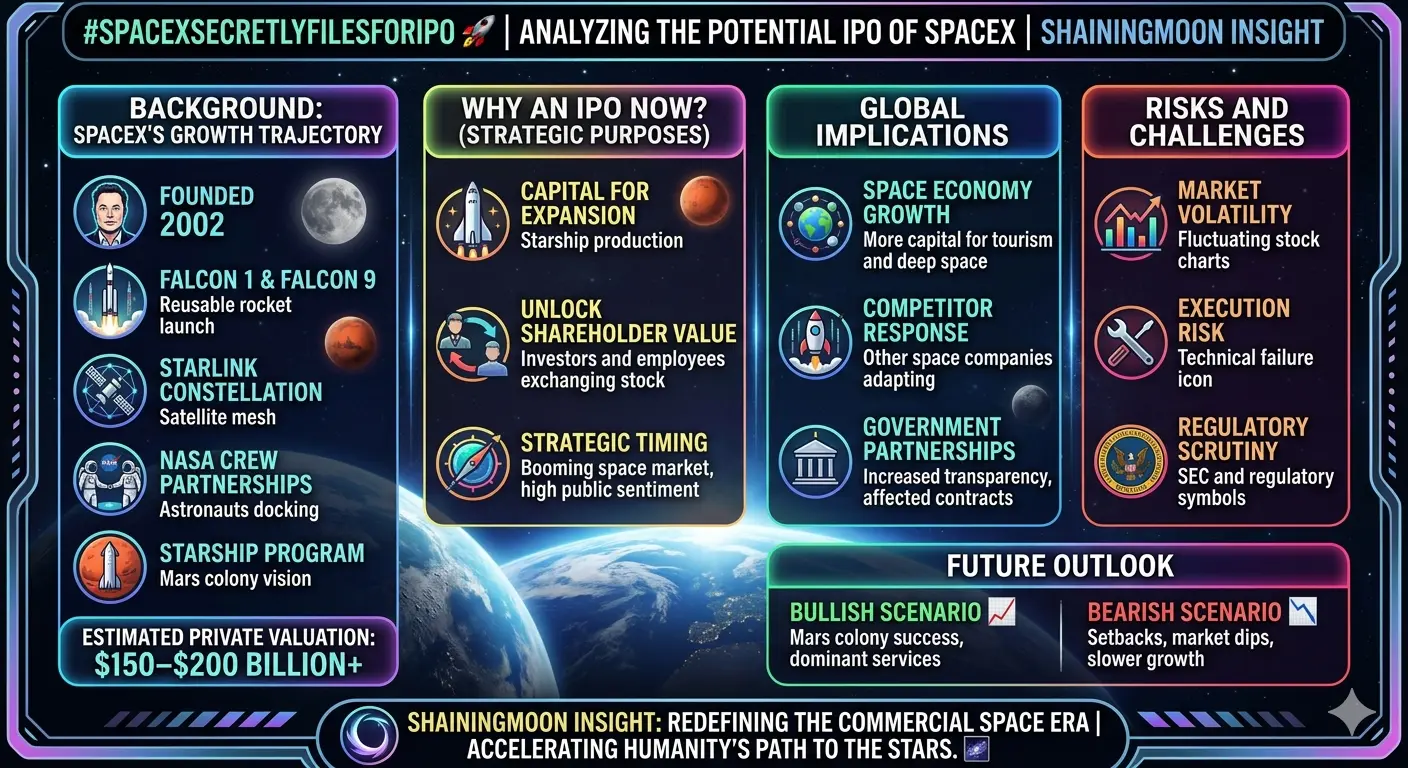
#SpaceXSecretlyFilesForIPO
The space industry is buzzing as rumors surface that SpaceX may have quietly filed for an Initial Public Offering (IPO). This revelation, if true, could mark one of the most significant events in both aerospace and technology investment history, redefining how private space companies access public markets.
Here’s a deep dive into the implications and what investors, space enthusiasts, and market watchers should know:
🚀 1. Background: SpaceX’s Growth Trajectory
Founded in 2002 by Elon Musk, SpaceX has transformed from a bold startup into a space powerhouse. Key mile
ShainingMoonvip
#SpaceXSecretlyFilesForIPO
The space industry is buzzing as rumors surface that SpaceX may have quietly filed for an Initial Public Offering (IPO). This revelation, if true, could mark one of the most significant events in both aerospace and technology investment history, redefining how private space companies access public markets.
Here’s a deep dive into the implications and what investors, space enthusiasts, and market watchers should know:
🚀 1. Background: SpaceX’s Growth Trajectory
Founded in 2002 by Elon Musk, SpaceX has transformed from a bold startup into a space powerhouse. Key milestones include:
Falcon 1 & Falcon 9 launches establishing reusable rockets
Starlink constellation providing global broadband coverage
Crewed missions to the ISS through NASA partnerships
Ambitious Starship program aiming for Mars colonization
SpaceX has remained privately funded for over two decades, raising billions from investors including venture capital firms, private equity, and strategic partners. Estimates place the company’s private valuation at $150–$200 billion, making it one of the most valuable private companies in the world.
⚖️ 2. Why an IPO Now?
Filing for an IPO could serve multiple strategic purposes:
2.1 Capital for Expansion
Starship and Mars programs require hundreds of billions in long-term capital.
An IPO could provide liquidity for ongoing R&D, production, and satellite deployment.
2.2 Unlocking Shareholder Value
Early investors and employees could liquidate some holdings, while new public investors gain exposure.
This could also enhance talent retention by giving employees publicly tradable equity.
2.3 Strategic Timing
The commercial space market is booming, with NASA, the US Department of Defense, and private satellite operators spending heavily.
Public sentiment around space exploration is at an all-time high, providing a favorable market window.
🌍 3. Global Implications
If SpaceX goes public:
Space economy growth: More capital inflows could accelerate satellite internet, space tourism, and deep-space exploration.
Competitor response: Companies like Blue Origin, Rocket Lab, and Axiom Space may explore public offerings or strategic partnerships.
Government partnerships: Public funding could increase transparency, potentially affecting contracts with NASA, the Department of Defense, and international agencies.
💡 4. Risks and Challenges
Going public is not without challenges:
Market volatility: SpaceX’s valuation is massive, and the IPO could fluctuate based on public market sentiment.
Execution risk: Starship development, satellite launches, and crewed missions involve high technological risks.
Regulatory scrutiny: Public filings could increase attention from the SEC, government regulators, and international authorities.
🔮 5. Future Outlook
Bullish Scenario 📈
IPO successfully raises billions for expansion
Starship program accelerates Mars missions
Starlink and space services dominate global communications
Bearish Scenario 📉
Market volatility impacts share price
Technical or regulatory setbacks delay major projects
Investor confidence wavers, slowing expansion
✍️ SHAININGMOON Insight
SpaceX’s potential IPO represents more than a financial event—it’s a milestone for humanity’s commercial space era. Investors are not just buying shares; they are investing in the future of space exploration.
The space race has moved from nations to companies, and SpaceX is at the forefront. This IPO could redefine how private space ventures access capital and accelerate humanity’s path to the stars. 🌌
repost-content-media
  • Reward
  • Comment
  • Repost
  • Share
#GoogleQuantumAICryptoRisk
🚨 #GoogleQuantumAICryptoRisk
How Google’s Quantum AI Acceleration Could Disrupt Crypto Security — And What Comes Next
By SHAININGMOON
In 2026, excitement around quantum computing has shifted from academic curiosity to real‑world risk projection — especially in the cryptocurrency ecosystem. Today, the intersection of Google’s quantum AI breakthroughs, advances in cryptanalysis, and the structure of blockchain cryptography raises urgent questions about digital asset security, long‑term trust, and ecosystem resilience.
This research post examines:
📌 What Google’s qua
ShainingMoonvip
#GoogleQuantumAICryptoRisk
🚨 #GoogleQuantumAICryptoRisk
How Google’s Quantum AI Acceleration Could Disrupt Crypto Security — And What Comes Next
By SHAININGMOON
In 2026, excitement around quantum computing has shifted from academic curiosity to real‑world risk projection — especially in the cryptocurrency ecosystem. Today, the intersection of Google’s quantum AI breakthroughs, advances in cryptanalysis, and the structure of blockchain cryptography raises urgent questions about digital asset security, long‑term trust, and ecosystem resilience.
This research post examines:
📌 What Google’s quantum AI developments mean
📌 How quantum computing threatens current cryptography
📌 What cryptos are most at risk
📌 The timeline for quantum‑induced attacks
📌 Potential defenses and migration strategies
📌 Societal, economic, and regulatory implications
📌 Actionable guidance for developers, investors, and policymakers
🧠 1. Google’s Quantum AI: What’s Happening?
Since Google first claimed quantum supremacy in 2019 — performing calculations beyond classical supercomputers — progress has accelerated. By late 2025, the company’s quantum hardware reportedly reached performance milestones measuring:
Hundreds of logical qubits (error‑corrected)
Scalable quantum processors
Hybrid integration with AI‑driven algorithms
Google’s strategy points to Quantum AI — not just quantum computing raw horsepower — where AI learns from quantum behavior to optimize computation pathways, reduce error, and find solutions faster than classical or naive quantum approaches.
Why this matters:
Pure quantum computation is limited by error rates; integrating AI can amplify practical performance, making quantum algorithms like Shor’s and Grover’s realizable outside labs.
🛡️ 2. Cryptography at the Quantum Frontier
Cryptocurrencies rely on cryptographic algorithms designed to be computationally infeasible to break with classical computers.
Key primitives used in most blockchains include:
Cryptographic Primitive
Used By
Security Guarantee
ECDSA (Elliptic Curve Digital Signature Algorithm)
Bitcoin, Ethereum
Signature security
Ed25519
Solana, Polkadot
Signature security
RSA
Rare in crypto
Legacy systems
SHA‑256 / Keccak‑256
Proof of Work, hashing
Collision resistance
Quantum threats:
🔹 Shor’s Algorithm (Breaks Public‑Key Crypto)
Shor’s algorithm can factor large integers and solve discrete log problems in polynomial time — far faster than any classical method.
ECDSA and Ed25519 rely on discrete logarithms → vulnerable
RSA also vulnerable but less relevant in crypto ecosystems
🔹 Grover’s Algorithm (Speeds Up Hash Collision Search)
Grover’s can reduce the complexity of brute‑forcing hash functions by ~√N.
SHA‑256: 2^256 → effectively 2^128 security with Grover
Keccak‑256: similar halving effect
Even after quantum mitigation, key sizes may need to double to retain equivalent security.
🚫 3. How Real Is the Threat?
There’s a misconception that “quantum will break Bitcoin tomorrow.” The honest assessment:
Quantum risk is real but staged:
No known quantum computer today can break ECDSA in the wild
Error correction and scaling remain bottlenecks
Google and others may achieve cryptanalysis‑capable hardware within 5–10 years
But hybrid quantum‑AI optimization accelerates feasibility beyond raw qubit counts alone — meaning timelines could compress.
Google’s quantum efforts aren’t secret; published research shows a trend where effective qubit performance improves year‑over‑year faster than expected. Similar progress has triggered quantum migration assumptions among cryptographers.
Key takeaway: The threat vector is time‑delayed but inevitable — and lucrative for attackers.
🔥 4. Attack Models & Scenarios
🧨 Scenario 1 — Key Theft Before Migration
An attacker uses a quantum computer to derive private keys from public addresses before the holder migrates to post‑quantum cryptography (PQC).
Impact: Immediate theft of assets.
🧨 Scenario 2 — Transaction Forgery
Validating nodes could be tricked into accepting forged signatures if cryptographic primitives are broken.
Impact: Chain disruption.
🧨 Scenario 3 — Smart Contract Exploitation
Quantum‑powered exploitation of cryptographic proofs within DeFi protocols, leading to drained liquidity pools.
Impact: Systemic market loss.
🧨 Scenario 4 — Hash Shard Manipulation
Reduced hash resistance can facilitate preimage attacks, enabling history rewriting, double‑spends or 51% style disruptions with fewer resources.
🪙 5. Which Cryptos Are Most Vulnerable?
Crypto
Signature Algorithm
Quantum Vulnerability
Bitcoin (BTC)
ECDSA
High
Ethereum (ETH)
secp256k1
High
Cardano (ADA)
Ed25519
High
Solana (SOL)
Ed25519
High
Polkadot (DOT)
Ed25519
High
Bitcoin Cash (BCH)
ECDSA
High
Litecoin (LTC)
ECDSA
High
Newer PQC trials
Variants
Lower (pending adoption)
Every major blockchain that relies on elliptic curve signatures will eventually face quantum risk unless proactively migrated.
🛡️ 6. Post–Quantum Cryptography: The Defenses
🔹 What Is PQC?
Post‑quantum cryptography refers to algorithms believed to resist both classical and quantum attacks.
Leading candidates (from NIST PQC standardization):
CRYSTALS‑Kyber — key encapsulation
CRYSTALS‑Dilithium — digital signatures
FALCON, SPHINCS+ — alternative signature schemes
These aim to replace or augment ECDSA/Ed25519.
🧱 7. Migration Challenges
Theoretical PQC is only part of the solution — implementing it in decentralized, real‑time systems is complex.
🔹 Hard Forks
Major chains require consensus to upgrade. This is slow and political.
🔹 Wallet Compatibility
Hardware and software wallets must adopt new algorithms.
🔹 Performance Tradeoffs
PQC keys and signatures are larger — impacting block sizes and throughput.
🔹 Legacy Addresses
Existing addresses remain vulnerable unless holders migrate.
🧠 8. AI’s Role: Optimization or Acceleration?
Artificial intelligence — especially when paired with quantum devices — changes the calculus.
🔹 AI‑Assisted Error Correction
AI can optimize error correction patterns, effectively improving usable qubit counts.
🔹 AI‑Driven Cryptanalysis
Machine learning can reveal structural weaknesses or optimize attack vectors against cryptographic functions.
🔹 AI‑Quantum Hybrid Algorithms
Research indicates hybrid strategies may extract cryptographic keys with fewer qubits or less coherence time.
Implication: The real risk clock isn’t just about qubit count — it’s about effective computational capability.
📅 9. Timeline Forecast (Estimated)
Phase
Timeline
Milestone
Early Quantum
Now – 2026
No real cryptanalysis
Emerging Capability
2026 – 2030
100–500 logical qubits
Practical PQC Attack Window
2030 – 2035*
Threat becomes realistic
Ubiquitous PQC Adoption
2030+
Migration under way
(This is a projection — could accelerate with breakthroughs.)
📊 10. Economic & Institutional Impacts
Quantum vulnerabilities reshape economic risk models:
🟡 Market Volatility
Perception of risk could trigger sell‑offs before actual breach.
🟡 Insurance & Custody
Crypto custody providers must promise PQC migration to remain insured.
🟡 Regulation
Governments may mandate post‑quantum standards.
🟡 National Security
Quantum capable actors could target financial infrastructure.
🛠️ 11. Practical Strategies (Developers & Builders)
✅ 1. Implement PQC Support Now
Integrate Kyber/Dilithium into wallets and nodes.
✅ 2. Dual‑Signature Schemes
Hybrid signatures: PQC + classical for backward compatibility.
✅ 3. Cold Storage Key Migration Tools
Priority migration for high‑value addresses.
✅ 4. Community Education
Educate users about key risks and migration.
✅ 5. Quantum Watchtower Monitoring
Track quantum research breakthroughs continuously.
📉 12. What Investors Should Do
Reevaluate risk models for PoW & PoS assets.
Favor projects with quantum‑resilient roadmaps.
Allocate capital for security upgrades.
Diversify beyond cryptos with weak primitives.
📜 13. Regulatory & Policy Considerations
Mandated PQC compliance
Standards for digital asset security
National cryptographic resilience plans
Public‑private research cooperation
📌 14. Summary: Threat and Opportunity
Category
Status
Risk Level
Quantum hardware
Progressing rapidly
Medium
Crypto security models
Currently safe
High Risk Future
Migration readiness
Variable
Critical
Regulatory clarity
Emerging
Moderate
Quantum risk is not hypothetical. It's an architectural challenge with real enforcement, economic, and security consequences.
🚀 Closing Thoughts
The quantum era isn’t coming — it’s already beginning.
For the crypto ecosystem, the window for preparation is narrow. Google’s advances in quantum AI amplify capacity, reduce timelines, and introduce cryptanalytic capability sooner than expected.
The most resilient projects will be those that embrace post‑quantum readiness, robust migration planning, and community education.
The future of crypto security is post‑quantum — and it starts today.
  • Reward
  • Comment
  • Repost
  • Share
#Web3SecurityGuide The Web3 revolution is here, promising a world of decentralized applications, blockchain-powered finance, and true digital ownership. Yet with great decentralization comes great responsibility. Web3 opens doors to new financial opportunities, creative expression, and data sovereignty—but it also introduces complex security challenges that cannot be ignored. Understanding these risks and implementing best practices is critical for anyone navigating this space.
In this guide, we’ll take a deep dive into Web3 security, covering threats, defensive strategies, and practical tips
ShainingMoonvip
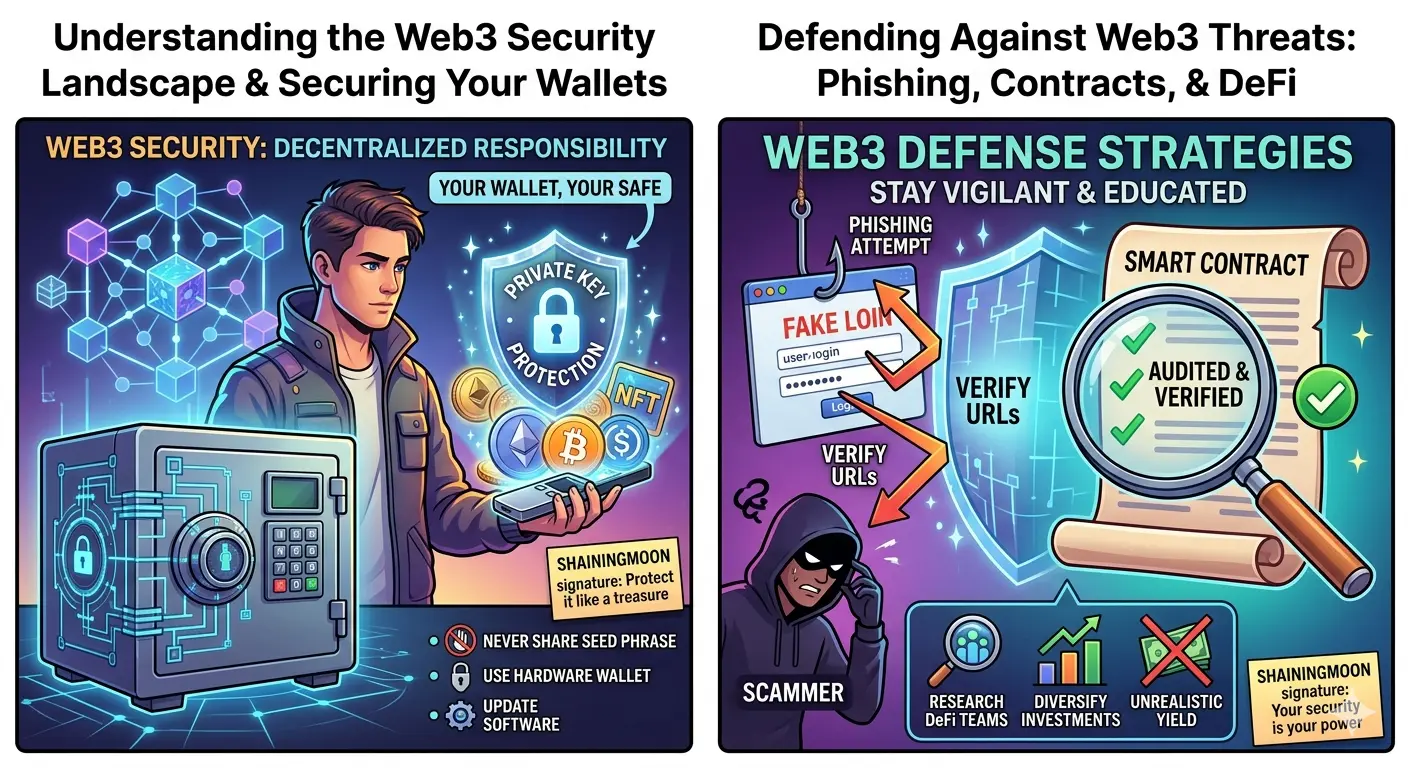
#Web3SecurityGuide The Web3 revolution is here, promising a world of decentralized applications, blockchain-powered finance, and true digital ownership. Yet with great decentralization comes great responsibility. Web3 opens doors to new financial opportunities, creative expression, and data sovereignty—but it also introduces complex security challenges that cannot be ignored. Understanding these risks and implementing best practices is critical for anyone navigating this space.
In this guide, we’ll take a deep dive into Web3 security, covering threats, defensive strategies, and practical tips to protect yourself and your assets.
1. Understanding the Web3 Security Landscape
Unlike Web2, Web3 platforms operate on decentralized networks, where users hold their own assets and data. This decentralization means no central authority can reverse transactions or freeze accounts if something goes wrong. While this empowers users, it also raises unique security concerns:
Smart contract vulnerabilities – Bugs or poorly coded contracts can be exploited to drain funds.
Phishing attacks – Scammers trick users into giving up private keys or seed phrases.
Wallet risks – Insecure wallets or compromised devices can lead to permanent asset loss.
DeFi exploits – Flash loan attacks, oracle manipulation, and rug pulls are common threats in decentralized finance.
Web3 security requires a proactive approach: knowing the risks, verifying code, and safeguarding private keys.
2. Securing Your Wallets
Your wallet is the gateway to your Web3 assets. Whether it’s a hot wallet connected to the internet or a cold wallet stored offline, security starts here.
Best practices:
Use hardware wallets for long-term storage; devices like Ledger or Trezor are industry standards.
Never share your private keys or seed phrases. Legitimate services never ask for them.
Enable multi-factor authentication where supported.
Regularly update wallet software to patch security vulnerabilities.
Remember: losing access to your wallet in Web3 usually means losing your assets forever.
3. Smart Contract Awareness
Smart contracts are the backbone of Web3 applications, automating transactions without intermediaries. But vulnerabilities can be catastrophic.
Tips for safety:
Prefer audited contracts from reputable sources. Audit reports identify potential weaknesses and ensure code integrity.
Check for open-source verification on platforms like Etherscan or GitHub.
Avoid interacting with new or unverified protocols promising unrealistic yields.
Understanding even basic smart contract principles empowers you to make safer choices.
4. DeFi & DApp Security
Decentralized finance (DeFi) offers high rewards, but it’s a hotbed for attacks. Rug pulls, liquidity theft, and oracle hacks can wipe out investments instantly.
Defensive strategies:
Research the team behind a project—anonymous developers increase risk.
Diversify your investments; never put all funds in a single protocol.
Monitor community channels like Discord or Telegram for suspicious activity.
Avoid “too good to be true” yield farming offers.
Tools like DeFi safety audits and analytics platforms can help detect red flags before you invest.
5. Protecting Against Phishing and Social Engineering
Cybercriminals target human weaknesses as much as technical vulnerabilities. In Web3, phishing scams are rampant: fake websites, impostor social media accounts, and deceptive messages are everywhere.
Stay vigilant:
Always verify website URLs and smart contract addresses.
Bookmark trusted platforms; avoid clicking links in unsolicited messages.
Be cautious with “airdrops” or “free token” offers—they often steal private keys.
Use hardware wallets for signing transactions instead of software wallets.
6. Network Security & Safe Browsing
Web3 users rely heavily on browsers and extensions like MetaMask. However, browser vulnerabilities can lead to key theft and transaction hijacking.
Security tips:
Keep your browser and extensions updated.
Avoid installing unverified extensions.
Consider using a separate device or browser profile for Web3 activity.
Use VPNs when on public Wi-Fi to protect against man-in-the-middle attacks.
7. The Role of Education and Community
Knowledge is your strongest shield. Web3 is rapidly evolving, and staying updated is crucial. Participate in communities, follow credible security experts, and learn from past exploits.
Follow open-source security repositories and audit reports.
Join Web3 security forums and developer communities.
Analyze attack case studies—understanding how breaches happen helps you avoid them.
8. Future-Proofing Your Web3 Security
As Web3 matures, new technologies like zero-knowledge proofs, multi-sig wallets, and decentralized identity solutions promise to enhance security. Staying informed and adapting early is key:
Consider multi-signature wallets for joint control of assets.
Use decentralized identity protocols for authentication instead of passwords.
Stay ahead of new DeFi protocols and smart contract standards to mitigate emerging risks.
✅ Key Takeaways
Treat your wallet like a physical safe—loss equals permanent loss.
Only interact with audited and verified smart contracts.
Diversify DeFi investments and never chase unrealistic yields.
Be vigilant against phishing, social engineering, and fake airdrops.
Keep devices, browsers, and extensions updated.
Educate yourself continuously—Web3 security is evolving.
Decentralization offers unprecedented control—but with control comes responsibility. By implementing these strategies, you protect not just your assets, but your freedom in the digital era.
SHAININGMOON signature: Always remember, in Web3, your security is your power. Protect it like a treasure.
repost-content-media
  • Reward
  • Comment
  • Repost
  • Share
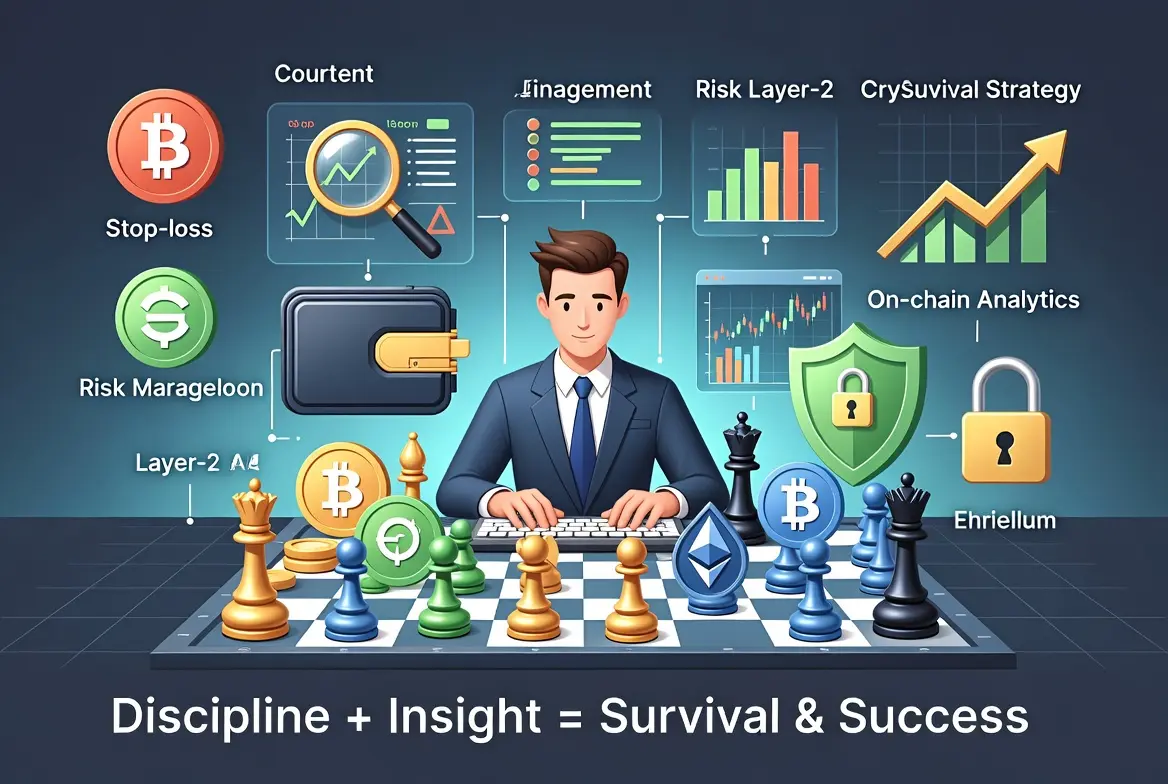
I#CryptoSurvivalGuide n the ever-evolving landscape of cryptocurrencies, survival isn’t about luck—it’s about strategy, discipline, and insight. As markets swing wildly, retail and institutional investors alike face the challenge of safeguarding capital while positioning for long-term gains. The 2026 crypto cycle is no different: volatility is high, regulation is tightening, and innovation is accelerating. Here’s a structured roadmap to stay resilient and thrive.
1. Understanding Market Volatility
Crypto markets are inherently volatile, often moving 5–20% in a single day. This is driven by mul
BTC-1,73%
ETH-3,33%
DEFI-7,27%
ShainingMoonvip
I#CryptoSurvivalGuide n the ever-evolving landscape of cryptocurrencies, survival isn’t about luck—it’s about strategy, discipline, and insight. As markets swing wildly, retail and institutional investors alike face the challenge of safeguarding capital while positioning for long-term gains. The 2026 crypto cycle is no different: volatility is high, regulation is tightening, and innovation is accelerating. Here’s a structured roadmap to stay resilient and thrive.
1. Understanding Market Volatility
Crypto markets are inherently volatile, often moving 5–20% in a single day. This is driven by multiple factors:
Regulatory shifts: Governments worldwide are increasingly regulating stablecoins, DeFi, and NFT markets.
Macro trends: Inflation, interest rate changes, and geopolitical tensions influence crypto indirectly but powerfully.
Technological developments: New Layer-1s, Layer-2 solutions, and AI-powered trading impact liquidity and sentiment.
Survival tip: Accept volatility as part of the ecosystem. Avoid panic selling. Use volatility to strategically enter positions when fundamentals are strong.
2. Risk Management
A disciplined approach is non-negotiable:
Position sizing: Never allocate more than 5–10% of your portfolio to a single crypto asset.
Stop-loss & take-profit: Automate exits to protect gains and limit losses.
Diversification: Blend high-risk tokens with blue-chip crypto (BTC, ETH) and emerging protocols.
Survival tip: Think in “portfolios” rather than single assets. A well-diversified portfolio can weather regulatory or market shocks.
3. Spotting Opportunities
Opportunities aren’t always obvious. Focus on:
Undervalued assets: Use on-chain data to identify tokens with strong activity but low price.
Layer-2 adoption: Protocols reducing gas fees or increasing scalability often see rapid growth.
AI integration: Cryptos using AI for trading, analytics, or smart contracts may offer early-mover advantages.
Survival tip: Research before you invest. Follow GitHub commits, developer activity, and liquidity metrics. Don’t chase hype.
4. Security First
Crypto security is the most overlooked survival factor. Hackers and scams are rampant:
Use hardware wallets: Cold storage prevents theft even if exchanges are compromised.
Enable multi-factor authentication: Always protect your exchange and wallet accounts.
Beware of phishing & rug pulls: Scrutinize projects, especially newly launched tokens.
Survival tip: Security is non-negotiable. Your strategy doesn’t matter if your assets are compromised.
5. Regulation Awareness
2026 will see tighter regulations in major markets:
Stablecoin compliance: Some jurisdictions now require audits and reserve proofs.
DeFi oversight: Protocols may need KYC or risk reporting.
Tax reporting: Countries are enforcing stricter crypto taxation.
Survival tip: Stay compliant. Ignoring regulations can erase gains overnight. Use wallets and exchanges that follow local laws.
6. Psychological Resilience
Market swings can test even seasoned traders:
Avoid FOMO: Jumping into hype assets often leads to losses.
Manage emotions: Fear and greed drive most poor decisions.
Set realistic expectations: Not every trade will be profitable. Long-term compounding wins over impulsive moves.
Survival tip: Treat crypto like chess, not roulette. Each move should have a reason, not just a reaction.
7. Strategic Tools & Resources
On-chain analytics: Glassnode, Nansen, and Dune provide actionable data.
News aggregators: Keep up with regulatory news via CoinDesk, The Block, and Gate.io updates.
Portfolio trackers: Tools like Zapper, Zerion, and Delta help monitor diversified holdings.
Survival tip: Knowledge is power. The better you understand metrics, adoption, and sentiment, the more informed your decisions.
8. Preparing for the Next Bull Run
Bull cycles are inevitable, but timing is everything:
Accumulate high-quality crypto during dips.
Keep a portion of capital in liquid assets for quick entry.
Rebalance regularly to avoid overexposure to risky assets.
SHAININGMOON Strategy: Always leave room for opportunity. Market leaders like Bitcoin and Ethereum dominate during bull runs, but emerging Layer-2s and AI-integrated protocols can provide exponential gains.
Conclusion:
The 2026 crypto market rewards discipline, insight, and preparation. Survival requires mastering volatility, managing risk, staying informed, and safeguarding assets. By combining strategic portfolio management with strong psychological resilience, you can not only survive—but thrive—no matter the market conditions.
Remember: In crypto, being reactive is dangerous. Being proactive with knowledge, security, and timing is what separates winners from losers.
repost-content-media
  • Reward
  • Comment
  • Repost
  • Share
#CLARITYBillMayHitDeFi
⚖️ THE REGULATORY RENCONTRES
A Strategic Deep-Dive on #CLARITYBillMayHitDeFi
By VORTEX KING
📜 PROLOGUE: When Code Meets Law
Every cycle in crypto faces a defining test.
For DeFi, that test is now regulation.
The narrative around #CLARITYBillMayHitDeFi is not just noise — it reflects a deeper reality:
The collision between permissionless finance and sovereign control.
DeFi was built to remove intermediaries.
Regulation exists to reintroduce them.
This is not a small adjustment.
This is a structural confrontation.
VORTEX KING does not deal in panic.
He deals in mechanics
DEFI-7,27%
Vortex_Kingvip
#CLARITYBillMayHitDeFi
⚖️ THE REGULATORY RENCONTRES
A Strategic Deep-Dive on #CLARITYBillMayHitDeFi
By VORTEX KING
📜 PROLOGUE: When Code Meets Law
Every cycle in crypto faces a defining test.
For DeFi, that test is now regulation.
The narrative around #CLARITYBillMayHitDeFi is not just noise — it reflects a deeper reality:
The collision between permissionless finance and sovereign control.
DeFi was built to remove intermediaries.
Regulation exists to reintroduce them.
This is not a small adjustment.
This is a structural confrontation.
VORTEX KING does not deal in panic.
He deals in mechanics, incentives, and outcomes.
🔍 PART I: WHAT THE CLARITY BILL REALLY TARGETS
Not Just Crypto — Control
The Clarity Bill is not attacking tokens.
It is targeting behavior:
• Custody
• Transactions
• Identity
• Accountability
Core Areas of Impact
Custody Expansion
Even interacting with wallets or multisig may count as control.
KYC Enforcement
Any financial interaction involving US users may require identity checks.
Protocol Liability
Developers and deployers may be legally responsible.
Stablecoin Control
Licensing pressure increases. Algorithmic models at risk.
Transaction Reporting
Large on-chain activity may require reporting.
The Real Shift
Old approach:
• Regulate companies
New approach:
• Regulate functions
This means:
Decentralization does not automatically protect you anymore.
⚠️ PART II: WHERE DEFI IS MOST EXPOSED
High Risk Zones
• Centralized front-ends
• Multisig-controlled protocols
• Stablecoin ecosystems
• Lending markets with US users
These have identifiable control points.
And control points = enforcement targets.
Medium Risk Zones
• DEX aggregators
• Bridges
• Liquidity pools
They face indirect pressure through interfaces and reporting.
Lower Risk Zones
• Fully decentralized protocols
• Non-US focused systems
• Experimental ecosystems
But “low risk” does not mean safe.
The Critical Weakness
Smart contracts are decentralized.
But access is not.
Most users interact through:
• Websites
• Interfaces
• Apps
And these are centralized choke points.
VORTEX KING Insight
Regulators don’t need to kill DeFi.
They only need to control how people access it.
📊 PART III: HISTORY ALREADY WARNED US
This is not new.
We have seen early signals:
• Protocol developers targeted
• DAO members held accountable
• Privacy tools restricted
• Interfaces forced to adapt
The Pattern
Regulation appears
Resistance rises
Enforcement begins
Adaptation follows
We are now entering:
Phase 3 — Adaptation
How DeFi Is Responding
• Blocking US users
• Decentralizing front-ends
• Moving jurisdictions
• Adding compliance layers
Each choice has a cost.
The Core Conflict
You cannot fully have both:
• Total decentralization
• Full regulatory compliance
At some point:
A trade-off must be made
🧠 PART IV: WHAT HAPPENS NEXT
🟡 Scenario 1: Market Segmentation (Most Likely)
Probability: 45%
• US users restricted
• Global DeFi continues
Outcome:
• Liquidity splits
• Growth continues outside US
🟢 Scenario 2: Compliance Evolution
Probability: 30%
• Some protocols adopt KYC
• Institutions enter
Outcome:
• DeFi becomes hybrid
• Institutional capital grows
🔴 Scenario 3: Enforcement Shock
Probability: 15%
• Aggressive legal actions
• Developer pressure increases
Outcome:
• Market contraction
• Temporary decline
⚡ Scenario 4: Regulatory Softening
Probability: 10%
• Adjustments to legislation
• Safe zones for DeFi
Outcome:
• Stability returns
• Innovation accelerates
VORTEX KING Insight
The most likely outcome is not destruction.
It is:
Transformation
⚔️ PART V: THE STRATEGIC EDGE
Most people will react emotionally.
Smart participants will adapt strategically.
The Winning Approach
1. Watch Structure, Not Noise
Ignore hashtags.
Follow real developments.
2. Track Enforcement
Laws matter less than:
How they are used
3. Choose Protocols Wisely
Strong projects:
• Adapt faster
• Survive longer
Weak ones disappear.
4. Maintain Flexibility
Do not depend on one system.
Keep options open.
5. Think Globally
Crypto is not limited to one country.
Opportunity shifts geographically.
🌟 EPILOGUE: THE FUTURE OF DEFI
This is not the end of DeFi.
It is the end of naive DeFi.
What Will Survive
• Truly decentralized systems
• Adaptive protocols
• Strong communities
What Will Fail
• Weak token models
• Centralized control points
• Projects without real utility
VORTEX KING FINAL MESSAGE
Regulation is not the enemy.
It is a filter.
It removes:
• Weak hands
• Weak projects
• Weak structures
And leaves behind:
Resilient systems
The Ultimate Truth
DeFi was never about avoiding rules.
It was about:
Creating better systems
So now the question is:
Will DeFi evolve —
Or will it break?
🔥 VORTEX KING SIGNATURE
The law is coming.
The market is watching.
But the builders who understand the system —
Will not be stopped.
repost-content-media
  • Reward
  • Comment
  • Repost
  • Share
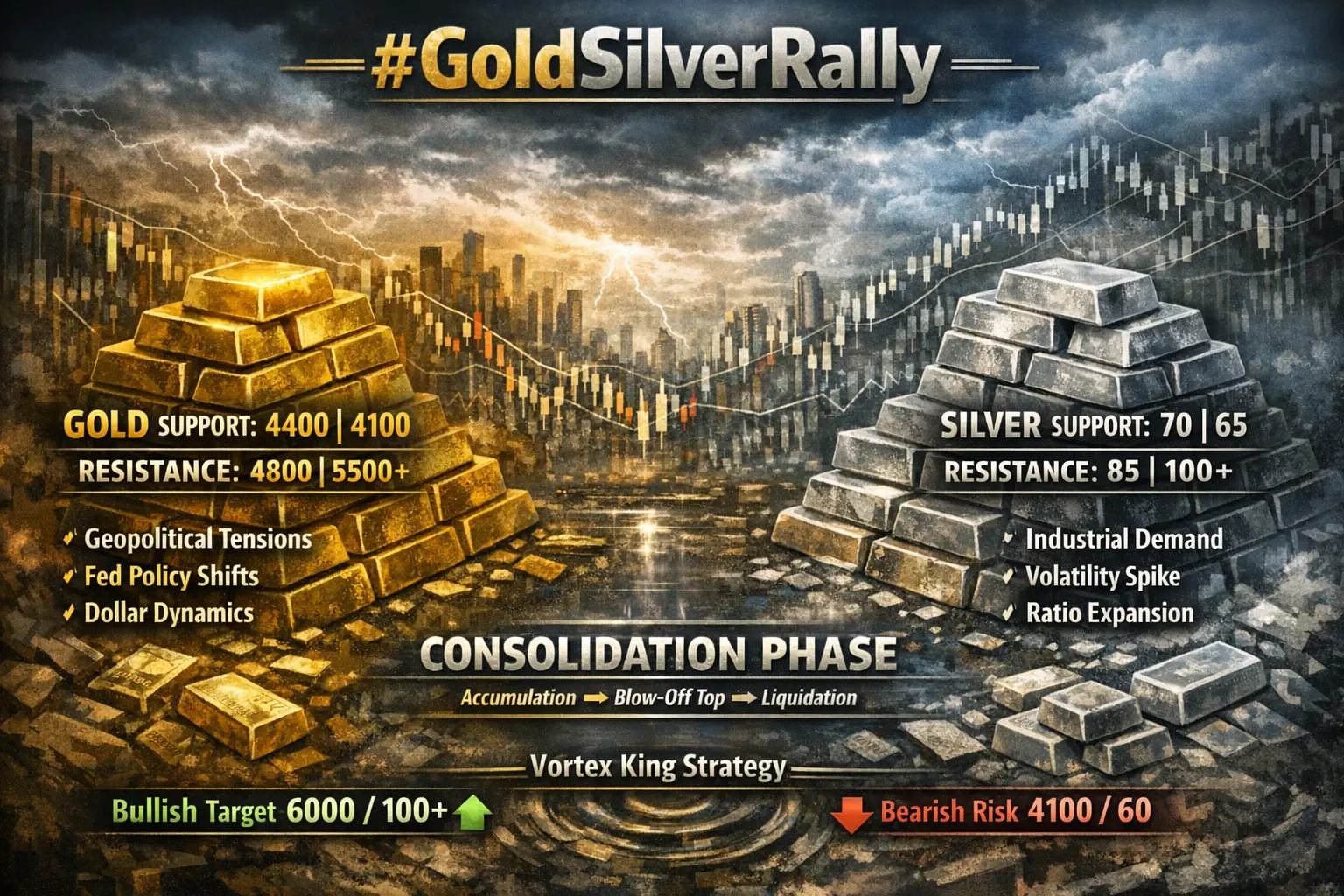
#GoldSilverRally
#GoldSilverRally
The Vortex King’s Institutional Deep Dive on Gold and Silver
Introduction: When Precious Metals Become Power
In the architecture of global finance, there are moments when gold and silver stop behaving like commodities and start behaving like macro signals of systemic stress, liquidity shifts, and monetary transformation.
2026 is one of those moments.
Gold and silver are no longer just inflation hedges, safe-haven assets, or portfolio diversifiers. They have evolved into indicators of trust in the global financial system itself.
Right now, the market stands at
Vortex_Kingvip
#GoldSilverRally
#GoldSilverRally
The Vortex King’s Institutional Deep Dive on Gold and Silver
Introduction: When Precious Metals Become Power
In the architecture of global finance, there are moments when gold and silver stop behaving like commodities and start behaving like macro signals of systemic stress, liquidity shifts, and monetary transformation.
2026 is one of those moments.
Gold and silver are no longer just inflation hedges, safe-haven assets, or portfolio diversifiers. They have evolved into indicators of trust in the global financial system itself.
Right now, the market stands at a critical inflection point.
PART 1: CURRENT MARKET SITUATION
Gold — Between Fear and Liquidity
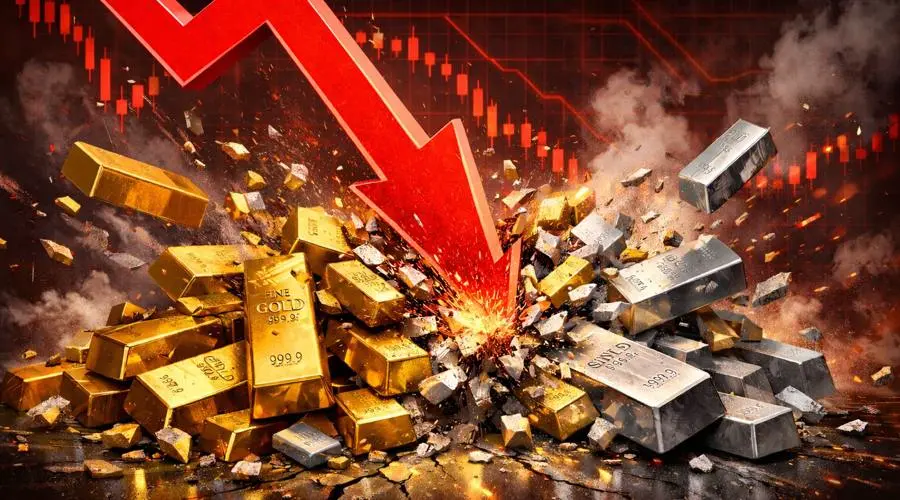
Gold is currently trading in an extremely volatile range after a historic rally followed by a sharp correction.
Recent price structure shows:
Highs near 5500 to 5600
Current range between 4400 to 4800
Recovery attempts after a major liquidation phase
This tells us one thing clearly.
Gold is not weak. It is resetting.
Silver — The Volatility King
Silver is currently:
Trading around 70 to 75 zone
Down from highs near 90 to 100 plus
Showing relative weakness vs gold short term
However, structurally:
Silver remains in a long-term bullish cycle
Driven by industrial demand like AI, EV, and solar
Short term weakness does not invalidate long term strength.
PART 2: FUNDAMENTAL DRIVERS
1. Geopolitics — The Primary Catalyst
Global tensions and ceasefire narratives are directly influencing metals.
Gold reacts instantly:
Rises on escalation
Falls on peace expectations
This creates rapid volatility cycles.
2. Central Bank Policy
Institutions like the Federal Reserve play a crucial role.
Higher rates pressure gold
Rate cuts support gold
Right now, uncertainty is dominating.
3. US Dollar Strength
Strong dollar weakens metals
Weak dollar boosts metals
This inverse relationship is critical.
4. Liquidity and Positioning
Gold became overcrowded during the rally.
Result:
Heavy long positions
Forced liquidation
Sharp correction
This was not collapse.
This was cleansing.
PART 3: TECHNICAL ANALYSIS — GOLD
Key Support Levels
4400 to 4500 strong demand zone
4380 previous breakout level
4100 major downside support
3500 extreme scenario
Key Resistance Levels
4675 short-term pivot
4800 strong resistance
5100 breakout zone
5500 to 5600 major high
Structure
Gold is currently in a high volatility consolidation phase.
Meaning:
Market is undecided
Liquidity is shifting
Smart money is repositioning
PART 4: TECHNICAL ANALYSIS — SILVER
Support Levels
73 to 70 current support
65 strong base
60 panic zone
Resistance Levels
77 flipped resistance
85 to 90 key zone
100 psychological level
Structure
Silver is in a bearish pullback inside a bullish macro trend.
Short term weak.
Long term powerful.
PART 5: GOLD VS SILVER
The ratio is expanding.
Meaning:
Gold outperforming
Risk-off sentiment active
Historically, when this happens, silver later explodes.
PART 6: MARKET PHASE
We are in post blow-off reset phase.
Cycle:
Accumulation
Expansion
Blow-off top
Liquidation
Current consolidation
Next:
Re-accumulation → Expansion
PART 7: SCENARIOS
Bullish
If:
Rates fall
Dollar weakens
Tensions rise
Then:
Gold targets 5000 to 6000
Silver targets 100 plus
Bearish
If:
Rates stay high
Dollar strengthens
Peace stabilizes markets
Then:
Gold may drop to 4100
Silver may drop to 60
Neutral
Most likely now:
Range bound
High volatility
Fake breakouts
PART 8: TRADING STRATEGY
Gold
Buy near 4400 to 4500
Sell near 4800 to 5000
Silver
Buy near 70
Sell near 85 to 90
Risk Management
Avoid high leverage
Respect volatility
Use stop losses
PART 9: MARKET PSYCHOLOGY
Current emotions:
Confusion
Fear
Overreaction
Opportunity exists here.
PART 10: MACRO TRUTH
Gold and silver are rising because:
Fiat pressure increasing
Debt levels rising
Central banks accumulating
This is not random.
This is structural.
FINAL INSIGHT — VORTEX KING EDGE
Average trader asks what next.
Smart trader asks where liquidity goes.
Because:
Price moves
Structure remains
Liquidity decides
CONCLUSION
Gold and silver are in a high-stakes consolidation phase.
Key takeaways:
Gold holding 4400 to 4500
Silver stabilizing near 70
Market driven by macro forces
The next move will be powerful.
Final Words
This is not the time to chase.
This is the time to:
Observe
Prepare
Position
Because the next expansion will reward only the prepared.
Stay sharp. Stay disciplined. Think like the Vortex King.
repost-content-media
  • Reward
  • Comment
  • Repost
  • Share
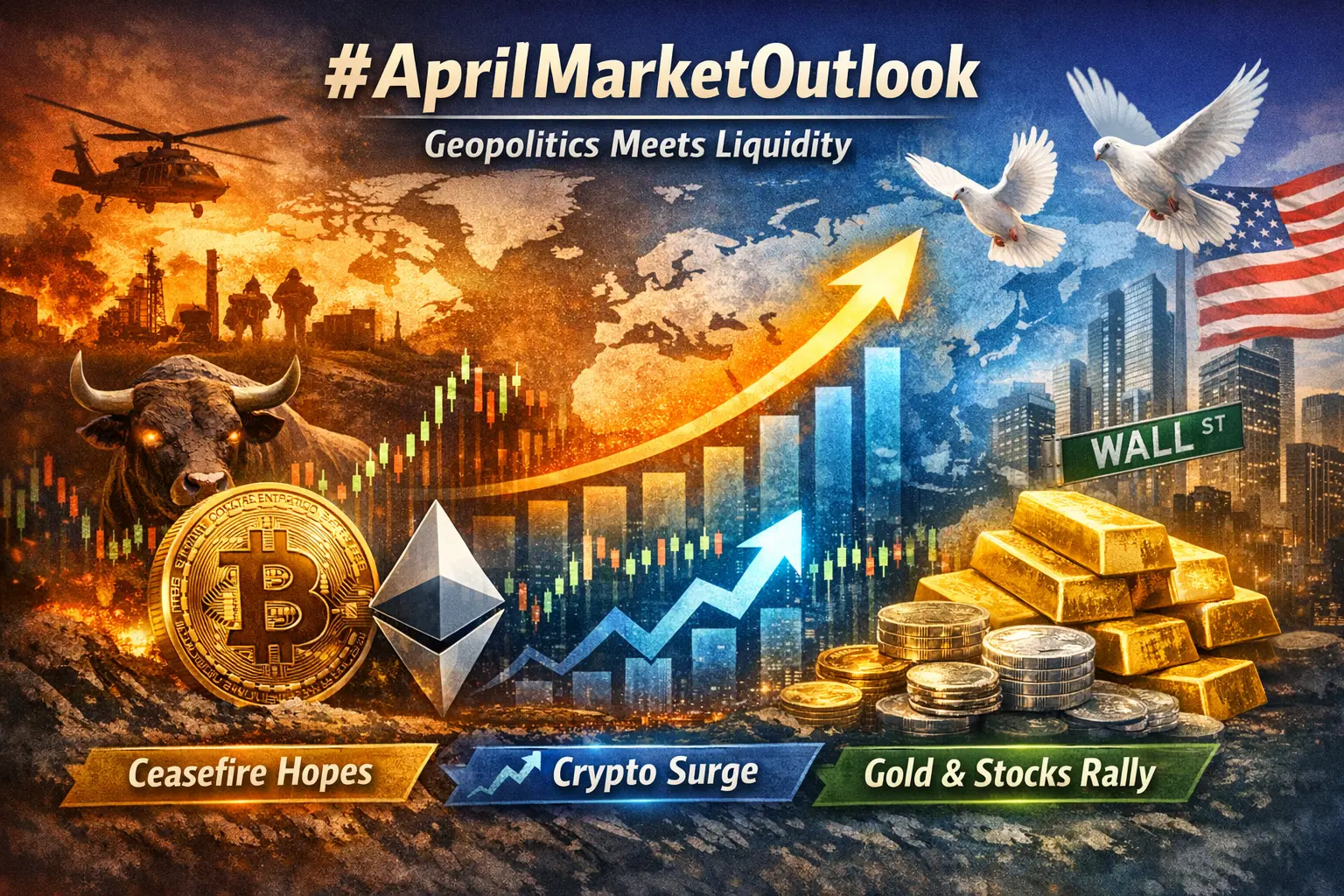
#AprilMarketOutlook
#AprilMarketOutlook
The Vortex King’s Strategic Blueprint for April — Where Geopolitics Meets Liquidity
Introduction: April Begins With a Narrative Shift
April has not started quietly.
It has opened with a macro-level narrative shock driven by evolving signals around the US–Iran situation and ceasefire expectations linked to Donald Trump.
This is not just geopolitical noise.
This is a cross-market catalyst that has already triggered synchronized movement across:
Crypto markets
US equities
Gold and silver
When multiple asset classes move together, it signals one thing:
Liqu
BTC-1,73%
ETH-3,33%
Vortex_Kingvip
#AprilMarketOutlook
#AprilMarketOutlook
The Vortex King’s Strategic Blueprint for April — Where Geopolitics Meets Liquidity
Introduction: April Begins With a Narrative Shift
April has not started quietly.
It has opened with a macro-level narrative shock driven by evolving signals around the US–Iran situation and ceasefire expectations linked to Donald Trump.
This is not just geopolitical noise.
This is a cross-market catalyst that has already triggered synchronized movement across:
Crypto markets
US equities
Gold and silver
When multiple asset classes move together, it signals one thing:
Liquidity is rotating at a global scale.
1. The Turning Point: From War Premium to Peace Pricing
For weeks, markets were pricing in:
Escalation risk
Energy disruption
Inflation pressure
Now suddenly, the narrative has flipped toward:
Ceasefire expectations
De-escalation
Stability outlook
This shift creates what professionals call:
A repricing event
Markets are no longer reacting to fear.
They are reacting to the removal of fear.
2. Why Everything Is Rising Together
The simultaneous rally in crypto, stocks, and metals is not coincidence.
It is a structural reaction to three key forces:
1. Risk Premium Collapse
When war risk declines:
Safe-haven demand stabilizes
Capital rotates into growth assets
2. Liquidity Re-Entry
Investors who stayed on the sidelines:
Begin re-entering markets
Increase exposure across asset classes
3. Sentiment Reversal
Markets shift from: Fear → Hope → Early Optimism
This phase is critical because it often leads to multi-week momentum cycles.
3. Crypto Market Outlook — Early Expansion Phase
Crypto is one of the biggest beneficiaries of this shift.
Current structure suggests:
Bitcoin stabilizing at higher levels
Ethereum gaining strength
Altcoins beginning to wake up
This indicates: The market is entering an expansion phase
What Happens Next in Crypto
If momentum continues:
Capital flows from Bitcoin → Ethereum
Then into mid-cap altcoins
Followed by speculative sectors
Key sectors to watch:
AI tokens
DeFi protocols
Layer 2 ecosystems
Gaming and infrastructure
Risk Factor
This rally is still: Expectation-driven, not confirmation-driven
If ceasefire fails:
Crypto will react violently
Over-leveraged positions will be wiped
4. Gold and Silver — Strength With Caution
Precious metals are reacting differently.
They surged initially due to:
Safe-haven demand
Geopolitical uncertainty
Now they are:
Entering consolidation
Balancing between risk-on and risk-off
Gold Structure
Holding strong support zones
Facing resistance near recent highs
Likely to remain range-bound short term
Silver Structure
Higher volatility than gold
Temporary weakness
Strong long-term bullish outlook
5. US Stock Market — Relief Rally Mode
Equities are benefiting from:
Reduced geopolitical stress
Improved sentiment
Lower perceived risk
This creates: A relief rally environment
But caution remains:
Not all risks are gone
Markets are forward-looking
6. The Federal Reserve Factor
Institutions like the Federal Reserve play a silent but powerful role.
If tensions ease:
Inflation pressure may reduce
Rate cuts become more likely
Liquidity improves
This is bullish for:
Crypto
Stocks
Risk assets
7. The Most Important Truth — This Is a Narrative Market
Right now, markets are not driven by fundamentals alone.
They are driven by:
Headlines
Expectations
Interpretation
This means:
Speed matters more than certainty
8. April Scenarios — Three Possible Paths
Bullish Scenario
If ceasefire confirms:
Crypto enters strong expansion
Stocks continue rally
Metals stabilize at higher levels
Bearish Scenario
If tensions return:
Markets reverse sharply
Liquidity exits quickly
Volatility spikes
Most Likely Scenario
Volatility continues
Fake breakouts appear
Markets remain reactive to news
9. Vortex King Strategy for April
Positioning
Enter during dips, not hype
Focus on strong sectors
Avoid emotional trades
Risk Management
Protect capital first
Use controlled exposure
Stay flexible
Profit Strategy
Scale out gradually
Do not wait for perfect tops
Respect momentum
10. Psychology — The Real Battlefield
Most traders right now are:
Confused
Reactive
Chasing moves
This creates opportunity.
Because: Clarity exists where confusion dominates
11. The Macro Insight
This moment represents something bigger.
It is not just about April.
It is about:
Global liquidity cycles
Market interconnectedness
The power of narrative
Final Insight — The Vortex King Edge
The average trader reacts to news.
The Vortex King understands:
News creates movement
Liquidity sustains movement
Psychology accelerates movement
But ultimately:
Structure defines the outcome
Conclusion
April has started with a powerful signal.
Geopolitics shifting
Markets reacting
Opportunities emerging
But this is not certainty.
This is potential energy in motion.
Final Words
Do not chase the rally.
Do not ignore the risk.
Understand the structure.
Track the narrative.
And position with precision.
Stay sharp. Stay disciplined. Think like the Vortex King.
repost-content-media
  • Reward
  • Comment
  • Repost
  • Share
#Web3SecurityGuide
Web3 is not just technology.
It is a financial revolution.
It removes banks, middlemen, and centralized control — and gives power directly to users.
But here’s the truth most beginners ignore:
👉 Freedom in Web3 comes with full responsibility.
There is no helpline.
No password reset.
No “forgot wallet” option.
One mistake… and your assets are gone forever.
This guide is designed to make you smarter than 95% of users — because in Web3, knowledge is your only protection.
🚨 The Harsh Reality: Why People Lose Money
Every year, billions of dollars are stolen in crypto.
Not beca
ETH-3,33%
TOKEN-2,46%
AIRDROP-8,08%
Vortex_Kingvip
#Web3SecurityGuide
Web3 is not just technology.
It is a financial revolution.
It removes banks, middlemen, and centralized control — and gives power directly to users.
But here’s the truth most beginners ignore:
👉 Freedom in Web3 comes with full responsibility.
There is no helpline.
No password reset.
No “forgot wallet” option.
One mistake… and your assets are gone forever.
This guide is designed to make you smarter than 95% of users — because in Web3, knowledge is your only protection.
🚨 The Harsh Reality: Why People Lose Money
Every year, billions of dollars are stolen in crypto.
Not because blockchain is weak — but because users are.
Most losses come from:
Careless clicks
Trusting fake links
Ignoring transaction details
Lack of awareness
👉 Web3 is not dangerous.
👉 Being careless in Web3 is dangerous.
🧠 1. Understanding Ownership in Web3
In traditional finance:
Bank controls your money
In Web3:
You control everything
This means:
You own your wallet
You manage your keys
You are responsible for security
👉 You are your own bank.
And banks don’t make careless mistakes.
🔑 2. Private Keys & Seed Phrases — The Core of Security
Your seed phrase is the root of your wallet.
Whoever has it:
Can access your funds
Can transfer everything
Cannot be stopped
Critical Rules:
❌ Never share it
❌ Never type it on unknown sites
❌ Never store in screenshots
Smart Protection Strategy:
✅ Write on paper
✅ Store in 2–3 secure locations
✅ Use fireproof storage if possible
Advanced users:
Use metal backup plates
🧊 3. Cold Storage vs Hot Storage (Advanced Strategy)
Most beginners keep everything in one wallet — huge mistake.
🔥 Hot Wallet (Daily Use)
Connected to internet
Used for trading and dApps
Higher risk
❄️ Cold Wallet (Long-Term Storage)
Offline
Immune to online attacks
Best for holding large funds
Pro Strategy:
👉 Split funds:
10–20% in hot wallet
80–90% in cold wallet
This alone reduces risk massively.
🎣 4. Phishing Attacks — The Silent Killer
Phishing is responsible for most Web3 losses.
Attackers create:
Fake exchange websites
Fake NFT mint pages
Fake airdrops
They look 100% real.
Real Scenario:
User clicks a fake link → connects wallet → approves transaction → funds drained in seconds.
Protection:
✅ Bookmark official websites
✅ Double-check URLs
✅ Avoid clicking links from DMs
👉 If someone rushes you — it’s a trap.
🧾 5. Smart Contract Risks Most People Ignore
When you connect your wallet, you are not just “logging in”.
You are giving permissions.
Many users blindly approve:
Unlimited token spending
Full wallet access
Danger:
Malicious contracts can:
Drain tokens anytime
Execute hidden actions
Safe Approach:
✅ Read transaction details
✅ Avoid “Unlimited Approval”
✅ Revoke permissions regularly
🔍 6. Wallet Connection Discipline
Before connecting your wallet, ask:
Is this the official website?
Is the project verified?
Do I trust this platform?
Golden Rule:
👉 Never connect your main wallet to unknown dApps
Use a secondary wallet for testing.
🧠 7. Social Engineering — The Psychological Hack
Not all attacks are technical.
Some are psychological.
Scammers pretend to be:
Admins
Influencers
Support teams
They build trust… then steal funds.
Example:
“Hello sir, we noticed an issue with your wallet. Please verify.”
👉 This is always fake.
Rule:
❌ No real team will DM you first
❌ No real support asks for private keys
🔐 8. Account Security Beyond Wallets
Your wallet is not the only target.
Hackers also attack:
Email accounts
Exchange accounts
SIM cards
Protection:
✅ Use strong passwords
✅ Enable 2FA (Authenticator apps)
✅ Avoid SMS-based security
SIM swap attacks are real.
⚠️ 9. Red Flags You Must Instantly Recognize
If you see any of these — STOP:
🚩 “Send 1 ETH, get 2 ETH”
🚩 “Limited time urgent mint”
🚩 Unknown token in wallet
🚩 Random airdrop links
👉 Free money does not exist in Web3.
🧠 10. Advanced Security Habits (Pro Level)
Want to stay ahead of scammers?
Adopt these habits:
Use multiple wallets
Separate trading & storage funds
Regularly audit wallet activity
Follow security researchers
Stay updated on new scams
Security is not one-time.
It is a continuous process.
🏆 Final Mindset — The Real Key
In Web3:
There is no safety net
There is no second chance
There is only awareness
The safest users are not lucky.
They are disciplined.
🔐 Conclusion
Web3 is powerful.
But power without knowledge is dangerous.
If you follow this guide:
You reduce 90% of risks
You protect your assets
You stay ahead of scammers
Stay smart. Stay alert. Stay secure.
✍️ VORTEX KING
🔐 VORTEX KING
repost-content-media
  • Reward
  • Comment
  • Repost
  • Share
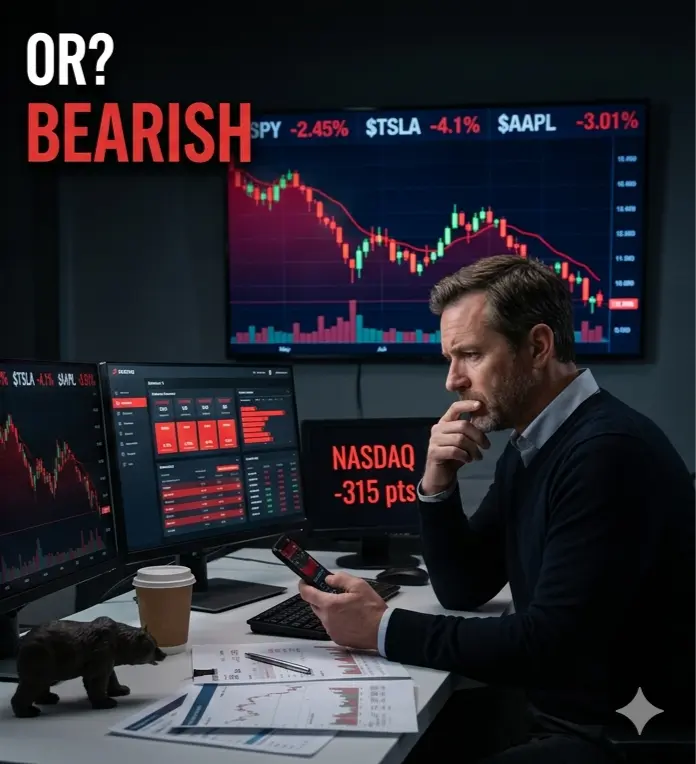
#AreYouBullishOrBearishToday?
Based on the confluence of the three major stories we've tracked—Ethereum Foundation staking, the CLARITY Act's threat to DeFi, and the broader Bitcoin technical setup—my outlook is a cautious, bifurcated bearish stance for the short term, with a strong undercurrent of strategic bullishness for the long term.
Here’s how I break it down:
🐻 The Short-Term Bearish Case (Today's Trading)
In the immediate term, the negatives carry more weight for price action.
1. Regulatory Weight (The CLARITY Act): This is the biggest cloud. The bill directly attacks the yield-gener
ETH-3,33%
BTC-1,73%
UNI-13,37%
AAVE-3,77%
Vortex_Kingvip
#AreYouBullishOrBearishToday?
Based on the confluence of the three major stories we've tracked—Ethereum Foundation staking, the CLARITY Act's threat to DeFi, and the broader Bitcoin technical setup—my outlook is a cautious, bifurcated bearish stance for the short term, with a strong undercurrent of strategic bullishness for the long term.
Here’s how I break it down:
🐻 The Short-Term Bearish Case (Today's Trading)
In the immediate term, the negatives carry more weight for price action.
1. Regulatory Weight (The CLARITY Act): This is the biggest cloud. The bill directly attacks the yield-generating business models of major DeFi protocols. While it's not law yet, the market is forward-looking. The fear of it passing is already causing institutional outflows (like the $222M from Ethereum products last week). This uncertainty creates a "sell first, ask questions later" environment for risk assets.
2. Technical Resistance: Bitcoin is facing a critical test. It needs to break and hold above $69,000** to invalidate the bearish pattern. Failure to do so, especially with the macroeconomic and regulatory headwinds, significantly increases the probability of a retest of the **$60,000-$62,500 support zone. Until that resistance breaks, the path of least resistance is sideways to down.
3. DeFi Contagion Fear: Even if you don't hold DeFi tokens, a regulatory crackdown on protocols like Uniswap or Aave could lead to a liquidity crunch and a sharp de-risking event across the entire crypto market, including blue chips like BTC and ETH.
🐂 The Long-Term Bullish Undercurrent
Despite the gloomy short-term view, the fundamental actions taken this week are profoundly bullish for the health and maturity of the ecosystem.
1. Ethereum's Supply Shock: The Ethereum Foundation staking $46.2M of its own ETH is a game-changer. It removes a massive seller from the market (they used to sell to fund operations) and locks up liquid supply. When the regulatory dust settles, this is a textbook bullish supply/demand dynamic.
2. Clarity is Eventually Good: While the CLARITY Act is painful for DeFi now, it represents the death of regulatory uncertainty. It draws a line in the sand. Once the rules are clear and the "bad" or non-compliant players are weeded out, massive institutional capital that has been waiting on the sidelines can finally enter the market with confidence. This sets the stage for the next major bull run, likely in 2027.
3. Historical Accumulation Zone: We are currently in the phase analysts call the "boring" or "painful" accumulation zone. If Bitcoin does fall toward the $44,000-$56,000 range identified in the on-chain data, that is likely to be the last great buying opportunity before the next cycle begins.
📊 My Trading Stance Today
Timeframe Sentiment Strategy
Intraday (Next 24h) Bearish Watching for a break below $65,000** (BTC) or **$2,000 (ETH). Expecting choppy, risk-off price action.
Short-Term (Next 1-3 Months) Bearish to Neutral Awaiting the bottoming process. Looking for a potential flush to $54,000-$60,000 (BTC) to deploy capital.
Long-Term (12+ Months) Strongly Bullish Viewing the current regulatory FUD and price weakness as a historic accumulation phase before the next cycle.
In short: I am bearish on the price for today due to regulatory and technical risks, but I am bullish on the fundamentals for tomorrow.
repost-content-media
  • Reward
  • Comment
  • Repost
  • Share
#GENIUSImplementationRulesDraftReleased
The Definitive Guide to GENIUS Act Rulemaking & Stablecoin Regulation (2026)
Updated with the latest regulatory developments as of April 2026.
Introduction: Why GENIUS Matters
The Guiding and Establishing National Innovation for U.S. Stablecoins Act (GENIUS Act) represents the first comprehensive federal law in the United States designed to regulate payment stablecoins — digital assets pegged to fiat currency that are used for payments, settlements, and broader financial activity. The law was signed into effect on July 18, 2025, marking a historic turn
Vortex_Kingvip
#GENIUSImplementationRulesDraftReleased
The Definitive Guide to GENIUS Act Rulemaking & Stablecoin Regulation (2026)
Updated with the latest regulatory developments as of April 2026.
Introduction: Why GENIUS Matters
The Guiding and Establishing National Innovation for U.S. Stablecoins Act (GENIUS Act) represents the first comprehensive federal law in the United States designed to regulate payment stablecoins — digital assets pegged to fiat currency that are used for payments, settlements, and broader financial activity. The law was signed into effect on July 18, 2025, marking a historic turning point in how digital currencies intersect with traditional financial regulation.
The GENIUS Act is not merely another policy paper — it is a framework that will shape how stablecoins are issued, managed, supervised, and integrated into the financial system. Over the course of 2025 and early 2026, federal agencies including the Treasury Department, Office of the Comptroller of the Currency (OCC), Federal Deposit Insurance Corporation (FDIC), and National Credit Union Administration (NCUA) have been engaged in drafting and proposing implementing rules — the actual regulations that will bring the law to life.
The recent release of the Draft Implementation Rules — referred to here as #GENIUSImplementationRulesDraftReleased — marks a crucial phase where the public, industry participants, and policymakers can see the practical interpretation of the law and provide feedback. In this post, we explain:
What the GENIUS Act requires
What the Draft Implementation Rules propose
Key regulatory and compliance provisions
Impact on stablecoin issuers and service providers
Industry reactions and controversies
Strategic implications for crypto businesses and financial institutions
1. Overview of the GENIUS Act
1.1 What the Law Is and What It Does
The GENIUS Act establishes a federal regulatory framework for payment stablecoins in the United States. Stablecoins are digital assets that are pegged to fiat currencies (e.g., the U.S. dollar) and are widely used in cryptocurrency markets for trading, payments, remittances, and DeFi protocols.
Key elements of the law include:
A prohibition on any person other than a “permitted payment stablecoin issuer” from issuing a payment stablecoin in the U.S.
A prohibition on digital asset service providers offering or selling stablecoins unless certain conditions are met (e.g., the issuer is approved or foreign issuers meet specific requirements)
A requirement that federal regulators issue implementing regulations within one year of enactment — i.e., by July 18, 2026
The law’s goal is to balance innovation in digital payments with consumer protection, financial stability, and anti-money-laundering (AML) safeguards.
2. The Regulatory Implementation Process
Passing the GENIUS Act was only the first step. The law mandates that multiple federal agencies issue regulations to interpret and enforce its provisions. This includes:
Treasury Department — for overarching guidance and coordination, especially state regulatory frameworks.
OCC (Office of the Comptroller of the Currency) — for federal stablecoin issuer regulation.
FDIC (Federal Deposit Insurance Corporation) — for draft rules on stablecoin applications tied to insured institutions.
NCUA (National Credit Union Administration) — for draft rules on stablecoin issuance by credit unions.
Each agency has been working through Notice of Proposed Rulemaking (NPRM) or draft regulations that lay out how the law will function in practice.
3. Treasury’s Draft Rules & Public Comment Period
One of the most recent developments is the Treasury Department’s notice of proposed rulemaking, which seeks public input on how to implement key aspects of the GENIUS Act.
3.1 State-Level Regulatory Regimes
The Treasury’s proposal focuses on establishing broad principles for determining whether a state-level regulatory regime is “substantially similar” to the federal framework. This is critical because:
Stablecoin issuers with less than $10 billion in outstanding issuance may opt for state regulation instead of full federal oversight — but only if the state regime is certified as substantially similar.
This creates a federal-state regulatory partnership model where states can regulate smaller issuers — but under principles set by the federal government.
3.2 Public Comment & Participation
The Treasury’s NPRM invites comments from all stakeholders, and the public comment period is open for 60 days after publication in the Federal Register. This means industry participants, academics, legal experts, and the general public can influence how stablecoin regulation is shaped.
4. OCC’s Proposed Rulemaking for Stablecoin Issuers
The OCC’s draft rule — a major piece of the implementation puzzle — was issued in early 2026. This proposed rule would:
Define what constitutes a permitted payment stablecoin issuer (PPSI) under federal law.
Clarify the types of entities that can be PPSIs (national banks, federal savings associations, foreign issuers meeting specific requirements, etc.).
Specify restrictions on custody, issuance, and operational activities related to stablecoins.
A key takeaway is that the rule generally limits stablecoin issuance to PPSIs — effectively eliminating unregulated issuance and placing stablecoin creation under the supervision of federal regulators.
5. FDIC & NCUA Draft Rules
In parallel with Treasury and OCC activity:
The FDIC released draft rules for stablecoin applications tied to insured institutions, providing guidance on how banks can participate in stablecoin issuance under GENIUS.
The NCUA unveiled draft rules for credit unions that seek to become stablecoin issuers, further expanding the regulated pathways.
These draft regulations signal that multiple regulatory paths are being developed — but all with strict compliance requirements.
6. Key Regulatory Themes in the Draft Rules
Across the draft regulations from Treasury, OCC, FDIC, and NCUA, several major themes emerge:
6.1 Permitted Payment Stablecoin Issuers (PPSIs)
A central concept is the designation of PPSIs — entities authorized to issue stablecoins. The draft rules propose clear criteria and supervision mechanisms for PPSIs, including capital, risk management, and compliance expectations.
6.2 Prohibitions on Unregulated Issuance
The draft rules reiterate that only PPSIs may issue payment stablecoins in the U.S., and digital asset service providers cannot offer or sell stablecoins unless certain conditions are met.
This has profound implications for exchanges, wallets, and DeFi platforms that currently facilitate stablecoin trading without issuer status.
6.3 Federal vs. State Oversight
The Treasury’s proposed principles for state regulation create a dual-track system where smaller issuers can choose state oversight — but only if the state framework meets federal standards.
6.4 AML, Consumer Protection, and Risk Management
Draft regulations emphasize:
Strong AML/CFT (Anti-Money Laundering/Counter-Terrorist Financing) controls
Consumer protection safeguards
Risk management and operational resilience
These requirements mirror traditional financial regulation but are tailored to digital asset risks.
7. Industry Reactions & Controversies
The regulatory proposals have sparked diverse reactions within the crypto community and broader financial industry.
7.1 Concerns About Innovation
Some stakeholders argue that stringent rules may stifle innovation, especially for nonbank and decentralized entities that have historically driven stablecoin development. Critics say that limiting issuance to PPSIs could centralize stablecoin creation among large financial institutions.
7.2 Yield-Bearing Stablecoins Debate
Another major controversy is the treatment of yield-bearing stablecoins — tokens that pay interest or rewards. The GENIUS Act did not explicitly address this category, leading to regulatory uncertainty and debate in Congress and among regulators.
8. Strategic Implications for Market Participants
The release of the draft implementation rules means that crypto firms, financial institutions, and technology providers must start preparing for compliance:
8.1 For Stablecoin Issuers
Entities that want to issue stablecoins in the U.S. will likely need to:
Apply for PPSI status
Build robust compliance programs
Align with federal or certified state regulatory frameworks
This may involve partnerships with banks or state regulators to meet requirements.
8.2 For Exchanges & Wallets
Platforms that list or facilitate stablecoin transactions will need to:
Verify issuer status
Ensure compliance with AML and consumer protection standards
Adjust product offerings to align with new regulations
9. What’s Next? Timeline & Expectations
The regulatory process is still unfolding:
Public comments on draft rules are ongoing through 2026.
Agencies are expected to finalize regulations by July 18, 2026, per the law’s timeline.
Implementation and compliance phases will continue into 2027 and beyond as enforcement mechanisms and supervisory structures are put in place.
10. Conclusion: A New Era for Stablecoin Regulation
The release of the #GENIUSImplementationRulesDraftReleased marks a watershed moment in digital asset regulation. For the first time, stablecoins — a cornerstone of modern cryptocurrency ecosystems — are being integrated into a comprehensive federal regulatory framework that aims to balance innovation with safety, transparency, and financial stability.
This regulatory evolution will shape how stablecoins operate, how businesses interact with them, and how consumers and institutions use digital assets in the years ahead. The draft rules reflect both the promise and complexity of bringing digital finance into the regulated financial system.
Stakeholders across the crypto and financial sectors should engage with the public comment process, assess compliance requirements, and prepare for a future where stablecoins are a regulated part of mainstream finance.
repost-content-media
  • Reward
  • Comment
  • Repost
  • Share
#PreciousMetalsPullBackUnderPressure
The global commodities market is experiencing a powerful shift—and right now, precious metals are under serious pressure.
After one of the strongest rallies in modern history, gold, silver, and other metals are pulling back sharply. What makes this moment so important is not just the decline itself—but why it’s happening.
Because this is not a normal correction.
👉 This is a complex mix of macroeconomics, geopolitics, liquidity flows, and market structure
👉 And understanding it gives you a huge edge as an investor
This
Vortex_Kingvip
#PreciousMetalsPullBackUnderPressure
The global commodities market is experiencing a powerful shift—and right now, precious metals are under serious pressure.
After one of the strongest rallies in modern history, gold, silver, and other metals are pulling back sharply. What makes this moment so important is not just the decline itself—but why it’s happening.
Because this is not a normal correction.
👉 This is a complex mix of macroeconomics, geopolitics, liquidity flows, and market structure
👉 And understanding it gives you a huge edge as an investor
This is your deep, Gate-style 3000-word research and analysis 👇
🔥 1. The Big Picture: From Boom to Pullback
Precious metals had an explosive run leading into 2026.
Gold surged to near record highs
Silver experienced a parabolic rally
Massive inflows from institutions and retail investors
But now…
👉 The market has entered a sharp correction phase
Recent observations show:
Gold has seen one of its steepest monthly declines in years
Silver fell even more aggressively
Platinum and palladium also declined
👉 This is not just profit-taking
👉 This is a multi-layered macro reset
⚠️ 2. The Core Reason: Interest Rates Are Crushing Metals
This is the #1 factor driving the pullback.
Precious metals like gold and silver are non-yielding assets.
That means:
👉 They don’t pay interest
👉 They rely on price appreciation only
Now look at what’s happening:
Inflation concerns remain elevated
Central banks are cautious about cutting rates
Bond yields remain attractive
As a result:
👉 Interest rates stay higher for longer
👉 Cash and bonds become more appealing
And this is negative for metals.
Because investors now prefer:
✔ Yield-generating assets
✔ Safer income streams
Instead of:
❌ Holding non-yielding gold
💵 3. The Dollar Effect: The Silent Killer
The US dollar plays a crucial role in precious metals pricing.
Here’s the relationship:
👉 Strong dollar = Weak metals
👉 Weak dollar = Strong metals
Right now:
Global capital is flowing into USD
Higher interest rates support dollar strength
Investors seek liquidity and safety
This creates:
👉 Downward pressure on gold and silver prices
Because metals become more expensive for non-dollar buyers.
🧠 4. The “Crowded Trade” Problem
One of the most overlooked reasons behind the correction:
👉 Too many investors were already bullish
Before the pullback:
Gold was heavily overbought
Hedge funds were heavily positioned long
Sentiment was extremely optimistic
When markets become crowded:
👉 Even small negative triggers can cause large declines
What happened next:
Profit-taking accelerated
Funds reduced exposure
Selling pressure increased rapidly
⚡ 5. The Liquidity Shock: Why Everything Fell Together
Here’s a key insight:
👉 In times of stress, even safe assets get sold
Why?
Because investors need liquidity.
During volatility:
Margin calls increase
Institutions reduce risk
Cash becomes king
So even gold:
👉 Gets sold to cover losses elsewhere
This explains why metals dropped alongside other assets.
🛢️ 6. Oil, Inflation, and the Paradox
Normally:
👉 Higher inflation = bullish for gold
But currently:
👉 Inflation is driven by energy prices
Oil price increases push inflation higher
Central banks respond by staying hawkish
This leads to:
👉 Higher interest rates
👉 Stronger dollar
👉 Pressure on metals
This creates a paradox:
👉 Inflation rises, but gold falls
📉 7. Silver Is Falling Harder — And Here’s Why
Silver behaves differently from gold.
👉 It has dual roles:
Precious metal
Industrial commodity
Key reasons for its sharper drop:
1. Overextended Rally
Silver rose faster → bigger correction
2. Economic Sensitivity
Industrial demand fears affect price
3. Volatility
Silver naturally moves more aggressively
👉 This makes silver more vulnerable during pullbacks
🏦 8. Central Banks: Still Quietly Buying
While prices fall:
👉 Central banks continue accumulating gold
Reasons include:
Diversification of reserves
Reducing dependence on foreign currencies
Long-term stability
👉 This creates underlying support for gold prices
📊 9. Technical Analysis: Market Structure
From a technical perspective:
Gold is stabilizing near key support levels
Resistance zones remain above current price
Momentum is slowing but not collapsing
Silver:
Showing volatility
Attempting to form a base
Still under resistance pressure
👉 The structure suggests consolidation, not breakdown
🧩 10. Crash or Healthy Correction?
Let’s evaluate both sides:
Bearish Scenario:
Interest rates stay high
Dollar remains strong
Risk sentiment improves
👉 Metals stay weak
Bullish Scenario:
Economic slowdown emerges
Central banks cut rates
Financial stress increases
👉 Metals rebound strongly
👉 Current data suggests this is a correction, not a collapse
🌍 11. Geopolitical Influence
Global tensions remain elevated.
However:
👉 Markets are not reacting in traditional ways
Gold typically rises during crises—but timing matters.
Often:
👉 Initial phase = volatility
👉 Later phase = sustained rally
This suggests:
👉 Metals may strengthen later
🔄 12. Market Psychology
Market sentiment has shifted.
Before:
👉 Greed and optimism
Now:
👉 Uncertainty and caution
This creates:
Short-term volatility
Rapid price swings
Confusion among retail investors
👉 Emotional markets create opportunities
🚀 13. Long-Term Outlook
Despite short-term pressure, long-term fundamentals remain strong.
Key drivers:
✔ Global debt expansion
✔ Currency devaluation risks
✔ Central bank accumulation
✔ Industrial demand (silver)
✔ Geopolitical uncertainty
👉 These factors support future upside
⚠️ 14. Risks to Watch
Investors should monitor:
1. Interest Rate Decisions
Major influence on metals
2. Dollar Strength
Key inverse relationship
3. Inflation Trends
Direction matters
4. Liquidity Conditions
Market stability
5. Global Events
Can trigger sudden moves
🧠 15. Strategy for Investors
❌ Avoid:
Panic selling
Overtrading
Ignoring macro trends
✅ Focus on:
Long-term positioning
Gradual accumulation
Diversification
Risk management
🔥 Final Insight
This pullback reflects a shift in priorities.
👉 Markets are favoring yield over safety
But this is not permanent.
When conditions change:
👉 Metals can regain strength quickly
🧾 Final Conclusion
The pullback in precious metals is driven by:
✔ High interest rates
✔ Strong US dollar
✔ Profit-taking
✔ Liquidity pressures
✔ Inflation dynamics
But underneath:
👉 Structural demand remains intact
📌 Bottom Line
Precious metals are not collapsing.
👉 They are adjusting to new macro conditions
And in financial markets:
👉 Corrections often create the biggest opportunities
VORTEX KING
VORTEX KING
repost-content-media
  • Reward
  • Comment
  • Repost
  • Share
#DriftProtocolHacked
🚨 #DriftProtocolHacked
The crypto market just witnessed one of the biggest shocks of 2026 — and it’s shaking confidence across the entire DeFi ecosystem.
A massive exploit targeting Drift Protocol has resulted in hundreds of millions of dollars stolen, triggering panic, market volatility, and serious questions about DeFi security.
Here’s your deep research + analysis breakdown of what happened, why it matters, and what comes next 👇
🔥 1. What Happened — The Hack Explained
Drift Protocol, a Solana-based DeFi platform, suffered a major exploit
Estimated losses: $200M – $2
SOL-4,46%
ETH-3,33%
Vortex_Kingvip
#DriftProtocolHacked
🚨 #DriftProtocolHacked
The crypto market just witnessed one of the biggest shocks of 2026 — and it’s shaking confidence across the entire DeFi ecosystem.
A massive exploit targeting Drift Protocol has resulted in hundreds of millions of dollars stolen, triggering panic, market volatility, and serious questions about DeFi security.
Here’s your deep research + analysis breakdown of what happened, why it matters, and what comes next 👇
🔥 1. What Happened — The Hack Explained
Drift Protocol, a Solana-based DeFi platform, suffered a major exploit
Estimated losses: $200M – $285M+
Large amounts of funds were transferred to suspicious wallets
Immediately after detecting the breach:
👉 The platform suspended deposits and withdrawals
👉 Users were warned not to deposit funds
👉 Security firms began tracking stolen assets
👉 This is now one of the largest crypto hacks of 2026
💸 2. Where Did the Money Go?
Blockchain tracking shows:
Funds moved to unknown wallet addresses
Converted into major assets like stablecoins and ETH
Bridged across multiple blockchains
Gradually swapped to reduce traceability
👉 Classic laundering pattern:
Bridge → Swap → Obfuscate → Repeat
And here’s the reality:
👉 Transactions are visible
👉 But recovery is extremely difficult
⚠️ 3. How Did the Hack Happen? (Early Analysis)
The exact exploit is still under investigation, but early signs suggest:
🧠 Possible Attack Vectors:
1. Oracle Manipulation
Price feeds may have been manipulated
Fake pricing enabled abnormal borrowing
2. Fake Collateral Attack
Worthless or manipulated tokens used as collateral
Real assets drained against false value
3. Smart Contract Weakness
Logic flaws or overlooked vulnerabilities
👉 Likely a combination of multiple weaknesses rather than a single bug
🧨 4. Why This Hack Is Different
This is not just another exploit.
1. Timing
Occurs during growing institutional interest in DeFi
2. Scale
Hundreds of millions lost
3. Impact
Affects trust across the entire ecosystem
👉 This makes it a system-level event, not just a protocol issue
📉 5. Market Reaction
Immediate effects:
Sharp drop in related token prices
Increased volatility across DeFi assets
Fear spreading in the broader crypto market
👉 One major hack can impact the entire sector
🏦 6. The Bigger Problem: DeFi Security Crisis
This event highlights a core issue:
👉 Innovation is moving faster than security
Key weaknesses:
❌ Complex Smart Contracts
More features increase risk
❌ Oracle Dependencies
External data feeds can be exploited
❌ Governance Risks
Human decision layers can be manipulated
❌ Limited Emergency Controls
Decentralization slows reaction speed
👉 Result: Large-scale vulnerabilities
🔄 7. The Custody Problem
Important insight:
👉 In DeFi, you don’t fully control your funds
Even though wallets are user-controlled:
Funds are locked in smart contracts
Bugs = total loss
👉 This creates a major contradiction:
Decentralization offers freedom—but also full responsibility
⚖️ 8. Regulation Will Accelerate
Events like this push regulators to act faster.
Expected outcomes:
Stricter compliance requirements
Mandatory audits
Security certifications
Pressure for user protection systems
👉 The era of “unregulated DeFi” is fading
🧠 9. Key Lessons for Investors
🚨 1. No Protocol Is 100% Safe
Even large platforms can fail
🚨 2. High Returns Come With High Risk
Yield often reflects underlying danger
🚨 3. Diversification Is Essential
Never rely on a single platform
🚨 4. Stay Informed
Monitoring activity can reduce exposure
🔍 10. What Happens Next?
Key questions:
1. Can Funds Be Recovered?
Very difficult, but tracking continues
2. Will Attackers Be Identified?
Possible through blockchain analysis
3. Will the Platform Recover?
Depends on response and compensation
4. Will Regulation Increase?
Highly likely
⚔️ 11. Impact on the Future of DeFi
This event may lead to:
🔒 Stronger Security Standards
Better audits and protections
🏦 Institutional Frameworks
More structured systems
🧱 Improved Infrastructure
Safer protocol design
👉 Growth will continue—but with stricter rules
🔥 Final Insight
This hack is more than a loss of funds.
👉 It is a critical warning for the entire industry
It reveals:
Structural weaknesses
Security gaps
Systemic risks
At a time when adoption is accelerating
🧾 Final Conclusion
The Drift Protocol exploit shows:
✔ Massive losses can happen instantly
✔ Transparency does not equal safety
✔ DeFi is still evolving
But also:
👉 These events drive improvement and maturity
📌 Bottom Line
This is not the end of DeFi.
👉 But it marks the end of blind trust
The next phase will be:
✔ More secure
✔ More regulated
✔ More institutional
VORTEX KING
VORTEX KING
repost-content-media
  • Reward
  • Comment
  • Repost
  • Share
#CeasefireExpectationsRise
The global geopolitical landscape is shifting again—and this time, markets are reacting not to war escalation… but to the possibility of peace.
After weeks of rising tensions, conflict-driven volatility, and fear across global markets, a new narrative is emerging:
👉 Ceasefire expectations are rising
But here’s the critical insight:
👉 Markets don’t wait for peace
👉 They move on expectations of peace
This creates one of the most powerful—and dangerous—phases in global finance.
Welcome to your deep research + macro analysis breakdown (3000
OP-3,54%
Vortex_Kingvip
#CeasefireExpectationsRise
The global geopolitical landscape is shifting again—and this time, markets are reacting not to war escalation… but to the possibility of peace.
After weeks of rising tensions, conflict-driven volatility, and fear across global markets, a new narrative is emerging:
👉 Ceasefire expectations are rising
But here’s the critical insight:
👉 Markets don’t wait for peace
👉 They move on expectations of peace
This creates one of the most powerful—and dangerous—phases in global finance.
Welcome to your deep research + macro analysis breakdown (3000 words) 👇
🔥 1. The Shift in Narrative: From Fear to Hope
For weeks, markets were driven by:
War escalation fears
Oil price spikes
Safe-haven demand (gold, USD)
Risk-off sentiment
Now suddenly:
👉 The narrative is changing
Diplomatic signals are increasing
Backchannel negotiations are rumored
Global leaders are softening rhetoric
This creates:
👉 A psychological turning point in markets
Because markets are forward-looking.
Even a hint of ceasefire can trigger massive shifts.
🧠 2. Why Expectations Matter More Than Reality
This is one of the most important concepts in macro investing:
👉 Markets price the future—not the present
So when traders believe:
War may slow down
Risks may decrease
Stability may return
They begin repositioning before anything actually happens.
This leads to:
✔ Risk assets rising
✔ Safe havens falling
✔ Volatility decreasing
Even if the ceasefire is not confirmed yet.
📉 3. Immediate Market Reactions
As ceasefire expectations rise, we typically see:
📊 1. Gold Pullback
Reduced demand for safety
Investors rotate into risk assets
💵 2. US Dollar Weakness
Lower global fear reduces demand for USD
📈 3. Stock Market Rally
Optimism drives equity buying
🛢️ 4. Oil Price Drop
Lower supply disruption fears
👉 This is a classic risk-on transition
⚠️ 4. But Here’s the Trap: False Peace Signals
This phase is extremely dangerous.
Why?
Because:
👉 Expectations can be wrong
History shows:
Many ceasefire talks fail
Negotiations break down
Conflicts re-escalate quickly
If that happens:
👉 Markets reverse violently
Gold spikes again
Stocks crash
Oil surges
Volatility explodes
👉 This creates whipsaw conditions
🌍 5. Geopolitical Strategy Behind Ceasefire Signals
Ceasefire discussions are not always about peace.
They can be:
Strategic pauses
Military repositioning
Political signaling
Economic pressure management
This means:
👉 Not all ceasefires are equal
Some are:
✔ Temporary
✔ Conditional
✔ Fragile
Markets must interpret intent, not just headlines.
🛢️ 6. Oil Market: The First Indicator
Oil is the most sensitive asset to geopolitics.
When ceasefire expectations rise:
👉 Oil prices drop immediately
Because traders anticipate:
Stable supply
Reduced risk premiums
Lower disruption
But if expectations fail:
👉 Oil becomes the first asset to spike
👉 Watch oil—it often signals the truth before headlines do
🏦 7. Central Banks Are Watching Closely
Ceasefire expectations impact:
Inflation forecasts
Energy prices
Economic stability
If tensions ease:
👉 Inflation may decline
👉 Central banks may become less aggressive
This can lead to:
✔ Interest rate cuts
✔ Easier monetary policy
✔ Liquidity returning to markets
👉 A powerful bullish catalyst
📊 8. Risk Assets: Ready to Explode?
If ceasefire becomes reality:
Markets could enter a strong rally phase.
Key beneficiaries:
Stocks
Crypto
Emerging markets
Tech sector
Because:
👉 Risk appetite returns quickly
Liquidity flows back into growth assets.
💰 9. Safe Havens Under Pressure
As expectations rise:
Gold
Losing momentum
US Dollar
Facing selling pressure
Bonds
Reduced demand
👉 Capital rotates out of safety → into growth
⚡ 10. The Liquidity Effect
Peace expectations increase:
👉 Market liquidity
Why?
Less uncertainty
More confidence
Increased participation
This creates:
✔ Stronger rallies
✔ Higher trading volumes
✔ More stable trends
🧩 11. Scenario Analysis: What Happens Next?
Let’s break down possible outcomes:
🟢 Scenario 1: Ceasefire Confirmed
Markets rally strongly
Oil declines further
Gold weakens
Risk assets surge
👉 Best-case scenario
🔴 Scenario 2: Talks Fail
Immediate market shock
Oil spikes
Gold surges
Stocks drop
👉 Worst-case scenario
🟡 Scenario 3: Partial Ceasefire
Mixed market reaction
Volatility continues
Uncertainty remains
👉 Most likely scenario
🧠 12. Market Psychology at Play
Right now, markets are in:
👉 Hope Phase
This phase is characterized by:
Optimism
Early positioning
Reduced fear
But it can quickly shift to:
👉 Panic or euphoria
Depending on outcomes.
🌐 13. Global Economic Impact
If ceasefire holds:
Positive Effects:
✔ Stabilized energy prices
✔ Improved trade conditions
✔ Reduced inflation pressure
✔ Stronger global growth
Negative Risks:
❌ Over-optimism
❌ Asset bubbles
❌ Mispricing of risk
⚠️ 14. Risks Investors Must Watch
🚨 1. Fake Headlines
Markets react instantly—even to rumors
🚨 2. Sudden Escalation
Geopolitics can change overnight
🚨 3. Policy Delays
Central banks may not react quickly
🚨 4. Overleveraged Positions
Can trigger massive liquidations
🧠 15. Smart Investor Strategy
❌ Avoid:
Chasing hype
Overreacting to headlines
Ignoring macro signals
✅ Focus on:
Risk management
Diversification
Watching key indicators (oil, USD, gold)
Staying flexible
🔥 Final Insight
Ceasefire expectations create:
👉 The most powerful market transitions
Because they shift:
❌ Fear → Hope
❌ Risk-off → Risk-on
But also:
👉 They carry the highest uncertainty
🧾 Final Conclusion
The rise in ceasefire expectations is:
✔ A bullish signal for risk assets
✔ A bearish signal for safe havens
✔ A major driver of global liquidity
But it is also:
👉 A fragile narrative
Markets are not reacting to reality yet…
👉 They are reacting to possibility
📌 Bottom Line
This moment is critical.
👉 If peace holds → major rally
👉 If peace fails → sharp reversal
The opportunity is huge.
But so is the risk.
VORTEX KING
VORTEX KING
repost-content-media
  • Reward
  • Comment
  • Repost
  • Share
#OilPricesRise
#OilPricesRise
The global energy market is heating up again—and this time, the move is aggressive, fast, and deeply connected to geopolitics, macroeconomics, and financial flows.
Oil prices are rising sharply, and this isn’t just another short-term fluctuation.
👉 This is a signal
👉 A warning
👉 And potentially the start of a much bigger macro shift
Here’s your deep research + 3000-word Gate-style analysis of what’s really driving oil higher—and what it means for markets 👇
🔥 1. The Big Picture: Why Oil Is Rising Now
Oil doesn’t move randomly.
Every major move reflects:
✔ Sup
Vortex_Kingvip
#OilPricesRise
#OilPricesRise
The global energy market is heating up again—and this time, the move is aggressive, fast, and deeply connected to geopolitics, macroeconomics, and financial flows.
Oil prices are rising sharply, and this isn’t just another short-term fluctuation.
👉 This is a signal
👉 A warning
👉 And potentially the start of a much bigger macro shift
Here’s your deep research + 3000-word Gate-style analysis of what’s really driving oil higher—and what it means for markets 👇
🔥 1. The Big Picture: Why Oil Is Rising Now
Oil doesn’t move randomly.
Every major move reflects:
✔ Supply shocks
✔ Demand expectations
✔ Geopolitical risks
✔ Financial positioning
Right now, all four are aligning.
That’s why oil is rising with strength.
🌍 2. Geopolitics: The #1 Driver
The biggest catalyst behind rising oil prices is:
👉 Geopolitical tension
Key developments:
Conflict risks in major oil-producing regions
Threats to supply routes (especially shipping lanes)
Military tensions increasing uncertainty
Markets react instantly because:
👉 Oil supply is highly concentrated geographically
Even a small disruption can cause:
Price spikes
Supply fears
Panic buying
👉 This creates a risk premium in oil prices
🛢️ 3. Supply Constraints Tightening
Another major factor:
👉 Global oil supply is tightening
Key reasons:
1. Production Cuts
Major oil producers are limiting output
2. Underinvestment
Years of low investment in oil infrastructure
3. Capacity Limits
Some producers are already near maximum output
👉 Result:
Supply cannot quickly respond to rising demand
📈 4. Demand Is Still Strong
Despite economic uncertainty:
👉 Oil demand remains resilient
Drivers include:
Global transportation
Industrial activity
Emerging market consumption
Even with slower growth:
👉 Demand is not collapsing
This creates:
✔ A supply-demand imbalance
✔ Upward pressure on prices
💵 5. The Dollar Factor
Oil is priced in US dollars.
So:
👉 Weak dollar → Oil rises
👉 Strong dollar → Oil pressured
However, right now:
👉 Geopolitical risk is overpowering currency effects
Even with a relatively strong dollar:
👉 Oil is still climbing
This shows how powerful the current drivers are.
⚡ 6. The Risk Premium Explained
This is critical to understand.
When tensions rise:
👉 Traders price in future supply disruptions
Even if supply is currently stable.
This “fear premium” can add:
$5
$10
Even $20+ per barrel
👉 Without any actual shortage
🧠 7. Financial Markets Are Fueling the Rally
Oil is not just a physical commodity.
👉 It is also a financial asset
Institutional players:
Hedge funds
Banks
Commodity traders
Are increasing exposure.
This leads to:
✔ Momentum buying
✔ Trend amplification
✔ Faster price movements
📉 8. Why Oil Rises Even During Uncertainty
Many people assume:
👉 Economic uncertainty = lower oil demand
But here’s the twist:
👉 Supply shocks matter more than demand fears
Right now:
Supply risks are immediate
Demand slowdown is uncertain
👉 Markets prioritize immediate risks
🛢️ 9. OPEC+ Strategy: Silent Power
Oil-producing alliances play a huge role.
They can:
Cut production
Maintain tight supply
Support higher prices
👉 Their strategy often focuses on:
✔ Price stability
✔ Revenue maximization
And right now:
👉 Supply discipline is supporting higher prices
⚠️ 10. Inflation Is Coming Back
Rising oil prices directly impact:
Fuel costs
Transportation
Manufacturing
Consumer goods
👉 This feeds into inflation
And here’s the key:
👉 Oil is one of the strongest inflation drivers
So when oil rises:
👉 Inflation expectations rise
🏦 11. Central Banks Are in Trouble
Higher oil prices create a policy dilemma:
❌ Problem:
Inflation rises again
❌ Challenge:
Economic growth is still fragile
Central banks may be forced to:
👉 Keep interest rates higher for longer
👉 Delay rate cuts
This impacts:
Stocks
Crypto
Bonds
📉 12. Impact on Financial Markets
Rising oil affects all major asset classes:
📊 Stocks
Energy stocks rise
Tech and growth stocks face pressure
🪙 Crypto
Liquidity tightens
Risk appetite decreases
🟡 Gold
Mixed reaction (inflation vs rates)
💵 Dollar
Can strengthen due to inflation expectations
👉 Oil is a macro driver for everything
🌍 13. Global Economic Impact
If oil continues rising:
Negative Effects:
❌ Higher inflation
❌ Slower economic growth
❌ Increased costs for businesses
❌ Reduced consumer spending
Positive Effects:
✔ Stronger energy sector
✔ Increased revenues for oil-exporting countries
👉 Overall impact:
More pressure on the global economy
⚡ 14. The Volatility Factor
Oil markets are extremely volatile.
Because:
Supply shocks happen suddenly
News moves prices instantly
Traders react aggressively
👉 This creates:
✔ Sharp spikes
✔ Sudden drops
✔ Unpredictable movements
🧩 15. What Happens Next? (Scenario Analysis)
🟢 Bullish Scenario
Tensions escalate
Supply disruptions occur
Oil breaks higher
👉 Prices surge significantly
🔴 Bearish Scenario
Ceasefire or stability returns
Supply fears ease
Demand concerns dominate
👉 Prices drop quickly
🟡 Base Case
Ongoing uncertainty
No major disruption
Moderate price increases
👉 Controlled uptrend
🧠 16. Smart Investor Strategy
❌ Avoid:
Chasing late moves
Ignoring macro signals
Overleveraging
✅ Focus on:
Monitoring geopolitics
Watching supply data
Diversifying investments
Managing risk carefully
🔥 Final Insight
Oil is not just rising.
👉 It is sending a message
Markets are saying:
👉 “Risk is increasing”
👉 “Inflation is not over”
👉 “Stability is fragile”
🧾 Final Conclusion
The rise in oil prices is driven by:
✔ Geopolitical tensions
✔ Supply constraints
✔ Strong demand
✔ Financial flows
✔ Risk premiums
And its impact is massive:
👉 Inflation pressure
👉 Central bank challenges
👉 Market volatility
📌 Bottom Line
Oil is one of the most powerful forces in global markets.
When it rises:
👉 Everything feels it
This is not just an energy story.
👉 It’s a global macro shift in motion
VORTEX KING
VORTEX KING
repost-content-media
  • Reward
  • Comment
  • Repost
  • Share
#CryptoMarketSeesVolatility
The crypto market is once again entering a phase that separates experienced investors from emotional traders:
👉 Volatility is back — and it’s stronger than most expected
Prices are swinging sharply. Narratives are shifting daily. Liquidity is rotating fast. And uncertainty is dominating sentiment.
But here’s the truth:
👉 Volatility is not chaos
👉 Volatility is information
It tells you what the market is thinking, where capital is moving, and what may come next.
This is your deep research, high-quality Gate-style analysis of why the cr
DEFI-7,27%
BTC-1,73%
Vortex_Kingvip
#CryptoMarketSeesVolatility
The crypto market is once again entering a phase that separates experienced investors from emotional traders:
👉 Volatility is back — and it’s stronger than most expected
Prices are swinging sharply. Narratives are shifting daily. Liquidity is rotating fast. And uncertainty is dominating sentiment.
But here’s the truth:
👉 Volatility is not chaos
👉 Volatility is information
It tells you what the market is thinking, where capital is moving, and what may come next.
This is your deep research, high-quality Gate-style analysis of why the crypto market is seeing volatility right now—and what it really means 👇
🔥 1. The Current Situation: A Market in Transition
The crypto market is not crashing… and it’s not fully bullish either.
👉 It’s in a transition phase
Key characteristics:
Sharp price swings (up and down)
Sudden liquidations
Rapid sentiment changes
Sector rotation (DeFi, AI, memecoins, etc.)
This kind of behavior usually happens when:
👉 The market is trying to find direction
⚠️ 2. The Core Driver: Macro Uncertainty
Crypto does not exist in isolation anymore.
👉 It is deeply connected to global macro conditions
Right now, macro uncertainty is high:
Interest rates remain elevated
Inflation concerns are still present
Oil prices are rising
Geopolitical tensions are ongoing
This creates:
👉 Uncertainty in liquidity
👉 Uncertainty in risk appetite
And crypto reacts strongly to both.
💵 3. Liquidity Is the Real Engine
If you want to understand crypto volatility, understand this:
👉 Liquidity drives everything
When liquidity is abundant:
✔ Prices rise smoothly
✔ Volatility decreases
When liquidity tightens:
❌ Prices become unstable
❌ Volatility increases
Right now:
Central banks are cautious
Rate cuts are delayed
Financial conditions are tightening
👉 Result: Unstable liquidity = volatile crypto
📉 4. Liquidations Are Fueling the Swings
Crypto markets are heavily leveraged.
This means:
👉 Small price moves can trigger large liquidations
What’s happening now:
Price drops → long positions liquidated
Price rises → short positions liquidated
This creates:
👉 A chain reaction
Known as:
👉 Liquidation cascades
Result:
✔ Fast drops
✔ Sudden spikes
✔ Unpredictable moves
🧠 5. Market Structure Has Changed
Compared to previous cycles:
👉 The crypto market is more complex now
Participants include:
Retail traders
Institutional investors
Algorithmic funds
Market makers
Each reacts differently.
This creates:
👉 Mixed signals
👉 Faster rotations
👉 Higher volatility
⚡ 6. Narrative Rotation Is Accelerating
Crypto is driven by narratives.
Right now, narratives are shifting rapidly:
AI tokens → surge → pullback
DeFi → recovery → uncertainty
Memecoins → hype → collapse
Layer 2 → growth → consolidation
👉 Capital is constantly rotating
This leads to:
✔ Short-lived rallies
✔ Quick reversals
🛢️ 7. External Markets Are Influencing Crypto
Crypto volatility is no longer isolated.
It is reacting to:
Stock market movements
Oil price changes
Bond yield shifts
Currency fluctuations
Example:
👉 Rising oil → inflation fears → risk-off → crypto drops
👉 Falling yields → risk-on → crypto rises
🏦 8. Institutional Behavior Is Changing the Game
Institutions now play a major role.
Their behavior is different:
Risk-managed
Data-driven
Less emotional
But also:
👉 More reactive to macro conditions
They:
Reduce exposure during uncertainty
Increase exposure during stability
👉 This amplifies volatility
⚠️ 9. Fear and Greed Cycle
Crypto is highly emotional.
Right now, the market is shifting between:
👉 Fear ↔ Greed
This creates:
Panic selling
FOMO buying
Fake breakouts
False breakdowns
👉 Emotional markets = volatile markets
📊 10. Technical Factors
From a technical perspective:
Key support and resistance levels are being tested
Breakouts are failing
Trends are unclear
This results in:
👉 Range-bound volatility
Where:
✔ Prices move up and down within a range
🌍 11. Geopolitical Impact
Global tensions are adding uncertainty.
Effects include:
Risk-off sentiment
Capital moving to safe assets
Reduced exposure to crypto
But also:
👉 Sudden reversals when optimism returns
🔄 12. Stablecoins and Capital Flows
Stablecoins are a key indicator.
When volatility rises:
👉 Capital moves into stablecoins
When confidence returns:
👉 Capital flows back into crypto
Monitoring stablecoin supply gives insight into:
👉 Market direction
📉 13. Altcoins vs Bitcoin
Volatility is not equal across the market.
Bitcoin:
More stable
Institutional interest
Altcoins:
Higher risk
Larger swings
👉 During volatility:
Bitcoin dominance often increases
Altcoins suffer more
🚀 14. Opportunities Hidden in Volatility
Volatility is not just risk.
👉 It creates opportunity
For:
✔ Traders (short-term moves)
✔ Investors (discount accumulation)
✔ Institutions (strategic positioning)
But only if managed correctly.
⚠️ 15. Risks to Watch
🚨 1. Over-Leverage
Can cause massive liquidations
🚨 2. Fake Breakouts
Trap inexperienced traders
🚨 3. News Shocks
Sudden market-moving events
🚨 4. Liquidity Drops
Can trigger sharp crashes
🧠 16. Smart Strategy in Volatile Markets
❌ Avoid:
Emotional trading
Overtrading
Chasing pumps
✅ Focus on:
Risk management
Position sizing
Long-term perspective
Watching macro signals
🔥 Final Insight
Volatility is not a problem.
👉 It is a signal
Right now, the market is saying:
👉 “We are uncertain”
👉 “We are repositioning”
👉 “We are preparing for the next move”
🧾 Final Conclusion
The crypto market is volatile due to:
✔ Macro uncertainty
✔ Liquidity tightening
✔ Liquidation cascades
✔ Narrative shifts
✔ Institutional activity
But beneath the noise:
👉 The market is evolving
📌 Bottom Line
Crypto volatility is not the end.
👉 It is the process
A process where:
✔ Weak hands exit
✔ Strong hands accumulate
✔ Smart capital positions early
And when clarity returns…
👉 The next major trend begins
VORTEX KING
VORTEX KING
repost-content-media
  • Reward
  • Comment
  • Repost
  • Share
#GateSquareAprilPostingChallenge
📊 BTC & ETH Market Outlook — April 2, 2026
📌 Current Market Structure
🔹 Bitcoin (BTC)
Bitcoin is currently trading in a volatile consolidation zone after failing to break above key resistance levels. The price has recently hovered around the $68,000 region, with downside pressure emerging due to risk-off sentiment across global markets.
BTC is no longer in a strong trend phase — instead, it is moving in a range-bound structure, where buyers and sellers are actively competing for control.
🔹 Ethereum (ETH)
Ethereum is showing relative strength compared to Bi
BTC-1,73%
ETH-3,33%
Vortex_Kingvip
#GateSquareAprilPostingChallenge
📊 BTC & ETH Market Outlook — April 2, 2026
📌 Current Market Structure
🔹 Bitcoin (BTC)
Bitcoin is currently trading in a volatile consolidation zone after failing to break above key resistance levels. The price has recently hovered around the $68,000 region, with downside pressure emerging due to risk-off sentiment across global markets.
BTC is no longer in a strong trend phase — instead, it is moving in a range-bound structure, where buyers and sellers are actively competing for control.
🔹 Ethereum (ETH)
Ethereum is showing relative strength compared to Bitcoin, holding above the critical $2,000 psychological level.
While ETH is also in consolidation, it is demonstrating better support retention, suggesting slightly stronger underlying demand compared to BTC in the short term.
📉 Market Sentiment Overview
The broader crypto market is currently influenced by:
Global geopolitical uncertainty
Risk-off behavior in equities
Tight liquidity conditions
Increased volatility in commodities like oil
This environment creates pressure on risk assets, including crypto.
Investor sentiment is leaning toward caution, with traders reducing exposure and taking profits after recent volatility.
🧠 Bitcoin (BTC) Technical Outlook
🔻 Key Resistance Levels
Around the $69,000 – $72,000 range
This zone has acted as a strong rejection area multiple times
A confirmed breakout above this level could trigger a bullish continuation
🔺 Key Support Levels
Immediate support near $65,900
Stronger support around $64,000
Losing these levels could lead to accelerated downside pressure
📊 Market Structure
BTC is currently in a consolidation phase
No clear bullish or bearish trend dominance
Price action suggests compression before expansion
🔮 BTC Outlook
Short-term: Neutral to slightly bearish
Breakout scenario: Bullish continuation if resistance breaks
Breakdown scenario: Deeper correction if support fails
🧠 Ethereum (ETH) Technical Outlook
🔻 Key Resistance Levels
Around $2,100 – $2,150
This area represents a short-term ceiling
🔺 Key Support Levels
Strong support near $2,000
Critical support zone between $1,950 – $1,800
📊 Market Structure
ETH is showing higher stability than BTC
Price remains above key moving averages
Structure suggests accumulation rather than distribution
🔮 ETH Outlook
Short-term: Slightly bullish to neutral
ETH could outperform BTC if market stabilizes
Breakdown below $1,800 would shift sentiment bearish
🌍 Macro & External Drivers
🔥 1. Risk Sentiment
Crypto is currently behaving like a high-risk asset class, meaning:
When markets are uncertain → crypto declines
When liquidity improves → crypto rallies
🛢 2. Oil Prices & Inflation
Rising oil prices are:
Increasing inflation expectations
Pressuring central bank policies
Reducing risk appetite globally
💵 3. U.S. Dollar Strength
A stronger dollar typically:
Weakens crypto prices
Pulls capital away from emerging and speculative assets
🏦 4. Interest Rate Expectations
High interest rates reduce liquidity
Lower rates support crypto markets
Current expectations remain a major price driver
📊 Institutional & Market Dynamics
Institutional participation is still present but cautious
Large players are waiting for clear macro direction
Spot demand remains weaker compared to previous bullish phases
Crypto ETFs, custody solutions, and institutional adoption continue to support the long-term structure, but short-term flows are driven by macro conditions.
⚖️ BTC vs ETH Comparison
Factor
Bitcoin (BTC)
Ethereum (ETH)
Trend
Consolidation
Slight strength
Volatility
Moderate
Moderate
Structure
Neutral
Slightly bullish
Key Zone
Near resistance
Holding support
Momentum
Weak
Stable
Conclusion:
Ethereum currently shows relative strength, while Bitcoin is acting as the market leader but facing resistance pressure.
📈 Possible Scenarios Ahead
🟢 Bullish Scenario
BTC breaks above resistance with strong volume
ETH follows with upward momentum
Improved global liquidity
Risk sentiment turns positive
🟡 Neutral Scenario
Market remains range-bound
BTC trades between key support and resistance
ETH continues sideways consolidation
Low volatility environment
🔴 Bearish Scenario
BTC loses support levels
ETH breaks below $1,800
Risk-off sentiment intensifies
Deeper correction across crypto markets
📌 Key Takeaways
Crypto market is currently in a consolidation phase
BTC is facing resistance while ETH is holding stronger
Macro conditions are dominating price action
Volatility is expected to remain high
Breakouts or breakdowns will define next major move
🧾 Final Outlook
The market is at a critical decision point.
Bitcoin and Ethereum are both trapped between strong support and resistance zones, and the next move will likely be driven by:
Global macro developments
Liquidity conditions
Investor sentiment shifts
Institutional capital flows
Until a clear breakout occurs, traders should expect range-bound movement with sharp volatility spikes.
repost-content-media
  • Reward
  • Comment
  • Repost
  • Share
#GateSquareAprilPostingChallenge
The crypto market behaves very differently during war or geopolitical tension compared to normal market conditions. War creates uncertainty, fear, liquidity stress, and rapid capital movement. These forces directly impact assets like Bitcoin and Ethereum, as well as the entire altcoin ecosystem.
This analysis explains how war shapes the crypto market from multiple angles: macroeconomics, liquidity, investor psychology, technical behavior, and long-term structural effects.
1. 🌍 War and the Global Financial System
War is not just a political event — it is a fin
BTC-1,73%
ETH-3,33%
Vortex_Kingvip
#GateSquareAprilPostingChallenge
The crypto market behaves very differently during war or geopolitical tension compared to normal market conditions. War creates uncertainty, fear, liquidity stress, and rapid capital movement. These forces directly impact assets like Bitcoin and Ethereum, as well as the entire altcoin ecosystem.
This analysis explains how war shapes the crypto market from multiple angles: macroeconomics, liquidity, investor psychology, technical behavior, and long-term structural effects.
1. 🌍 War and the Global Financial System
War is not just a political event — it is a financial shock.
When conflict starts or escalates:
Governments increase military spending
Supply chains get disrupted
Oil prices rise sharply
Inflation expectations increase
Global risk perception changes
All of this creates uncertainty in financial markets.
Crypto, being a global and highly speculative asset class, reacts quickly to these changes.
2. ⚠️ Immediate Reaction of Crypto Markets
When war news breaks, crypto markets usually react in the following sequence:
Phase 1: Panic Selling
Traders react emotionally
High leverage positions get liquidated
Rapid price drops occur
Liquidity disappears temporarily
Phase 2: Volatility Spike
Price swings become extreme
Both upward and downward wicks appear
Stop-losses are triggered frequently
Phase 3: Stabilization or Continuation
Market decides direction based on:
War escalation or de-escalation
Central bank reactions
Market liquidity conditions
3. 🧠 Psychological Impact on Traders
War creates one of the strongest emotional reactions in markets.
Fear Dominates:
Panic selling increases
Retail investors exit early
Social media sentiment turns negative
Greed Disappears Temporarily:
Risk appetite drops
Investors prefer stable assets
Capital shifts to safer instruments
Uncertainty:
Traders are unsure about future outcomes
This leads to indecision and sideways trading
Psychology plays a major role in short-term crypto movements during conflict.
4. 💧 Liquidity and Market Structure
Liquidity is one of the most important factors during war.
What Happens to Liquidity:
Market depth decreases
Order books become thin
Large orders move prices significantly
Why This Matters:
Small trades can create large price movements
Whales can manipulate markets more easily
Volatility increases sharply
Crypto markets are already less liquid than traditional markets, and war makes this even more extreme.
5. 📊 Bitcoin Behavior During War
Bitcoin is the most important asset to analyze during war.
Short-Term Behavior:
Initial drop after war headlines
Strong intraday volatility
Liquidations of leveraged traders
Medium-Term Behavior:
Range-bound movement
Market tries to find equilibrium
Accumulation by smart money
Long-Term Behavior:
Depends on macro liquidity, not war alone
Historically recovers after panic phases
Bitcoin often behaves like a risk asset in the short term but can act as a macro hedge in the long term.
6. ⚡ Ethereum and Altcoin Behavior
Ethereum and altcoins behave differently from Bitcoin during war.
Key Observations:
More volatile than Bitcoin
Higher downside during panic
Stronger upside during recoveries
Why Altcoins React More:
Lower liquidity
Higher speculation
Retail-driven trading
Less institutional support
During war, investors usually:
Sell altcoins first
Then rebalance into Bitcoin
Or exit to stable assets
7. 🛢️ Oil Prices, Inflation, and Crypto
War often leads to rising oil prices.
Effects:
Increased transportation and production costs
Inflation expectations rise
Central banks may tighten monetary policy
Impact on Crypto:
Higher inflation can increase interest in Bitcoin as a hedge
But tighter monetary policy reduces liquidity, which is bearish
This creates a conflict between bullish and bearish forces in the market.
8. 🏦 Central Banks and Monetary Policy
Central banks play a huge role during war.
Possible Responses:
Increasing liquidity (printing money)
Lowering interest rates
Providing economic support
OR
Tightening policy to control inflation
Impact on Crypto:
More liquidity → bullish for crypto
Less liquidity → bearish for crypto
War often forces central banks into difficult decisions.
9. 📉 Correlation With Stock Markets
Crypto is increasingly correlated with traditional markets.
During War:
Stock markets usually fall
Risk assets decline together
Crypto follows similar patterns
However:
Crypto reacts faster
Crypto recovers faster
Crypto has 24/7 trading advantage
This makes crypto more volatile but also more dynamic.
10. 🧱 On-Chain Behavior During War
On-chain data gives powerful insights into market behavior.
Exchange Flows:
Outflows increase during accumulation
Inflows increase during panic selling
Long-Term Holders:
Continue holding or accumulate
Rarely sell during short-term fear
Whale Activity:
Large players often buy during fear
They accumulate during dips
War often creates opportunities for smart money accumulation.
11. 💣 Leverage and Liquidation Cascades
Crypto markets are highly leveraged.
During war:
Volatility triggers liquidations
Forced selling amplifies price drops
Liquidation cascades can crash prices rapidly
This is one of the biggest risks in crypto trading during conflict.
12. 🧭 Safe Haven Narrative vs Reality
There is a debate: Is crypto a safe haven during war?
Reality:
Short term: Not a safe haven
Medium term: Mixed behavior
Long term: Potential store of value
Why Not Immediate Safe Haven:
High volatility
Strong correlation with risk assets
Speculative trading dominance
Why It Still Has Potential:
Decentralized
Borderless
Independent of governments
The narrative is evolving but not fully realized yet.
13. 🔄 Market Cycles During War
Crypto markets still follow cycles even during war.
Cycle Stages:
Accumulation (quiet period)
Expansion (bullish move)
Distribution (profit-taking)
Decline (bear phase)
War can:
Accelerate the decline phase
Delay the expansion phase
Create fake breakouts
Understanding cycles is critical during uncertain times.
14. 🛡️ Risk Management in War Markets
Trading during war requires strict discipline.
Key Rules:
Avoid over-leverage
Use stop-loss orders
Reduce position size
Stay cash-heavy when uncertain
Strategy Focus:
Preserve capital first
Trade only high-probability setups
Avoid emotional decisions
War markets punish overconfidence.
15. 📈 Institutional Behavior During War
Institutions behave differently from retail traders.
Actions:
Accumulate during fear
Reduce exposure before extreme risk
Use hedging strategies
Institutions often:
Provide liquidity
Stabilize markets over time
Influence long-term direction
Their involvement has made crypto more resilient than in earlier years.
16. 🔍 Long-Term Impact of War on Crypto
War does not permanently damage crypto markets.
Long-Term Effects:
Increases global awareness of decentralized assets
Highlights need for borderless financial systems
Encourages adoption in unstable regions
Structural Growth:
More institutional participation
Better infrastructure
Improved market maturity
Crypto continues to evolve regardless of geopolitical events.
17. 📊 Bullish and Bearish Scenarios
🟢 Bullish Scenario:
Liquidity injection by governments
End or de-escalation of war
Increased adoption
Strong institutional inflows
🔴 Bearish Scenario:
Prolonged war escalation
Global economic slowdown
Tight monetary policy
Mass liquidation events
Markets will follow the dominant macro trend.
18. 🧠 Final Thoughts
Crypto markets during war are driven by:
Fear and uncertainty
Liquidity changes
Investor psychology
Macroeconomic forces
In the short term, war creates volatility and fear.
In the long term, it often creates opportunities.
Bitcoin and Ethereum may drop, range, or spike unpredictably during conflict. However, the underlying trend of adoption, institutional participation, and technological growth continues.
The key principle is simple:
War creates chaos, but markets reward discipline, patience, and strategy.
repost-content-media
  • Reward
  • Comment
  • Repost
  • Share
  • Pin