

 :
:
Google's Report Changes the Timeline for the Crypto World
The quantum threat, long considered a theoretical risk by the cryptocurrency ecosystem, has become a concrete and urgent issue with a technical report published by the Google Quantum AI team on March 31, 2026. The report reveals that the encryption systems protecting giant blockchains like Bitcoin and Ethereum can be broken with significantly less quantum computing power than previously assumed, forcing the industry to rewrite its security timeline. These findings demonstrate that a transition to post-quantum cryptography (PQC) is no longer a preference, but an urgent necessity.
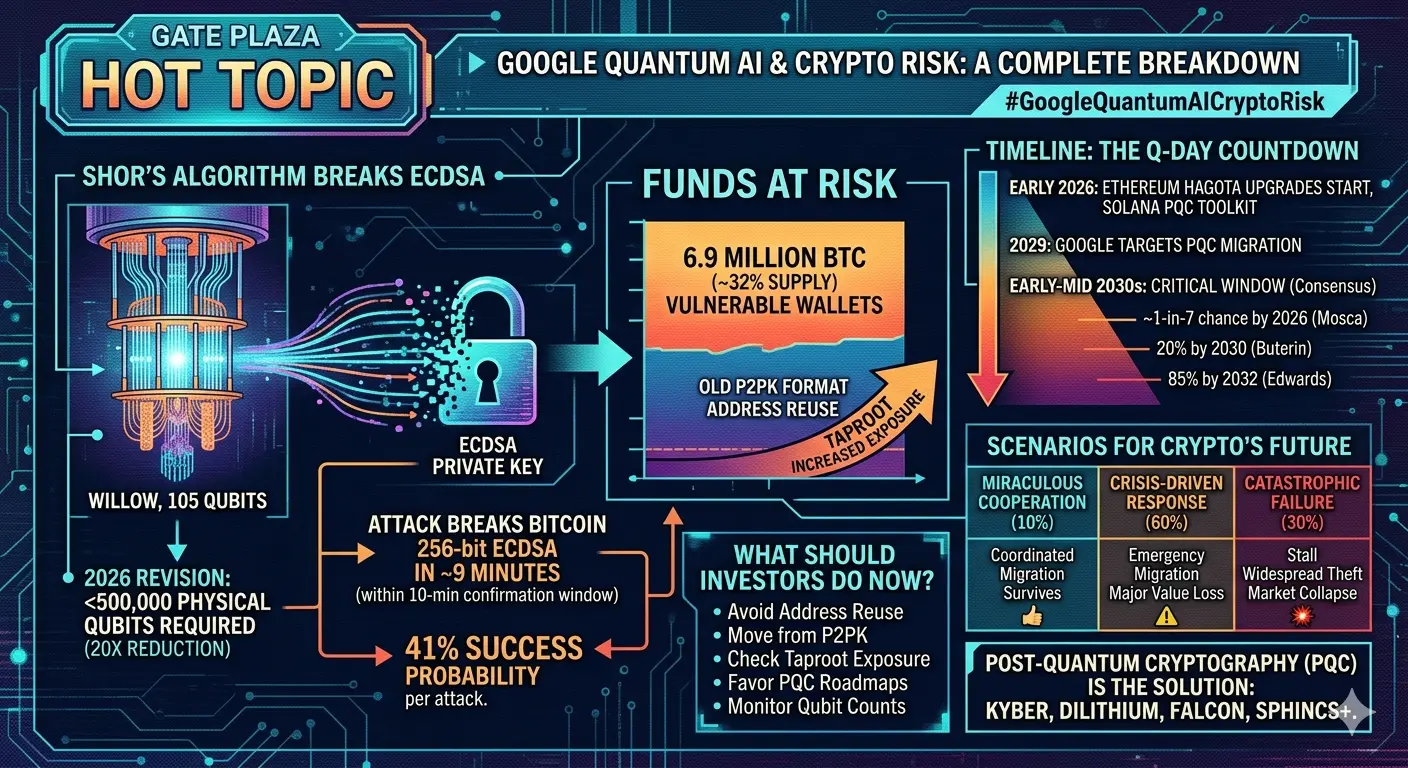
The most striking finding of the report is the dramatic decrease in resource estimates required for a quantum attack. While previously it was thought that such an attack would require millions of qubits, Google researchers now predict that fewer than 500,000 physical qubits would suffice; this represents an 80% reduction compared to previous estimates. According to the theoretical scenario presented in the study, a quantum computer with sufficient power could crack a Bitcoin private key in approximately 9 minutes. Since this time is shorter than the Bitcoin network's block confirmation time, it poses a serious risk, especially for targeted attacks that could exploit vulnerabilities arising at the transaction stage. Similarly, it is estimated that even some of the largest wallets on Ethereum could be cracked in as little as 9 days. At the heart of the threat lies Elliptic Curve Cryptography (ECDSA), which secures these networks. This encryption standard, virtually unbreakable for classical computers, becomes vulnerable to quantum computers capable of running Shor's algorithm.
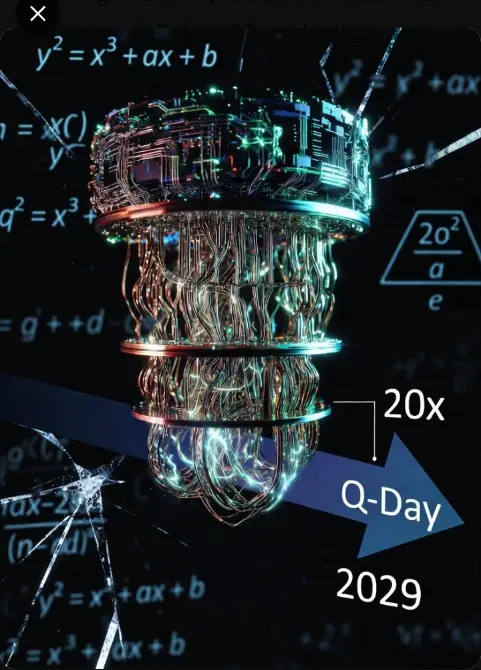
Google's clear warning also offers a roadmap for the crypto industry. The company has set 2029 as a critical target for transitioning to quantum-resistant encryption within its ecosystem. This date is considered the first potential threshold where the threat could move from theory to practice, rendering the current encryption infrastructure obsolete. In this context, it is emphasized that 2026–2028 should be the year of planning and preparation, and 2029 the year of full adaptation. The developer community responded quickly to this call. Bitcoin core developers have begun working on a new Bitcoin Improvement Proposal (BIP) to strengthen the network against quantum attacks and are testing quantum-resistant security models on test networks. The general consensus within the community is that there is no need for panic, but the adaptation process should definitely not be delayed.
Amidst this technological revolution, discussions focus not only on risks but also on potential opportunities. Figures like Elon Musk, who have commented on the issue, also raise "positive" scenarios, such as the possibility that quantum computers could one day be used to recover lost or inaccessible private keys. This reminds us that the threat is only one side of the coin and that the quantum age can open new and unexpected doors.
In conclusion, Google's report is not a harbinger of a doomsday scenario, but rather a wake-up call. For the crypto world, the question is now "is there a threat?" The question is not, "When will this threat become a reality, and how prepared will we be for that day?" The acceleration of the quantum risk timeline has made the transition to post-quantum cryptography one of the industry's top priorities. If Bitcoin, Ethereum, and other major networks can successfully manage this fundamental and inevitable transformation, they will have secured the long-term safety and future of digital assets.
#CreatorLeaderboard
The quantum threat, long considered a theoretical risk by the cryptocurrency ecosystem, has become a concrete and urgent issue with a technical report published by the Google Quantum AI team on March 31, 2026. The report reveals that the encryption systems protecting giant blockchains like Bitcoin and Ethereum can be broken with significantly less quantum computing power than previously assumed, forcing the industry to rewrite its security timeline. These findings demonstrate that a transition to post-quantum cryptography (PQC) is no longer a preference, but an urgent necessity.
The most striking finding of the report is the dramatic decrease in resource estimates required for a quantum attack. While previously it was thought that such an attack would require millions of qubits, Google researchers now predict that fewer than 500,000 physical qubits would suffice; this represents an 80% reduction compared to previous estimates. According to the theoretical scenario presented in the study, a quantum computer with sufficient power could crack a Bitcoin private key in approximately 9 minutes. Since this time is shorter than the Bitcoin network's block confirmation time, it poses a serious risk, especially for targeted attacks that could exploit vulnerabilities arising at the transaction stage. Similarly, it is estimated that even some of the largest wallets on Ethereum could be cracked in as little as 9 days. At the heart of the threat lies Elliptic Curve Cryptography (ECDSA), which secures these networks. This encryption standard, virtually unbreakable for classical computers, becomes vulnerable to quantum computers capable of running Shor's algorithm.
Google's clear warning also offers a roadmap for the crypto industry. The company has set 2029 as a critical target for transitioning to quantum-resistant encryption within its ecosystem. This date is considered the first potential threshold where the threat could move from theory to practice, rendering the current encryption infrastructure obsolete. In this context, it is emphasized that 2026–2028 should be the year of planning and preparation, and 2029 the year of full adaptation. The developer community responded quickly to this call. Bitcoin core developers have begun working on a new Bitcoin Improvement Proposal (BIP) to strengthen the network against quantum attacks and are testing quantum-resistant security models on test networks. The general consensus within the community is that there is no need for panic, but the adaptation process should definitely not be delayed.
Amidst this technological revolution, discussions focus not only on risks but also on potential opportunities. Figures like Elon Musk, who have commented on the issue, also raise "positive" scenarios, such as the possibility that quantum computers could one day be used to recover lost or inaccessible private keys. This reminds us that the threat is only one side of the coin and that the quantum age can open new and unexpected doors.
In conclusion, Google's report is not a harbinger of a doomsday scenario, but rather a wake-up call. For the crypto world, the question is now "is there a threat?" The question is not, "When will this threat become a reality, and how prepared will we be for that day?" The acceleration of the quantum risk timeline has made the transition to post-quantum cryptography one of the industry's top priorities. If Bitcoin, Ethereum, and other major networks can successfully manage this fundamental and inevitable transformation, they will have secured the long-term safety and future of digital assets.
#CreatorLeaderboard