Shrinkflation, a phenomenon featuring products shipped in smaller quantities but sold at the same prices, is starting to hit the Brazilian economy, as inflation has taken a turn for the worse due to the ongoing conflict in the Middle East.
Key Takeaways:
- With Brazil’s March inflation at 4.14%, firms adopted shrinkflation, ensuring prolonged consumer pain next.
- Bloomberg notes that March food prices surged 1.56% due to Middle East war costs, ensuring tighter budgets next.
- Despite a 7% Jan. wage hike, angry voters blame Lula da Silva, making his upcoming reelection bid uncertain.
Shrinkflation Hits Brazilian Households Even as Lula Jumps to Lighten the Burden
Shrinkflation, a term made famous by former U.S. President Joe Biden during his last reelection bid, has entered the Brazilian economy.
According to reports, companies have started changing their presentation to include fewer quantities, maintaining the same prices to keep consumers buying their products, unaware of this form of hidden inflation.
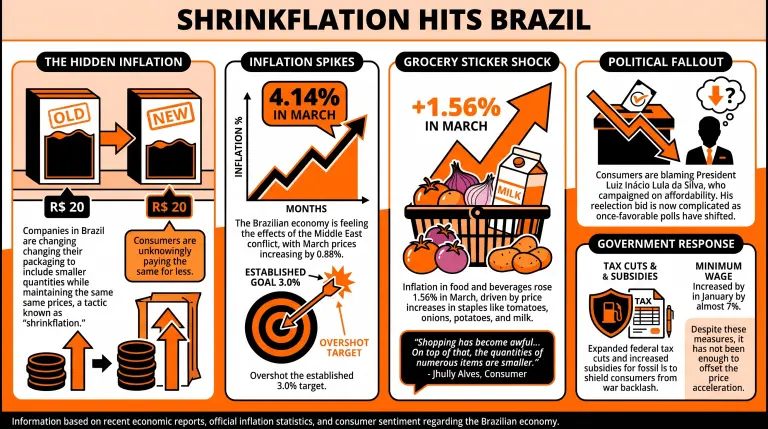
The phenomenon surges as inflation has taken a turn for the worse, with the Brazilian economy feeling the effects of the ongoing conflict in the Middle East. In March, prices rose by 0.88%, with annual inflation hitting 4.14%, above the 3.0% goal established by the central bank.
Consumers are getting the short end of the stick in this situation, with groceries getting way too expensive even while most of the price growth comes from energy commodities. Jhully Alves, a 40-year-old cleaning lady, told Bloomberg that shopping had become “awful.” “Milk, coffee, and sugar are more expensive again, and laundry detergent, too. On top of that, the quantities of numerous items are smaller,” she stressed. Inflation in food and beverages rose 1.56% in March, pushed by increases in tomatoes, onions, potatoes, and milk, according to official sources.
People have started blaming President Luiz Inácio Lula da Silva for these woes, as he campaigned on the premise of affordability and bringing better times for the Brazilian people. But now the polls, which favored him, have changed, and the outcome of the election is uncertain, complicating his reelection bid.
Lula has not been sitting idly to combat this price acceleration, as he increased the minimum wage in January by almost 7% and expanded federal tax cuts while increasing subsidies for fossil fuels to shield consumers from the war backlash. Nonetheless, it seems that it has not been enough.
Disclaimer: The information on this page may come from third parties and does not represent the views or opinions of Gate. The content displayed on this page is for reference only and does not constitute any financial, investment, or legal advice. Gate does not guarantee the accuracy or completeness of the information and shall not be liable for any losses arising from the use of this information. Virtual asset investments carry high risks and are subject to significant price volatility. You may lose all of your invested principal. Please fully understand the relevant risks and make prudent decisions based on your own financial situation and risk tolerance. For details, please refer to
Disclaimer.
Related Articles
U.S. Energy Department to Release Third Batch of Strategic Petroleum Reserve, Loaning Over 26M Barrels to Nine Oil Companies
The U.S. Department of Energy will loan over 26 million barrels of crude oil to nine companies, marking the third release of strategic reserves since the U.S.-Israel-Iran conflict began, aimed at moderating oil prices. Delivery is set for May and June 2026.
GateNews2h ago
Trump Rules Out Tolls on Strait of Hormuz
President Trump announced that U.S. negotiations about a potential conflict with Iran will persist over the weekend. He firmly denied any possibility of Iran imposing tolls on vessels in the Strait of Hormuz.
GateNews4h ago
US Seeks Increased Namibian Uranium Imports to Power AI-Driven Nuclear Plants
The U.S. is contemplating increased uranium imports from Namibia to support nuclear energy for AI data centers, as China dominates Namibia's uranium sector. Rising uranium prices are reviving mining interests, despite water supply challenges in the arid region.
GateNews5h ago
U.S. Stock Indices Post Strong Gains, Nasdaq Extends 13-Day Rally; Oil Prices Plunge on Strait of Hormuz Reopening
Gate News message, April 18 — U.S. stock indices closed sharply higher on April 17, with the S&P 500 rising 1.2% to 7,126.06, the Nasdaq Composite gaining 1.52% to 24,468.48, and the Dow Jones Industrial Average climbing 1.79% to 49,447.43. The Nasdaq extended its winning streak to 13 consecutive tr
GateNews6h ago
Three Airlines Collapse as Jet Fuel Crisis Triggers Thousands of Flight Cancellations
In 2026, the aviation industry faces a crisis as three airlines, EcoJet UK, Royal Air Philippines, and Dove Airlines, entered administration or liquidation due to soaring jet fuel prices linked to geopolitical tensions. This has led to thousands of flight cancellations and increased operational costs for remaining carriers.
GateNews13h ago
Traders Bet $760M on Falling Oil 20 Minutes Before Iran's Hormuz Strait Announcement
On April 17, investors sold significant Brent crude futures amid news of open passage in the Strait of Hormuz, causing prices to drop sharply. Lawmakers are investigating potential insider trading linked to these trades before key policy announcements.
GateNews15h ago


