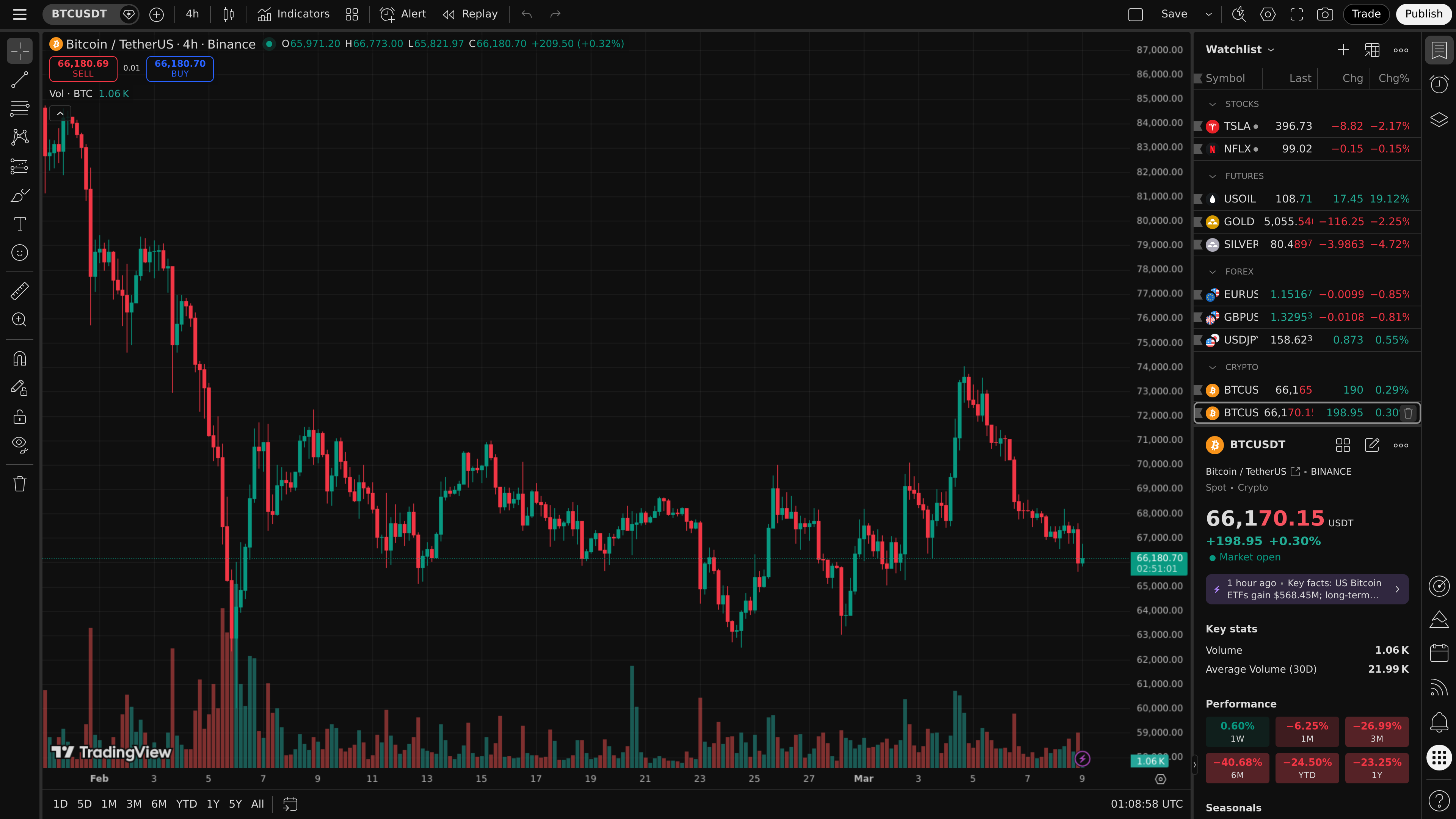
Bitcoin has been gradually declining from its high of $68,200, falling below $65,700 during the session. It temporarily rebounded to $66,323 in the early trading hours. Ethereum retreated from $2,134 to a bottom of $2,055, then stabilized, currently at $2,073. Over the past 24 hours, futures liquidations reached $342 million. The Fear & Greed Index dropped to 8, indicating extreme fear, with the market remaining in this state for multiple weeks. Rising oil prices pushed the US Dollar Index (DXY) up to 99.5, putting pressure on risk assets across the board.
(Background: Bitcoin sharply dropped from $65,000, Ethereum fell below $1,900, and the entire February market was in extreme panic.)
(Additional context: Bloomberg reports that the US-Iran conflict has limited impact on Bitcoin, which remains range-bound between $60,000 and $70,000.)
Table of Contents
Toggle
- $342 million liquidated, Fear Index at 8
- Rising oil prices strengthen the dollar, risk assets under pressure
- Trump: Oil prices will “drop back very soon”
- Asian stock markets open sharply lower
- Market outlook
Bitcoin started its decline around 6 PM on Sunday from the $68,200 level, briefly falling below $65,700. It then rebounded slightly, and in early Monday trading, it was at $66,323, down about 2.8% in 24 hours. The drop of nearly 2% within just 15 minutes occurred almost simultaneously with the surge in oil prices.
Ethereum followed a similar weak trend, falling from $2,134 overnight to a low of $2,055 before stabilizing. It is currently at $2,073, down approximately 2.9% over 24 hours. Notably, Bitcoin surged to $73,770 last week amid escalating US-Iran tensions but then retraced all gains over four consecutive days.
$342 Million Liquidated, Fear Index at 8
In the past 24 hours, futures market liquidations totaled $342 million, mostly long positions. The Crypto Fear & Greed Index remains at 8, in the “Extreme Fear” zone, and has been stuck in this state for several weeks. Since mid-February, the index has stayed below 15, which historically indicates a mid-term bottom, but does not guarantee an immediate rebound.
Rising Oil Prices Strengthen the Dollar, Risk Assets Under Pressure
The US Dollar Index (DXY) rose to 99.5 during Monday’s Asian session, up 0.6% for the day, reaching its highest since January 20. Most major currencies weakened:
- EUR/USD fell 0.7% to 1.1532
- GBP/USD fell 0.6% to 1.3313
- AUD/USD fell 0.7% to 0.6977
- USD/JPY rose 0.3% to 158.33
The main driver was rising oil prices. Due to escalating US-Iran tensions, Iraq warned that about 3 million barrels per day of production in the Hormuz Strait could be disrupted. WTI crude futures surged to $113.7 per barrel, the highest since April 2022 during the Russia-Ukraine conflict. The increase in oil prices boosted inflation expectations, prompting capital to flow into the safe-haven dollar, which compressed valuations of risk assets including Bitcoin.
Trump: “Oil Prices Will Drop Very Soon”
According to ABC News, Trump told reporters on Saturday:
We expect oil prices to go up, and they did. But they will also come down, and very quickly.
Trump also denied the need to tap into strategic petroleum reserves, stating, “We have a lot of oil, this country’s reserves are incredible, and it will return to normal very soon.” The market responded tepidly, with the dollar continuing its strength and risk assets remaining under pressure.
Asian Stock Markets Open Sharply Lower
Asian markets opened sharply down on Monday:
- Nikkei 225 down 1,031.72 points (-1.85%) at 54,589.12
- KOSPI down 368.07 points (-6.59%) at 5,216.8
A single-day drop of over 6% on KOSPI is rare, indicating that the surge in oil prices has directly impacted export-driven economies, transmitting pressure into the stock markets.
Market Outlook
Currently, the market is in a “consolidation vacuum” — lacking clear bullish catalysts, but the Fear & Greed Index remains at extreme lows. If oil prices break above $110 and the dollar index stabilizes above 100, Bitcoin could test the $62,000–$64,000 range. Conversely, if tensions between the US and Iran ease and oil prices fall, a weaker dollar could provide room for risk assets to recover, with BTC potentially retesting $68,000–$70,000.
In the short term, the persistent extreme fear indicated by the Fear Index below 10 warrants attention — historical data shows that after more than three weeks of extreme panic, markets often experience a technical rebound within 2 to 4 weeks, depending on macroeconomic conditions.
Disclaimer: The information on this page may come from third parties and does not represent the views or opinions of Gate. The content displayed on this page is for reference only and does not constitute any financial, investment, or legal advice. Gate does not guarantee the accuracy or completeness of the information and shall not be liable for any losses arising from the use of this information. Virtual asset investments carry high risks and are subject to significant price volatility. You may lose all of your invested principal. Please fully understand the relevant risks and make prudent decisions based on your own financial situation and risk tolerance. For details, please refer to
Disclaimer.


