


SANAE Meme Coin Plummets 58%! Sanae Takashi Denies Issuing Coins, Japanese Financial Services Agency Intervenes in Investigation
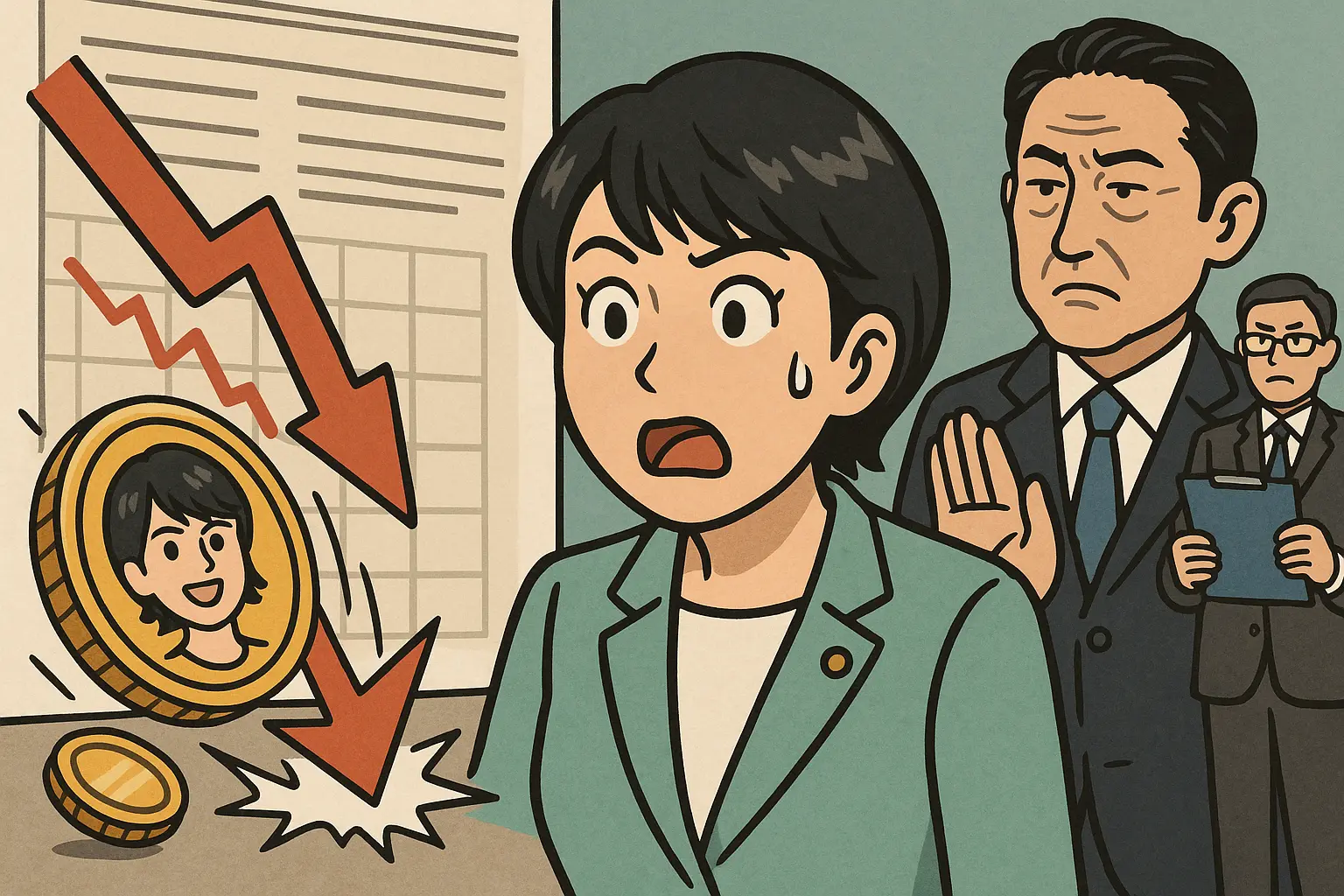
Japanese Prime Minister Sanae Takaichi publicly stated on the X platform on March 2 that she and her office had no knowledge of the SANAE TOKEN named after her. The post received over 63 million views. After the statement was issued, SANAE meme coin nearly plummeted to $0.0058, a 58% drop. Japan’s Financial Services Agency (FSA) has intervened and found that the issuer lacked the necessary cryptocurrency exchange license.
Event Timeline: The Birth and Collapse of SANAE TOKEN
 (Source: Phantom)
SANAE TOKEN was issued on February 25, 2025, on Solana by NoBorder DAO, a community led by serial entrepreneur Yuji Murokuchi, as part of the “Japan is Back” project. The project website displayed Prime Minister Sanae Takaichi’s name and illustration portrait. Murokuchi previously claimed on his YouTube show “REAL VALUE” that he had contacted Takaichi’s office, fueling speculation that the token might have official support, prompting some investors to buy in.
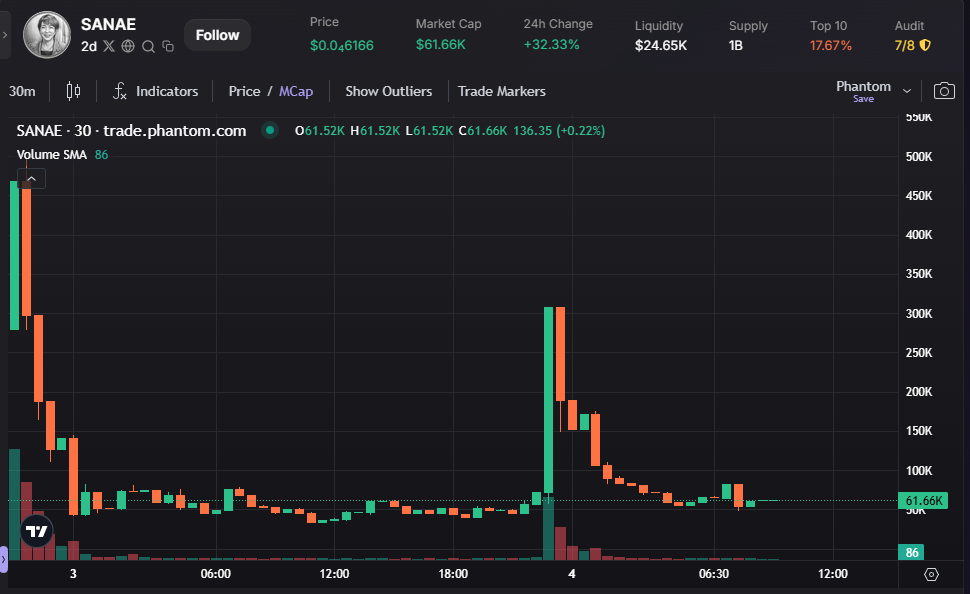
Takaichi’s public denial on March 2, 2026, changed the situation entirely. Following her statement, SANAE TOKEN’s market cap plummeted to about $62,000 by March 4, with only $25,000 in liquidity remaining.
The FSA’s investigation revealed deeper issues. The token was designed by a company called “neu,” whose CEO, Ken Matsui, issued a public apology on March 3, stating that all operations were handled by that company. Murokuchi reposted the statement, pledged to cooperate with media investigations, and said he would face the matter with facts rather than emotions.
Key Timeline of the SANAE TOKEN Collapse
- February 25, 2025: SANAE TOKEN launched on Solana, website features Prime Minister’s name and portrait
- March 2, 2026: Takaichi publicly denies involvement; post exceeds 63 million views; token drops 58%
- March 3, 2026: CEO of “neu” Ken Matsui issues public apology; FSA begins investigation
- March 4, 2026: Market cap drops to about $62,000; liquidity remains at $25,000
- Regulatory findings: “neu” was not registered with the FSA as a crypto exchange as of January and had not submitted any application
- Token structure issue: 65% of total supply held by operators
Global Political Meme Coin Crisis: SANAE Just the Latest
Japan’s SANAE TOKEN incident is not isolated but part of a recent wave of global political meme coin scandals. In the U.S., Donald Trump launched the $TRUMP token on Solana in January 2025, with 80% of the supply held by his family and partners, earning over $350 million. In Argentina, Milei promoted the $LIBRA token in February 2025, which reached a market cap of $4.5 billion before crashing 89% within three hours. Insiders reportedly cashed out about $100 million, and Milei is now under fraud investigation and impeachment calls.
Japan’s case may offer regulators a more effective enforcement path. Under Japan’s Payment Services Act, selling or exchanging crypto assets requires registration with the FSA. Violators face up to five years in prison or a fine of 5 million yen, regardless of token type. This means the FSA can act against unlicensed operators without classifying tokens as securities, unlike the U.S. framework that relies on securities designation, providing a model for global regulators.
Frequently Asked Questions
Why did SANAE TOKEN drop 58%?
Prime Minister Sanae Takaichi publicly denied on the X platform that she authorized the issuance of tokens bearing her name and portrait, breaking the public’s expectation of official endorsement and triggering a massive sell-off. The post’s over 63 million views amplified the impact of her denial, causing the token to lose market support almost immediately.
What is the focus of the FSA investigation?
The FSA is investigating whether “neu” operated without the necessary crypto exchange license. Under Japan’s Payment Services Act, selling or exchanging crypto assets requires registration with the FSA. Violators face up to five years in prison or a 5 million yen fine.
What does the SANAE TOKEN incident reveal about global meme coin regulation?
Japan’s approach shows that even without specific laws targeting political meme coins, existing crypto asset trading licensing systems can serve as effective regulatory tools. They can hold unlicensed operators accountable without relying solely on securities classification. This framework offers a valuable reference for other regulators facing similar issues.
Related Articles
Dark Week for Asian Stocks! Korea locks out margin traders, Taiwan's many frogs are crying out, and Japan's NISA investors are feeling the pain of the stock market crash
ETH 15-minute short-term rally up 1.23%: Institutional capital inflows and protocol upgrade expectations drive price rebound
BTC 15-minute increase of 0.83%: Short covering and on-chain large funds resonate to drive the move
ETF Frenzy for Capital Inflow, Strong Bearish Momentum in Futures: Bitcoin Surges Past $69,000, Can the Short-term Rebound Continue?