


Bitcoin hits $66,000 and struggles to hold steady; three Federal Reserve officials warn: Iran war makes rate cuts even more distant
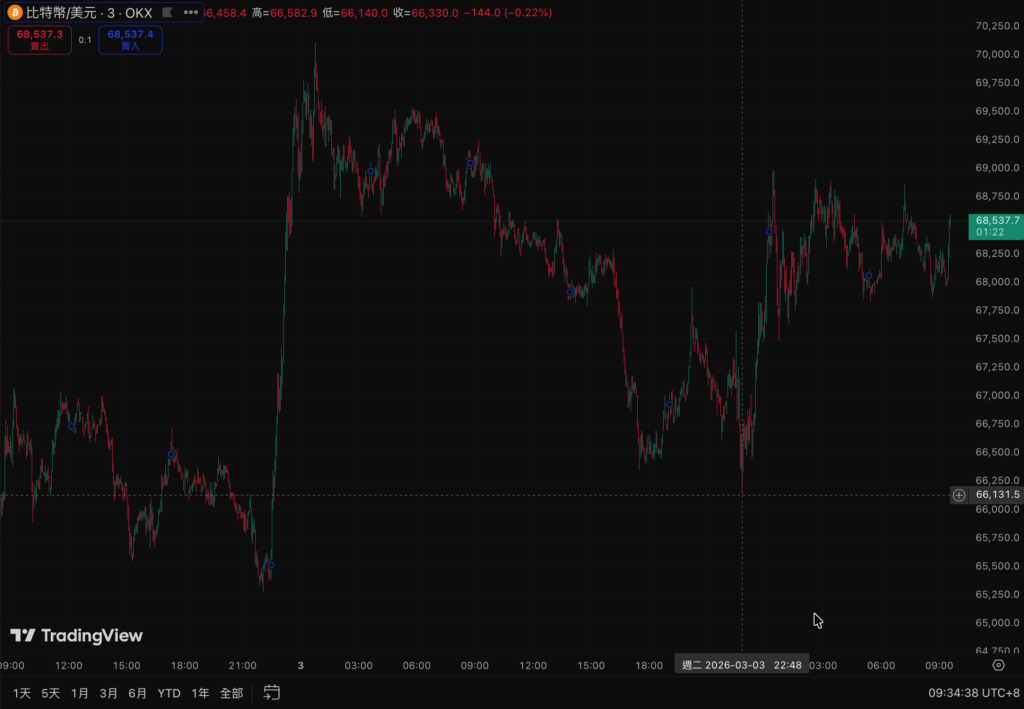
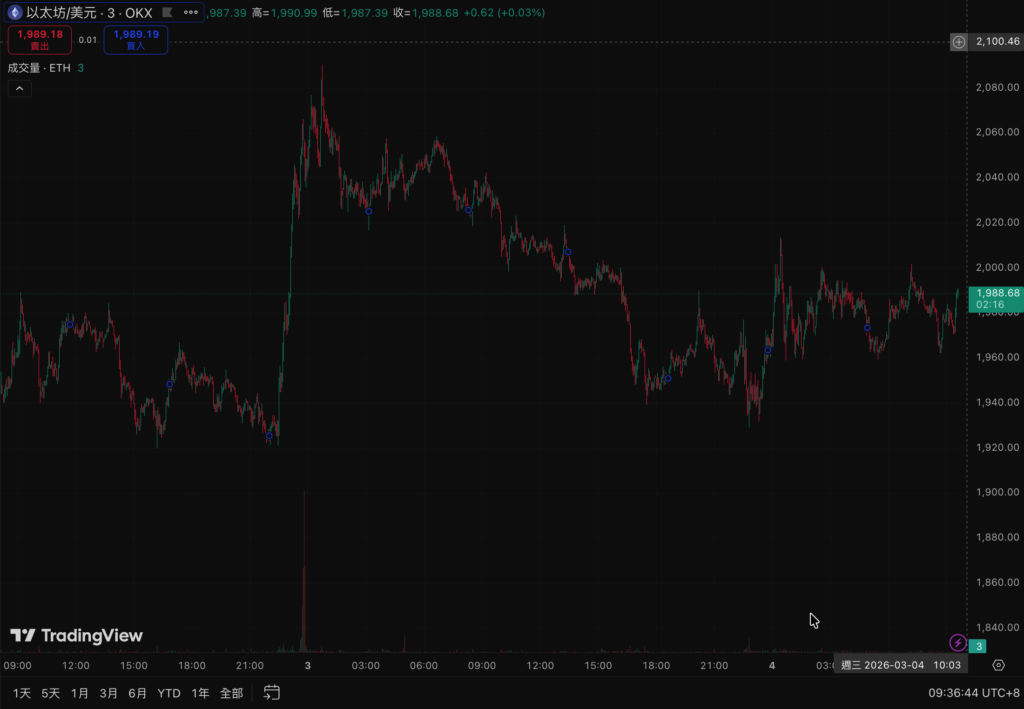
Bitcoin, after plunging to $66,140 last night, rebounded to around $68,549 and has been fluctuating since, currently at $68,549. Ethereum (ETH) followed a similar pattern, dropping from $1,929 to around $2,000 and then retreating, now at $1,990.
Dragged down by the sharp decline in U.S. stocks, gold—traditionally seen as a safe haven—also unexpectedly fell by 6% last night, indicating that the impact of the Iran war situation on the market has entered a highly uncertain phase—investors are even losing confidence in safe assets.
Rising oil prices boost the dollar, suppress gold gains
Monex USA forex strategist Juan Perez wrote that the surge in oil prices caused by Middle East conflicts is a key driver of recent dollar appreciation. He explained that since most crude oil is priced in dollars, the shipping difficulties in the Strait of Hormuz will push up oil prices, leading to increased dollar borrowing demand, which strengthens the dollar and suppresses gold’s rally.
Perez warned that the market fears this conflict could last longer than previously expected. He also pointed out that emerging market currencies, which performed well until last week, are now also weakening against the dollar.
Three Fed officials issue warnings: inflation risks intensify
Williams, President of the New York Fed, said that persistent deviation of inflation from target does pose a risk of changing inflation expectations, but “so far, this has not happened.” He still believes the Fed’s policy rate is slightly above the neutral level. Regarding the Iran conflict, Williams noted that its impact will be reflected through oil prices, financial market conditions, and asset prices, emphasizing:
Oil prices will indeed influence inflation, and this impact will alter the near-term inflation outlook. We need to assess the persistence of oil price effects.
Schmied, President of the Kansas City Fed, took a more hawkish stance. He reiterated that inflation “remains too high,” with recent data showing inflation rates nearly one percentage point above the Fed’s 2% target. Schmied stated plainly:
Inflation has been above the Fed’s target for nearly five years. I see no reason for complacency.
He pointed out that inflationary pressures are evident in sectors affected by tariffs. While optimistic that AI and other emerging technologies will eventually bring growth without inflation, “we are not there yet.” Schmied also warned that aging populations and high demand for healthcare workers are squeezing industry profits, potentially leading to further inflation risks—by 2025, healthcare nearly accounts for all new jobs created.
Schmied additionally mentioned that large fiscal stimulus measures might be introduced in 2026, and highlighted that “uncertainty about employment and AI is greater than concerns about the economy.”

Related Articles
Bitcoin ETF attracts $1.5 billion in five days: Institutions and Baby Boomer funds support BTC price
Top 3 cryptocurrency price predictions: BTC, ETH, and XRP are struggling to find a trend amid a prolonged accumulation phase
Bitcoin fell below $63,000 and rebounded to around $70,000, with institutional funds continuing to flow in to support the BTC price.
BTC 15-minute increase of 0.79%: ETF capital net inflow and institutional buying drive short-term rally
Bitcoin implied volatility has increased from approximately 38.5% to 53.1%.
Bitcoin mining companies start reducing BTC holdings: Core Scientific sells nearly 2,000 BTC