


Bitcoin ATMs face a nationwide ban, Minnesota legislation responds to scam crisis
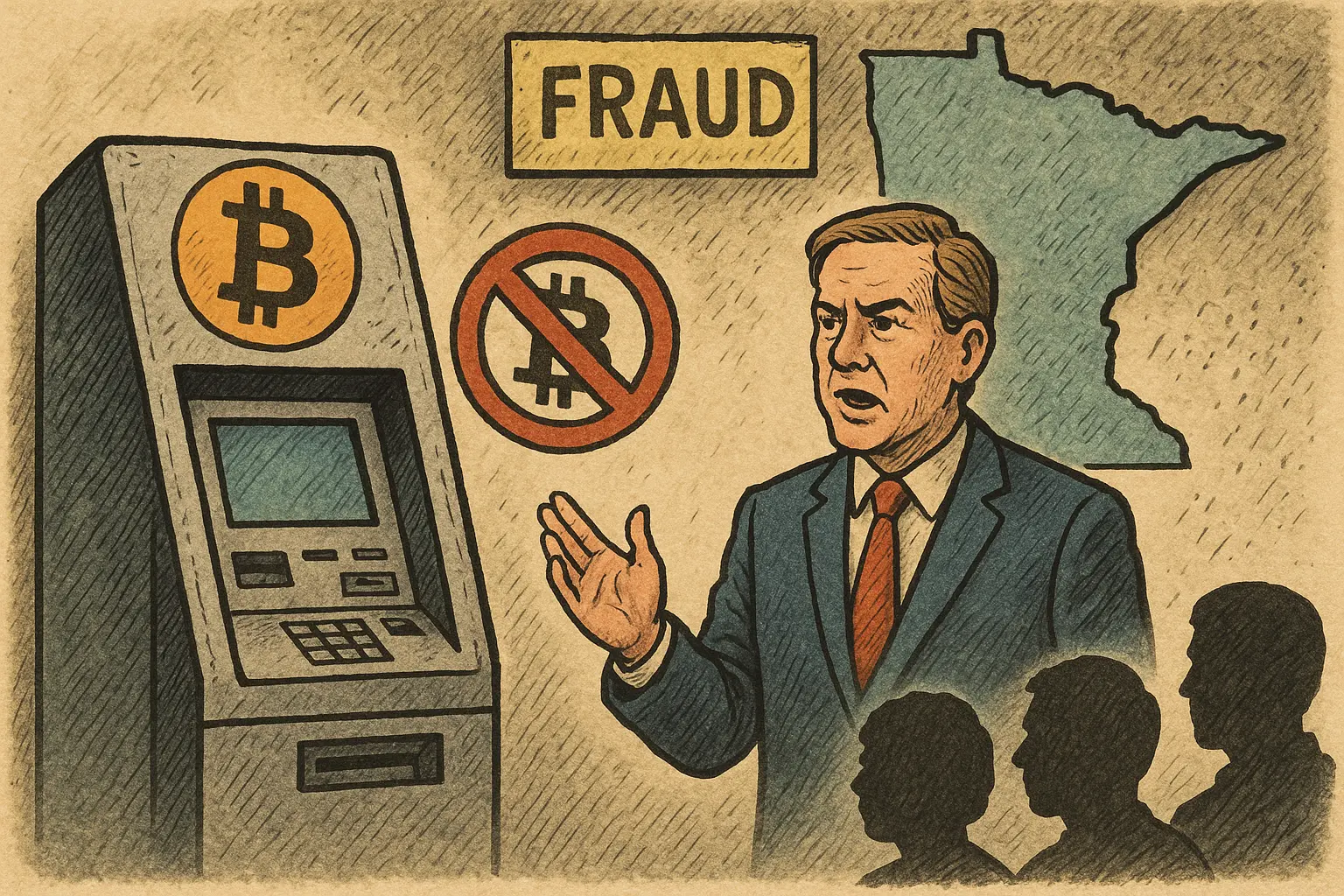
U.S. Rep. Erin Koegel of Minnesota introduced HF 3642 bill this week, which proposes a complete ban on all physical machines in the state that allow users to buy cryptocurrencies with cash. If passed, Minnesota will become the first state in the nation to implement a state-level blanket ban on Bitcoin ATMs, following the nationwide ban introduced by New Zealand last year. There are currently about 430 such machines in Minnesota.
HF 3642 Act: Legislative logic from elder victimization to full-scale legislation
This is not the first time Minnesota has regulated Bitcoin ATMs. In 2024, the state has passed a regulatory framework that stipulates a daily transaction cap of $2,000 for new customers, a refund mechanism, and a business licensing system. However, the continued increase in fraud cases has prompted lawmakers to turn to more aggressive blanket ban options.
During Thursday’s legislative hearing, law enforcement officials provided several typical cases describing elderly victims being lured into by scammers posing as government officials or technical support workers to continuously transfer money through Bitcoin ATMs. A detective testified that a resident sent Bitcoin to scammers ten times in six months, losing 50% of his monthly income as a result, and was eventually found in a trance at a gas station and had to rely on government assistance. A city police chief pointed out in a written statement: “The ability of law enforcement to recover funds after they have been transferred is extremely limited.”
The core point of contention in the HF 3642 bill
Legislative purpose: Responding to the rising public safety needs of seniors affected by Bitcoin ATM scams
Scope of the ban: All physical machines that allow users to purchase cryptocurrencies with cash are prohibited, regardless of whether the operator is compliant
The first case in the United States: If passed, it will be the first state-level blanket ban in the United States, following New Zealand’s national ban model
Scale of loss: Bitcoin ATM fraud losses across the United States reached $3.33 billion last year, with about 430 machines in Minnesota
Rural community impact: Lawmakers note that millions of dollars may have flowed out of rural communities
Bitcoin Depot’s lawsuit and industry compliance pressure are heating up across the board
The proposed legislation in Minnesota is a microcosm of the regulatory tightening the Bitcoin ATM industry in the United States as a whole. Bitcoin Depot, North America’s largest Bitcoin ATM operator, announced this week that it will proactively strengthen its compliance process by requiring customers to provide personally identifiable information starting with every transaction.
However, just before that, Massachusetts Attorney General Andrea Campbell filed a lawsuit this month, accusing Bitcoin Depot of knowingly facilitating cryptocurrency scams and “removing fraud prevention safeguards to enrich its own pockets.” Bitcoin Depot denies the allegations, emphasizing compliance and consumer protection as its core business principles.
Additionally, the Arizona Attorney General has issued an urgent warning, stating that Arizona residents lost more than $1.77 million in 2024 due to cryptocurrency ATM scams. This series of events shows that the Bitcoin ATM industry is facing unprecedented regulatory and legal pressure, and how to effectively prevent fraud while maintaining business has become a key issue for the industry’s survival.
Frequently Asked Questions
What is the content of the Minnesota HF 3642 bill?
The HF 3642 bill proposes a blanket ban on all physical machines within Minnesota that allow users to purchase cryptocurrencies with cash. Previously, Minnesota had established relevant regulatory frameworks in 2024, including a daily transaction limit of $2,000 for new customers, a refund mechanism, and a business licensing system, but fraud cases continue to rise, prompting lawmakers to seek tougher solutions.
Why is Minnesota considering a blanket ban instead of further regulation?
Testimony from law enforcement officials at legislative hearings reveals that existing regulatory frameworks are ineffective in deterring seniors from continued scams. Scammers impersonate government or technical support personnel to trick victims into continuous transfers, and once the funds are transferred through Bitcoin ATMs, the chances of law enforcement recovering them are extremely low.
How is Bitcoin Depot Responding to Regulatory Pressure?
Bitcoin Depot has announced that it will make it mandatory for customers to provide personally identifiable information starting with every transaction. However, the Massachusetts Attorney General has filed a lawsuit against him, accusing him of knowingly facilitating cryptocurrency scams. The company denies the allegations, emphasizing that compliance and consumer protection are core business principles.
Related Articles
U.S. 303-page Housing Bill Hidden CBDC Ban, White House Endorses
CLARITY Act deadline passed in March; stablecoin yield controversy hinders legislation
JPMorgan CEO Calls for Unified Regulatory Standards for Stablecoin Incentives
U.S. Court Rules: Uniswap is Not Responsible for Scam Tokens; Open-Source Smart Contracts Are Neutral Tools
Cracking down on 71% of illegal gambling! The UK Gambling Commission is considering using crypto payments to bring black market activities back into the compliant system
Senate Advances Housing Bill With CBDC Ban, Draws White House Backing