![]() Trusted Editorial content, reviewed by leading industry experts and seasoned editors. Ad Disclosure
Ethereum’s core backers have stepped up after a string of clever thefts that empty users’ wallets in seconds. A new link between the Ethereum Foundation and Security Alliance, known as SEAL, aims to make those quick hits harder to pull off. Reports say the move will widen who watches for threats and how quickly fixes are pushed out.
Trusted Editorial content, reviewed by leading industry experts and seasoned editors. Ad Disclosure
Ethereum’s core backers have stepped up after a string of clever thefts that empty users’ wallets in seconds. A new link between the Ethereum Foundation and Security Alliance, known as SEAL, aims to make those quick hits harder to pull off. Reports say the move will widen who watches for threats and how quickly fixes are pushed out.
Related Reading: Super Bowl Karaoke: Coinbase Ad Sparks Mixed Reactions## Ethereum Foundation Joins SEAL
According to coverage from multiple outlets, the Foundation is sponsoring a dedicated security engineer within SEAL to chase down wallet drainers and phishing networks.
SEAL will receive funding to bring in one specialist whose role centers on tracking harmful infrastructure. That includes fake websites, hidden scripts, and backend tools that allow funds to be pulled the moment a user signs the wrong request.
Based on reports, this work sits under the Trillion Dollar Security effort, which maps weak spots across user design, smart contracts, and social attack routes. The goal is simple. Turn scattered warnings into faster alerts that wallets can act on before damage spreads.
The Old Tricks Come Back With New Tweaks
Reports note that losses from drainer attacks fell last year, but attackers keep trying. Security trackers recorded a steep drop in stolen funds tied to wallet drainers during the past year.
That decline, however, did not end the threat. Groups behind these scams now rely on trusted web hosts, rapid page switching, and selective targeting that hides attacks from scanners.
Wallet teams noticed the pattern. Some defenses improved. Others lagged. The addition of a Foundation-backed engineer inside SEAL is meant to tighten response times when these tricks resurface.
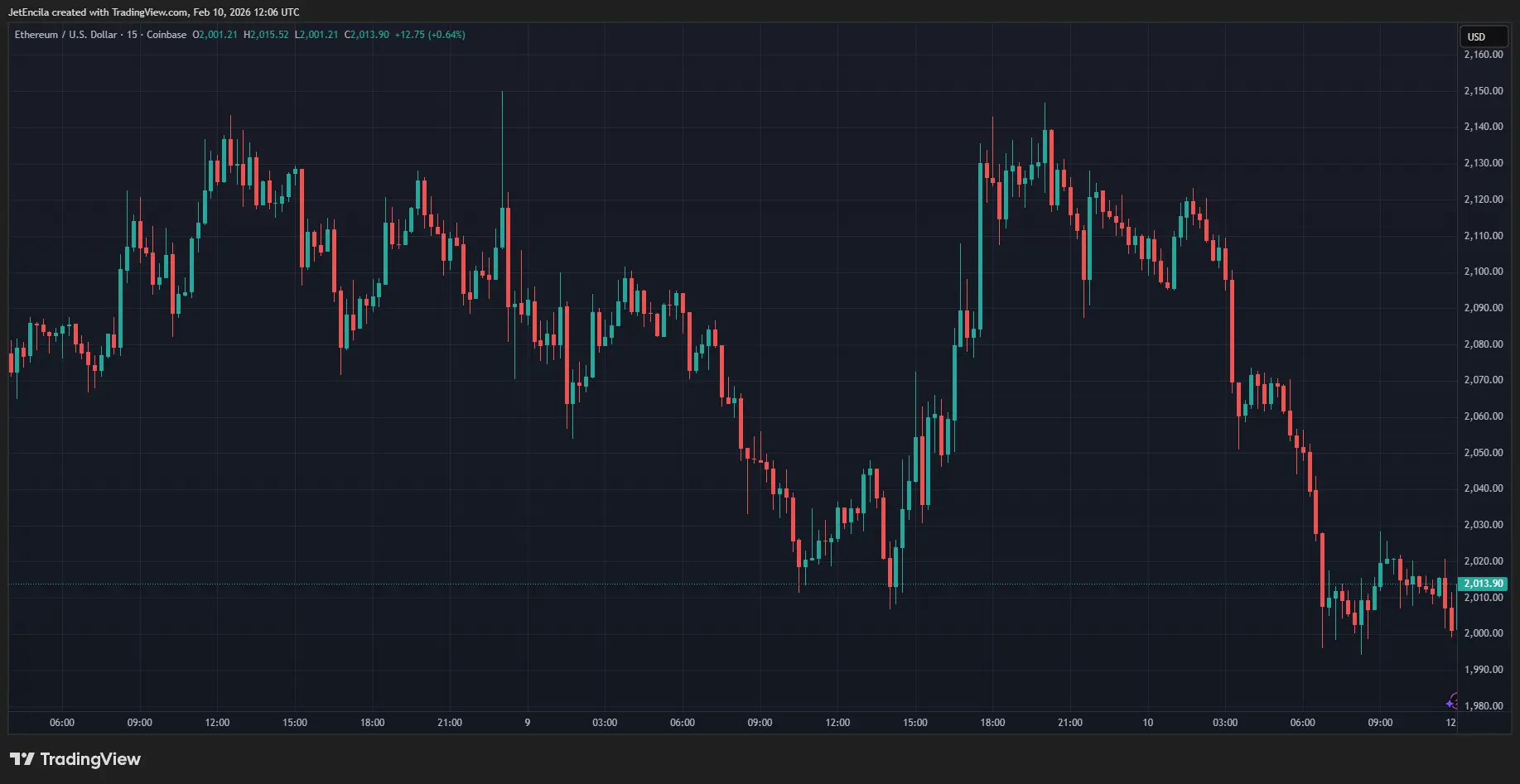 ETHUSD now trading at $2,013. Chart: TradingViewBehind the scenes, a shared view of attack data is being built. It shows how scams move, how long they stay active, and which wallets are being targeted. Parts of this system are visible to partners, while other sections remain restricted to prevent misuse.
Real-Time Alerts And A Shared Watchlist
Reports say the alliance will expand data sharing between wallets, researchers, and platforms. One focus is speed. When a harmful site or contract behavior is confirmed, alerts can be pushed out across connected wallets almost immediately.
Some blocks happen automatically. Others rely on human checks before warnings go live. That balance helps catch unusual attacks that automated tools might miss.
This approach mirrors strategies used in other security fields, where shared intelligence often cuts losses even if it cannot stop every breach. Wallet providers involved in earlier efforts have already seen fewer repeat attacks once data flows improved.
Related Reading: Crypto Markets Catch A Breather As Outflows Begin To Slow: Analysts### The Pressure Move
The partnership between the Ethereum Foundation and SEAL is not framed as a final fix. It is a pressure move. One designed to slow attackers, shorten response time, and give users a better chance to stay ahead of the next drain attempt.
Featured image from Unsplash, chart from TradingView
![]() Editorial Process for bitcoinist is centered on delivering thoroughly researched, accurate, and unbiased content. We uphold strict sourcing standards, and each page undergoes diligent review by our team of top technology experts and seasoned editors. This process ensures the integrity, relevance, and value of our content for our readers.
Editorial Process for bitcoinist is centered on delivering thoroughly researched, accurate, and unbiased content. We uphold strict sourcing standards, and each page undergoes diligent review by our team of top technology experts and seasoned editors. This process ensures the integrity, relevance, and value of our content for our readers.
Disclaimer: The information on this page may come from third parties and does not represent the views or opinions of Gate. The content displayed on this page is for reference only and does not constitute any financial, investment, or legal advice. Gate does not guarantee the accuracy or completeness of the information and shall not be liable for any losses arising from the use of this information. Virtual asset investments carry high risks and are subject to significant price volatility. You may lose all of your invested principal. Please fully understand the relevant risks and make prudent decisions based on your own financial situation and risk tolerance. For details, please refer to
Disclaimer.
Related Articles
End the L2 chaos! The Ethereum community proposes the "Economic Zone EEZ" to resolve cross-Rollup transactions and liquidity issues all at once.
Gnosis and Zisk proposed the Ethereum Economic Zone (EEZ) framework, aiming to address the fragmentation issues of Ethereum L2, allowing smart contracts on different Rollups to execute cross-chain synchronously in a single transaction without the need for bridging infrastructure. The EEZ reduces complexity by directly calling mainnet contracts and establishes the EEZ Alliance to coordinate multiple participants, but it faces challenges in ecological coordination and the test of standard unification.
動區BlockTempo19m ago
BNP Paribas Opens Access to Bitcoin and Ethereum ETNs for Retail Clients
BNP Paribas opens regulated access to bitcoin and ethereum through ETNs, giving retail clients exposure via traditional securities accounts while advancing a broader institutional blockchain strategy.
BNP Paribas Adds Crypto-Linked ETNs for Retail Investors
Growing access to regulated
Coinpedia25m ago
$40 billion in liquidity fragmentation, Ethereum L2 economic zone plan proposes integration path.
The Ethereum Economic Zone (EEZ) framework was proposed by the developers of Gnosis and Zisk. It aims to solve the fragmentation problem of Ethereum L2s, allowing smart contracts from different Rollups to execute across networks in a single transaction without needing to bridge. The framework includes three core mechanisms: bridge-less execution, shared infrastructure, and unified standards. Ethereum co-founder Vitalik Buterin criticized existing L2 roadmaps, emphasizing that a fundamental restructuring of the scaling architecture is needed, and his remarks have triggered disagreements across the industry.
MarketWhisper25m ago
Gate Daily (March 30): Washington sues Kalshi prediction market; Canada plans to ban cryptocurrency political donations.
Bitcoin prices remain weak, around $66,380 on March 30. The U.S. Kalshi prediction market is facing lawsuits, and Canada plans to ban cryptocurrency political donations entirely to reduce election risks. U.S. stocks have plummeted, with significant declines in tech stocks. Concerns over war and inflation have led to investor pessimism, and future attention must be paid to U.S. stock trends.
MarketWhisper29m ago
ETH rises 1.21% in 15 minutes: ETF inflows and whale fund transfers resonate to drive up the price.
2026-03-30 00:15 to 00:30 (UTC), within the 15-minute window ETH’s price surged 1.21% quickly, rising from 1981.9 USDT to 2023.69 USDT, with a range of 2.11%. Market attention increased in tandem; during this period, the ETH/USDT trading volume rose by about 15% compared with the previous interval, the buy order ratio reached 62%, overall volatility intensified, and it attracted a large influx of capital into the spotlight.
The primary driving force behind this unusual move is that ETF inflows hit a new high, while multiple institutions’ funds continued adding to their ETH holdings, causing the circulating supply to decrease significantly.
GateNews1h ago
A certain whale address purchased 5,039 ETH, bringing their total holdings to 138,200 ETH.
Gate News message, March 30, according to Onchain Lens monitoring, a whale address purchased 5,039 ETH for about $10 million. This address currently holds a total of 138,234 ETH, valued at approximately $274 million, and there is also a loan position of about $142.3 million.
GateNews1h ago


