


Russia's DPI technology blocks the internet! 10 crypto media outlets banned, netizens can only access via VPN
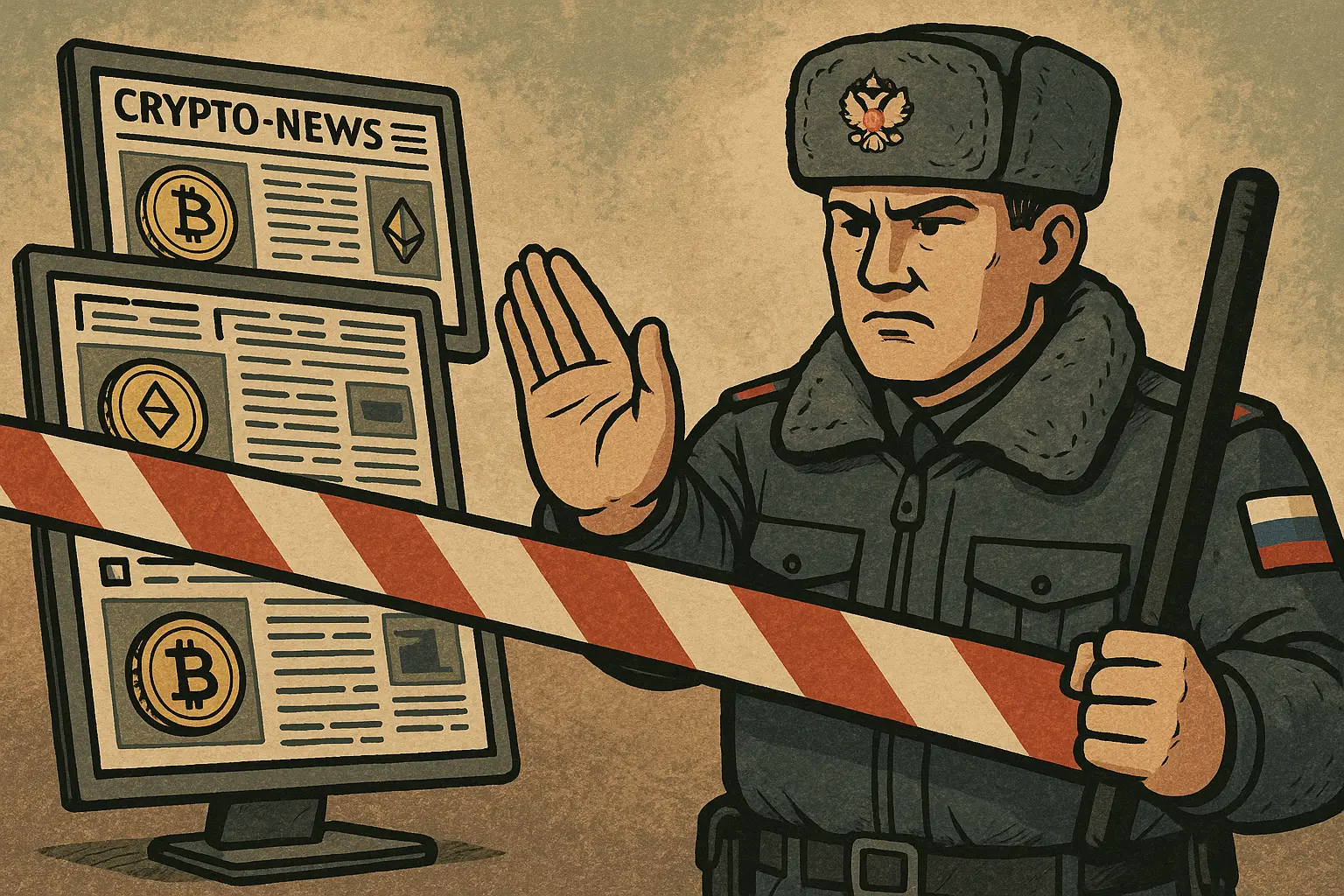
The Federal Service for Supervision of Communications, Information Technology and Mass Media (Roskomnadzor) is implementing covert blocking against crypto media. Outset PR testing shows that at least 11 international crypto media outlets, including Benzinga, Cointelegraph, CoinEdition, cannot load on home networks, yet they are not listed on the official blacklist. Technical diagnostics confirm this is a Deep Packet Inspection (DPI) blockade, and industry estimates suggest that up to a quarter of crypto publications may be affected.
Technical Testing Reveals Distributed Censorship Mechanism
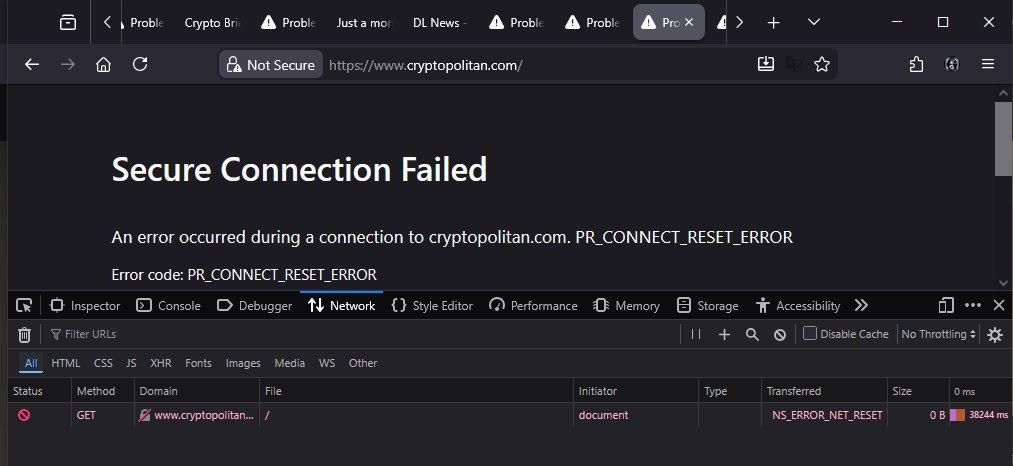
To determine whether these disruptions follow a broader pattern, an independent technical team tested the accessibility of multiple crypto media websites from different cities in Russia and conducted network-level diagnostics. Devices connected to home Wi-Fi networks were unable to load several web pages, but these same pages loaded normally when accessed via mobile data, corporate networks, or VPNs. This phenomenon clearly rules out website outages or server issues, pointing instead to human interference at the network layer.
The testing team selected a representative set of cryptocurrency and financial media, covering different languages, regions, and editorial styles. The affected list includes Benzinga, Coinness, FastBull, FXEmpire, CoinGeek, Criptonoticias, Cointelegraph, CoinEdition, The Coin Republic, AMBCrypto, and Nada News. This list is not exhaustive; industry analysts estimate that access restrictions could impact up to 25% of crypto and financial publications.
Notably, BeInCrypto was not affected during testing, providing an important contrast for evaluating selective blocking. This difference suggests that Russian authorities may be applying censorship selectively based on content bias, reporting angle, or other criteria, rather than imposing a blanket ban on all crypto media.
To further confirm the blocking mechanism, the team conducted deep packet inspection (DPI) circumvention tests. After enabling DPI circumvention tools, all previously inaccessible sites loaded normally. This strongly indicates that Russia’s restrictions rely on DPI-based filtering rather than simple DNS hijacking, IP blocking, or server-side attacks. DPI technology allows telecom providers to inspect the content and destination of network traffic and selectively block specific connections, making it more covert and harder to detect than traditional blocking methods.
Nationwide Testing Confirms Uneven ISP-Level Enforcement
To assess whether access varies by Internet Service Provider (ISP), the team invited 10 crypto users from Moscow, Saint Petersburg, Yekaterinburg, and Novosibirsk to test access without VPNs or other tools by visiting the same sites on domestic Wi-Fi networks. Results showed only two users experienced minimal issues, while the remaining eight could not load the sites at all.
This pattern is not a centralized shutdown but more consistent with a decentralized enforcement model, where different providers implement restrictions using their own systems and schedules. As a result, some networks completely block access, while others allow intermittent or ongoing access. This uneven enforcement may be motivated by various reasons:
Three Modes of ISP-Level Censorship in Russia
Full Block: Major state or pro-government telecoms like Rostelecom, MTS enforce the strictest bans.
Intermittent Restrictions: Some regional ISPs impose restrictions during certain times or on specific sites.
No Enforcement: A few small or enterprise-level ISPs have yet to receive directives or choose to delay enforcement.
Despite these regional and ISP differences, the network blocking behaviors are surprisingly similar. Users across different regions and providers encounter the same connection reset errors. This technical signature is typical of DPI-based censorship, where detection systems identify targeted domains or features and proactively terminate TCP connections, resulting in browser errors like “Connection Reset” or “Unable to Establish a Secure Connection.”
Absence of Official Blacklists and Political Implications
The most notable finding is that these affected sites are not listed on Roskomnadzor’s public blacklist. According to Russian law, authorities are obliged to include websites in a public registry and specify reasons for blocking, such as “extremist content,” “unauthorized gambling,” “drug information,” or “protection of minors.”
However, Roskomnadzor’s official website states a legal loophole: “According to Articles 65.1 and 65.2 of the Russian Federation Law on Communications, access to internet resources may be restricted. Information about such restrictions is not reflected in this public registry.” These legal provisions relate to “state security” and “counter-terrorism” emergency powers, allowing authorities to impose restrictions without public disclosure.
This operational mode is not new in Russia’s internet censorship history. Authorities have long used similar techniques to restrict access to social media platforms like Facebook, Instagram, Twitter (now X), messaging apps like Telegram, and online gaming services such as Discord and Steam. However, covert blocking of crypto media marks a significant expansion of censorship scope.
From a political-economic perspective, Russia’s attitude toward crypto media is contradictory. On one hand, the government is promoting cryptocurrency legalization, allowing trading on regulated exchanges and even considering using crypto for cross-border payments to circumvent Western sanctions. On the other hand, authorities evidently seek to control the flow of crypto information, preventing independent media reports that could threaten financial stability or challenge official narratives.
Industry Impact and Evasion Strategies
This covert censorship significantly impacts the Russian crypto community. First, access to information is severely restricted. Russian users cannot obtain timely, diverse perspectives and in-depth analysis of international crypto markets, relying instead on domestic or officially approved sources, which may lead to biased investment decisions and distorted market perceptions.
Second, technical barriers are increased. While VPNs or DPI circumvention tools can bypass blocks, they impose additional technical and economic costs on ordinary users. Moreover, the Russian government is continuously tightening regulation of VPN services, requiring providers to comply with blocking orders or face blacklisting. This creates a cat-and-mouse game, forcing users to constantly seek new circumvention methods.
Third, self-censorship effects may emerge. As users become aware of government monitoring and restrictions, a chilling effect could reduce participation in crypto discussions and transactions. This psychological deterrent might be more damaging than the technical blocks themselves.
Overall, evidence indicates that Russian ISPs are implementing selective access controls at the network layer, but enforcement is uneven. Affected sites are not listed in Roskomnadzor’s public registry, and blocking is carried out via DPI technology, with consistent connection behaviors regardless of location. This pattern suggests a coordinated but decentralized censorship operation, possibly based on undisclosed government directives.