


Pi Network issues the strictest warning! Non-custodial wallets are being hacked, and Pi coins may disappear permanently
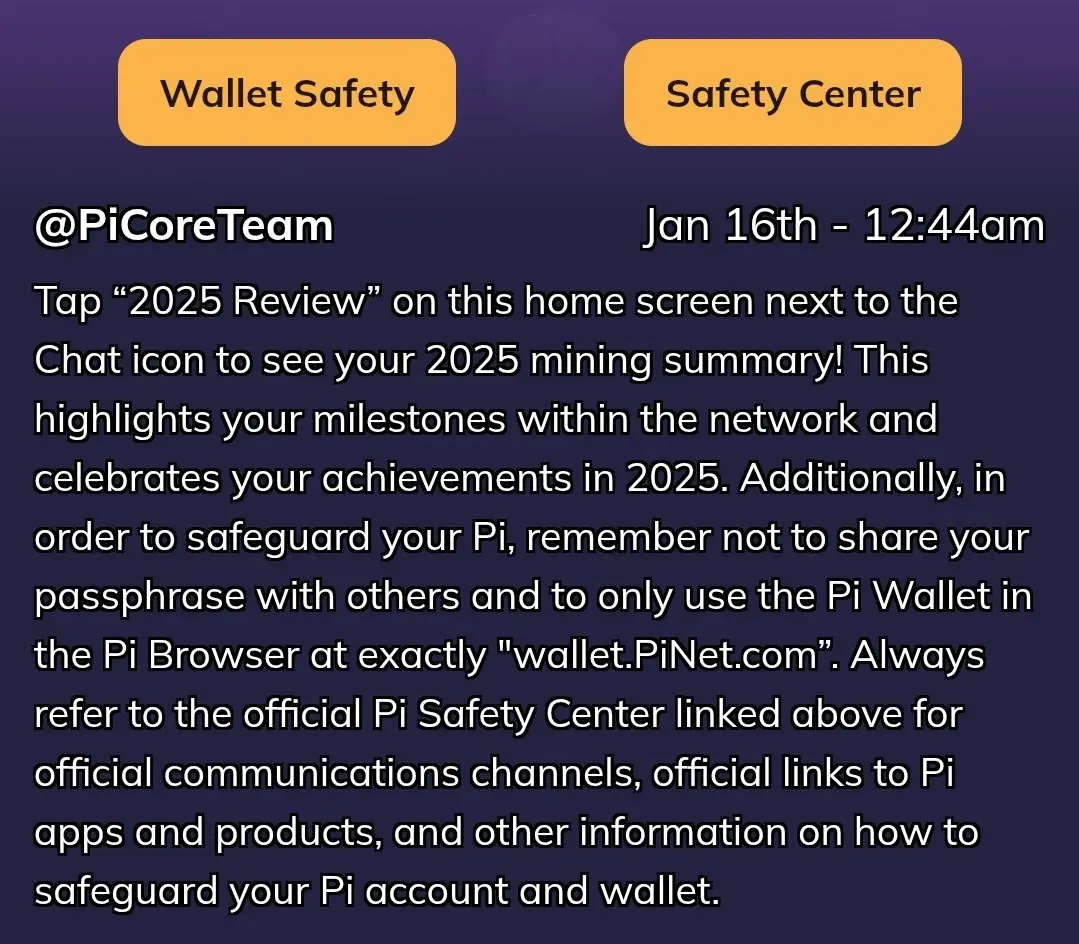
Pi Network issues a security warning, reminding users to protect their wallets from phishing attacks. The Pi wallet is non-custodial; if the seed phrase is stolen, it will be permanently lost. Scammers use fake DEX platforms claiming each Pi is worth $314 to lure users. The official emphasizes they will never ask for passwords, and simultaneously launches the “2025 Review” feature to view mining achievements.
Pi Network Non-Custodial Wallet Features: Lost and Irretrievable
Pi Network today issued an important security warning to its global community. The team reminds users to stay vigilant and protect their wallets from scams and phishing attacks. As the network moves into the open mainnet phase, Pi Network states that wallet security is more important than ever. The warning was published through official Pi channels and shared by community leaders.
It reminds users that the Pi wallet is non-custodial, meaning only the user can control the wallet. If someone steals your password or passphrase, your Pi coins will be permanently lost. Blockchain transactions are irreversible. Simply put, if you cannot access your wallet, your Pi account is gone. This is completely different from centralized exchanges or bank accounts, where password resets are possible through customer support. With non-custodial wallets, once the private key or seed phrase is lost, no one can recover it.
Pi Network explains that many fake websites, apps, and social media accounts attempt to trick users into revealing wallet information. These scammers often impersonate Pi staff, Pi support teams, or official representatives. Once they obtain your seed phrase, they can empty your wallet within seconds. The Pi team emphasizes that they will never ask for your password or seed phrase. This is the most critical identification principle: any message claiming to be official and requesting your seed phrase is 100% a scam.
The “autonomy” of non-custodial wallets is a double-edged sword. The advantage is that users have full control over their assets without trusting third parties. The risk is that if mistakes happen, there are no remedies. This design aligns with the decentralization spirit of blockchain but also demands high security awareness from users. Pi Network’s warning aims to help users fully understand this responsibility.
Common Pi Network Scam Tactics Revealed
Pi Network published a list of common tricks used by scammers. These include: fake websites that look like official Pi pages; false advertisements on social media; claims that you have won free Pi or need to verify your wallet. Some scammers even create fake Pi apps or browser extensions. Others send seemingly official links that actually lead to phishing sites.
Particularly alarming are fake DEX (decentralized exchange) scams. Scammers use fake DEX links claiming 1 Pi = $314, attempting to lure users into connecting their wallets and authorizing transactions. This price is far above any real market rate and is a classic “too good to be true” scam signal. Once users connect their wallet and sign transactions on the fake DEX, scammers can transfer all assets via malicious smart contracts.
Common Scams Users Should Avoid
Fake Official Website: Impersonating the official site with similar URLs, e.g., pinetwork.com instead of the real one
Fake Support: Pretending to be Pi support on social media or Telegram, asking for seed phrases
Fake Airdrops: Claiming users have won and need to connect wallets to claim free Pi
Fake DEX: Fake exchanges claiming unrealistically high prices (e.g., $314) to induce authorization
Fake Apps: Cloned Pi mining apps listed on app stores designed to steal user data
The Pi team warns users not to trust any messages from unknown sources, even if they look professional. If someone claims they can help you unlock Pi faster or double your coins, it’s a scam. Pi Network has no shortcuts. All unlocking and transferring of Pi must go through official channels; any promises to bypass these processes are scams.
Scammers continually evolve their methods, using the latest technology and social engineering. For example, generating AI-created official statements, creating highly realistic fake websites, or buying ads on search engines to rank fake sites higher. Users must stay vigilant, carefully verify URLs and sources before any operation.
Official Wallet: The Only Safe Access Path
Pi Network reminds users that the only safe way to access their wallet is through the official Pi browser. The correct link is: wallet.PiNet.com. Never enter your password on any other website or app. If you encounter suspicious pages, close immediately. The Pi team also recommends bookmarking the official wallet page. Additionally, avoid clicking random links in social media or Telegram groups.
This official URL should be memorized by all Pi users. Scammers use various similar URLs to confuse users, such as wallет.pinetwork.com (using Cyrillic characters), wallet-pi.com, pi-wallet.net, etc. These URLs may look very similar at first glance, but careful inspection reveals differences. The safest approach is to type the official URL directly into the browser and avoid clicking third-party links.
Pi Network clarifies that the project is still in a gradual decentralization phase and has not yet fully open-sourced. Full decentralization will only occur after all testing is complete. This means users should be extra cautious during this stage. Scammers often exploit major upgrades and transitions, taking advantage of user curiosity and information asymmetry. Pi Network states that once testing is finished, they will fully open-source the network, marking an important milestone for the ecosystem.
Tracking the 2025 Review and Mining Achievements
In addition to the security warning, Pi Network has launched a new “2025 Review” feature within the app. Users can click the “2025 Review” button next to the chat icon to view their mining progress, milestones, and achievements from the past year. For early users, this is a fun way to reflect on their journey and accomplishments.
The timing of this feature’s release is noteworthy. While issuing a stern security warning, Pi Network also provides a positive user experience feature, balancing the message and avoiding panic caused by purely negative news. The 2025 Review allows users to see their mining days, accumulated Pi, number of referrals, and other data, enhancing their sense of belonging and participation in the ecosystem.
Today’s Pi Network news concludes with a simple reminder: never disclose your password, never share your seed phrase, and only use official Pi links. As Pi moves toward full decentralization, ensuring security is the first step to protecting your future Pi holdings.

