


Expert Flags Bail-ins, Asset Seizures and Gold Confiscation as Confidence in Banks Erodes
Precious metals analyst Lynette Zang has warned that the global financial order is shifting away from legal norms toward coercive power, arguing in a 2026 outlook interview that bank bail-ins, asset seizures, and renewed gold confiscation risks are increasingly plausible in this day in age.
Zang Warns of Rising Risk Following U.S. Bank Failures
In a wide-ranging interview with Kitco News anchor Jeremy Szafron, CEO of Zang Enterprises, Lynette Zang, framed recent geopolitical developments as evidence of what she described as a transition from the rule of law to a “rule of might,” where control over assets increasingly depends on force rather than contracts or legal protections.
During the interview, Zang cited U.S. actions involving Venezuelan oil shipments and the seizure of a Russian-linked vessel as examples of precedents that, in her view, could weaken long-standing assumptions about property rights. She argued that such moves signal to investors that ownership may no longer be guaranteed by legal frameworks alone, particularly during periods of systemic stress.
Zang extended that argument to the global banking system, which she characterized as structurally impaired after years of low interest rates. According to her assessment, many banks are holding long-duration bonds that are deeply underwater, leaving institutions vulnerable if depositors lose confidence and attempt to withdraw funds at scale.
She said:
“When there is a run on the banks, all of those bonds, the 15 years of zero interest rate bonds, meaning all the banks are zombie banks, they’re all underwater.”
Referencing the regional bank failures in the United States in 2023, Zang said those episodes offered a preview of how authorities might handle future crises. She noted that while depositors were ultimately protected, emergency measures included partial bail-ins of uninsured deposits, which she described as a test of public tolerance.
“If there’s a run on the bank, that means that they could be forced to sell off those bonds that are so deeply underwater, and then everybody will know the emperor has no clothes.”
Based on that experience, Zang argued that a broader bail-in framework could be deployed in a more severe downturn. She described a “full bail-in” as the logical next step if confidence continues to erode, contending that policymakers are constrained by the need to prevent bank runs while absorbing mounting losses within the system.
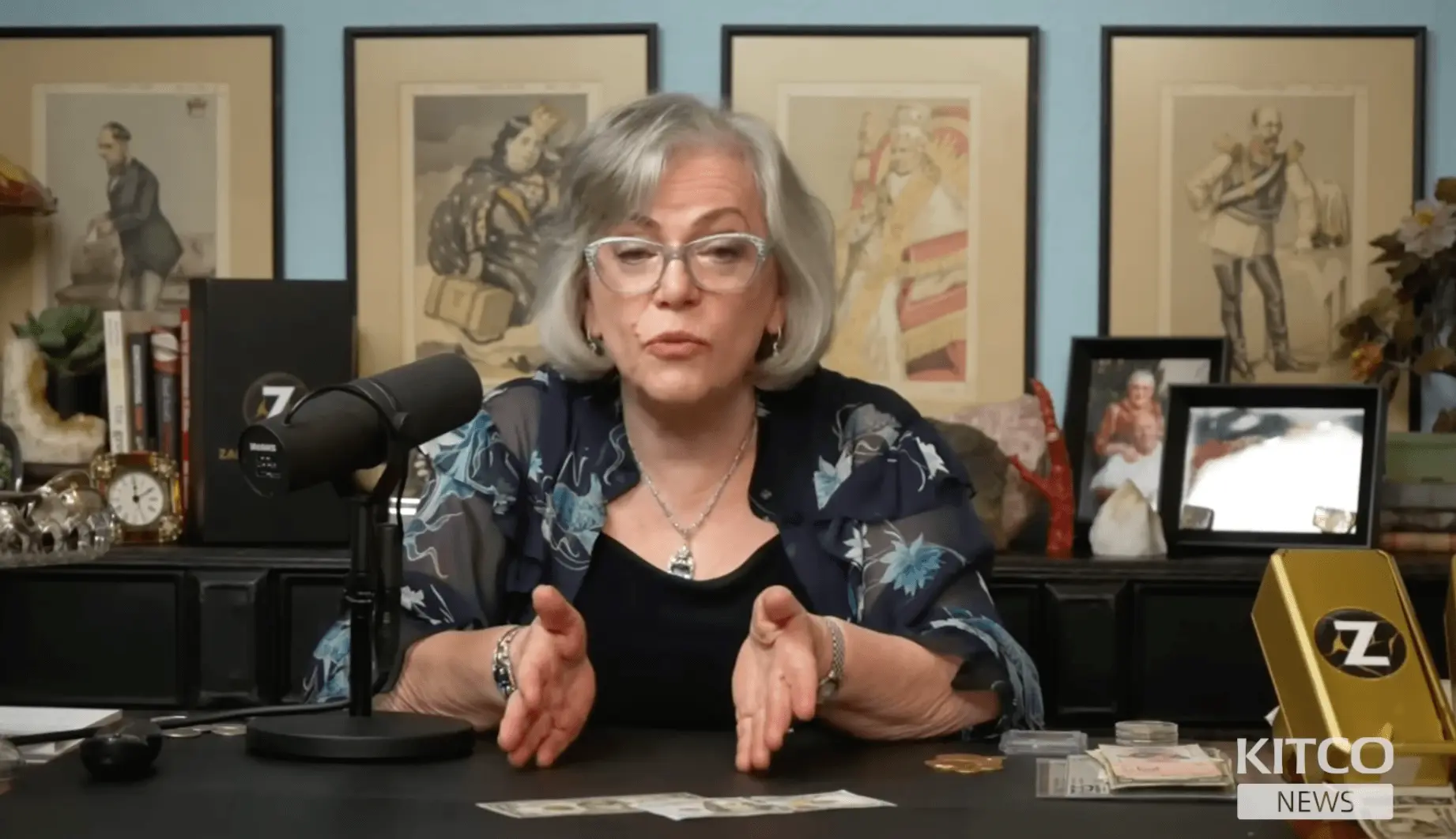 Precious metals analyst and economist Lynette Zang.
Beyond banking, Zang focused on gold as a potential target during periods of fiscal strain. She pointed to what she called an “Italian Blueprint,” referring to debates over the ownership and control of Italy’s gold reserves held by the Bank of Italy. Italy holds one of the world’s largest official gold reserves, much of it tied to its participation in the euro system.
Precious metals analyst and economist Lynette Zang.
Beyond banking, Zang focused on gold as a potential target during periods of fiscal strain. She pointed to what she called an “Italian Blueprint,” referring to debates over the ownership and control of Italy’s gold reserves held by the Bank of Italy. Italy holds one of the world’s largest official gold reserves, much of it tied to its participation in the euro system.
Zang argued that disputes over whether such gold belongs to the public, the national government, or the European Central Bank illustrate how governments could redefine ownership during crises. In her view, that ambiguity raises broader questions about how states might treat privately held assets if financial pressures intensify.
While Zang acknowledged that modern confiscation may not mirror the overt measures seen in the 1930s, she suggested that subtler approaches—such as reporting requirements, transaction restrictions, or special taxes—could achieve similar outcomes without explicit seizures.
Also read: Standard Chartered Readying Launch of New Crypto Prime Brokerage: Report
The interview also addressed inflation and declining purchasing power, which Zang described as long-running forms of wealth erosion. She argued that inflation, combined with rising public debt, places governments under increasing pressure to identify new sources of revenue or assets.
Throughout the discussion, Zang emphasized that her views reflect risk assessment rather than political advocacy. She repeatedly framed her comments as warnings about systemic vulnerabilities rather than predictions of immediate action.
Szafron noted that markets have remained resilient despite these concerns, a contrast Zang attributed to confidence and liquidity rather than underlying financial health. She argued that market stability can persist until a triggering event forces hidden losses into the open.
The interview concluded with Zang reiterating that 2026 could be defined less by price swings than by questions about the reliability of financial systems and the durability of ownership rights, particularly in a world shaped by heightened geopolitical tensions and fiscal strain.
FAQ ❓
- **What does Lynette Zang mean by “rule of might”?**She argues that asset control is increasingly determined by power and force rather than legal protections.
- **Why does Zang warn about bank bail-ins?**She believes past banking rescues show authorities may impose losses on depositors during future crises.
- **What is the “Italian Blueprint” Zang references?**It refers to debates over who ultimately owns Italy’s gold reserves held within the euro system.
- **Is Zang predicting immediate gold confiscation?**No, she suggests risks are rising but says any actions would likely be gradual rather than sudden.