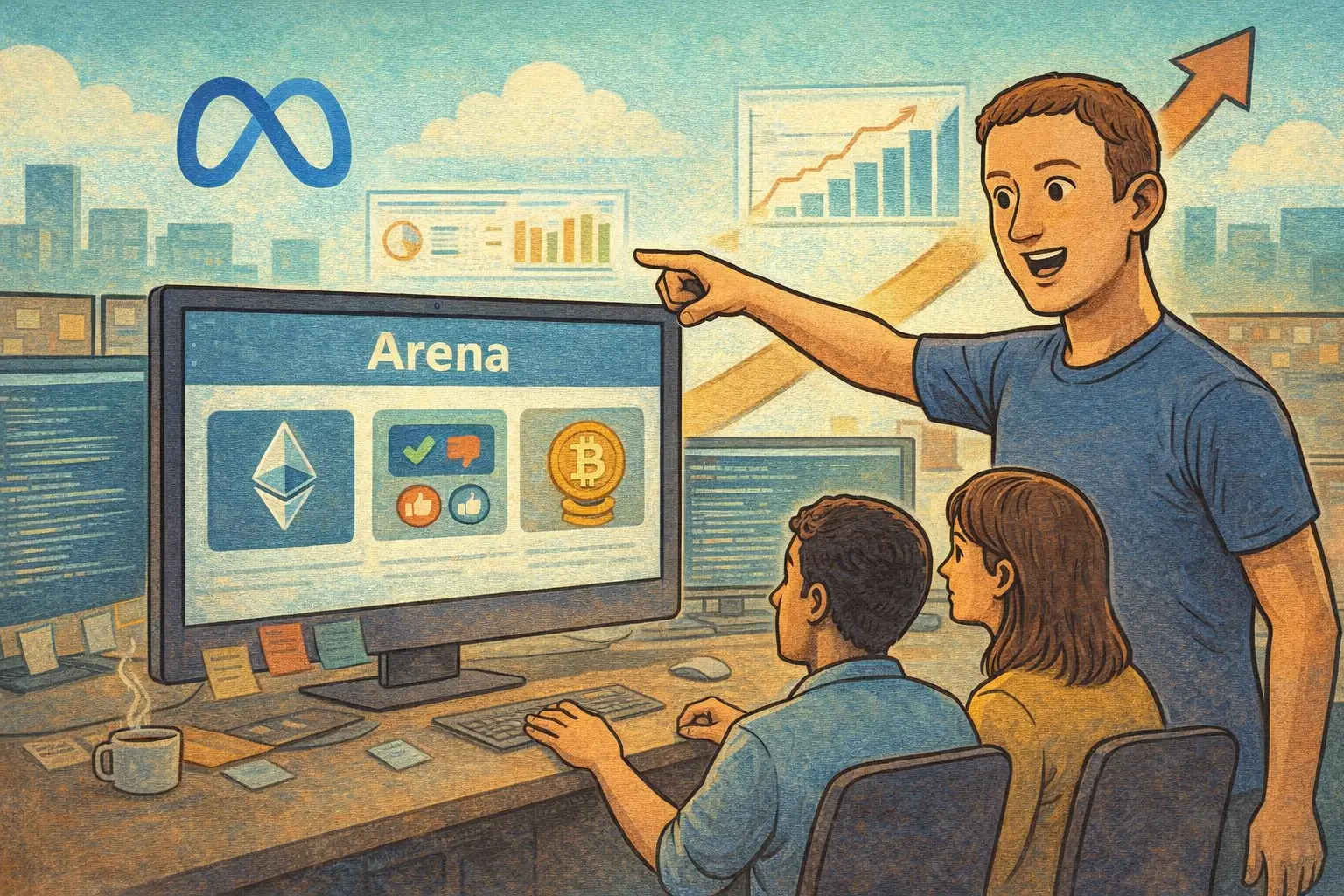
The New York Times reported on June 24 that Meta CEO Mark Zuckerberg has instructed an internal small team to develop a smartphone prediction market application similar to Polymarket and Kalshi. The project’s internal codename is “Arena.” According to several unnamed sources familiar with the matter, while the project is experimental in nature, it is of the highest priority.
Known design details of Arena: point-based system, independent operation, Meta social network promotion
According to the New York Times report citing sources familiar with the matter, the known design details of Arena are as follows: the app will operate independently of Meta’s existing social media applications (Facebook, Instagram, WhatsApp, Messenger); it will initially adopt a point-based system and will not involve real-money betting; Meta plans to promote Arena using its massive social network user base (with more than 3.56 billion people visiting at least one of Meta’s apps per day).
Arena is one of the few apps Meta is currently trying, with another being Meta Photos—a standalone app that creates new media types using AI technology.
Market size background for prediction markets in 2026: Kalshi and Polymarket combined exceed $130 billion
Based on the reported figures, prediction market growth is as follows: in 2025, Kalshi and Polymarket together reached $50 billion in online trading volume; since 2026, it has already exceeded $130 billion; Polymarket and Kalshi have become one of the fastest-growing websites on the internet, frequently appearing in TV broadcasts of major sporting events and the Golden Globe Awards.
Other companies that have already entered prediction markets include: FanDuel, DraftKings (traditional bookmakers), Gemini (crypto exchange), and The Trump media and technology group.
A cautionary tale from Meta’s 2020 Forecast app
This is not Meta’s first foray into prediction markets. In 2020, during the early stages of the COVID-19 pandemic, Meta launched a crowdsourced prediction market app called “Forecast.” Users made predictions about world events in the form of points, positioning it as a platform for sharing crowdsourced knowledge; Meta shut down the app in 2022.
In addition, in 2019 Meta had launched multiple social apps covering areas such as podcasts, travel, music, and dating, but very few succeeded, mainly because users found it difficult to discover and download these apps.
Regulatory and legal risks for prediction markets: CFTC and insider trading allegations
The rapid growth of prediction markets has drawn regulatory attention. In April 2026, federal prosecutors in New York City charged a member of a U.S. special forces unit with using confidential information (an ultra-secret plan regarding the arrest of Venezuelan President Nicolás Maduro) to place bets on Polymarket and profit more than $400,000. The CFTC (Commodity Futures Trading Commission) regulates prediction markets. During the Trump administration, its level was cut to the lowest in many years, but the scope of its responsibilities has been expanding quickly.
FAQ
When can Meta’s Arena be officially released?
According to the New York Times report, Meta insiders warned that Arena is still under development and “may not be released”; Meta declined to comment officially, and there is currently no public release timeline.
Why doesn’t Arena integrate directly into Facebook or Instagram?
According to sources familiar with the matter, as Facebook and Instagram increasingly offer video-centric content, Meta executives believe there is less and less room to test new product ideas within existing apps, prompting the company to shift toward developing a standalone application.
Does Arena’s point-based system mean it can’t earn real money?
According to sources familiar with the matter who spoke to the New York Times, the initial plan is to use a point system similar to that of electronic games and does not involve real-money betting; however, at the same time, Meta has not ruled out the possibility of eventually launching real-money wagers, and the specific decision has not been determined yet.


