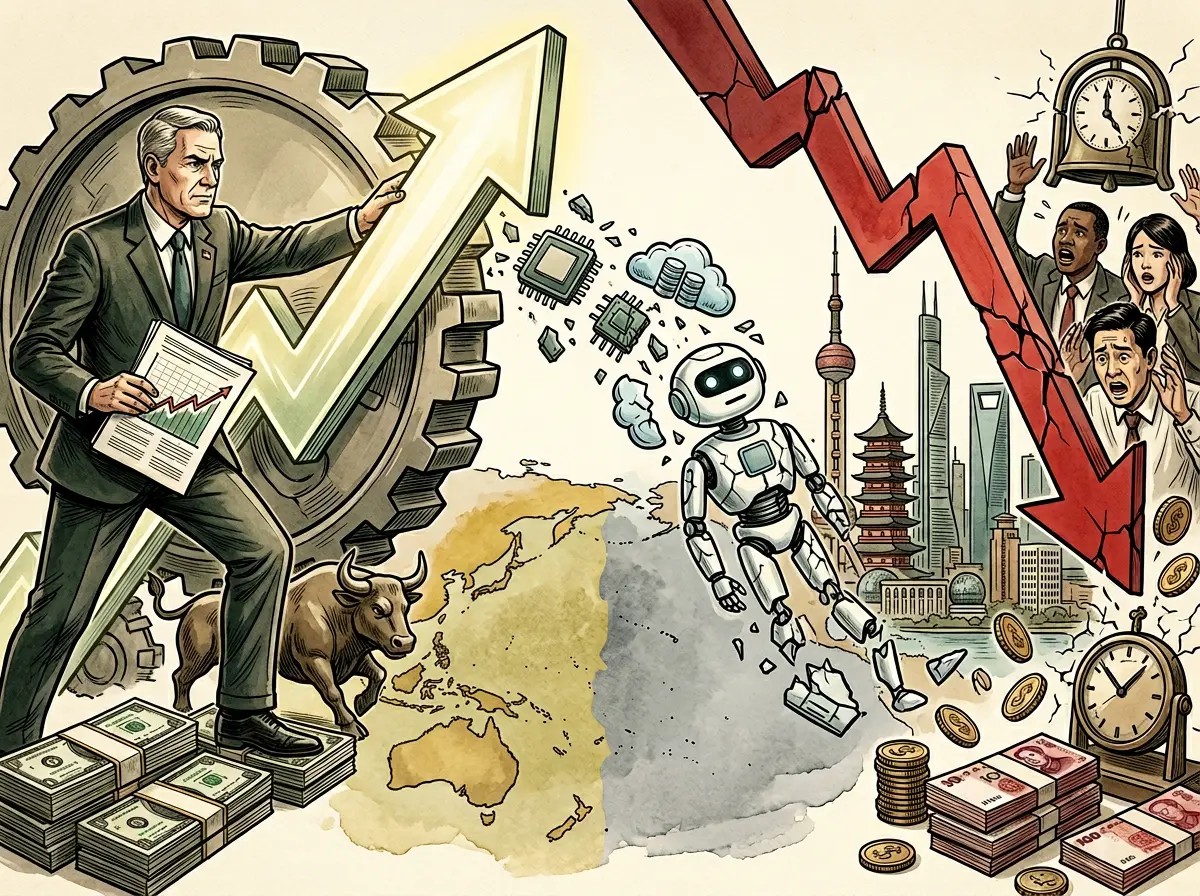
Asian stock markets continued last Friday’s sharp selloff on June 8, with semiconductors suffering the biggest losses. The Korea Composite Stock Price Index (KOSPI) fell by more than 4.5%. Reuters reported from Singapore that last Friday’s sharp decline in U.S. equities was driven by strong employment data, which increased the likelihood of rate hikes this year. This prompted investors to dump the technology and AI-related stocks that had been the best performers this year. Weak-than-expected results from Broadcom last week were also one of the triggers.
Confirmed Assessments by Four Analysts
Frank Benzimra of Société Générale: “The market is extremely sensitive to earnings. Once there is any concern about a positive earnings momentum, the market becomes very tense. Leveraged ETFs, due to their structural characteristics, magnify any downside moves, creating additional volatility.”
Thomas Mathews, head of markets for APAC at Capital Economics: “Broadcom’s results were weaker than expected last week, which may make some investors worry about AI trading. U.S. labor market data and the corresponding changes in Federal Reserve expectations have intensified these concerns. But from a more macro perspective, semiconductor companies still have strong profitability and the overall economy is performing well—this is usually not the backdrop for a sustained decline.”
Fabien Yip of IG Markets (Sydney): “Last Friday’s sharp pullback in U.S. tech stocks sparked this selloff. Once optimistic sentiment around AI trading fades, it could also impact Asia’s traditional mining companies. Pullbacks after continued gains may actually be beneficial for the market—the fundamentals of companies remain solid.”
Mark Willam, investment director at Luzern Asset Management (Singapore): “This looks more like position adjustment and the release of momentum, rather than a reassessment of AI’s long-term development prospects. With Korean tech stocks carrying very large positions, they naturally become a source of liquidity when rate expectations change after the employment report is released. The key question is whether spending by super-large data centers on AI will slow down—so far, there is no sign of that.”
Common Questions
How does strong employment data boost the Fed’s rate-hike expectations and, in turn, hit the stock market?
Strong employment data signals that the job market is overheating, increasing the likelihood of persistent inflation. The market therefore reprices the probability of the Fed raising rates by the end of the year. Rising rate expectations lift discount rates, putting pressure on the valuations of growth stocks (especially AI-related tech stocks). This leads investors to sell such assets in an environment where rate hikes are expected.
How do leveraged ETFs magnify the size of this drop?
Benzimra said the structural design of leveraged ETFs requires them, when their underlying assets fall, to be forced to sell holdings further to maintain the target leverage ratio (such as 2x or 3x). This “forced deleveraging” mechanism creates a self-reinforcing cycle of selling pressure during a market-wide plunge, causing the decline to exceed the range that underlying fundamentals alone can explain.
Multiple analysts say this is a ‘position adjustment’ rather than a ‘trend reversal.’ What is the basis?
Mathews and Willam point to the same fundamental logic: semiconductor companies’ overall earnings remain strong, and there is no sign that AI-related capital expenditures at super-large data centers are slowing down. Willam noted that Korean tech stocks become a “liquidity source” when, due to their large holdings, rate-expectation adjustments are taking place—this is technical selling pressure rather than the market reassessing the AI business cycle’s outlook.


