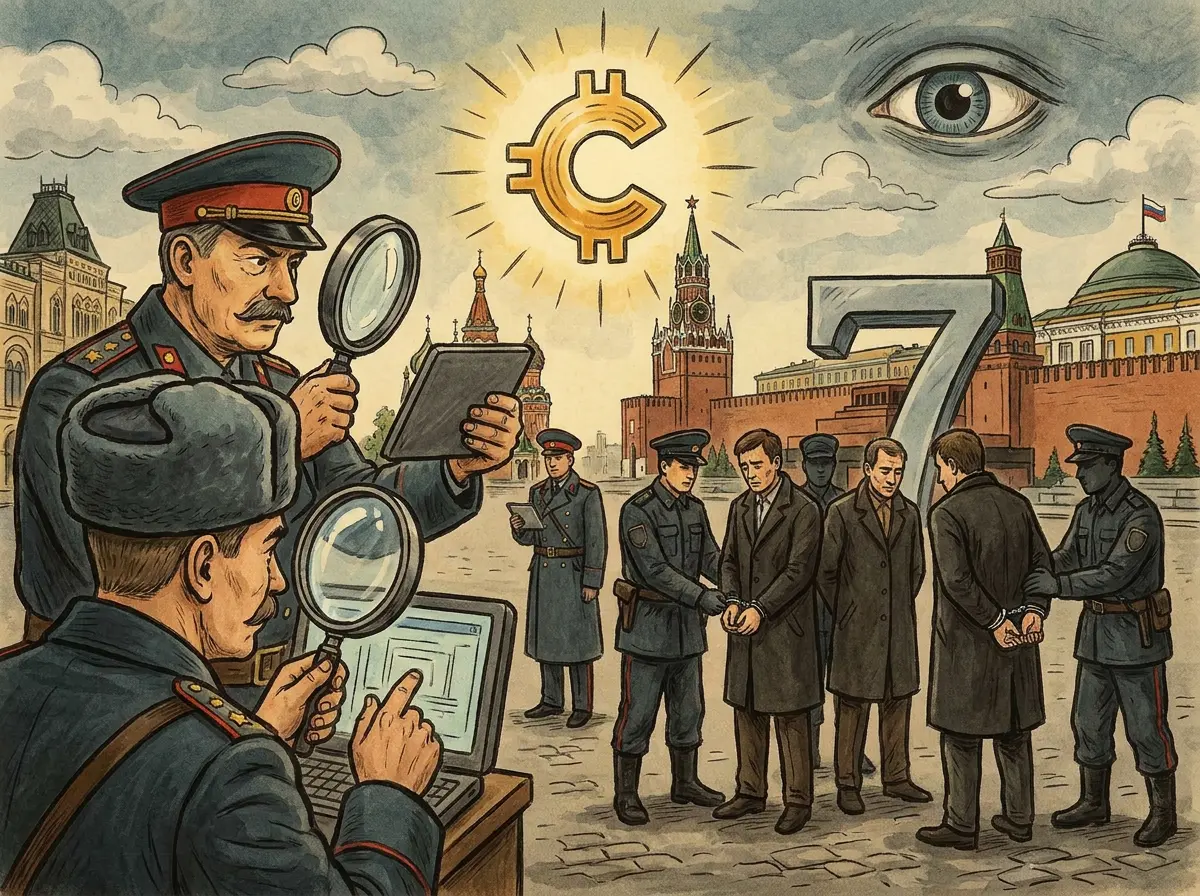
According to a report by Bits.media on May 18, Russia’s State Duma is reviewing a set of amendments to the “Digital Currency and Digital Rights Act,” requiring mandatory monitoring of all digital currency and digital rights transactions involving more than 1 million rubles. The State Duma is also considering bills related to administrative and criminal liability; in Russia, illegal organizations facilitating the circulation of cryptocurrencies will face a maximum prison term of up to seven years.
Scope of Mandatory Monitoring: Four Confirmed Scenarios
Under the draft bill, the following types of transactions will be subject to mandatory monitoring:
Digital currency and digital rights transactions exceeding 1 million rubles (covering the purchase and sale of digital assets, as well as the acquisition and redemption of digital rights)
Cross-border transfers: transfers from non-Russian wallets to Russian crypto wallets, and vice versa
Transactions related to foreign trade contracts: transactions under foreign trade contracts involving at least 10 million rubles between Russian residents and non-residents
Transactions involving FATF high-risk jurisdictions: any transactions involving jurisdictions classified as high-risk by the FATF
Mandatory Duties for Operators and the Central Bank’s Enforcement Powers
Mandatory Duties for Operators (Confirmed): perform customer identification (KYC); detect suspicious transactions; maintain internal control systems and documentation records; hand over data to government agencies; cooperate with the Russian Central Bank; digital compliance—i.e., check whether wallets and cryptocurrencies carry potential risks such as money laundering, financing of organizations designated as bad, etc. GMT Legal confirmed that exchanges can delegate customer identification procedures to banks.
Central Bank’s Enforcement Powers (Confirmed): If the bill is passed in its current form, all foreign exchange dealers must operate in the form of non-credit institutions; the Central Bank has the power to restrict operators’ activities for up to six months, require changes to management regulations, remove them from the foreign exchange dealers registry, and even initiate company liquidation proceedings through the courts. Foreign exchange dealers will also become currency control agents and must transmit transaction data according to Central Bank procedures.
Administrative and Criminal Liability: Confirmed Penalty Standards
Administrative fines: 30,000 to 50,000 rubles for officials; 700,000 to 1 million rubles for legal entities. Applicable situations: failure to comply with anti-money laundering and anti-terrorist financing requirements, and lack of internal control systems and digital compliance.
Criminal liability: for facilitating the illegal circulation of cryptocurrencies by organizations in Russia, up to seven years’ imprisonment.
FAQ
How many Dollars does the 1 million rubles monitoring threshold correspond to?
Based on the current ruble exchange rate, 1 million rubles is approximately 10 thousand to 15 thousand Dollars (the specific amount fluctuates with exchange rates). This threshold means that relatively low-value cryptocurrency transactions are included in mandatory monitoring, with a broader coverage area.
Why does Russia classify crypto exchanges as bank-like institutions?
Russia’s financial monitoring agency, Rosfinmonitoring, previously called for treating cryptocurrency exchanges as banks, citing Russia’s need to comply with FATF’s anti-money laundering requirements. The submission of this accompanying bill is the concrete legislative implementation of that regulatory direction.
What legislative process is the bill currently in?
The related bill is currently under review by the State Duma and has not been passed yet. The Duma is also considering two related bills—one on administrative liability and one on criminal liability. The specific effective date depends on the subsequent legislative process; there is no confirmed timetable for passage.


