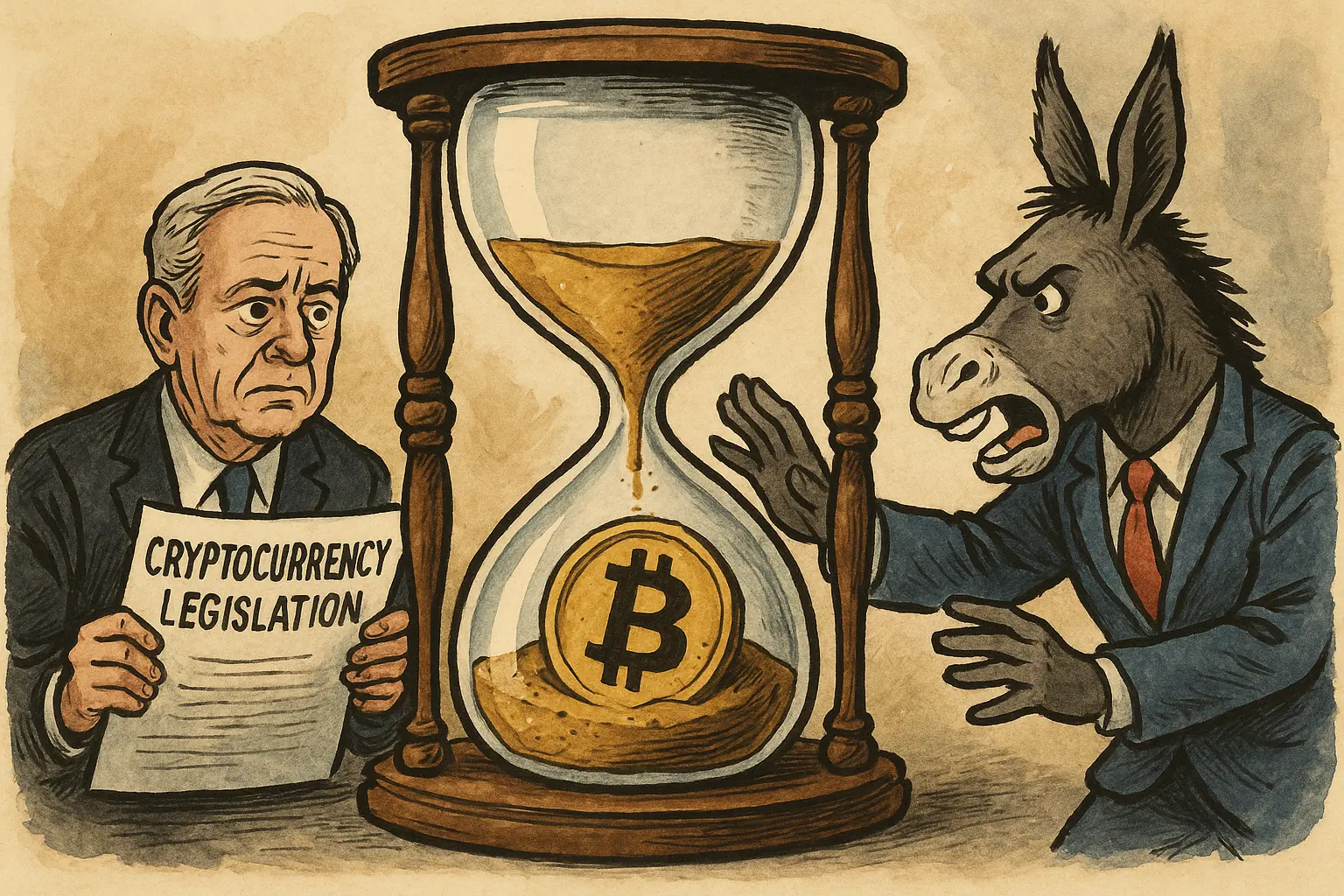
NYDIG research director Greg Cipolaro said in a May 18 report that if the U.S. Senate’s crypto market structure bill is not approved by a full vote by August, it faces a risk of being tabled or even failing. The Senate Banking Committee voted to advance the bill to the full chamber on May 14 (Thursday), largely along party lines. Cipolaro confirmed that the realistic legislative window is from June to early August.
Legislative Timeline: Confirmed Key Dates and Procedural Hurdles
May 14, 2026 (completed): The Senate Banking Committee voted largely along party lines to advance the bill to the full chamber
June to early August (realistic window confirmed by NYDIG): The bill must complete full-chamber voting of 60 votes within this period
Late July 2026 to early September 2026: Congress confirms the recess period
November 2026: Midterm elections, with control of Senate seats in competition
Fallback path: If the bill is not passed during the regular session, the most likely route is a post-election Lame Duck session—provided Republicans control the Senate and Majority Leader John Thune prioritizes the bill over the government funding deadline
The 60-Vote Threshold: Vote Breakdown and Confirmed Obstacles
The bill needs 60 votes to avoid a protracted debate and to pass. Republicans hold 53 Senate seats and would need at least 7 Democrats to support it. Publicly confirmed concerns from Democratic lawmakers include: the bill’s insufficient strength in preventing crime and evading sanctions; ongoing negotiation differences over moral issues and enforcement provisions related to decentralized finance (DeFi). Current polling suggests control of Senate seats is highly contested, with some predictions indicating Republicans have a slight edge, while others believe Democrats could ultimately control the Senate.
Confirmed Impacts on Whether the Bill Succeeds or Fails
If the bill passes (Cipolaro confirms): The crypto market will get a boost from legal clarity; Bitcoin would be classified as a commodity under CFTC oversight; removing the “last major regulatory obstacle” to Bitcoin being treated as an institutional asset class.
If the bill fails (Cipolaro confirms): The crypto industry will continue to operate amid “permanent jurisdictional ambiguity.”
Common Questions
What is the basis for NYDIG’s August deadline setting?
Based on Cipolaro’s explanation, Congress will enter the recess period in late July (through early September); after returning, it will prepare for the midterm elections in November, during which Senate leadership is unlikely to schedule highly contentious votes requiring 60 votes. Therefore, the final window for the regular session is early June to early August.
If the August window is missed, what is the most feasible subsequent path?
According to Cipolaro’s analysis, the post-election Lame Duck session is the most likely fallback path, but only if Republicans continue to control the Senate in the November midterm election and Majority Leader Thune prioritizes the bill over the government funding deadline. If Democrats control the Senate, this route is basically not feasible.
What specific policy impact would the bill’s passage have on Bitcoin?
Per Cipolaro’s confirmation, if the bill passes it will clearly classify Bitcoin as a commodity under CFTC oversight, removing the “last major regulatory obstacle” for institutional investors to allocate to Bitcoin, which is expected to push more mainstream institutions into the Bitcoin market.


