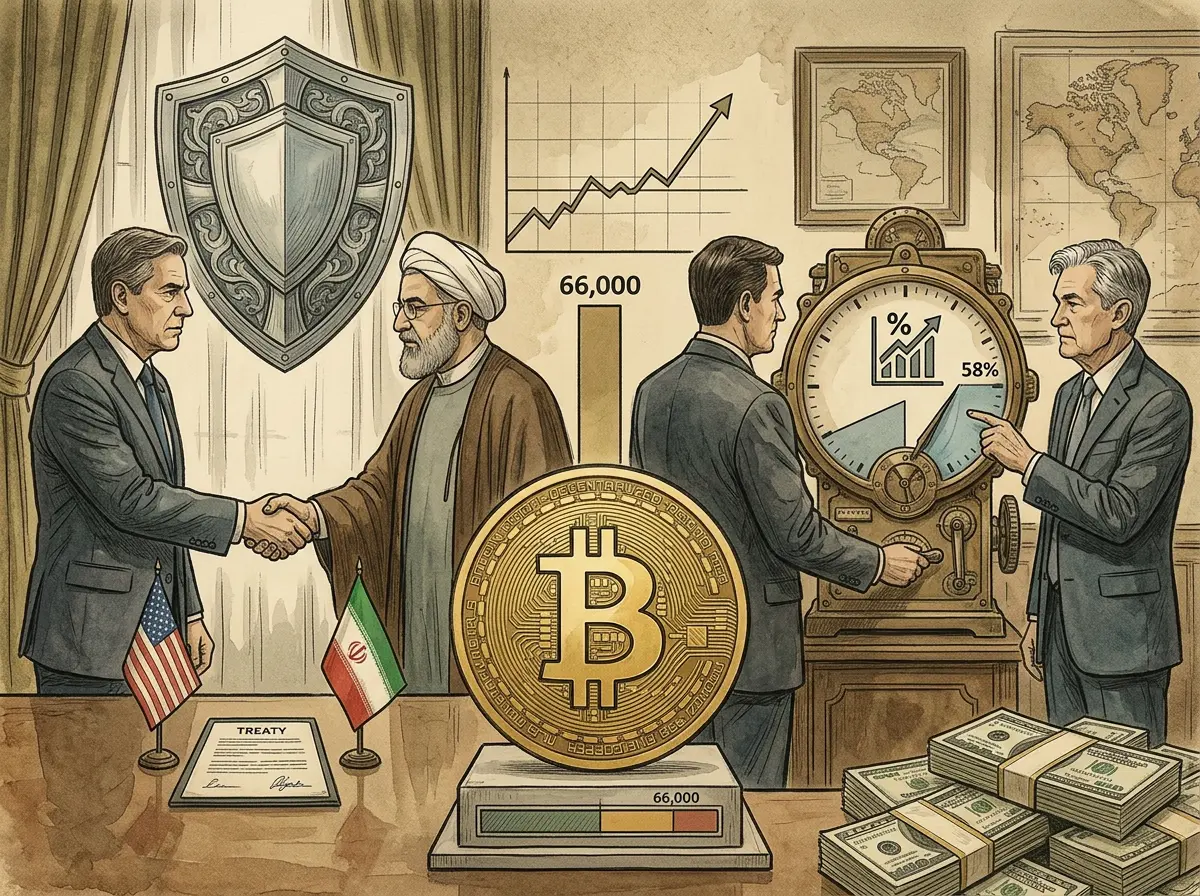
Bitcoin fell from the early-week high of $67,292 on June 16, held steady above $66,000, and was reported at $66,336. CME’s “FedWatch” tool shows that after the U.S.-Iran framework agreement was reached, traders reduced the probability of a Fed rate hike in December from nearly 70% last week to 58%. During the French G7 summit, President Trump announced that the two sides, the U.S. and Iran, have completed the electronic signing of the Memorandum of Understanding (MoU).
Fed Rate-Hike Expectations Data and Wednesday Meeting
Based on CME FedWatch data, the probability of a December rate hike has dropped from nearly 70% to 58%. Analyst Valencia noted that while both the U.S. May CPI and PPI are above the Fed’s 2% target, if the war ends, interest rates could remain unchanged for the rest of the year. Analyst Streible said that gold’s next move depends entirely on Warsh’s tone and any statements about the interest-rate path.
The Fed will announce its current monetary policy decision on Wednesday (June 18). This will be Warsh’s first decision since taking over as Fed chair, followed by a press conference. The market will closely watch his communication style, how he handles the balance sheet, and his policy stance.
Terms of the U.S.-Iran Framework Agreement
According to what was confirmed by senior U.S. officials to CNBC: Iranian Parliament Speaker Mohammad Bagher Ghalibaf has completed the electronic signing on Iran’s behalf. Key confirmed terms include:
Ceasefire arrangements: a 60-day ceasefire framework
Strait of Hormuz: calls for immediate reopening
Issues for follow-up negotiations: Iran’s nuclear program, long-term arrangements for the Strait of Hormuz, future economic reconstruction
At the G7, President Trump said: “Most importantly, Iran will not have nuclear weapons. They have fully agreed, and will accept strong monitoring and enforcement mechanisms.” He emphasized that any easing of sanctions must be tied to Iran’s compliance.
U.S. officials also revealed that the agreement may include reconstruction funding arrangements of up to $300 billion, but relevant details have not yet been released.
Current Situation of the Strait of Hormuz: About 300 Tankers Waiting, Mine-Clearing Still Needs 1–2 Weeks
Based on shipping data and confirmation from industry insiders:
Tankers waiting in the Persian Gulf: about 300 loaded tankers
Empty tankers in the Gulf of Oman: about 300 waiting to return to loading ports
Ballast ships: about 250 vessels ready to enter ports to load crude oil
First passage: the LNG carrier Disha was the first to leave the strait
Mine-clearing progress: U.S. officials confirmed that full restoration of normal passage still requires 1–2 weeks
Iranian media Fars reported that the current agreement between the two sides only stipulates a toll-free arrangement within 60 days; after 60 days, Iran may charge fees for commercial vessels. Angad Banga, CEO of Caravel Group, one of the world’s largest ship management companies, said: “We’ve seen positive signals before as well; in the end, what matters is whether these arrangements can be implemented consistently.” The global shipping organization Bimco also confirmed that due to the agreement’s details still being unclear, the strait remains a high-risk area.
Frequently Asked Questions
How will the U.S.-Iran agreement affect the Fed’s rate-hike expectations?
According to CME FedWatch data, after the U.S.-Iran framework agreement was reached, the probability of a December rate hike was revised down from nearly 70% last week to 58%. Analysts said that if the fighting ends, inflation pressure could ease as energy prices fall, and interest rates could remain unchanged for the rest of this year.
When can the Strait of Hormuz fully restore normal passage?
According to confirmations from U.S. officials, although the agreement calls for immediate reopening, actual restoration still depends on time needed for clearing remaining mines. U.S. officials estimated that in the next 1–2 weeks, the number of vessels will gradually increase. Shipping industry participants are currently generally cautious, and most companies are still waiting for more information on safety assurances.
Is there disagreement between the two sides on the Strait of Hormuz toll issue?
According to reports, Iranian media Fars disclosed that the agreement currently includes only a 60-day toll-free arrangement; after 60 days, Iran may charge commercial vessels. Meanwhile, U.S. Vice President Vance said the U.S. wants the strait to remain toll-free in the long term. The two sides’ statements differ, and the related issue is expected to become an important topic in subsequent negotiations.


