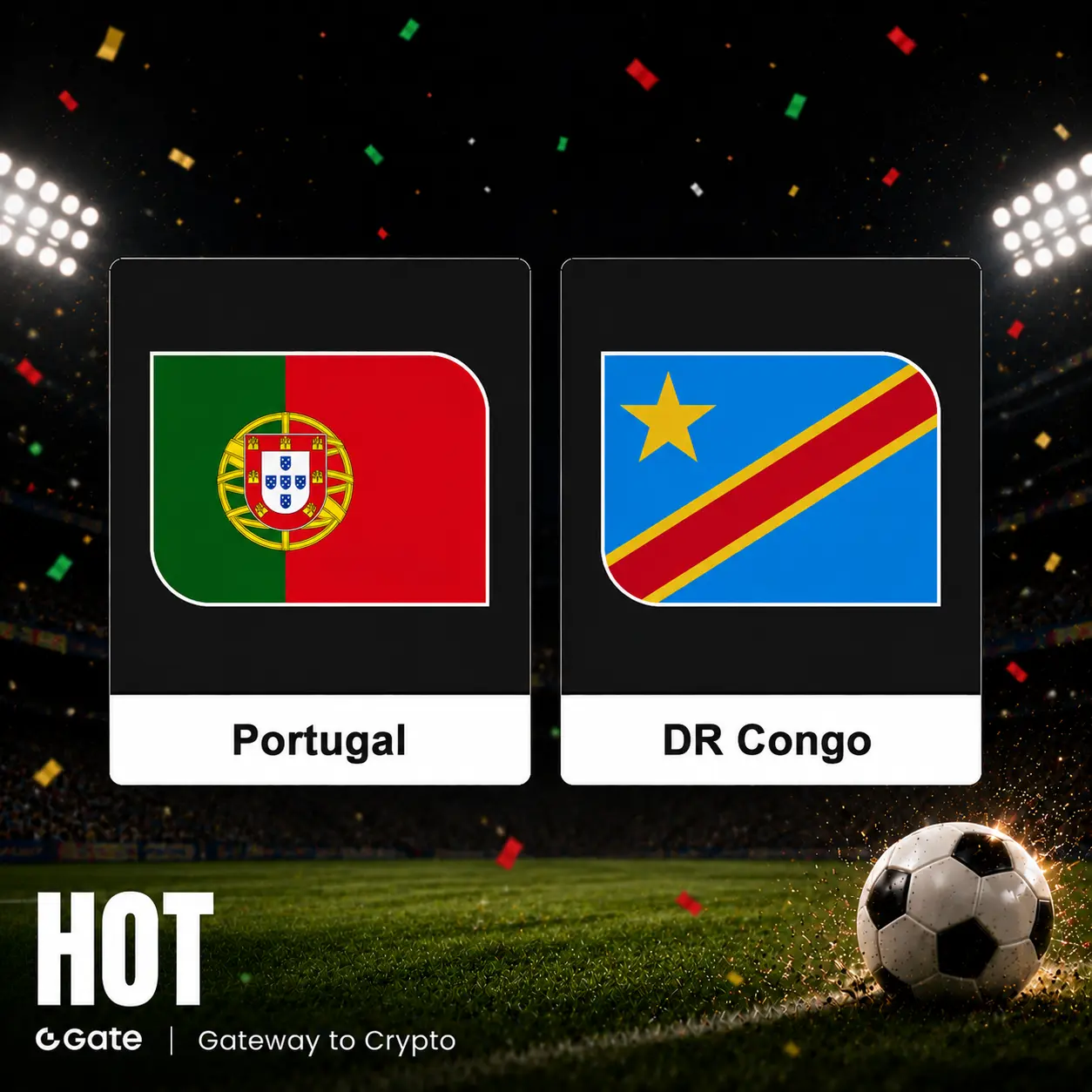
How Portugal’s squad depth and major-tournament experience support market expectations
Portugal currently ranks 5th in the FIFA rankings. The team’s total squad value is about €1.01 billion, with starting players across all three lines drawn from top leagues. Ruben Dias leads the defense, with Vitinha and João Neves in midfield; Bruno Fernandes and Bernardo Silva provide creativity, while the 41-year-old Cristiano Ronaldo continues as a spiritual leader and offensive focal point.
From recent performance, Portugal ended their warm-up matches with a record of 4 wins and 1 draw, remaining unbeaten, scoring 15 goals and conceding only 3. In the World Cup qualifiers, the team was placed in Europe’s Group F, topping the group with a record of 4 wins, 1 draw, and 1 loss, scoring 20 goals and conceding just 7. These attack-and-defense numbers provide solid fundamentals for the market’s pricing.
In terms of squad structure, Portugal does not have any obvious tactical weaknesses. The defense is anchored by world-class center backs, midfield has both control and creativity, and the front line offers multiple solutions in attack. This “no weak angles” squad setup is one of the key reasons the prediction market assigns a 76% win probability.
Whether Congo’s defensive resilience and potential for an upset are being underestimated by the market
Congo is one of the most story-rich teams in this World Cup—this is the country’s first return to the World Cup stage in 52 years since 1974 (competing under the name Zaire). All 26 players in the squad play in leagues overseas, including familiar Premier League faces such as Newcastle forward Juny Wissa, former Manchester United defender Wan-Bissaka, and Tuan Zebe.
In terms of tactical style, Congo coach Desabre runs a 5-4-1 defensive counterattacking system, with a clear strategy: low-block defense, everyone retreating, and seizing opportunities through physical duels and speed to pressure opponents. During the African qualifiers, Congo repeatedly beat traditional powerhouses such as Cameroon and Nigeria, then sealed their World Cup spot with a 1-0 extra-time knockout over Jamaica in the intercontinental playoff. In the last 10 official matches, they conceded only 4 goals, with 7 clean sheets. In warm-ups before the World Cup, they drew 0-0 with Denmark and lost narrowly 1-2 to Chile.
However, Congo’s attack has an obvious weakness—over the past 4 matches across all competitions, they have scored only 2 goals. Against a ball-control strong side like Portugal, Congo may spend the entire match in a passive defensive posture, with very limited attacking chances. The market’s 8% win probability reflects exactly this structural flaw of “defend strong, attack weak.”
How capital pricing logic in prediction markets differs from traditional odds
The essence of a Prediction Market is a mechanism that aggregates dispersed information through financial incentives. Participants place bets on the outcome of an event: if they favor a certain result, they buy the corresponding position; otherwise, they sell it. When many participants trade based on their own information battles, market prices update continuously and ultimately converge to a collective judgment of the event’s probability.
Unlike traditional sports betting with fixed odds, prediction market prices are dynamic and updated in real time. Every trade changes the market price, and every new piece of information triggers capital to re-price. That means the three figures—76%, 18%, and 8%—are not static assessments, but the market’s “live” evaluation of the match outcome at each moment.
Taking Gate’s prediction market product as an example, its cumulative trading volume has already exceeded $251 million, and the daily peak is close to $69 million. In the World Cup champion prediction market, the total traded volume has already surpassed $1.9 billion. Such scale of capital participation gives prediction markets a high level of information efficiency—any key information that is overlooked will be captured by “smart money” and reflected in the price.
Does a 76% win probability mean Portugal is in complete control?
Looking at historical data, World Cup group-stage opening matches are never short on upsets. Strong teams can start slow, weak teams can perform beyond expectations, referee factors can swing outcomes, and sudden injuries can also cause results to deviate from probability forecasts.
Congo’s defensive resilience is a variable that the market pricing cannot ignore. A 5-4-1 system naturally has the effect of “compressing space,” and is especially good at limiting an opponent’s offensive efficiency. The issue exposed by Portugal in recent warm-ups is that even against a dense defense, their offensive conversion efficiency still has room to improve. If Congo successfully drags the match into a stalemate, the likelihood of a draw (with an 18% probability) will rise significantly.
Also, the World Cup stage has special significance. For Congo, returning to the World Cup after 52 years, every minute is history. This kind of psychological boost can sometimes translate into on-pitch performances beyond what the paper strength suggests. Congo’s 8% win probability may not be high, but it is not an ignorable “zero-probability” event.
How crypto prediction markets change the way capital battles over sports events
Traditional sports betting relies on centralized institutions to set odds, leaving users only able to passively accept prices. Prediction markets are completely different—users are not only price takers, but also price creators.
The core advantage of this mechanism is “information aggregation.” When enough participants trade based on their own information and judgments, the market price gradually converges toward the event’s true probability. In sports settings, this means that hard-to-quantify information—team injuries, tactical adjustments, dressing-room atmosphere, and so on—gets “translated” into tradable price signals through capital.
Gate’s “Stadium Prophecy” themed campaign around the 2026 World Cup is a typical example of this trend. The campaign runs throughout the World Cup, covering all 104 matches, and offers a total prize pool of over 500,000 USDT. This pattern of combining sports wagering with crypto prediction markets is reshaping how users engage with sports events—from passive “watching” to active “pricing.”
Market probability divergence: why the draw probability is higher than Congo’s win probability
An 18% draw probability versus an 8% Congo win probability—the gap itself is worth deeper interpretation.
From a tactical logic perspective, Congo’s “defend strong, attack weak” profile determines that their most realistic way to earn points is to “force a draw” rather than “beat the opponent.” A 5-4-1 system is naturally suited to producing draws—compressing space, limiting the opponent’s attack, and waiting for counterattack opportunities. But constrained by offensive capability, even when counterattack chances arise, the probability of converting them into goals is relatively low.
From historical data, in matches between strong teams and weak teams, the draw probability is typically higher than the weak team win probability. The prediction market’s pricing (18% vs 8%) aligns with this statistical pattern, indicating that the market’s pricing is not a simple emotional bet, but has solid logic behind it.
From capital behavior, some participants may adopt a “hedging strategy”—while betting on Portugal to win, they place small bets on a draw to reduce risk. This kind of strategic trading further pushes up the price of draw contracts, and therefore, probabilistically, it is reflected as an 18% draw probability.
From a single match: prediction market information efficiency and pricing boundaries
The Portugal vs. Congo match is an excellent window for observing information efficiency in prediction markets.
On one hand, the market provides clear pricing—Portugal 76%, draw 18%, Congo 8%. These three numbers condense multi-dimensional information such as team strength, recent form, tactical style, and historical data. From a fundamentals analysis perspective, this probability distribution closely matches mainstream pre-match predictions, showing that prediction market pricing is not “alternative,” but rather an effective complement to traditional analysis.
On the other hand, the market’s pricing boundary is also clear. Prediction markets cannot predict “unexpected” events—such as an early red card, goalkeeper mistakes, VAR rulings, and other random occurrences. The existence of these variables means no probability forecast can achieve 100% accuracy. Congo’s 8% win probability is exactly the market’s pricing of the “unexpected”—not high, but present.
For practitioners and investors in the crypto industry, understanding the pricing logic of prediction markets is more valuable than simply focusing on the outcome of a single match. It offers a new way to observe the world—turn every event into tradable probabilities, making “consensus” measurable, tradable, and arbitrageable.
FAQ
Q: How are probabilities in prediction markets calculated?
Probabilities in prediction markets are determined collectively by participants’ buy and sell behavior. Each trade affects the contract price, and the contract price directly corresponds to the market’s assessment of the probability of a given outcome. When enough participants make trades based on their own information battles, the market price gradually converges to a collective consensus on the event probability.
Q: Does a 76% win probability mean Portugal is guaranteed to win?
No. 76% is the market’s probability assessment of Portugal winning, not a deterministic commitment. Every sports match contains uncertainty—random factors such as injuries, red cards, and referee decisions can cause the outcome to deviate from probability forecasts. Congo’s 8% win probability, while not high, is not a zero-probability event.
Q: What’s the difference between prediction markets and traditional sports betting?
The core difference is the pricing mechanism. Traditional betting is set by centralized institutions with fixed odds, and users can only passively accept them. Prediction market prices are determined jointly by all participants’ trading behavior, updated in real time, and users are both price takers and price creators. In addition, prediction markets run on blockchain technology, offering higher transparency and verifiability.
Q: Do crypto prediction markets only cover sports events?
No. For example, Gate’s prediction market covers multiple areas including sports events, crypto asset price levels, macroeconomic indicators, and traditional financial markets. World Cup champion predictions, Federal Reserve rate decision outcomes, and Bitcoin year-end price targets can all become tradable assets in prediction markets.
Q: How can regular users participate in crypto prediction markets?
Users can participate through platforms like Gate in the “Prediction Market” section. Choose an event you’re interested in (such as the outcome of a specific World Cup match), then buy the corresponding “Yes” or “No” contract. If your prediction is correct, the contract settles for $1; if wrong, it goes to zero. Users can also sell their positions at any time before the event ends to lock in profits or cut losses.