ColdBrewSparklingWater

vip
Age 0.1 Yıl
Peak Tier 0
No content yet
HTX's move this time was very decisive, and the transactions are keeping up; it's worth paying close attention to what happens next.
HTX0,27%
View Original
Original content no longer visible
  • Reward
  • Comment
  • Repost
  • Share
Ever since I started recording my feelings about NFT liquidity, my mindset has actually stabilized a bit: when the floor price drops, everyone focuses on trading volume and order book depth. When royalties change, it causes a huge fuss, but in the end, what really holds up is whether the "community narrative" matters to people. When it's hot, a single meme can be blown out of proportion; when it's cold, even airdrops seem like a water droplet lost in the water... Anyway, I’m not in a rush to jump into the excitement now. I’ll just sip some cold brew first.
By the way, it’s also crazy how hardw
View Original
  • Reward
  • Comment
  • Repost
  • Share
Bloomberg, this piece of information is very substantial: from pilot to scale, only one official channel is missing, and AI governance needs to keep up.
View Original
CryptoFrontier
Anthropic Mythos Model Advances Federal Rollout Amid Cybersecurity Concerns
The U.S. government is preparing to grant federal agencies access to Anthropic's Mythos model, according to Bloomberg reporting Thursday. Gregory Barbaccia, federal chief information officer at the White House Office of Management and Budget, sent a Tuesday email to Cabinet department officials
  • Reward
  • Comment
  • Repost
  • Share
The highlight is not the farm style, but that it integrates production relationships and consumption scenarios back into the system. Whether $PIXEL can run depends on the demand fulfillment.
PIXEL-7,45%
View Original
Furan86999
Over the past few years, the blockchain game industry has been stuck in an awkward cycle: first attracting people with high returns, then relying on new users to retain the old ones as they exit, until the model collapses, leaving behind a "sea of data" and a group of educated players. Many projects claim to be making games, but in reality, they are still conducting financial experiments. It’s precisely because of this that, when I look at Pixels again, I care less about its art style or short-term token price, and more about whether it has pushed blockchain gaming in a different direction.
In my view, the most noteworthy aspect of Pixels isn’t that it made a farming game, but that it attempts to bring "behavior" back to the center of the economic system. The biggest problem with traditional P2E is that it compresses everyone’s goals into maximizing profits. Players no longer care about experience, the world, or social interactions; all actions ultimately serve one purpose: converting time into tokens as quickly as possible, then turning tokens into money. On the surface, such a system seems lively, but it’s actually very fragile because once returns decline, behaviors collapse instantly, and everyone leaves simultaneously.
What’s relatively clever about Pixels is that it doesn’t base its economic model solely on a gold-farming logic. You can plant, harvest, build, complete tasks, and participate in trading; you can also develop your own management route around land and resources. Different types of players assume different roles within this system. Some are producers, responsible for resource supply; some are traders, making money through market efficiency; some are consumers, driving demand through purchases and upgrades; and others are essentially engaging in social and long-term development, bringing activity and stickiness to the entire world. Once roles are differentiated, the economy is no longer just a simple "reward distribution—token selling" closed loop but more closely resembles a real market.
That’s why I say the core of Pixels isn’t the game shell but the production relationships. It’s not just giving you a gameplay but providing a behavior structure that’s participatory, tradable, investable, and accumulative. Tokens are important here, but they shouldn’t be the whole story. The real value doesn’t come from a phrase like “it will rise in the future,” but from whether there are use cases within the system, whether there’s demand to support it, and whether it can sustain circulation. If a token can only be driven by sentiment, it’s essentially an old narrative; but if it begins to support consumption, trading, upgrades, identity, and resource allocation, it has the chance to transform from a pure financial symbol into a genuine ecological tool.
Another point that cannot be ignored is the significance of Ronin for Pixels. Many people attribute growth to lower gas fees and smoother chains, but I believe the deeper value lies in the fact that Ronin has already proven that blockchain games can have large-scale user recognition. In other words, Pixels isn’t re-educating a completely blank market but is meeting demand within an ecosystem that already has blockchain gaming culture and asset awareness. This directly lowers the conversion threshold and makes it easier for players to accept the logic of “assets, trading, and behavioral value.” Its growth isn’t explosive out of nowhere but built upon a verified user base, climbing steadily.
Of course, Pixels is far from a "sure win." The challenges it faces are very real: if new user growth slows, will resource demand decline accordingly? If players quickly find the optimal strategies, will behaviors converge into a single path again? If content updates can’t keep pace, can slow-paced gameplay like farming still sustain activity? These issues are still present, just not fully exposed yet.
But even so, I believe Pixels has given the industry something more important than a “short-term hit”: it has reignited discussions about whether blockchain games can shift from a financial narrative back to content-driven products, from airdrops to behavioral value, from crude subsidies to refined operations. If blockchain games are to have a next phase of growth, it’s likely not about who offers higher APY, but about who can create a more authentic world, a more stable cycle, and a longer-lasting reason for players to stay.
So, in my view, Pixels isn’t the endpoint or the answer; it’s more like a turning point. At least it shows the market that blockchain games don’t have to survive solely on bubbles—they can start to operate more like a real economy.
  • Reward
  • Comment
  • Repost
  • Share
Today, the on-chain data was "lagging again," and I initially thought my internet was bad. Actually, many times it's not the chain itself being slow, but the indexer/Subgraph hasn't finished processing the new blocks. When the frontend queries it, it's like flipping through an unorganized ledger; plus, RPCs often have rate limits, and when too many requests come in, they get queued or dropped, making it feel like a series of pauses. Thinking about it later, I found it quite funny—I kept refreshing as if I were "pushing the chain."
Recently, with more incidents of cross-chain bridge thefts and
View Original
  • Reward
  • Comment
  • Repost
  • Share
Gate's approach of treating creation as a long-term project aligns well with the spirit of the Web3 community.
View Original
NexaCrypto
𝐖𝐡𝐞𝐧 𝐂𝐨𝐧𝐭𝐞𝐧𝐭 𝐁𝐞𝐜𝐨𝐦𝐞𝐬 𝐋𝐞𝐠𝐚𝐜𝐲: 𝐀 𝐏𝐞𝐫𝐬𝐨𝐧𝐚𝐥 𝐉𝐨𝐮𝐫𝐧𝐞𝐲 𝐓𝐡𝐫𝐨𝐮𝐠𝐡 𝐭𝐡𝐞 𝐆𝐚𝐭𝐞 𝐒𝐪𝐮𝐚𝐫𝐞 𝐂𝐫𝐞𝐚𝐭𝐨𝐫 𝐂𝐚𝐫𝐧𝐢𝐯𝐚𝐥
𝐈𝐧𝐭𝐫𝐨𝐝𝐮𝐜𝐭𝐢𝐨𝐧: 𝐌𝐨𝐫𝐞 𝐓𝐡𝐚𝐧 𝐉𝐮𝐬𝐭 𝐚 𝐏𝐨𝐬𝐭
There was a time when posting online felt simple.
Write something. Share it. Move on.
No pressure. No expectations. No long-term meaning attached to it.
But somewhere along the way, the digital world changed—and so did I.
Content stopped being just words on a screen.
It became identity. It became voice. It became responsibility.
And that realization is exactly what led me to participate in the 𝐆𝐚𝐭𝐞 𝐒𝐪𝐮𝐚𝐫𝐞 𝐂𝐫𝐞𝐚𝐭𝐨𝐫 𝐂𝐚𝐫𝐧𝐢𝐯𝐚𝐥, an initiative by Gate.io that is quietly redefining what it means to be a creator in the Web3 era.
𝐓𝐡𝐞 𝐌𝐨𝐦𝐞𝐧𝐭 𝐄𝐯𝐞𝐫𝐲𝐭𝐡𝐢𝐧𝐠 𝐂𝐡𝐚𝐧𝐠𝐞𝐝
I didn’t join this carnival because it was trending.
I joined because I saw something deeper.
At first glance, it looks like a content competition—post, engage, and earn rewards.
But if you look closely, it’s something far more meaningful:
It’s a system that rewards 𝐜𝐨𝐧𝐬𝐢𝐬𝐭𝐞𝐧𝐜𝐲, 𝐭𝐡𝐢𝐧𝐤𝐢𝐧𝐠, 𝐚𝐧𝐝 𝐜𝐨𝐧𝐭𝐫𝐢𝐛𝐮𝐭𝐢𝐨𝐧.
That’s rare.
In a world where speed is rewarded more than substance, finding a platform that values depth feels different.
And that difference matters.
𝐓𝐡𝐞 𝐒𝐢𝐥𝐞𝐧𝐭 𝐒𝐭𝐫𝐮𝐠𝐠𝐥𝐞 𝐨𝐟 𝐂𝐫𝐞𝐚𝐭𝐨𝐫𝐬
What most people don’t see is what happens behind the screen.
The time spent thinking before writing.
The effort to make something simple yet meaningful.
The pressure to stay consistent, even when motivation fades.
Content creation isn’t easy.
Not when you care about what you’re building.
Because when you start caring, every post becomes a reflection of you.
And that’s where things change.
𝐅𝐫𝐨𝐦 𝐏𝐨𝐬𝐭𝐢𝐧𝐠 𝐭𝐨 𝐏𝐮𝐫𝐩𝐨𝐬𝐞
Before joining the 𝐆𝐚𝐭𝐞 𝐒𝐪𝐮𝐚𝐫𝐞 𝐂𝐫𝐞𝐚𝐭𝐨𝐫 𝐂𝐚𝐫𝐧𝐢𝐯𝐚𝐥, content was something I did.
Now, it’s something I think about.
• What value does this bring?
• Does this help someone understand better?
• Is this worth their time?
These questions have become part of my process.
Because in today’s world, attention is limited.
And if someone chooses to read what I write, the least I can do is make it meaningful.
𝐔𝐧𝐝𝐞𝐫𝐬𝐭𝐚𝐧𝐝𝐢𝐧𝐠 𝐖𝐡𝐚𝐭 𝐓𝐫𝐮𝐥𝐲 𝐌𝐚𝐭𝐭𝐞𝐫𝐬
There is a misconception in the digital space:
That success comes from posting more.
But through this journey, I’ve realized something different:
𝐒𝐮𝐜𝐜𝐞𝐬𝐬 𝐜𝐨𝐦𝐞𝐬 𝐟𝐫𝐨𝐦 𝐩𝐨𝐬𝐭𝐢𝐧𝐠 𝐛𝐞𝐭𝐭𝐞𝐫.
Not louder.
Not faster.
Better.
That means:
• Clear thinking
• Honest perspective
• Real effort
And most importantly—respect for the audience.
𝐓𝐡𝐞 𝐇𝐮𝐦𝐚𝐧 𝐒𝐢𝐝𝐞 𝐨𝐟 𝐖𝐞𝐛3
We often talk about Web3 in technical terms:
Blockchain.
Decentralization.
Smart contracts.
But rarely do we talk about the human side of it.
Web3 is not just technology.
It’s people.
People sharing ideas.
People building trust.
People creating value together.
The 𝐆𝐚𝐭𝐞 𝐒𝐪𝐮𝐚𝐫𝐞 𝐂𝐫𝐞𝐚𝐭𝐨𝐫 𝐂𝐚𝐫𝐧𝐢𝐯𝐚𝐥 reflects this beautifully.
It’s not just about rewards—it’s about recognition of effort.
𝐖𝐡𝐲 𝐓𝐡𝐢𝐬 𝐉𝐨𝐮𝐫𝐧𝐞𝐲 𝐅𝐞𝐞𝐥𝐬 𝐃𝐢𝐟𝐟𝐞𝐫𝐞𝐧𝐭
There’s something unique about creating content when you know it matters.
You don’t rush.
You don’t copy.
You don’t settle.
You take your time.
Because you understand that what you’re building is not temporary.
It’s part of something bigger.
Every post becomes a small piece of a larger identity.
And over time, those pieces come together to form something powerful.
𝐂𝐨𝐧𝐬𝐢𝐬𝐭𝐞𝐧𝐜𝐲: 𝐓𝐡𝐞 𝐑𝐞𝐚𝐥 𝐂𝐡𝐚𝐥𝐥𝐞𝐧𝐠𝐞
People often talk about creativity.
But they rarely talk about consistency.
Because consistency is harder.
It’s easy to write one good post.
It’s hard to show up every day with the same level of effort.
That’s what this carnival tests.
Not just your creativity—but your discipline.
And discipline is what separates participants from serious creators.
𝐋𝐞𝐚𝐫𝐧𝐢𝐧𝐠 𝐓𝐡𝐫𝐨𝐮𝐠𝐡 𝐭𝐡𝐞 𝐏𝐫𝐨𝐜𝐞𝐬𝐬
One of the most valuable things I’ve gained from this experience is clarity.
Clarity about:
• What kind of content I want to create
• How I want to communicate
• What I want to be known for
This kind of clarity doesn’t come overnight.
It comes through repetition, reflection, and refinement.
𝐓𝐡𝐞 𝐕𝐚𝐥𝐮𝐞 𝐨𝐟 𝐁𝐞𝐢𝐧𝐠 𝐔𝐧𝐝𝐞𝐫𝐬𝐭𝐨𝐨𝐝
In a crowded digital space, being seen is easy.
Being understood is not.
That’s the real challenge.
Anyone can post.
But not everyone can connect.
And connection is what creates impact.
That’s what I’m focusing on in this journey:
Not just reaching people—but reaching them in a way that stays.
𝐀 𝐏𝐥𝐚𝐭𝐟𝐨𝐫𝐦 𝐓𝐡𝐚𝐭 𝐄𝐧𝐚𝐛𝐥𝐞𝐬 𝐆𝐫𝐨𝐰𝐭𝐡
Platforms play a huge role in shaping creators.
And Gate.io, through initiatives like the Creator Carnival, is doing something important:
It is giving creators a reason to take themselves seriously.
By rewarding consistency and quality, it encourages a higher standard.
And when standards rise, everything improves:
• Content quality
• Community engagement
• Overall ecosystem value
𝐁𝐞𝐲𝐨𝐧𝐝 𝐑𝐞𝐰𝐚𝐫𝐝𝐬: 𝐖𝐡𝐚𝐭 𝐑𝐞𝐚𝐥𝐥𝐲 𝐌𝐚𝐭𝐭𝐞𝐫𝐬
Yes, rewards are part of the journey.
But they are not the reason.
The real reward is growth.
Growth in thinking.
Growth in discipline.
Growth in confidence.
Because once you grow as a creator, everything else follows.
𝐖𝐡𝐚𝐭 𝐈’𝐦 𝐁𝐮𝐢𝐥𝐝𝐢𝐧𝐠 𝐓𝐡𝐫𝐨𝐮𝐠𝐡 𝐓𝐡𝐢𝐬
This carnival is not just a campaign for me.
It’s a foundation.
A foundation for:
• A stronger personal brand
• A more refined content style
• A deeper connection with the audience
And most importantly—a mindset that values quality over quantity.
𝐋𝐨𝐨𝐤𝐢𝐧𝐠 𝐀𝐡𝐞𝐚𝐝
This journey is just beginning.
There’s still a lot to learn.
A lot to improve.
A lot to build.
But one thing is clear:
I’m no longer just posting.
I’m creating with intention.
𝐂𝐨𝐧𝐜𝐥𝐮𝐬𝐢𝐨𝐧: 𝐖𝐡𝐞𝐧 𝐂𝐨𝐧𝐭𝐞𝐧𝐭 𝐁𝐞𝐜𝐨𝐦𝐞𝐬 𝐌𝐞𝐚𝐧𝐢𝐧𝐠𝐟𝐮𝐥
In the end, this is what the 𝐆𝐚𝐭𝐞 𝐒𝐪𝐮𝐚𝐫𝐞 𝐂𝐫𝐞𝐚𝐭𝐨𝐫 𝐂𝐚𝐫𝐧𝐢𝐯𝐚𝐥 has taught me:
Content is not just about visibility.
It’s about responsibility.
Responsibility to:
• Share something valuable
• Respect the audience’s time
• Build something that lasts
Because in a world full of noise, meaning stands out.
And that’s what I’m aiming for.
Not just to be seen.
But to be remembered.
#CreatorCarnival #ContentMining #GateSquare #Gate13thAnniversaryLive
@Gate_Square @KevinLee @Dr.Han
repost-content-media
  • Reward
  • Comment
  • Repost
  • Share
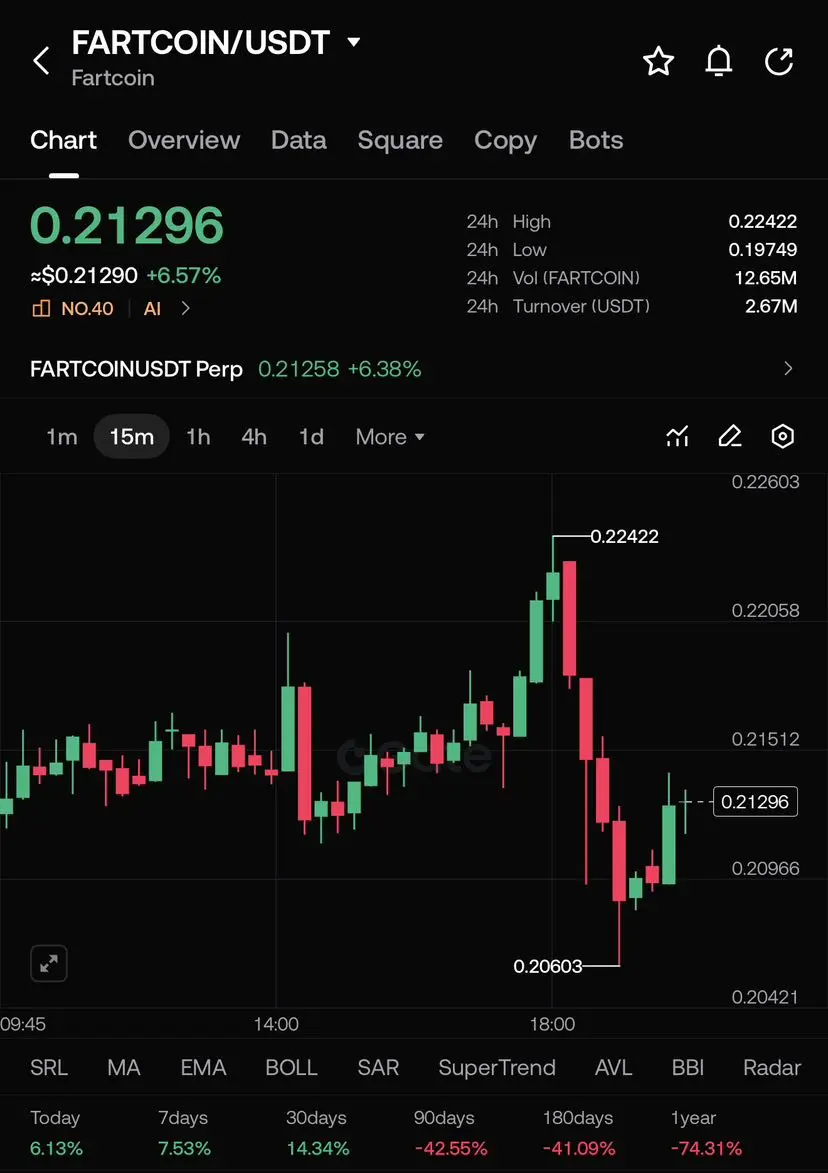
If you can't get the amount around 0.213, don't enter; better to miss out than to make a mistake.
View Original
LedgerBull
$FARTCOIN showing rejection from local highs with momentum turning bearish.
Sellers stepping in as structure weakens on lower timeframes.
EP
0.213 - 0.218
TP
TP1 0.205
TP2 0.198
TP3 0.190
SL
0.225
Liquidity above 0.224 was tapped before a sharp sell-off, confirming rejection. Weak bounce and continued lower highs suggest downside continuation unless price reclaims the broken structure.
Let’s go $FARTCOIN ‌
repost-content-media
  • Reward
  • Comment
  • Repost
  • Share
Lately I feel like I've been pulled back into the "attention economy" again; every time I refresh the timeline, there's a new narrative, a new chain, airdrop, or subsidy... Watching others post screenshots makes me itchy. Then I think about it—being repeatedly cut off isn't usually because the strategy is bad, but because emotions are being carried away: you think you're chasing opportunities, but you're actually chasing the hype.
Recently, the competition among Layer 2s over TPS, fees, and ecological subsidies has been quite lively. I used to spend a lot of time researching it too, but the re
View Original
  • Reward
  • Comment
  • Repost
  • Share
Recently, I saw someone say that "throwing it into the pool to pay fees" is as easy as making money while lying down. I can only take a sip of cold brew to cool down... Actually, that AMM curve is just pushing you to buy low and sell high. When the price deviates, your asset ratio passively changes, and the fees earned may not be enough to cover the impermanent loss. To put it simply, market making is more like taking volatility as the counterparty. The bigger the volatility, the easier it is to be "moved." Anyway, I'm taking a very relaxed approach now: only choose pools that are deeper and l
View Original
  • Reward
  • Comment
  • Repost
  • Share
  • Pin