GateUser-b7c83aba

vip
Age 1.2 Yıl
Peak Tier 5
No content yet
post-image
KatyPatyvip
[Ended] BTC Prediction and Market Analysis
live-cover
  • Reward
  • Comment
  • Repost
  • Share
bitcoin bullish or bearish
bullish
1
1
bearish
0
0
neutral
0
0
1 ParticipantsVoting Finished
CryptoEyevip
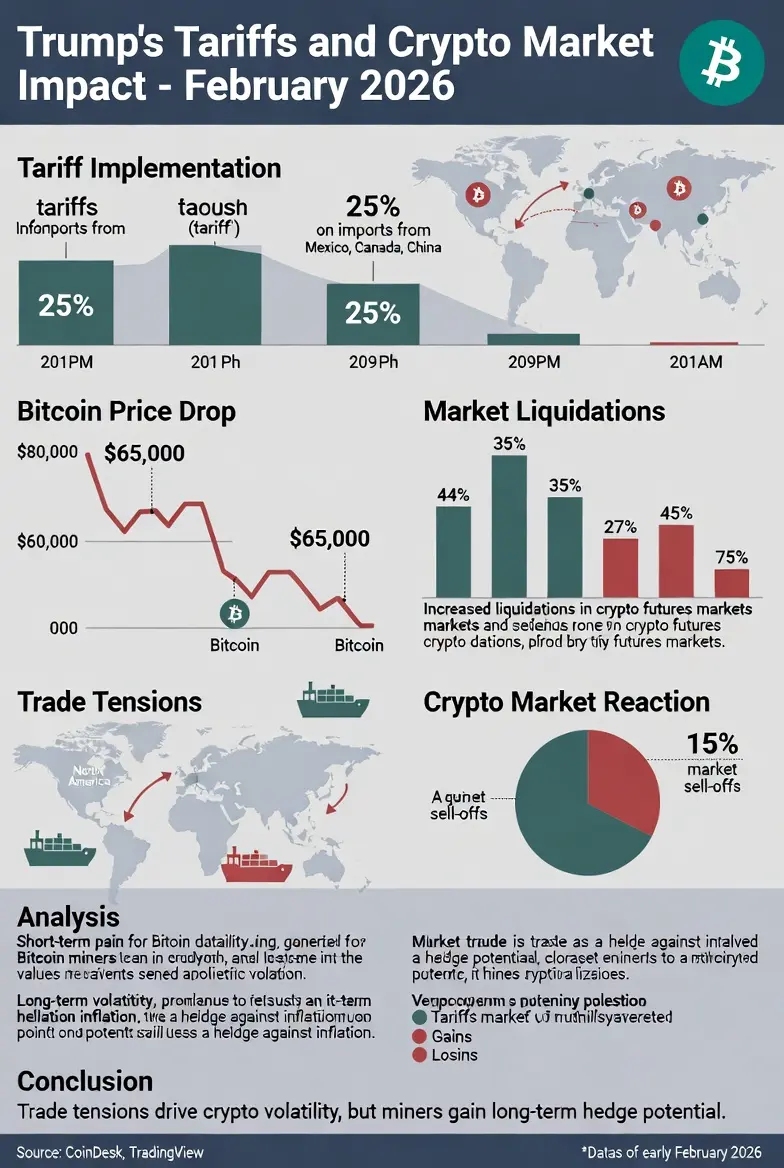
#TrumpAnnouncesNewTariffs is trending worldwide after Donald Trump unveiled a bold new trade policy aimed at reshaping America’s economic landscape. In a high-energy announcement, Trump revealed plans to impose fresh tariffs on selected imports, arguing that the move will protect domestic industries, strengthen national security, and create more jobs for American workers.
According to the proposal, the new tariffs will primarily target foreign goods in key sectors such as manufacturing, technology components, and industrial materials. Trump emphasized that for too long, unfair trade practices have harmed American businesses and workers. By increasing import duties, he believes companies will be incentivized to produce more goods domestically rather than relying on overseas suppliers.
Supporters of the decision say the tariffs could provide a much-needed boost to local manufacturers. They argue that cheaper foreign imports have made it difficult for American factories to compete, leading to job losses and weakened industrial capacity. By leveling the playing field, the administration hopes to encourage investment within the United States, ultimately revitalizing communities that depend on manufacturing and production.
Critics, however, warn that tariffs often come with unintended consequences. Higher import taxes can lead to increased prices for businesses and consumers, especially if companies pass additional costs down the supply chain. Economists caution that retaliatory measures from trading partners could escalate tensions and disrupt global markets. In previous trade disputes, tariffs have sometimes led to volatility in stock markets and uncertainty among investors.
Trump defended the strategy by framing it as a long-term investment in economic independence. He stated that strengthening domestic production reduces reliance on foreign supply chains, which can be vulnerable during global crises.
The announcement also aligns with his broader economic philosophy that prioritizes national interests and domestic job growth over multilateral trade agreements.
Small business owners and industry leaders are now closely evaluating how these new measures may affect their operations. Some anticipate short-term cost increases but remain optimistic about potential long-term gains. Others are urging policymakers to provide support mechanisms, such as tax incentives or subsidies, to ease the transition.
On social media, reactions to #TrumpAnnouncesNewTariffs have been sharply divided. Supporters praise the move as decisive leadership aimed at restoring American economic strength. Opponents question whether the policy will ultimately burden consumers with higher prices.
As the policy moves toward implementation, lawmakers, economists, and global partners will be watching closely. The coming months will likely determine whether these tariffs become a cornerstone of a renewed industrial strategy or spark renewed debate over the balance between protectionism and free trade.
One thing is certain: the announcement has reignited a national conversation about trade, economic sovereignty, and America’s role in the global marketplace.
repost-content-media
  • Reward
  • Comment
  • Repost
  • Share
hi hello, yes it is very much true that the battle over stablecoin yield is reaching a turning point.
post-image
post-image
post-image
post-image
post-image
MoonGirlvip
#WhiteHouseTalksStablecoinYields 🇺🇸💵
The Battle Over Stablecoin Yield Is Reaching a Turning Point
On Feb 19, 2026, the White House hosted its third closed-door meeting on stablecoin yields — bringing together:
• Coinbase
• Ripple
• Major bank trade groups (ABA, ICBA)
• Administration negotiators
Sources describe the session as “productive” — but no final deal yet.
The core issue remains explosive:
👉 Should Stablecoins Pay Yield?
💰 What’s at Stake?
The stablecoin market now exceeds $300B, largely backed by U.S. Treasuries.
If issuers like Circle (USDC) or Tether (USDT) offer 3–5% passive yield on idle balances, it changes everything.
That moves stablecoins closer to bank deposits — without being regulated like banks.
🏦 Banks’ Position: “Protect the $18 Trillion Deposit System”
Banks fear:
• Deposit migration into higher-yielding stablecoins
• Reduced lending capacity
• Shadow banking expansion
Their demand?
❌ Full prohibition on issuer-paid yield
❌ No loopholes
They argue anything less risks destabilizing traditional credit markets.
🪙 Crypto’s Counterargument: Innovation & U.S. Leadership
Crypto leaders respond:
• Stablecoins are payment rails, not deposits
• Yield increases adoption & liquidity
• Bans push innovation offshore
They warn that strict restrictions could weaken U.S. digital dollar dominance.
🏛️ Emerging Compromise: Activity-Based Rewards
The White House appears to be steering toward a middle ground:
✅ Allow rewards tied to transactions, trading, DeFi activity
❌ Ban passive yield on idle balances
Draft language reportedly focuses on rewards for “activities or transactions (not balances).”
This could satisfy financial stability concerns while preserving user incentives.
⚖️ Legislative Pressure
The debate is tied to two major bills:
• GENIUS Act – restricts direct interest but leaves reward gray areas
• CLARITY Act – defines SEC/CFTC roles; currently stalled
Without compromise, broader crypto legislation could remain gridlocked.
📊 What This Means for Investors
If Full Ban Wins:
• No passive 4–5% yield on idle USDC
• Exchanges end easy reward programs
• Capital shifts into DeFi (higher risk)
If Limited Rewards Pass:
• Active users still earn
• Platforms pivot toward engagement-based perks
• Stablecoins remain growth-friendly
If Pro-Yield Prevails:
• Massive institutional inflows
• Treasury-backed digital dollar expansion
• Explosive adoption
🔥 Bottom Line (Feb 23, 2026)
Three meetings complete.
Progress made.
Compromise increasingly likely.
March 1 is shaping up as a key pressure point.
This decision won’t just affect stablecoins —
it could define U.S. crypto regulation for the next decade.
Shadow banking risk…
or fintech evolution?
History is being negotiated behind closed doors.
#Stablecoins #CryptoPolicy #DigitalDollar #USRegulation
  • Reward
  • Comment
  • Repost
  • Share
  • Pin

Trade Crypto Anywhere Anytime
qrCode
Scan to download Gate App
Community
  • 简体中文
  • English
  • Tiếng Việt
  • 繁體中文
  • Español
  • Русский
  • Français (Afrique)
  • Português (Portugal)
  • Bahasa Indonesia
  • 日本語
  • بالعربية
  • Українська
  • Português (Brasil)