MasterChuTheOldDemonMaster

vip
Age 0.4 Yıl
Peak Tier 6
No content yet
🚀 Trading plan for this weekend: Why did I decide to "only play the obvious cards"?
Market funds are voting with their feet, and many people are pretending not to see it.
Friends, good weekend. The past week’s market movements have made me more certain of one thing: the most dangerous thing right now is not a sharp drop, but "pretending to be dead."
Some coins you think are bottoming out are actually bleeding silently. My principle is simple: don’t guess rotations, don’t catch falling knives, only follow the directions that funds are voting for with real money.
📉 The core issue in the curren
BTC-0,33%
ETH-0,67%
TAO-0,32%
MERL-3,03%
View Original
post-image
post-image
[The user has shared his/her trading data. Go to the App to view more.]
  • Reward
  • 28
  • Repost
  • Share
FenerliBaba:
2026 GOGOGO 👊
View More
#Gate13周年 🎉 Warm congratulations to Gate on its 13th anniversary!🚀
Time flies, and I thank the platform for providing a secure trading environment and a rich selection of assets over the years, allowing me to grow from a novice to a loyal user.💪
Here, I not only gained trading experience but also witnessed the rapid development of the cryptocurrency industry.✨
May Gate continue to be driven by innovation, focus on users, and create new glories in the Web3 wave in the future!🌊
Looking forward to the next 13 years, continuing to walk together!🥳
View Original
  • Reward
  • 46
  • Repost
  • Share
FenerliBaba:
To The Moon 🌕
View More
#Gate13周年 Happy 13th Anniversary, Gate! May you continue to lead innovation and enable users worldwide to trade with confidence!
View Original
  • Reward
  • 36
  • Repost
  • Share
LittleGodOfWealthPlutus:
Direct to the Moon!
View More
📈 Gold surges up to 4800! Is this the starting point of the “risk-avoidance consensus,” or the end point of the “FOMO trap”?
XAUUSD is playing “high-wire balancing” at historical highs: currently, it keeps tugging back and forth in the 4780 - 4810 USD range, with 4800 USD becoming a psychological battleground for both bulls and bears.
💡 The core logic behind the current bulls-and-bears battle:
• Bullish narrative: geopolitical conflict (the Middle East) + global central banks buying gold = a solid “hardcore” backing. This is no longer just speculation, but an asset-allocation behavior that i
ETH-0,71%
GT-0,93%
BTC-0,35%
View Original
post-image
post-image
  • Reward
  • 46
  • 1
  • Share
LittleGodOfWealthPlutus:
Wishing you good luck in the Year of the Horse, and congratulations on your wealth.
View More
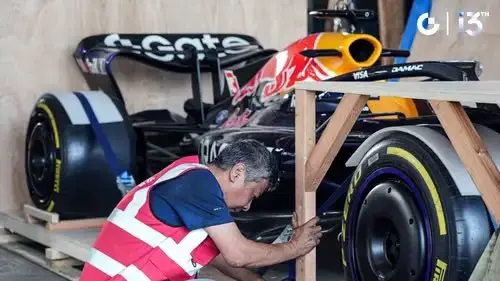
🏎️ 13 Years of Breaking New Ground! Gate 13th Anniversary Celebration: Red Bull Racing Touches Down in Victoria Harbour!
When the glorious moment of Gate’s 13th anniversary meets the peak speed of Red Bull Racing, an energy storm spanning Web3 and F1 officially sweeps across Hong Kong!
The race car has arrived at K11 MUSEA! We’re not only celebrating the past 13 years of walking side by side, but also accelerating into the next future!
📍 Coordinates: K11 MUSEA Seafront Promenade, Tsim Sha Tsui, Hong Kong
🗓️ Dates: April 18 - April 24
For 13 years, speed doesn’t slow and exploration never st
View Original
post-image
post-image
[The user has shared his/her trading data. Go to the App to view more.]
  • Reward
  • 51
  • Repost
  • Share
Crypto_Buzz_with_Alex:
Diamond Hands 💎
View More
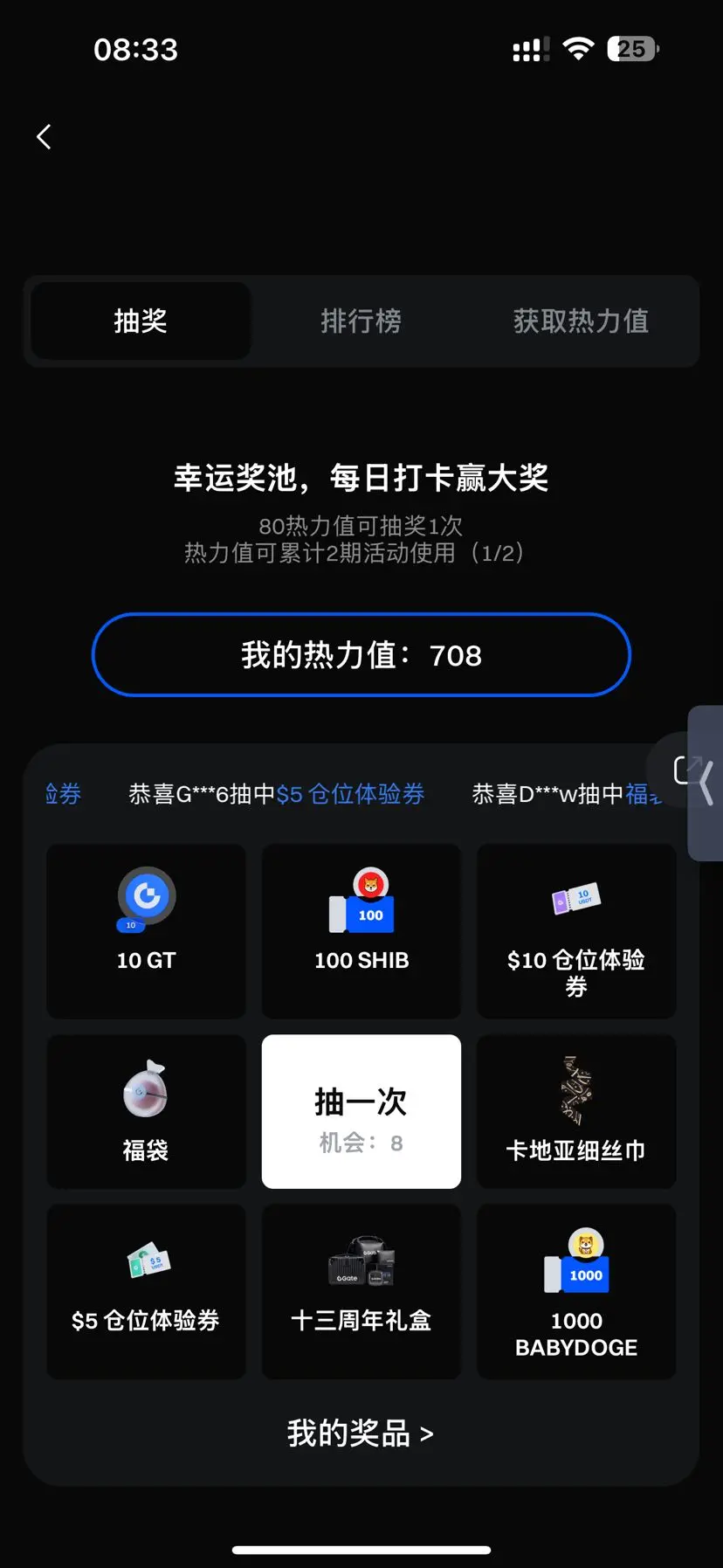
🔥 Watching Earn Phase 20 is now live — the prize pool has been fully upgraded!
Earn popularity points by watching live streams, 80 popularity points = 1 lottery entry 🎰
🎁 Prize Pool:
10 GT | 100 SHIB | $10 Trading Voucher
Cartier Scarf | 13th Anniversary Gift Box
1000 BABYDOGE | $5 Trading Voucher | Lucky Bag
🎁 Extra Rewards:
🏆 The top 10 users by popularity points will receive additional merchandise
📅 Continuous check-ins qualify for extra draws, winning 10 prizes
👉 Join now:
https://www.gate.com/activities/watch-to-earn?now_period=20
👀 Watch live streams and earn popularity points:
GT-0,96%
SHIB-0,91%
View Original
post-image
  • Reward
  • 54
  • 1
  • Share
Crypto_Buzz_with_Alex:
Diamond Hands 💎
View More
True remembrance often grows silently between people’s spoken words and exchanged glances✨. It might be an ancient folk song passed down from generation to generation in a village🎵, a clandestine vow made by a group of people during years of war as they guarded the same handwritten poetry collection🤝, or that streetlamp in a certain community that is lit every winter solstice for elderly people who have no family—one that has never gone out🕯️. It has no price tag, cannot be displayed in a shop window, yet through collective watching and trust, it gains a life more solid than gold, stone, an
ETH-0,71%
GT-0,93%
BTC-0,35%
View Original
post-image
post-image
  • Reward
  • 54
  • Repost
  • Share
Vortex_King:
LFG 🔥
View More
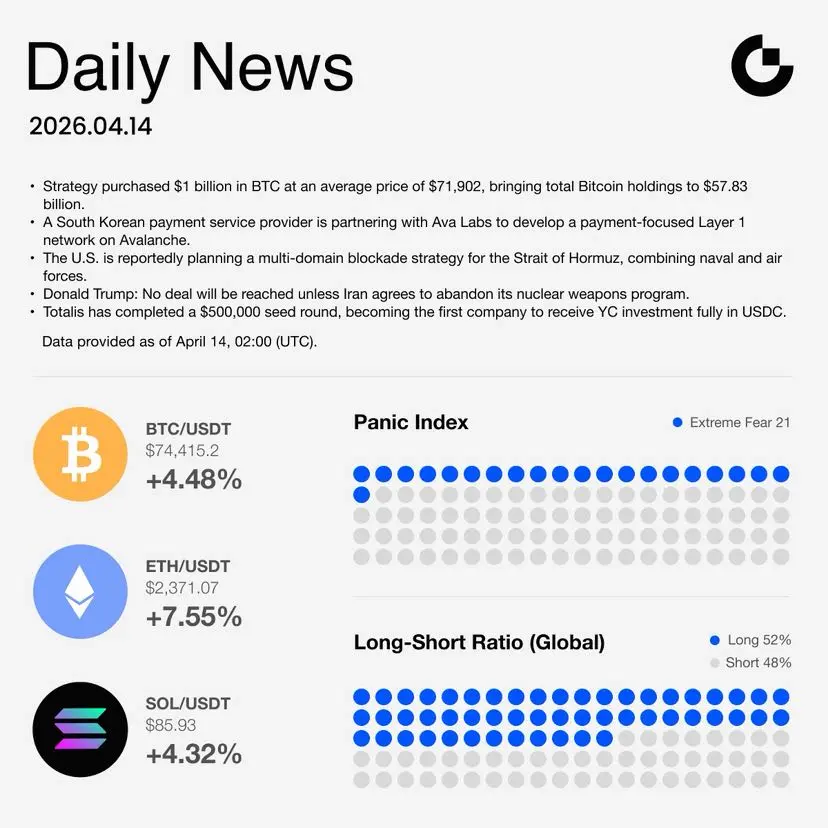
📌 【Daily Crypto Brief | 2026.04.14】
🔹 Strategy splashes $1 billion USD to add to BTC holdings; average price $71,902, bringing total holdings up to $5.783B!
🔹 A major South Korean payment group teams up with Ava Labs to build a Layer 1 payment network on Avalanche.
🔹 The US is considering blocking the Strait of Hormuz; Trump says: Iran will not give up nuclear weapons—no agreement!
🔹 Totalis becomes the first company to receive full YC USDC investment; a $500k seed round lands successfully—on-chain finance is rising!
📈 Market: BTC +4.48%, ETH +7.55%, SOL +4.32%
📊 Sentiment: Fear index 2
BTC-0,33%
USDC-0,01%
ETH-0,67%
SOL-0,32%
View Original
post-image
  • Reward
  • 61
  • Repost
  • Share
Vortex_King:
2026 GOGOGO 👊
View More
After reading Gate founder Dr. Han’s 13th anniversary open letter, I felt really moved. It wasn’t because of the number “13 years” by itself, but because of the calm yet firm power in what he said when he told us to “leave certainty, embrace the unknown”—more than a decade ago, when he was doing a postdoctoral fellowship overseas, even though there was a “steady and safe” academic path he could take, he still chose the blockchain path at a time when it was hardly anyone’s focus, with no references, and no consensus.
He said: “The real questions that need answering are not which path is more re
RWA-2,74%
View Original
Dr.Han
Gate Founder Dr. Han's 13th Anniversary Open Letter: Unleashing the Power of Transformation Amid Cyclical Changes
Dear Gate users, partners, and media friends:
This year, Gate celebrates its thirteenth anniversary. When I founded this platform, Bitcoin and blockchain were still very niche topics. Today, Gate has become a platform serving hundreds of millions of users worldwide. Along the way, we could not have achieved this without the trust and support of every user, partner, and team member. On the occasion of our 13th anniversary, I want to share with you the development history of Gate, our milestone achievements, and our thoughts on the future.
repost-content-media
  • Reward
  • 52
  • Repost
  • Share
MrFlower_XingChen:
2026 GOGOGO 👊
View More
Middle East Situation Tracking and In-Depth Analysis | April 13
The US-Iran Islamabad marathon negotiations were announced as having collapsed on April 12. Trump then ordered the blockade of Iranian ports, and the standoff in the Strait of Hormuz escalated sharply. Oil prices jumped by more than 8% on the news. Ground clashes in Lebanon continued, and the Houthis issued another round of threats. The risk of coordination within the “Axis of Resistance” increased. The two-week temporary ceasefire lasted only a few days, and the Middle East is sliding into a larger conflict vortex.
Quick Overview
View Original
post-image
post-image
RiverOfPassion
Middle East Situation Tracking and In-Depth Analysis | April 13
The US-Iran Islamabad Marathon negotiations announced failure on April 12, immediately followed by Trump ordering the blockade of Iranian ports, sharply escalating the Strait of Hormuz standoff. Oil prices surged over 8% in response, ground clashes in Lebanon continue, Houthi forces issued a new round of threats, and the "Axis of Resistance" risk increases. The two-week ceasefire lasted only a few days, and the Middle East is sliding into a larger conflict vortex.
Quick Overview
· Negotiation Breakdown: US and Iran failed to reach an agreement in Islamabad; Iran announced three "unreasonable demands" from the US, with core disagreements on Strait control and uranium enrichment rights.
· Strait Confrontation: Trump announced the blockade of the Strait of Hormuz, the Revolutionary Guard claimed full control of the strait, US warships attempted to pass but were forced back.
· Israel-Lebanon Clashes: Israeli military and Hezbollah engaged in fierce firefights in southern Lebanon at Bint Jbeil, Netanyahu personally visited the "buffer zone."
· Energy Markets: Brent crude surged about 8% intraday, European natural gas jumped 18%, the effects of the Hormuz blockade quickly transmitted.
I. Negotiation Breakdown: 21-Hour Marathon Fails
The US-Iran Islamabad talks ended on April 12 without any agreement. US Vice President Vance announced the breakdown in a press conference lasting just over three minutes, accusing Iran of refusing to promise to give up nuclear weapons development, claiming the US had offered a "final best offer." Iran blamed the failure on US "excessive demands and greed," stating the negotiations were in an "atmosphere of mistrust and suspicion," with disagreements on two or three key issues.
Sources familiar with the matter revealed that "both sides' emotions fluctuated during the negotiations, sometimes tense, sometimes easing." Iranian Foreign Minister Araghchi issued a statement after the talks, saying "just one step away from reaching the Islamabad Memorandum of Understanding, we encountered maximum pressure, constantly changing goals, and obstruction. Goodwill should be met with goodwill; hostility will only invite hostility."
Iranian official Nabavi disclosed three major US demands:
1. Equal sharing of benefits and management in the Strait of Hormuz;
2. All 60% enriched uranium to be shipped abroad;
3. Deprive Iran of all uranium enrichment rights for the next 20 years.
In addition to these demands, senior US officials also revealed that Iran rejected the US proposal to stop funding Hamas, Hezbollah, and Houthi forces, and to fully open the Strait of Hormuz.
II. Strait Confrontation Escalates: Dual Narratives Under the Blockade
Hours after the negotiations failed, Trump posted on social media that the US Navy would immediately begin blocking all ships attempting to enter or exit the Strait of Hormuz, intercept and verify all ships paying tolls to Iran in international waters, and clear mines laid by Iran in the strait. He also indicated possible strikes on Iran’s desalination plants and power plants. According to The Wall Street Journal, sources said Trump and his aides are considering limited military strikes against Iran while maintaining the blockade.
US Central Command then announced that from 10 a.m. Eastern Time on April 13, all maritime traffic entering or leaving Iranian ports would be blocked, but ships traveling to non-Iranian ports would still be allowed through the Strait of Hormuz. This scope is narrower than Trump’s initial statement of "any ship."
Iran responded strongly. The Revolutionary Guard issued a statement saying the Strait of Hormuz is under control, open to non-military ships under certain conditions, warning that any military vessels approaching the strait would be considered violations of the ceasefire and met with tough responses. They also released drone surveillance footage of the strait, warning "any wrong move will plunge the enemy into a deadly whirlpool in the strait."
Regarding the US and Iranian naval standoff, both sides have different accounts. Trump claimed two US ships successfully passed through the Strait of Hormuz on April 11, but Iran said that when two US destroyers attempted to enter the Persian Gulf, the Revolutionary Guard completed cruise missile lock-on and deployed attack drones, giving the US ships a 30-minute retreat deadline. The US ultimately withdrew, just minutes from destruction. Iran’s state broadcaster called this a "failed propaganda operation."
The UK has made clear it will not participate in the blockade. A government spokesperson said the UK is working with France and others to form a coalition to protect navigation freedom.
III. Israel-Lebanon Clashes Continue: Netanyahu Visits "Buffer Zone"
While the Hormuz Strait crisis escalates, ground conflicts in Lebanon persist. On April 12, Israeli military and Hezbollah engaged in fierce firefights in southern Lebanon at Bint Jbeil, with Hezbollah firing rockets at Israeli Defense Forces headquarters in northern Israel that night.
Netanyahu personally visited the so-called "buffer zone" controlled by Israel in southern Lebanon, stating "the war continues, including within the buffer zone in Lebanon," and that the IDF has more work to do. Israel agreed to hold formal peace talks with Lebanon in Washington on April 14 but refused to discuss a ceasefire with Hezbollah.
Meanwhile, Houthi forces issued a statement on April 12, warning that if the US and Israel attack Iran and the "Resistance Front" again, they will participate with greater intensity. The four simultaneous fronts—nuclear negotiations, Hormuz Strait confrontation, Israel-Lebanon ground clashes, and Houthi threats—show Iran and its proxy system are capable of "full-scale counterattacks."
IV. Energy Markets React Sharply
Affected by the blockade news, international oil prices surged at Asian market open on Monday, with Brent and WTI crude both rising about 8%. More notably, spot market distortions are extreme—Brent Forties spot prices approached $147 per barrel, far above futures prices, signaling severe shortages. European natural gas also jumped 18%.
Trump rarely admits that oil prices might stay high before the midterm elections, saying "they might go down, stay the same, or maybe go a bit higher, but should be roughly at current levels." Iranian Parliament Speaker Kalibaf posted a map of oil prices around the White House on social media, writing "As the so-called blockade continues, you’ll soon miss $4–$5 per gallon gasoline."
V. In-Depth Analysis
(1) The Essence of the Negotiation Breakdown: From "Military Stop-loss" to "Political Showdown"
The root cause of the US-Iran negotiation failure lies in fundamentally different underlying logics of "ceasefire." For Iran, the war has lasted over a month, with more than 3,300 deaths, domestic economic pressure, and damaged refineries. Accepting a ceasefire and seeking negotiations is essentially a stop-loss move—using diplomacy to consolidate battlefield gains, seek sanctions relief and asset thawing, and gain breathing room. Foreign Minister Araghchi explicitly said Iran "never expects to reach an agreement in a single round," revealing a strategic view of negotiations as a long-term game.
For the US, a ceasefire is an extension of military pressure through diplomacy. The three core US demands in Islamabad—"benefit sharing" in the strait, all 60% enriched uranium shipped out, and depriving Iran of uranium enrichment rights for 20 years—each touch Iran’s core interests. These "red lines" show the Trump administration’s goal is not primarily to reach an agreement but to exert maximum pressure for Iran to fully concede.
The immediate root of the negotiation failure is this strategic goal mismatch.
(2) The Strait of Hormuz: Geographical Leverage and Nuclear Bargaining
The New York Times analysis suggests both sides see themselves as "winners of the first round": the US by military strikes, Iran by survival; neither willing to compromise. Former US State Department Middle East negotiator Miller pointed out Iran "still possesses high-enriched uranium, demonstrating it can use geographic advantage to control and manage the Strait of Hormuz, and the regime remains standing—these are their chips."
Iran’s two key chips—geographical leverage (the Strait of Hormuz) and nuclear (60% enriched uranium)—are linked in this game. The US demands Iran give up both, but Iran believes "the day it drops its weapons is the day it gets beaten."
(3) Political Constraints and Red Lines for US and Iran
Iran’s dilemma: Despite domestic calls for peace and economic recovery, Supreme Leader Khamenei prioritizes national dignity. Accepting the US demand to deprive Iran of 20 years of uranium enrichment is tantamount to self-destruction. Iran reportedly "is not in a hurry to renegotiate," and as long as the US refuses a reasonable deal, the Hormuz situation will not change. Parliament Speaker Kalibaf said, "If war is necessary, we will fight; if rational negotiations are possible, we will respond rationally."
US dilemma: Trump faces core political constraints from the November midterms. Currently, US regular gasoline prices exceed $4 per gallon, up from below $3 in February. The New York Times notes Trump’s "biggest leverage is threatening to escalate military action," but this is not a particularly feasible political choice for him, and Iran is well aware of this.
(4) Multi-Front War Risks
Iran is currently engaged simultaneously on three fronts: direct confrontation with the US in the Strait of Hormuz, fierce clashes with Israeli forces in southern Lebanon, and ongoing pressure via Houthi forces in the Red Sea. This "multi-pronged, multi-point" deployment enables Iran to exert pressure on the US and Israel if negotiations break down.
The most severe risk is a two-front squeeze: if the Strait of Hormuz is fully blocked, the Bab el-Mandeb Strait could also close, disrupting about 20% of global oil transport and 12% of trade, causing unprecedented energy price shocks.
Iranian political analyst Haratian proposed two possible future scenarios: one, the US avoids escalation into another war and instead intensifies economic and shipping sanctions; two, the situation escalates into military action and war, with Iran continuing economic and energy price pressure on the US, and swiftly taking action against Israel to pave the way for new negotiations.
Key Variables
The future trajectory depends on several key variables:
1. Whether the US will implement limited military strikes—Trump is weighing whether to resume airstrikes while maintaining the blockade; if implemented, the situation will escalate.
2. Duration and enforcement of the Hormuz blockade—Britain has made clear it will not participate, and the scale of the US "alliance" remains to be seen.
3. The intensity of Israeli military actions against Lebanon—Israel will start negotiations with Lebanon in Washington on April 14 but refuses to discuss a ceasefire with Hezbollah, which could trigger new conflicts.
4. Whether diplomatic windows remain open—despite US claims of "final and best offer," Iran says "the ball is in the US court," and Pakistan continues to call for "all parties to continue honoring ceasefire commitments." China played a key role in the ceasefire, and whether it can again mediate amid escalation remains to be seen.
With all sides’ bottom lines unchanged, the confrontation in the Strait of Hormuz has become the core "pressure valve" of Middle East tensions. In the short term, the outlook can be summarized as: diplomatic doors remain open, but the risk of conflict is rising at an unprecedented pace. Trump’s midterm election countdown is underway, while Tehran’s strategic patience and military resilience are also under heavy test.
This report is compiled from open sources and is for reference only as of April 13, 2026, and does not represent any position.
#Gate廣場四月發帖挑戰
repost-content-media
  • Reward
  • 54
  • Repost
  • Share
Vortex_King:
2026 GOGOGO 👊
View More
The US-Iran confrontation causes cryptocurrency markets to plummet. Is now the time to do "Digital Pre-IPO"—bottom-fishing or taking over the position? 🤔
These past two days, the market has been truly a rollercoaster. 🔥 On one side, tense Middle East situation and a major correction in the crypto space, with over 110k liquidations; on the other side, Gate unexpectedly opened the Digital Pre-IPO reservation portal, claiming you can use USDT to buy shares of unlisted unicorns in advance.
This approach is indeed innovative, breaking the previous barrier where only institutions could invest. But
View Original
post-image
post-image
[The user has shared his/her trading data. Go to the App to view more.]
  • Reward
  • 57
  • Repost
  • Share
MrFlower_XingChen:
To The Moon 🌕
View More
🎁 Gate 13th Anniversary Celebration, Free Draw for $GT Grand Prize!
👉 Participate with just 1 USDT to share a prize pool of 10,000 GT!
🤝 Invite friends to trade and reach the target, you can get up to 11 chances to win, and friends can also receive rewards!
🔥 100% win rate, the event is in full swing, come and join now!
Event link: https://www.gate.com/campaigns/4513(https://www.gate.com/campaigns/4513)
Event details: https://www.gate.com/announcements/article/50633(https://www.gate.com/announcements/article/50633)
#Gate13thAnniversary #Referral #GT #LuckyDraw #AirDrop
GT-0,96%
View Original
  • Reward
  • 58
  • Repost
  • Share
MrFlower_XingChen:
To The Moon 🌕
View More
#Gate广场四月发帖挑战 A two-week ceasefire between the US and Iran: a rapid halt to war, a life-and-death negotiation, a critical turning point for global markets!
On April 12th, local time, after mediation by Pakistan, the third round of US-Iran negotiations in Islamabad concluded, with Iran stating this was the last chance to reach a framework agreement. The two-week ceasefire window is nearing its end, with sharp disagreements on three core issues, diplomatic negotiations and military pressure intensifying simultaneously. The Middle East stands at the crossroads of war and peace, while global capit
View Original
post-image
post-image
post-image
[The user has shared his/her trading data. Go to the App to view more.]
Ryakpanda
#Gate广场四月发帖挑战 Two-week ceasefire between the US and Iran: War slows down abruptly, negotiations face a life-and-death dilemma, global markets迎来 a critical turning point!
On April 12th, local time, after mediation by Pakistan, the third round of US-Iran negotiations in Islamabad concluded, with Iran stating this was the last chance to reach a framework agreement. The two-week ceasefire window is nearing its end, with sharp disagreements on three core issues, diplomatic games and military pressure intensifying simultaneously. The Middle East stands at the crossroads of war and peace, and global capital markets are holding their breath.
1. From war to ceasefire: the pragmatic logic of forced compromise
The US-Iran ceasefire this time is not out of goodwill, but a pragmatic retreat amid high war costs and failed objectives.
- US: Over a month of fighting, 13 soldiers killed, daily costs exceeding $1 billion, ammunition rapidly depleted. Failed to destroy Iran’s nuclear capability, and did not open the Strait of Hormuz. Domestic anti-war voices are rising, cracks appear within the Republican Party, and Trump urgently needs a “diplomatic victory” to mitigate electoral losses.
- Iran: Subjected to multiple airstrikes, high-level attacks, economic and livelihood pressures, but still controls the Strait, retains half of its arsenal, and refuses to submit to the US. The ceasefire aims to breathe, seek sanctions relief, asset thawing, and stabilize the regime and regional position.
2. Core contradictions: three deadlocks, two weeks unlikely to break
At the negotiation table, both sides’ demands are worlds apart, with three major issues refusing to budge:
1. Strait of Hormuz: US demands Iran fully open and international co-management; Iran insists on sovereignty control, negotiable transit rules, and refuses to abandon the strategic chokepoint.
2. Asset thawing abroad: Iran demands full unfreezing of frozen assets; the White House directly denies related commitments, only willing limited relaxations with harsh conditions.
3. Uranium enrichment: US demands Iran reduce to 3.67% and undergo comprehensive inspections; Iran refuses to give up nuclear capability, only willing limited concessions, and rejects linking missile and regional issues.
3. Both sides’ chips: hard power and vulnerabilities
- US chips: military superiority, global sanctions, cooperation with Israel, dollar hegemony;
Vulnerabilities: domestic anti-war sentiment, election pressures, allied disunity, high oil prices dragging down the economy.
- Iran chips: control of the Strait (20%-30% of global oil transit), missile and drone stockpiles, regional proxy networks, resistance will;
Vulnerabilities: economic sanctions, livelihood hardships, military losses.
4. Outlook prediction: three possible directions, many uncertainties
- Optimistic (40%): Achieve a temporary framework, extend ceasefire, Iran limits uranium enrichment, some assets unfreezed, Strait opened, negotiations continue.
- Neutral (45%): Maintain ceasefire, defer disagreements, establish working groups, limited Strait opening, prolong negotiations.
- Pessimistic (15%): Negotiations break down, fighting reignites, US targets infrastructure, Iran attacks Middle Eastern energy facilities, oil prices surge to $200/barrel.
The biggest variable: Israel. Netanyahu says he will continue striking Iran’s proxies or stir trouble through Lebanon conflicts, undermining ceasefire and negotiations, and consolidating domestic hardline support. Additionally, strong domestic hardline factions in the US and Iran oppose each other, with zero mutual trust—both are ticking time bombs.
5. Impact on global and Chinese markets
- Global capital markets—
Crude oil: smooth negotiations could bring prices back to $80-90; if negotiations break, prices could spike above $150, triggering stagflation risks.
- Stock markets: easing tensions may boost tech and consumer sectors; deterioration could cause global crashes, with military and energy sectors outperforming against the trend.
- Gold/USD: risk aversion rising boosts gold prices and strengthens the dollar; easing tensions weakens the dollar and causes gold to fluctuate.
- Tomorrow’s A-share trend—overall: risk appetite recovers, major indices oscillate upward, ChiNext more elastic.
- Beneficiary sectors: technology (AI, computing power), aerospace and shipping, mid- and downstream chemicals, consumer goods.
- Under pressure sectors: oil and gas, coal, military industry (risk aversion wanes).
- Risks: if negotiations suddenly turn sour, A-shares will quickly retreat, and safe-haven sectors will rise again.
A two-week ceasefire is a breathing space, not a final resolution. The essence of US-Iran negotiations is a “dignified ceasefire” game. Core disagreements are hard to resolve, and variables like Israel are brewing. The probability of reaching a comprehensive agreement within two weeks is extremely low; the most likely scenario is an extension of the ceasefire and postponement of disputes.
For markets, short-term focus on negotiation news pulses, medium-term on Strait navigation and sanctions easing. Investors should beware of black swans, control positions, buy on dips in growth and consumption sectors, and keep safe-haven sectors as hedges.
repost-content-media
  • Reward
  • 45
  • Repost
  • Share
MrFlower_XingChen:
To The Moon 🌕
View More
🌟 Enlightenment Moment: In the square, my social assets achieved a "tenfold increase" before my wallet did
Before coming to the square, I thought the entire crypto world was just candlestick charts and profit and loss.
Now I understand that every connection built here, every bit of genuine recognition I receive, is the "certain Alpha" for crossing bull and bear markets.
I’m no longer just an address behind a screen, but a "resident" in the community—well-known, with a name, a surname, and opinions. Every like, every thoughtful comment, is adding a solid bullish candle to my personal social ca
ETH-0,71%
BTC-0,35%
View Original
post-image
post-image
[The user has shared his/her trading data. Go to the App to view more.]
  • Reward
  • 65
  • Repost
  • Share
MrFlower_XingChen:
To The Moon 🌕
View More
#Gate广场四月发帖挑战 4.11 US-Iran Negotiations: Global Markets Hold Their Breath, Your Wallet Will Face a Major Turning Point!
Today, the world's attention is focused on Islamabad, Pakistan—where the first round of official ceasefire negotiations between the United States and Iran has begun. This "two-week ceasefire," initiated by Trump halting bombings and Iran agreeing to restart the Strait, is a chain reaction that directly influences oil prices, gold prices, stock markets, inflation, and exchange rates.
1. The Night Before Negotiations: Tensions High, Variables Abound
• Date: April 11 (Saturday),
View Original
post-image
post-image
Ryakpanda
#Gate广场四月发帖挑战 4.11 US-Iran Negotiations: The Global Markets Hold Their Breath, Your Wallet Will Face a Major Turning Point!
Today, the world's attention is focused on Islamabad, Pakistan—the first round of official ceasefire negotiations between the United States and Iran has officially begun. This "two-week ceasefire," where Trump paused bombings and Iran agreed to restart the Strait, is a chain reaction that directly influences oil prices, gold prices, stock markets, inflation, and exchange rates.
Part 1: The Night Before Negotiations: Tensions High, Variables Abound
• Time: April 11th (Saturday), Islamabad
• Format: Vice President Vance leading the U.S. side, Iranian Parliament Speaker Kalibaf leading the team
• Core Disputes:
◦ U.S.: Ban Iran from uranium enrichment, lift sanctions in exchange for denuclearization
◦ Iran: Fully lift sanctions, war reparations, respect sovereignty
◦ Biggest Variable: Iran demands Lebanon cease fire first; Israel refuses, negotiations once again hanging in the balance
• Ceasefire Duration: Until April 22nd, only a 12-day window
Part 2: The Market Has Exploded: A Night of "Roller Coaster" and Wealth Reshuffle
1. Crude Oil: Plunged 20%, Risk Premium Eliminated
• WTI from $117 → $91, a drop of over 19%
• Brent falls below $94, shipping costs sharply decrease
• Positive effects: Logistics, chemicals, aviation, foreign trade, manufacturing (costs significantly reduced)
2. Gold: Safe-haven Shifted Up, Breaks Through $4,850
• Spot gold surges 3%, hitting a three-week high
• Logic: Ceasefire stabilizes sentiment + dollar weakens + liquidity easing expectations
3. Global Stock Markets: Violent Rebound, All in Asia-Pacific Rise
• Nikkei up 5%, Korean stocks up 7% (triggering circuit breakers)
• A-shares: Shanghai Composite up 2.69%, Shenzhen Composite up 4.79%
• Capital: Safe-haven funds flee, flooding into risk assets
Part 3: Three Possible Negotiation Outcomes, Directly Impacting Your Wallet
1. Optimistic: Preliminary Agreement Reached (Probability ★★★☆☆)
• Oil prices: Stable below $90, inflation cools significantly
• Stock Market: Continues to rebound, manufacturing, consumer, and tech lead gains
• Gold: Slight pullback, entering consolidation
2. Neutral: Negotiations Continue Without Breakthrough, Ceasefire Extended (Probability ★★★★☆)
• Maintain status quo, Strait remains open, no fighting, no negotiations
• Market: Mainly volatile, structural opportunities emerge
• Strategy: Light positions, buy low and sell high
3. Pessimistic: Negotiations Fail, War Resumes (Probability ★★☆☆☆)
• Oil prices: Return to over $110, inflation rebounds
• Stock Market: Further sharp decline, energy and gold defy the trend and rise
• For you: Oil prices, living costs, travel expenses rise again
Part 4: Ordinary People: 3 Steps to Respond, Avoid Pitfalls, Seize Opportunities
1. Financial Management: Avoid Risks, Focus on Main Trends
• Favorable sectors: Logistics, aviation, chemicals, foreign trade, automotive, consumption (costs down)
• Cautious sectors: Pure energy, military industry, high debt (volatility increases)
• Gold: Hold lightly, hedge against uncertainty
2. Career/Business: Embrace Cost-Reduction Benefits
• Manufacturing: Raw materials and logistics costs fall, profits recover
• Foreign trade/Cross-border: Shipping resumes, freight costs drop, orders rebound
• Entrepreneurship: Prioritize low-energy, high-turnover industries
3. Life: Money-Saving Window Opens
• Falling oil prices: Cheaper fuel, travel, courier services
• Inflation slowdown: Reduced prices and inflation pressure
• Mortgage/Interest rates: Easing expectations rise, monthly payments may decrease
The Islamabad negotiations on April 11th are a critical turning point for the global economy:
If successful, it means cooling inflation, economic recovery, and your wallet bouncing back;
If failed, it means renewed conflict, soaring prices, and market declines.
In the next 12 days (until April 22nd), every piece of news will influence global assets. Ordinary people need not panic but should read the trend clearly and follow the rhythm—geopolitical easing is your biggest money-making window this year.
repost-content-media
  • Reward
  • 40
  • Repost
  • Share
Yusfirah:
2026 GOGOGO 👊
View More
🏭 This Weekend "Point Production" Pipeline Launch | My Disciplined Trading Plan
Tired of ineffective weekend monitoring and random fluctuations?
My solution is: stop guessing, start "producing."
No betting on direction, only use very small positions, and make the process of earning points systematic and disciplined.
====================
1. Core of the plan: discipline against randomness
• ⏰ Fixed time: Launch this Saturday (April 12), execute through Sunday.
• 💡 Very small positions: Only use 5% of total funds as "production-specific capital," with gains and losses not affecting your mindset
BTC-0,33%
ETH-0,67%
View Original
post-image
post-image
[The user has shared his/her trading data. Go to the App to view more.]
  • Reward
  • 50
  • Repost
  • Share
Yusfirah:
To The Moon 🌕
View More
"The Self-Cultivation of Chives: From 'Unity of Knowledge and Action' to 'Unity of Knowledge and Action in Billion'"
1. Knowledge: The white paper is torn apart, the K-line chart is scrutinized, suddenly enlightened at 3 a.m.—
"Blockchain is the future, all-in is now!"
Action: Open the exchange, hands trembling like an electric shock, in the end only bought $10 worth of dog coins.
2. Knowledge: Idols shout "Bull markets never end, buy more during crashes!"
Action: When the crash really comes, kneel and beg the heavens: "As long as I break even, I’ll uninstall immediately!"
(After breaking even
ETH-0,71%
BTC-0,35%
View Original
post-image
post-image
[The user has shared his/her trading data. Go to the App to view more.]
  • Reward
  • 84
  • 1
  • Share
Yusfirah:
2026 GOGOGO 👊
View More
$MRT is a digital commemorative asset built on GateChain EVM. It is designed to permanently preserve the memory of specific individuals/spirits through blockchain technology.
Core attributes: purely commemorative in nature, with no economic value, investment attributes, or future plans.
Initiator's commitment: I only hold a symbolic share. I will never actively trade, pump up prices (“pull the pad”), or make false promises.
This is the only announcement; there will be no further updates. Please do not inquire about prices and the roadmap.
View Original
MRT
MRTMemorial Token
MC:$2.46KHolders:4
1.51%
  • Reward
  • 91
  • Repost
  • Share
Yusfirah:
1000x VIbes 🤑
View More
#Gate广场四月发帖挑战 Crypto Daily(04.10): Bitcoin prices highly tied to geopolitical situations and oil prices, Iran promotes BTC payments for oil transit fees
1. Bitcoin Price Trends and Market Analysis
1. Recent Bitcoin prices are directly affected by US-Iran geopolitical conflicts and oil price fluctuations, with high volatility: optimistic ceasefire sentiments have pushed BTC past $70k and $72k multiple times. If the ceasefire breaks down and oil prices rise, BTC faces a correction pressure, with its trend closely linked to global risk appetite and Federal Reserve rate cut expectations.
2. Market
BTC-0,33%
ETH-0,67%
XRP0,27%
View Original
Ryakpanda
#Gate广场四月发帖挑战 Crypto Daily(04.10): Bitcoin prices highly tied to geopolitical situations and oil prices, Iran promotes BTC payments for oil transit fees
1. Bitcoin Price Trends and Market Analysis
1. Recent Bitcoin prices are directly affected by US-Iran geopolitical conflicts and oil price fluctuations, with high volatility: optimistic ceasefire sentiments have pushed BTC past $70k and $72k multiple times. If the ceasefire breaks down and oil prices rise, BTC faces a correction pressure, with its trend closely linked to global risk appetite and Federal Reserve rate cut expectations.
2. Market institutions have clear disagreements on future trends: bullish views believe that if oil prices continue to fall, prompting the Fed to cut rates early, combined with $6 billion in short positions in the $72,000–$73.5k range, a breakout could trigger chain liquidations, pushing BTC to $80k; on-chain data also shows short-term traders are exiting while long-term holders continue accumulating, building momentum for future gains.
3. Bearish opinions argue that if BTC cannot hold above $75k, it may fall back to $10k, as market confidence remains fragile. Short-term technicals show BTC's current volatility range is between $69k and $73k, with support around $69,000 and key resistance at $73,000–$76k. Investors should watch for breakthroughs and support levels, as short-term volatility risks remain high.
2. Bitcoin ETF and Traditional Institutional Deployment Dynamics
1. Morgan Stanley's new Bitcoin ETF MSBT performed well on its first day, with approximately $30.6 million in inflows. This ETF charges a 0.14% fee, making it the lowest-cost spot Bitcoin ETF in the US market, leveraging Morgan Stanley’s extensive wealth advisory network for channel advantages.
2. Recently, overall crypto ETF funds have been flowing out: on April 7, Bitcoin ETFs saw a net outflow of $159 million, Ethereum ETFs about $64.67 million, with only niche tokens like Ripple experiencing small net inflows, reflecting lingering market confidence fragility.
3. Major financial institutions continue to push crypto adoption: Charles Schwab plans to pilot spot BTC and ETH trading in Q2 2026, CME Group plans to launch new crypto futures in May, indicating increasing institutional acceptance of Bitcoin.
3. Strategic Use of Bitcoin in Geopolitics
1. During the US-Iran ceasefire, Iran announced that oil tankers passing through the Strait of Hormuz would pay tolls in Bitcoin, charging $1 per barrel of oil, using Bitcoin’s peer-to-peer, untraceable features to evade US financial sanctions. Empty tankers can pass freely.
2. This event marks the first time a sovereign nation has used cryptocurrency as a strategic tool in geopolitical games, breaking the notion of crypto solely as a financial asset. It signifies that crypto technology has officially entered national-level geopolitical finance practices and also reflects cracks in the traditional petrodollar system.
4. Changes in Bitcoin Holdings by Various Entities
1. Bhutan continues to sell off Bitcoin reserves accumulated through national hydroelectric mining. As of April 2026, holdings have decreased from about 13k BTC at the end of 2024 to less than 4,000 BTC, with a total outflow of over 9,000 BTC. Bhutan remains the fifth-largest sovereign holder of Bitcoin globally.
2. Long-term bullish Bitcoin supporter MicroStrategy continues to increase holdings, recently investing an additional $330 million to buy BTC. Through issuing preferred stock, Strategy can raise funds to purchase over 2,500 BTC; meanwhile, mining firm Core Scientific plans to liquidate nearly all its Bitcoin reserves by 2026 to fund AI transformation.
5. Bitcoin Security and Risk Events
1. Bitcoin ATM operator Bitcoin Depot was hacked, with hackers stealing about 50.9 BTC worth approximately $3.66 million. The incident did not affect user platforms or data. The company has initiated emergency response and notified law enforcement.
2. Quantum computing expert John M. Martinis warned that Bitcoin faces quantum attack risks; quantum computers could crack Bitcoin’s elliptic curve encryption sooner than expected. Upgrading Bitcoin’s distributed network infrastructure is challenging, so early anti-quantum preparations are necessary.
3. South Korean exchange Bit mistakenly awarded 620k KRW in promotions as 620k BTC. Ultimately, 7 BTC (~$490k) could not be recovered. The exchange has initiated asset preservation procedures and plans to sue users who did not return the coins.
6. Historical Review of Bitcoin Industry Development
The 12-year development from Bitcoin’s genesis block in 2009 to mainstream institutional acceptance records Bitcoin’s evolution from a geek experiment to a global mainstream digital asset, including key milestones such as early trading, mining technology evolution, and institutional entry.
repost-content-media
  • Reward
  • 49
  • Repost
  • Share
Yusfirah:
2026 GOGOGO 👊
View More
#FDICReleasesStablecoinGuidanceDraft
🏦 #FDICReleasesStablecoinGuidanceDraft — A Step Toward Regulation
FDIC has just released a draft guidance on stablecoins, another sign that regulators are beginning to take crypto-backed currencies seriously.
💭 My perspective:
1️⃣ Why this matters
Stablecoins have always been the backbone of crypto trading and decentralized finance. Clearer regulatory guidance means more trust and stability for investors and institutions.
2️⃣ Focus areas
Banks and issuers may need to comply more strictly
Pay attention to reserves, transparency, and risk management
Potent
View Original
Crypto_Buzz_with_Alex
#FDICReleasesStablecoinGuidanceDraft
🏦 #FDICReleasesStablecoinGuidanceDraft — A Step Toward Regulation
The FDIC just released a draft guidance for stablecoins, and it’s another sign that regulators are starting to take crypto-backed money seriously.
💭 My thoughts:
1️⃣ Why this matters
Stablecoins have been the backbone of crypto trading and DeFi. Clearer regulatory guidance means more trust and stability for both investors and institutions.
2️⃣ Key points to watch
Banks and issuers may need stricter compliance
Focus on reserves, transparency, and risk management
Could pave the way for safer integration into traditional finance
3️⃣ What it means for traders
Short-term: volatility might increase if any stablecoin adjustments are required
Long-term: safer ecosystem, potentially more institutional adoption
⚖️ Final take
Stablecoins are critical for crypto’s growth. Guidance like this may feel restrictive to some, but it could boost confidence across the entire market.
Being informed now is better than reacting later 👀
#CryptoRegulation #StablecoinUpdate #DeFiGrowth
repost-content-media
  • Reward
  • 44
  • Repost
  • Share
Yusfirah:
2026 GOGOGO 👊
View More
  • Pin