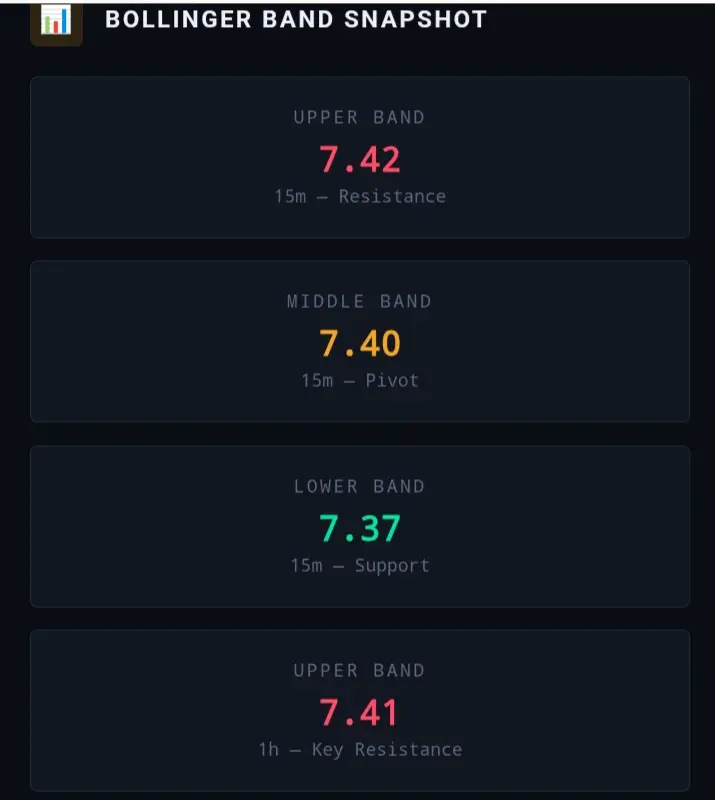

# TradingStrategiesInChoppyMarkets

981
#TradingStrategiesInChoppyMarkets
$GT
Technical Trade Plan · April 25, 2026
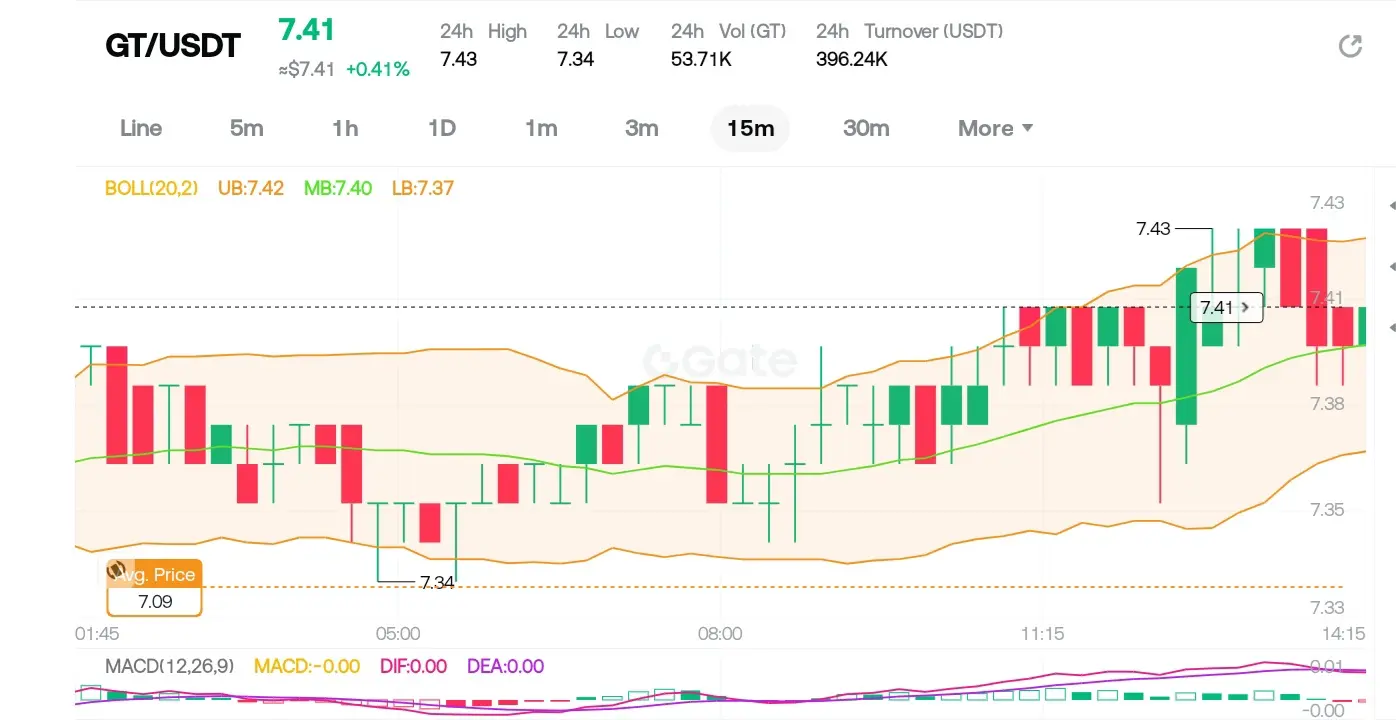
GT/USDT — Breakout or Fade?
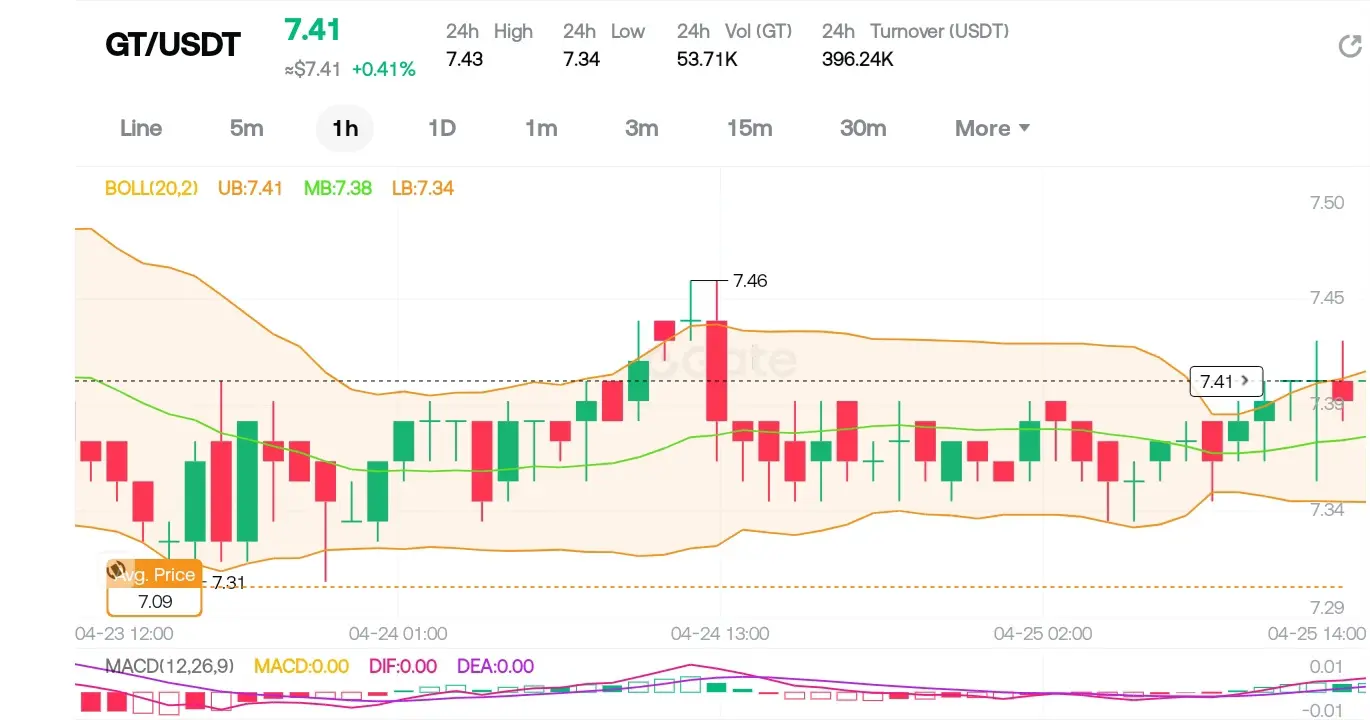
15-Minute & 1-Hour Multi-Timeframe Analysis · Gate.io · BOLL + MACD
Price
7.41
Change 24h
+0.41%
24h High
7.43
24h Low
7.34
Avg Entry
7.09
Unrealised PnL
+4.51%
⚡ Cautiously Bullish
Price pressing upper BOLL bands on both timeframes — watch for breakout or rejection
📋
Market Narrative
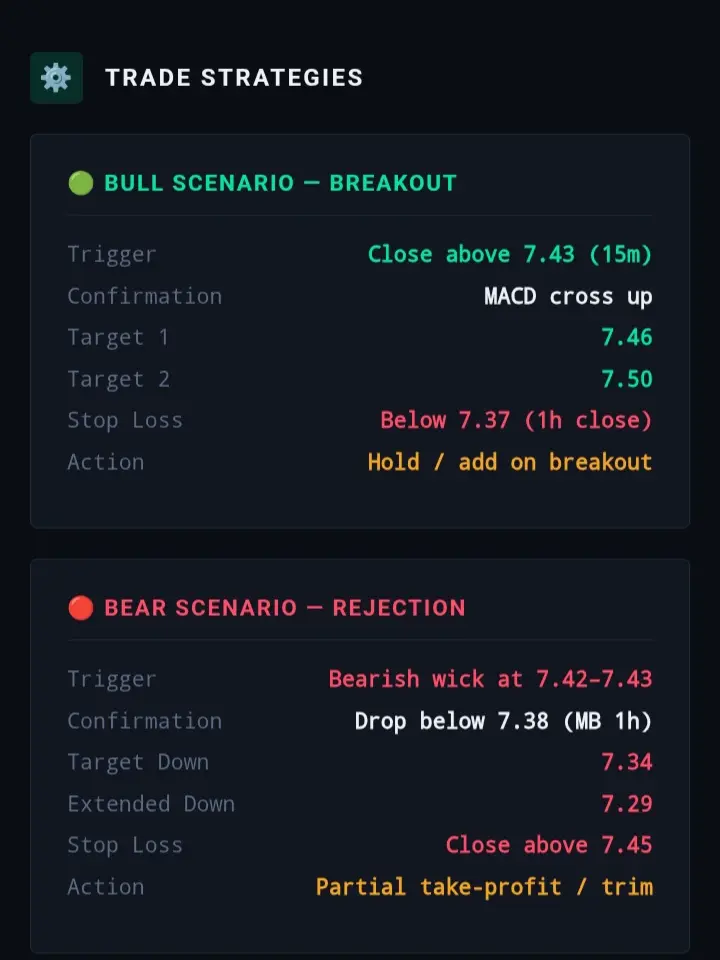
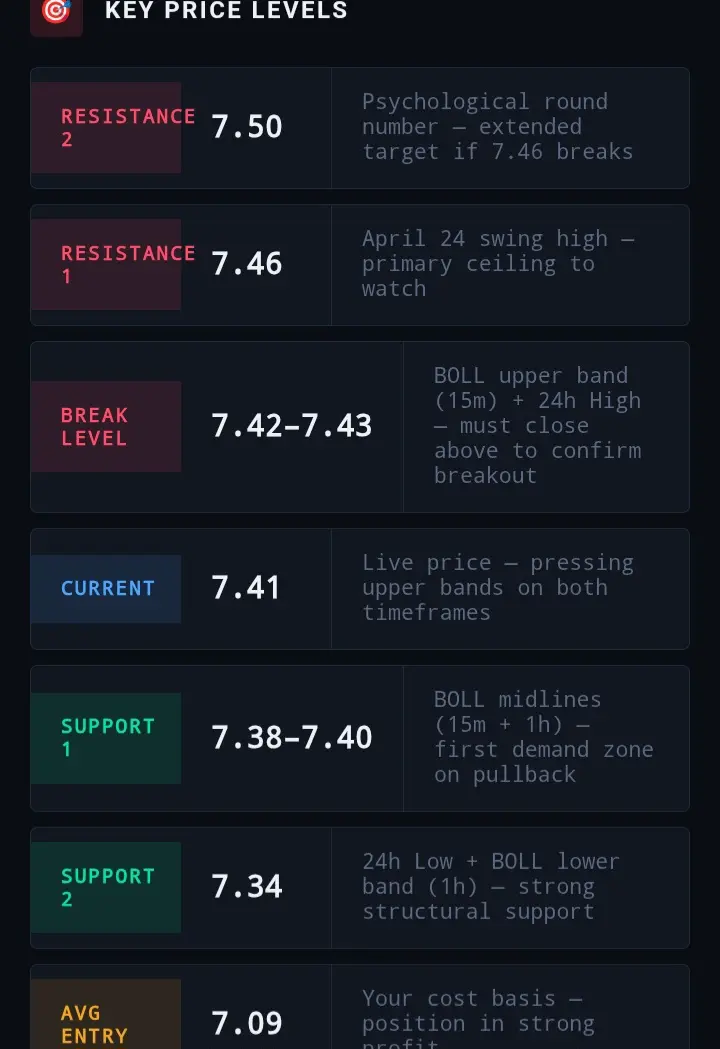
GT/USDT has staged a steady recovery from a 7.09 average entry, now sitting at 7.41 — a clean 4.5% gain. On the 1-hour chart, price briefly spiked to 7.46 on April 24 before pulling back and consolidating
GT-0,54%
post-image
post-image
post-image
post-image
post-image
post-image
  • Reward
  • Comment
  • Repost
  • Share
#TradingStrategiesInChoppyMarkets
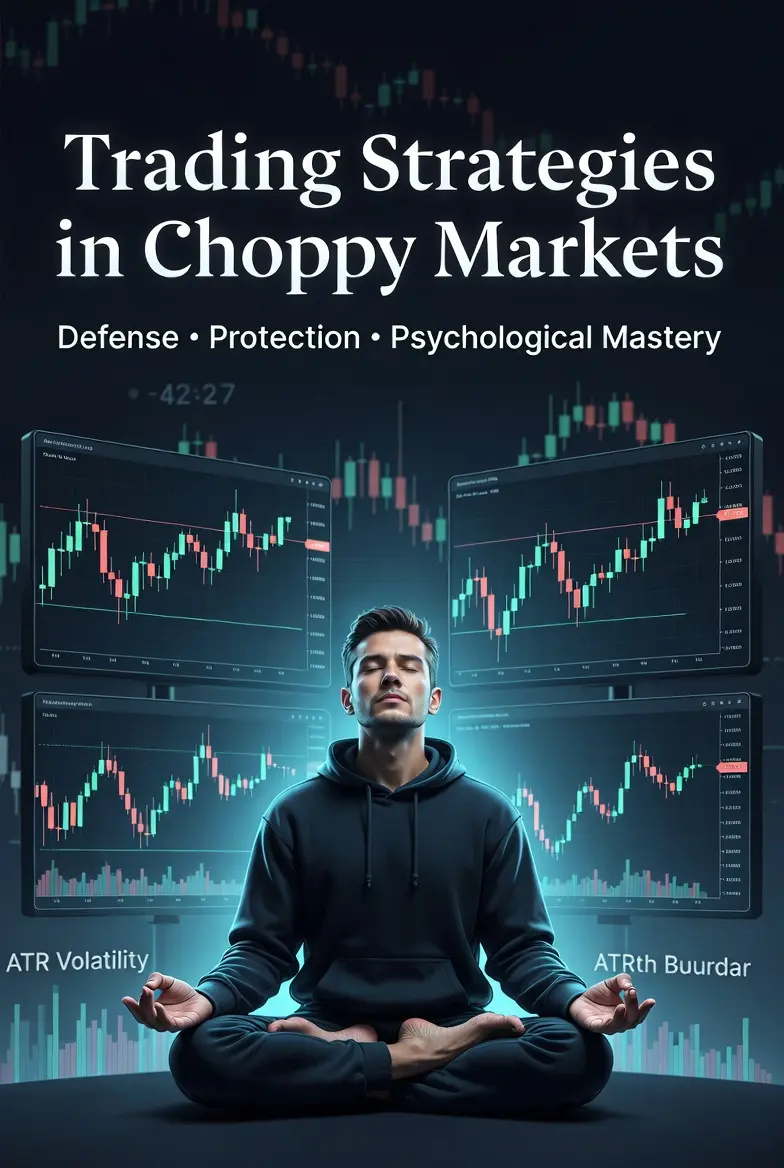
Trading Strategies in Choppy Markets: A Comprehensive Guide to Defense, Survival, and Psychological Mastery
The cryptocurrency market is known for volatility, but sideways and choppy conditions are equally challenging. When price moves within a range, traders feel the urge to force trades, often leading to losses and mental pressure. This guide focuses on three key areas: defining defense levels, avoiding traps, and managing trading anxiety.
Understanding the Nature of Sideways Markets
Sideways markets occur when price moves between support and resistance wit
ATR-0,91%
BTC-0,78%
HighAmbition
#TradingStrategiesInChoppyMarkets
Trading Strategies in Choppy Markets: A Comprehensive Guide to Defense, Survival, and Psychological Mastery
The cryptocurrency market is known for volatility, but sideways and choppy conditions are equally challenging. When price moves within a range, traders feel the urge to force trades, often leading to losses and mental pressure. This guide focuses on three key areas: defining defense levels, avoiding traps, and managing trading anxiety.
Understanding the Nature of Sideways Markets
Sideways markets occur when price moves between support and resistance without a clear trend. Price action looks random, with frequent fake breakouts that trap traders. These phases often appear after strong trends or during uncertainty.
The real danger isn’t lack of movement—it’s the illusion of opportunity. Small moves look like trends, pushing traders into overtrading. Survival depends not on trading more, but on knowing when not to trade.
My Essential Defense Level in Sideways Markets
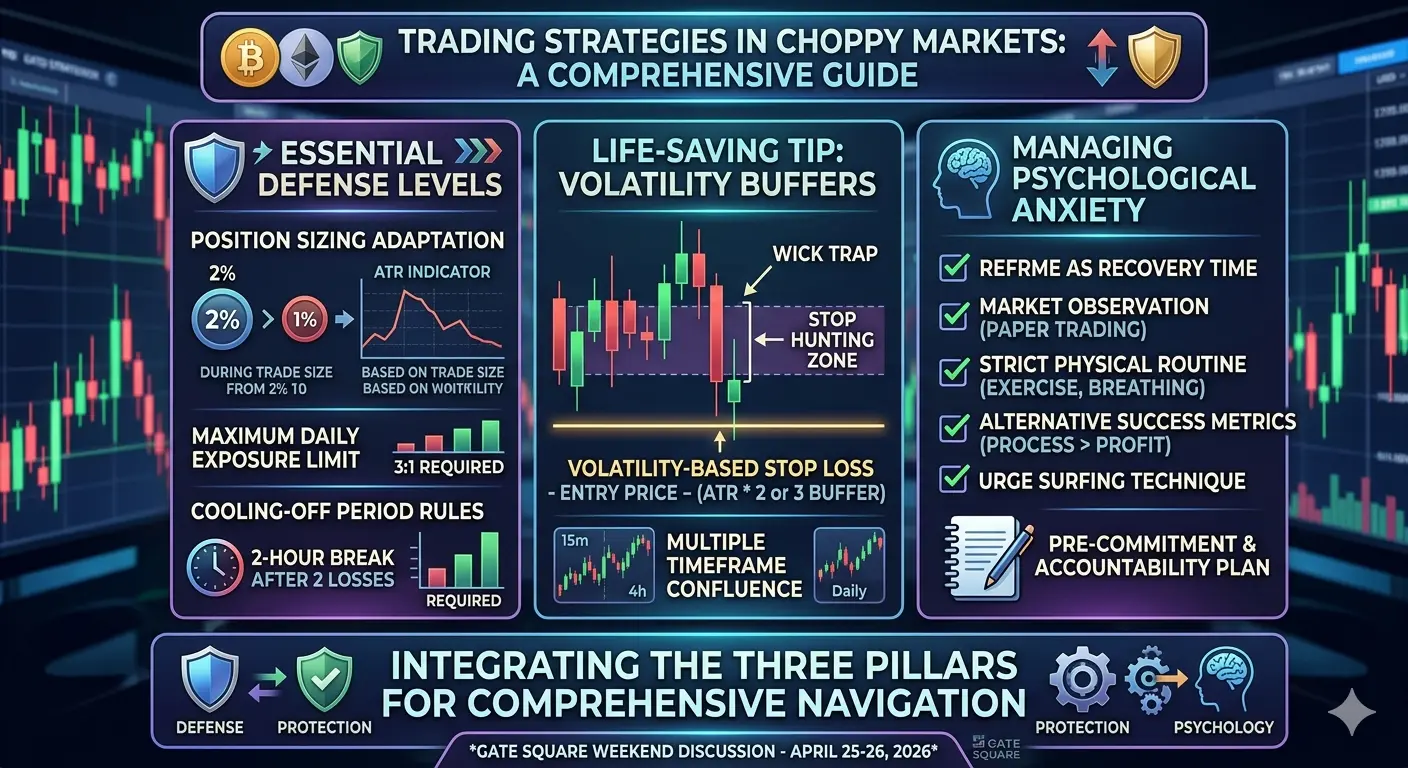
My defense strategy focuses on capital protection through three pillars:
1. Reduced Risk Exposure
In trending markets, risk per trade may be 2–3%. In choppy markets, I reduce it to 1% max, with daily exposure capped at 3%. This limits losses and forces selective trading.
2. Volatility-Based Position Sizing
Using ATR (Average True Range), I adjust position size based on volatility. If volatility increases, position size decreases. If volatility compresses, I become cautious as breakouts may follow.
3. Cooling-Off Rule
After 2 consecutive losses, I take a 2-hour break. After 3 losses, I stop trading for the day. This prevents emotional revenge trading.
Additional rules:
Minimum 3 touches on support/resistance
Volume should expand at range edges
Risk-reward must be at least 3:1
If conditions aren’t met, I skip the trade.
Avoiding Dumps and Wick Traps
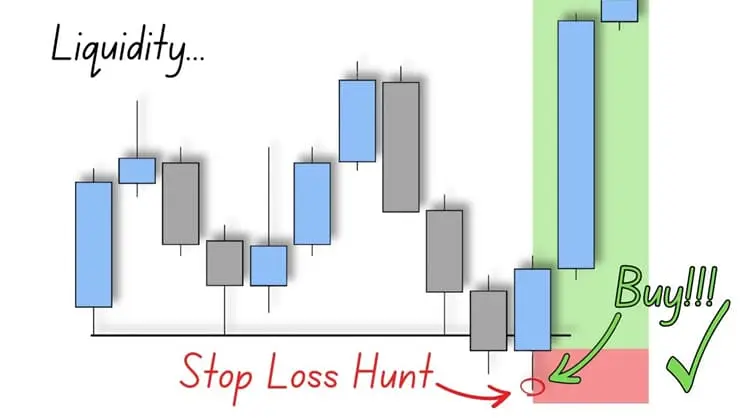
One of the biggest lessons I learned is proper stop-loss placement.
Most traders place stops at obvious levels, making them easy targets. Large players often push price into these zones to collect liquidity.
My solution: Volatility Buffer Strategy
Instead of placing stops directly at support/resistance, I use ATR:
Bitcoin: 2× ATR buffer
Altcoins: 2–3× ATR buffer
This allows room for natural price movement and avoids fake wicks.
Other protection methods:
Multi-timeframe confirmation (entry + higher + lower timeframe)
Position scaling (enter in parts instead of full size)
Time-based exits (close trade if no movement in 4–8 hours)
These methods reduce unnecessary losses and improve survival.
Managing Anxiety Without Trading
The hardest part of choppy markets is not trading.
1. Reframing Mindset
I treat sideways markets as recovery periods, not missed opportunities.
2. Stay Engaged Without Risk
I use paper trading and journaling instead of real trades.
3. Physical & Mental Control
Exercise and breathing techniques help reduce stress and improve focus.
4. Process-Based Success
I measure success by discipline, not profit.
5. Pre-Planned Rules
I define clear no-trade conditions before the week starts.
6. Urge Control
Instead of reacting, I observe the urge to trade—it usually fades.
7. Productive Alternatives
Backtesting, journaling, and learning replace impulsive trading.
Final Integration
Defense, protection, and psychology work together. Smaller risk allows wider stops, reducing stop-outs and stress. Better mindset improves decision-making.
The goal in choppy markets isn’t profit—it’s survival.
Successful traders don’t trade all the time. They wait for high-probability setups and protect capital during uncertain phases.
Markets will always shift between trending and sideways conditions. Those who master both environments build long-term success.

repost-content-media
  • Reward
  • Comment
  • Repost
  • Share
#TradingStrategiesInChoppyMarkets
Trading Strategies in Choppy Markets: A Comprehensive Guide to Defense, Survival, and Psychological Mastery
The cryptocurrency market is known for volatility, but sideways and choppy conditions are equally challenging. When price moves within a range, traders feel the urge to force trades, often leading to losses and mental pressure. This guide focuses on three key areas: defining defense levels, avoiding traps, and managing trading anxiety.
Understanding the Nature of Sideways Markets
Sideways markets occur when price moves between support and resistance wit
BTC-0,78%
ATR-0,91%
HighAmbition
#TradingStrategiesInChoppyMarkets
Trading Strategies in Choppy Markets: A Comprehensive Guide to Defense, Survival, and Psychological Mastery
The cryptocurrency market is known for volatility, but sideways and choppy conditions are equally challenging. When price moves within a range, traders feel the urge to force trades, often leading to losses and mental pressure. This guide focuses on three key areas: defining defense levels, avoiding traps, and managing trading anxiety.
Understanding the Nature of Sideways Markets
Sideways markets occur when price moves between support and resistance without a clear trend. Price action looks random, with frequent fake breakouts that trap traders. These phases often appear after strong trends or during uncertainty.
The real danger isn’t lack of movement—it’s the illusion of opportunity. Small moves look like trends, pushing traders into overtrading. Survival depends not on trading more, but on knowing when not to trade.
My Essential Defense Level in Sideways Markets
My defense strategy focuses on capital protection through three pillars:
1. Reduced Risk Exposure
In trending markets, risk per trade may be 2–3%. In choppy markets, I reduce it to 1% max, with daily exposure capped at 3%. This limits losses and forces selective trading.
2. Volatility-Based Position Sizing
Using ATR (Average True Range), I adjust position size based on volatility. If volatility increases, position size decreases. If volatility compresses, I become cautious as breakouts may follow.
3. Cooling-Off Rule
After 2 consecutive losses, I take a 2-hour break. After 3 losses, I stop trading for the day. This prevents emotional revenge trading.
Additional rules:
Minimum 3 touches on support/resistance
Volume should expand at range edges
Risk-reward must be at least 3:1
If conditions aren’t met, I skip the trade.
Avoiding Dumps and Wick Traps
One of the biggest lessons I learned is proper stop-loss placement.
Most traders place stops at obvious levels, making them easy targets. Large players often push price into these zones to collect liquidity.
My solution: Volatility Buffer Strategy
Instead of placing stops directly at support/resistance, I use ATR:
Bitcoin: 2× ATR buffer
Altcoins: 2–3× ATR buffer
This allows room for natural price movement and avoids fake wicks.
Other protection methods:
Multi-timeframe confirmation (entry + higher + lower timeframe)
Position scaling (enter in parts instead of full size)
Time-based exits (close trade if no movement in 4–8 hours)
These methods reduce unnecessary losses and improve survival.
Managing Anxiety Without Trading
The hardest part of choppy markets is not trading.
1. Reframing Mindset
I treat sideways markets as recovery periods, not missed opportunities.
2. Stay Engaged Without Risk
I use paper trading and journaling instead of real trades.
3. Physical & Mental Control
Exercise and breathing techniques help reduce stress and improve focus.
4. Process-Based Success
I measure success by discipline, not profit.
5. Pre-Planned Rules
I define clear no-trade conditions before the week starts.
6. Urge Control
Instead of reacting, I observe the urge to trade—it usually fades.
7. Productive Alternatives
Backtesting, journaling, and learning replace impulsive trading.
Final Integration
Defense, protection, and psychology work together. Smaller risk allows wider stops, reducing stop-outs and stress. Better mindset improves decision-making.
The goal in choppy markets isn’t profit—it’s survival.
Successful traders don’t trade all the time. They wait for high-probability setups and protect capital during uncertain phases.
Markets will always shift between trending and sideways conditions. Those who master both environments build long-term success.

repost-content-media
  • Reward
  • Comment
  • Repost
  • Share
#TradingStrategiesInChoppyMarkets
Trading Strategies in Choppy Markets: A Comprehensive Guide to Defense, Survival, and Psychological Mastery
The cryptocurrency market is known for volatility, but sideways and choppy conditions are equally challenging. When price moves within a range, traders feel the urge to force trades, often leading to losses and mental pressure. This guide focuses on three key areas: defining defense levels, avoiding traps, and managing trading anxiety.
Understanding the Nature of Sideways Markets
Sideways markets occur when price moves between support and resistance wit
BTC-0,78%
ATR-0,91%
HighAmbition
#TradingStrategiesInChoppyMarkets
Trading Strategies in Choppy Markets: A Comprehensive Guide to Defense, Survival, and Psychological Mastery
The cryptocurrency market is known for volatility, but sideways and choppy conditions are equally challenging. When price moves within a range, traders feel the urge to force trades, often leading to losses and mental pressure. This guide focuses on three key areas: defining defense levels, avoiding traps, and managing trading anxiety.
Understanding the Nature of Sideways Markets
Sideways markets occur when price moves between support and resistance without a clear trend. Price action looks random, with frequent fake breakouts that trap traders. These phases often appear after strong trends or during uncertainty.
The real danger isn’t lack of movement—it’s the illusion of opportunity. Small moves look like trends, pushing traders into overtrading. Survival depends not on trading more, but on knowing when not to trade.
My Essential Defense Level in Sideways Markets
My defense strategy focuses on capital protection through three pillars:
1. Reduced Risk Exposure
In trending markets, risk per trade may be 2–3%. In choppy markets, I reduce it to 1% max, with daily exposure capped at 3%. This limits losses and forces selective trading.
2. Volatility-Based Position Sizing
Using ATR (Average True Range), I adjust position size based on volatility. If volatility increases, position size decreases. If volatility compresses, I become cautious as breakouts may follow.
3. Cooling-Off Rule
After 2 consecutive losses, I take a 2-hour break. After 3 losses, I stop trading for the day. This prevents emotional revenge trading.
Additional rules:
Minimum 3 touches on support/resistance
Volume should expand at range edges
Risk-reward must be at least 3:1
If conditions aren’t met, I skip the trade.
Avoiding Dumps and Wick Traps
One of the biggest lessons I learned is proper stop-loss placement.
Most traders place stops at obvious levels, making them easy targets. Large players often push price into these zones to collect liquidity.
My solution: Volatility Buffer Strategy
Instead of placing stops directly at support/resistance, I use ATR:
Bitcoin: 2× ATR buffer
Altcoins: 2–3× ATR buffer
This allows room for natural price movement and avoids fake wicks.
Other protection methods:
Multi-timeframe confirmation (entry + higher + lower timeframe)
Position scaling (enter in parts instead of full size)
Time-based exits (close trade if no movement in 4–8 hours)
These methods reduce unnecessary losses and improve survival.
Managing Anxiety Without Trading
The hardest part of choppy markets is not trading.
1. Reframing Mindset
I treat sideways markets as recovery periods, not missed opportunities.
2. Stay Engaged Without Risk
I use paper trading and journaling instead of real trades.
3. Physical & Mental Control
Exercise and breathing techniques help reduce stress and improve focus.
4. Process-Based Success
I measure success by discipline, not profit.
5. Pre-Planned Rules
I define clear no-trade conditions before the week starts.
6. Urge Control
Instead of reacting, I observe the urge to trade—it usually fades.
7. Productive Alternatives
Backtesting, journaling, and learning replace impulsive trading.
Final Integration
Defense, protection, and psychology work together. Smaller risk allows wider stops, reducing stop-outs and stress. Better mindset improves decision-making.
The goal in choppy markets isn’t profit—it’s survival.
Successful traders don’t trade all the time. They wait for high-probability setups and protect capital during uncertain phases.
Markets will always shift between trending and sideways conditions. Those who master both environments build long-term success.

repost-content-media
  • Reward
  • Comment
  • Repost
  • Share
#TradingStrategiesInChoppyMarkets
Weekend consolidation isn't boring — it's where most accounts bleed out. I'm treating this Gate Square "Safe Harbor Plan" as a survival drill, not a lottery ticket.
Here’s my choppy-market playbook right now:
1️⃣ My key "defense level"? The 4H 200-EMA + previous range low.
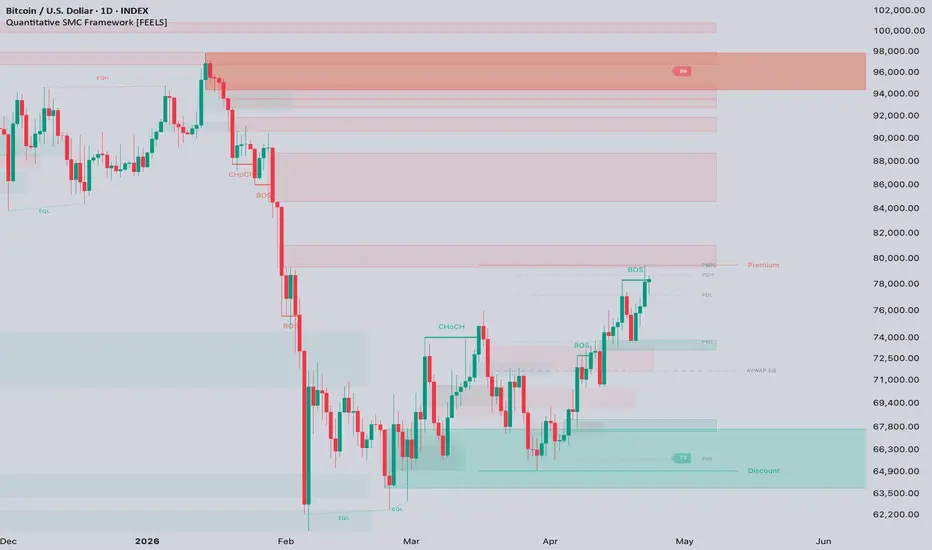
For BTC I'm not watching $80k hype, I'm watching $73,000. That's been the base of this 5-week chop (73k–78k). If we close a 4H candle below it with volume, I'm flat. No hero trades. On alts I do the same: I mark the last swing low on the 4H, then place my stop 1.5% under the wick, not unde
BTC-0,78%
GT-0,54%
post-image
  • Reward
  • 4
  • Repost
  • Share
User_any:
LFG 🔥
View More
#TradingStrategiesInChoppyMarkets
Trading Strategies in Choppy Markets: A Comprehensive Guide to Defense, Survival, and Psychological Mastery
The cryptocurrency market is known for volatility, but sideways and choppy conditions are equally challenging. When price moves within a range, traders feel the urge to force trades, often leading to losses and mental pressure. This guide focuses on three key areas: defining defense levels, avoiding traps, and managing trading anxiety.
Understanding the Nature of Sideways Markets
Sideways markets occur when price moves between support and resistance wit
BTC-0,78%
ATR-0,91%
HighAmbition
#TradingStrategiesInChoppyMarkets
Trading Strategies in Choppy Markets: A Comprehensive Guide to Defense, Survival, and Psychological Mastery
The cryptocurrency market is known for volatility, but sideways and choppy conditions are equally challenging. When price moves within a range, traders feel the urge to force trades, often leading to losses and mental pressure. This guide focuses on three key areas: defining defense levels, avoiding traps, and managing trading anxiety.
Understanding the Nature of Sideways Markets
Sideways markets occur when price moves between support and resistance without a clear trend. Price action looks random, with frequent fake breakouts that trap traders. These phases often appear after strong trends or during uncertainty.
The real danger isn’t lack of movement—it’s the illusion of opportunity. Small moves look like trends, pushing traders into overtrading. Survival depends not on trading more, but on knowing when not to trade.
My Essential Defense Level in Sideways Markets
My defense strategy focuses on capital protection through three pillars:
1. Reduced Risk Exposure
In trending markets, risk per trade may be 2–3%. In choppy markets, I reduce it to 1% max, with daily exposure capped at 3%. This limits losses and forces selective trading.
2. Volatility-Based Position Sizing
Using ATR (Average True Range), I adjust position size based on volatility. If volatility increases, position size decreases. If volatility compresses, I become cautious as breakouts may follow.
3. Cooling-Off Rule
After 2 consecutive losses, I take a 2-hour break. After 3 losses, I stop trading for the day. This prevents emotional revenge trading.
Additional rules:
Minimum 3 touches on support/resistance
Volume should expand at range edges
Risk-reward must be at least 3:1
If conditions aren’t met, I skip the trade.
Avoiding Dumps and Wick Traps
One of the biggest lessons I learned is proper stop-loss placement.
Most traders place stops at obvious levels, making them easy targets. Large players often push price into these zones to collect liquidity.
My solution: Volatility Buffer Strategy
Instead of placing stops directly at support/resistance, I use ATR:
Bitcoin: 2× ATR buffer
Altcoins: 2–3× ATR buffer
This allows room for natural price movement and avoids fake wicks.
Other protection methods:
Multi-timeframe confirmation (entry + higher + lower timeframe)
Position scaling (enter in parts instead of full size)
Time-based exits (close trade if no movement in 4–8 hours)
These methods reduce unnecessary losses and improve survival.
Managing Anxiety Without Trading
The hardest part of choppy markets is not trading.
1. Reframing Mindset
I treat sideways markets as recovery periods, not missed opportunities.
2. Stay Engaged Without Risk
I use paper trading and journaling instead of real trades.
3. Physical & Mental Control
Exercise and breathing techniques help reduce stress and improve focus.
4. Process-Based Success
I measure success by discipline, not profit.
5. Pre-Planned Rules
I define clear no-trade conditions before the week starts.
6. Urge Control
Instead of reacting, I observe the urge to trade—it usually fades.
7. Productive Alternatives
Backtesting, journaling, and learning replace impulsive trading.
Final Integration
Defense, protection, and psychology work together. Smaller risk allows wider stops, reducing stop-outs and stress. Better mindset improves decision-making.
The goal in choppy markets isn’t profit—it’s survival.
Successful traders don’t trade all the time. They wait for high-probability setups and protect capital during uncertain phases.
Markets will always shift between trending and sideways conditions. Those who master both environments build long-term success.
repost-content-media
  • Reward
  • Comment
  • Repost
  • Share
#TradingStrategiesInChoppyMarkets
Trading Strategies in Choppy Markets: A Comprehensive Guide to Defense, Survival, and Psychological Mastery
The cryptocurrency market is known for volatility, but sideways and choppy conditions are equally challenging. When price moves within a range, traders feel the urge to force trades, often leading to losses and mental pressure. This guide focuses on three key areas: defining defense levels, avoiding traps, and managing trading anxiety.
Understanding the Nature of Sideways Markets
Sideways markets occur when price moves between support and resistance wit
BTC-0,78%
ATR-0,91%
HighAmbition
#TradingStrategiesInChoppyMarkets
Trading Strategies in Choppy Markets: A Comprehensive Guide to Defense, Survival, and Psychological Mastery
The cryptocurrency market is known for volatility, but sideways and choppy conditions are equally challenging. When price moves within a range, traders feel the urge to force trades, often leading to losses and mental pressure. This guide focuses on three key areas: defining defense levels, avoiding traps, and managing trading anxiety.
Understanding the Nature of Sideways Markets
Sideways markets occur when price moves between support and resistance without a clear trend. Price action looks random, with frequent fake breakouts that trap traders. These phases often appear after strong trends or during uncertainty.
The real danger isn’t lack of movement—it’s the illusion of opportunity. Small moves look like trends, pushing traders into overtrading. Survival depends not on trading more, but on knowing when not to trade.
My Essential Defense Level in Sideways Markets
My defense strategy focuses on capital protection through three pillars:
1. Reduced Risk Exposure
In trending markets, risk per trade may be 2–3%. In choppy markets, I reduce it to 1% max, with daily exposure capped at 3%. This limits losses and forces selective trading.
2. Volatility-Based Position Sizing
Using ATR (Average True Range), I adjust position size based on volatility. If volatility increases, position size decreases. If volatility compresses, I become cautious as breakouts may follow.
3. Cooling-Off Rule
After 2 consecutive losses, I take a 2-hour break. After 3 losses, I stop trading for the day. This prevents emotional revenge trading.
Additional rules:
Minimum 3 touches on support/resistance
Volume should expand at range edges
Risk-reward must be at least 3:1
If conditions aren’t met, I skip the trade.
Avoiding Dumps and Wick Traps
One of the biggest lessons I learned is proper stop-loss placement.
Most traders place stops at obvious levels, making them easy targets. Large players often push price into these zones to collect liquidity.
My solution: Volatility Buffer Strategy
Instead of placing stops directly at support/resistance, I use ATR:
Bitcoin: 2× ATR buffer
Altcoins: 2–3× ATR buffer
This allows room for natural price movement and avoids fake wicks.
Other protection methods:
Multi-timeframe confirmation (entry + higher + lower timeframe)
Position scaling (enter in parts instead of full size)
Time-based exits (close trade if no movement in 4–8 hours)
These methods reduce unnecessary losses and improve survival.
Managing Anxiety Without Trading
The hardest part of choppy markets is not trading.
1. Reframing Mindset
I treat sideways markets as recovery periods, not missed opportunities.
2. Stay Engaged Without Risk
I use paper trading and journaling instead of real trades.
3. Physical & Mental Control
Exercise and breathing techniques help reduce stress and improve focus.
4. Process-Based Success
I measure success by discipline, not profit.
5. Pre-Planned Rules
I define clear no-trade conditions before the week starts.
6. Urge Control
Instead of reacting, I observe the urge to trade—it usually fades.
7. Productive Alternatives
Backtesting, journaling, and learning replace impulsive trading.
Final Integration
Defense, protection, and psychology work together. Smaller risk allows wider stops, reducing stop-outs and stress. Better mindset improves decision-making.
The goal in choppy markets isn’t profit—it’s survival.
Successful traders don’t trade all the time. They wait for high-probability setups and protect capital during uncertain phases.
Markets will always shift between trending and sideways conditions. Those who master both environments build long-term success.
repost-content-media
  • Reward
  • Comment
  • Repost
  • Share
#TradingStrategiesInChoppyMarkets
Trading Strategies in Choppy Markets: A Comprehensive Guide to Defense, Survival, and Psychological Mastery
The cryptocurrency market is known for volatility, but sideways and choppy conditions are equally challenging. When price moves within a range, traders feel the urge to force trades, often leading to losses and mental pressure. This guide focuses on three key areas: defining defense levels, avoiding traps, and managing trading anxiety.
Understanding the Nature of Sideways Markets
Sideways markets occur when price moves between support and resistance wit
BTC-0,78%
ATR-0,91%
HighAmbition
#TradingStrategiesInChoppyMarkets
Trading Strategies in Choppy Markets: A Comprehensive Guide to Defense, Survival, and Psychological Mastery
The cryptocurrency market is known for volatility, but sideways and choppy conditions are equally challenging. When price moves within a range, traders feel the urge to force trades, often leading to losses and mental pressure. This guide focuses on three key areas: defining defense levels, avoiding traps, and managing trading anxiety.
Understanding the Nature of Sideways Markets
Sideways markets occur when price moves between support and resistance without a clear trend. Price action looks random, with frequent fake breakouts that trap traders. These phases often appear after strong trends or during uncertainty.
The real danger isn’t lack of movement—it’s the illusion of opportunity. Small moves look like trends, pushing traders into overtrading. Survival depends not on trading more, but on knowing when not to trade.
My Essential Defense Level in Sideways Markets
My defense strategy focuses on capital protection through three pillars:
1. Reduced Risk Exposure
In trending markets, risk per trade may be 2–3%. In choppy markets, I reduce it to 1% max, with daily exposure capped at 3%. This limits losses and forces selective trading.
2. Volatility-Based Position Sizing
Using ATR (Average True Range), I adjust position size based on volatility. If volatility increases, position size decreases. If volatility compresses, I become cautious as breakouts may follow.
3. Cooling-Off Rule
After 2 consecutive losses, I take a 2-hour break. After 3 losses, I stop trading for the day. This prevents emotional revenge trading.
Additional rules:
Minimum 3 touches on support/resistance
Volume should expand at range edges
Risk-reward must be at least 3:1
If conditions aren’t met, I skip the trade.
Avoiding Dumps and Wick Traps
One of the biggest lessons I learned is proper stop-loss placement.
Most traders place stops at obvious levels, making them easy targets. Large players often push price into these zones to collect liquidity.
My solution: Volatility Buffer Strategy
Instead of placing stops directly at support/resistance, I use ATR:
Bitcoin: 2× ATR buffer
Altcoins: 2–3× ATR buffer
This allows room for natural price movement and avoids fake wicks.
Other protection methods:
Multi-timeframe confirmation (entry + higher + lower timeframe)
Position scaling (enter in parts instead of full size)
Time-based exits (close trade if no movement in 4–8 hours)
These methods reduce unnecessary losses and improve survival.
Managing Anxiety Without Trading
The hardest part of choppy markets is not trading.
1. Reframing Mindset
I treat sideways markets as recovery periods, not missed opportunities.
2. Stay Engaged Without Risk
I use paper trading and journaling instead of real trades.
3. Physical & Mental Control
Exercise and breathing techniques help reduce stress and improve focus.
4. Process-Based Success
I measure success by discipline, not profit.
5. Pre-Planned Rules
I define clear no-trade conditions before the week starts.
6. Urge Control
Instead of reacting, I observe the urge to trade—it usually fades.
7. Productive Alternatives
Backtesting, journaling, and learning replace impulsive trading.
Final Integration
Defense, protection, and psychology work together. Smaller risk allows wider stops, reducing stop-outs and stress. Better mindset improves decision-making.
The goal in choppy markets isn’t profit—it’s survival.
Successful traders don’t trade all the time. They wait for high-probability setups and protect capital during uncertain phases.
Markets will always shift between trending and sideways conditions. Those who master both environments build long-term success.
repost-content-media
  • Reward
  • 1
  • Repost
  • Share
HighAmbition:
Diamond Hands 💎
#TradingStrategiesInChoppyMarkets
Trading Strategies in Choppy Markets: A Comprehensive Guide to Defense, Survival, and Psychological Mastery
The cryptocurrency market is known for volatility, but sideways and choppy conditions are equally challenging. When price moves within a range, traders feel the urge to force trades, often leading to losses and mental pressure. This guide focuses on three key areas: defining defense levels, avoiding traps, and managing trading anxiety.
Understanding the Nature of Sideways Markets
Sideways markets occur when price moves between support and resistance wit
ATR-0,91%
BTC-0,78%
post-image
post-image
post-image
post-image
post-image
post-image
  • Reward
  • 25
  • Repost
  • Share
BlackRiderCryptoLord:
Diamond Hands 💎
View More
Apr 25–26 | Gate Square Weekend Topic: #TradingStrategiesInChoppyMarkets
☕ Weekend consolidation isn’t the end of trading—it’s the ultimate test of mindset and risk control. This weekend, Gate Square launches the “Safe Harbor Plan” to focus on steady survival strategies, not get-rich-quick plays.
🎁 Share to grab $1,000 in Position Vouchers (5 winners)!
💬 Discussion Topics:
1️⃣ Where is your key “defense level” in a choppy market?
2️⃣ Share a tip that helped you avoid dumps or wick traps
3️⃣ If the market goes sideways, how do you ease anxiety without trading?
👉 Join the discussion: https://
Gate_Square
Apr 25–26 | Gate Square Weekend Topic: #TradingStrategiesInChoppyMarkets
☕ Weekend consolidation isn’t the end of trading—it’s the ultimate test of mindset and risk control. This weekend, Gate Square launches the “Safe Harbor Plan” to focus on steady survival strategies, not get-rich-quick plays.
🎁 Share to grab $1,000 in Position Vouchers (5 winners)!
💬 Discussion Topics:
1️⃣ Where is your key “defense level” in a choppy market?
2️⃣ Share a tip that helped you avoid dumps or wick traps
3️⃣ If the market goes sideways, how do you ease anxiety without trading?
👉 Join the discussion: https://www.gate.com/post
📅 Event Time: Apr 25, 02:00 – Apr 26, 10:00 UTC
repost-content-media
  • Reward
  • 3
  • Repost
  • Share
ShainingMoon:
To The Moon 🌕
View More
Load More