


The six major banks enter Bitcoin ETF, Morgan Stanley locks in Coinbase as dual custodian
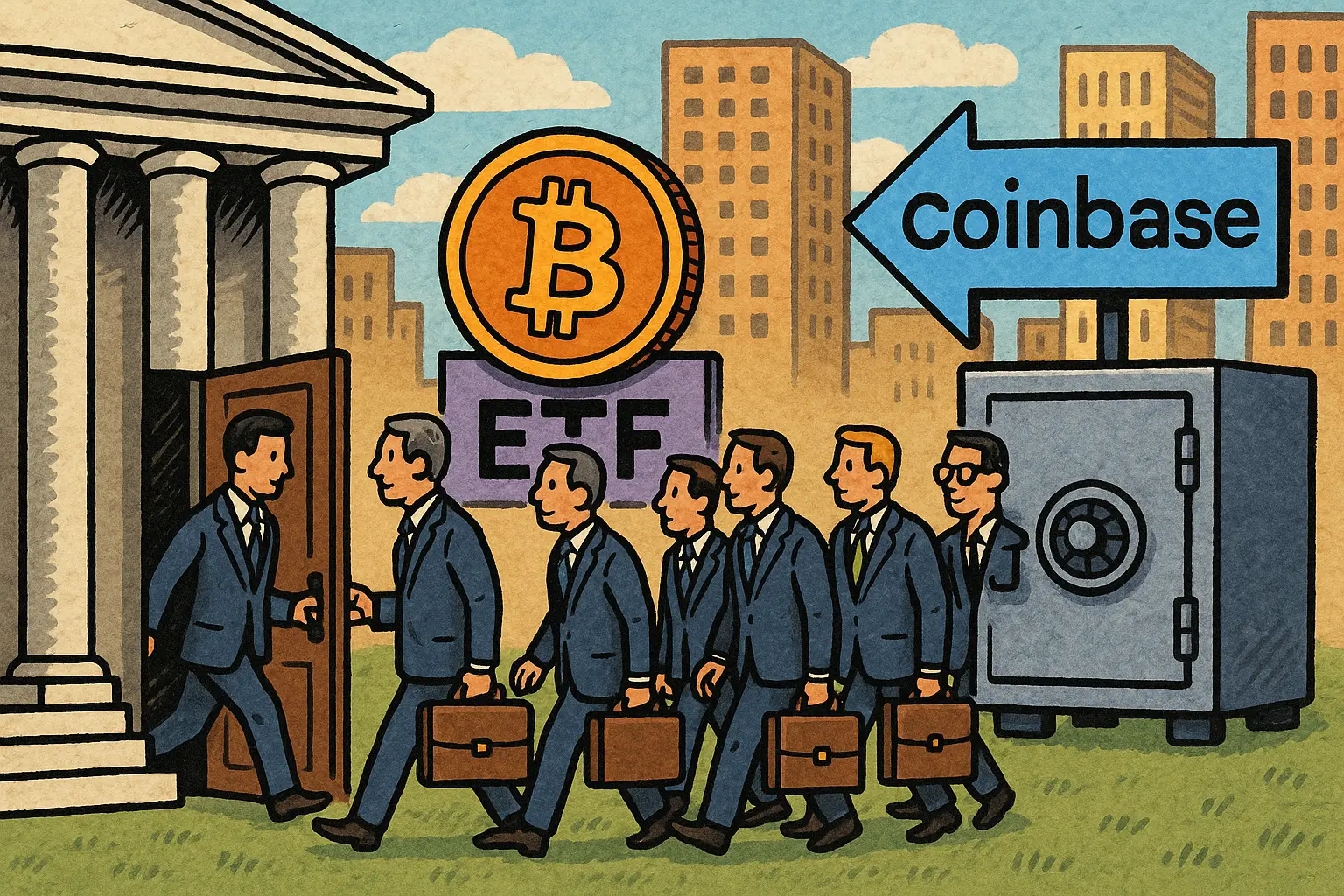
Morgan Stanley updated its proposed exchange-traded product registration statement S-1 with the U.S. Securities and Exchange Commission (SEC) this Tuesday, officially designating Coinbase Custody and Bank of New York Mellon (BNY) as co-custodians for its Bitcoin ETF. As the sixth-largest bank in the United States by assets, Morgan Stanley has previously taken a relatively conservative approach in the cryptocurrency space, and analysts have described its application as “shocking.”
S-1 Document Structure: Roles of Coinbase and BNY
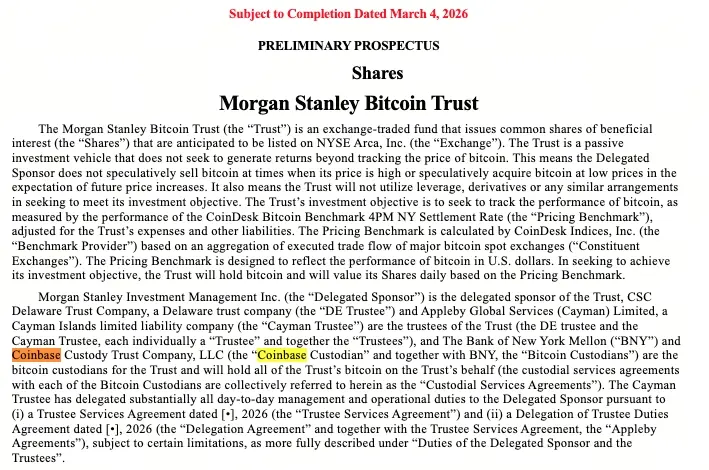 (Source: SEC)
According to the updated S-1 filing, Morgan Stanley Bitcoin Trust adopts a dual-institution service structure:
Coinbase Custody: Serves as the primary asset custodian and broker, responsible for safekeeping Bitcoin spot holdings and executing trades.
Bank of New York Mellon (BNY): Acts as the fund manager, transfer agent, and cash custodian, providing comprehensive traditional financial back-office support.
Morgan Stanley Bitcoin Trust will directly track Bitcoin spot prices, aligning with existing spot Bitcoin ETFs in the market and not involving derivatives exposure. Currently, Morgan Stanley manages about 20 ETFs, with only two directly named after its brand. If approved, this Bitcoin trust will become a significant expansion of its proprietary brand ETFs.
Coinbase’s Custodial Role Confirmed Again, Market Structure Continues to Strengthen
This time, Coinbase was designated as the primary asset custodian for Morgan Stanley’s Bitcoin ETF, continuing its dominant role in the U.S. spot Bitcoin ETF market. Besides Fidelity’s products, which use self-custody, almost all mainstream U.S. spot Bitcoin ETFs rely on Coinbase as the main asset custodian.
Since the approval of spot Bitcoin ETFs in January 2024, they have rapidly become one of the fastest-growing categories of financial products in history. BlackRock’s IBIT Bitcoin Trust has repeatedly hit milestones in asset management size. If Morgan Stanley receives SEC approval, it will introduce a new institutional player with a large wealth management client base into the Bitcoin ETF market, potentially impacting not only asset management scale but also opening institutional-level wealth management channels.
Morgan Stanley’s Digital Asset Strategy: Systematic Layout Behind Bitcoin ETF
This S-1 update is not an isolated move. Earlier this year, Morgan Stanley appointed senior executive Amy Oldenburg to a newly created position dedicated to expanding the company’s digital asset strategy. Additionally, Morgan Stanley has submitted an application to the SEC for the listing of the Morgan Stanley Solana Trust, indicating its digital asset plans extend beyond Bitcoin. As of press time, the Solana Trust’s S-1 has not been updated, and the specific progress remains unclear.
Frequently Asked Questions
Q: Why does Morgan Stanley’s Bitcoin ETF adopt a dual-custody structure?
A dual-custody structure separates professional custody of crypto assets (Coinbase Custody) from traditional financial back-office services (BNY), ensuring Bitcoin spot security while providing compliance guarantees through traditional banking institutions, meeting regulatory standards for institutional ETF infrastructure.
Q: Why do analysts find Morgan Stanley’s Bitcoin ETF application “shocking”?
Morgan Stanley’s previous direct involvement in cryptocurrencies was relatively limited. Compared to institutions like BlackRock and Fidelity, which actively promote Bitcoin ETFs, its timing and decision-making appeared more conservative, making its move into the space surprising.
Q: When will Morgan Stanley’s Bitcoin ETF be approved?
The S-1 is currently under update, and approval timing depends on the SEC. Based on past approvals of spot Bitcoin ETFs in 2024, the review process typically takes several months, and the final decision depends on the SEC’s assessment of the application’s completeness and compliance.
Related Articles
Canada's Scotiabank launches multi-cryptocurrency ETF fund in partnership with 3iQ
Chainlink CCIP Becomes Exclusive Bridge for Coinbase Wrapped BTC to the Monad DeFi Ecosystem
Nine Group Partners With Rocket IDO to Advance RWA Cross-chain Liquidity Supported By Web3 Launchpad
Vision Chain Taps Bitpanda Enterprise to Advance Scalable Tokenization Across Europe
Billions Network launches Verified Agent Identity Skill for the OpenClaw platform and initiates the first AI agent reward program