


First casualties report of the US-Iran war: 6 US troops killed, 18 seriously injured, Trump cautiously considers ground troop options
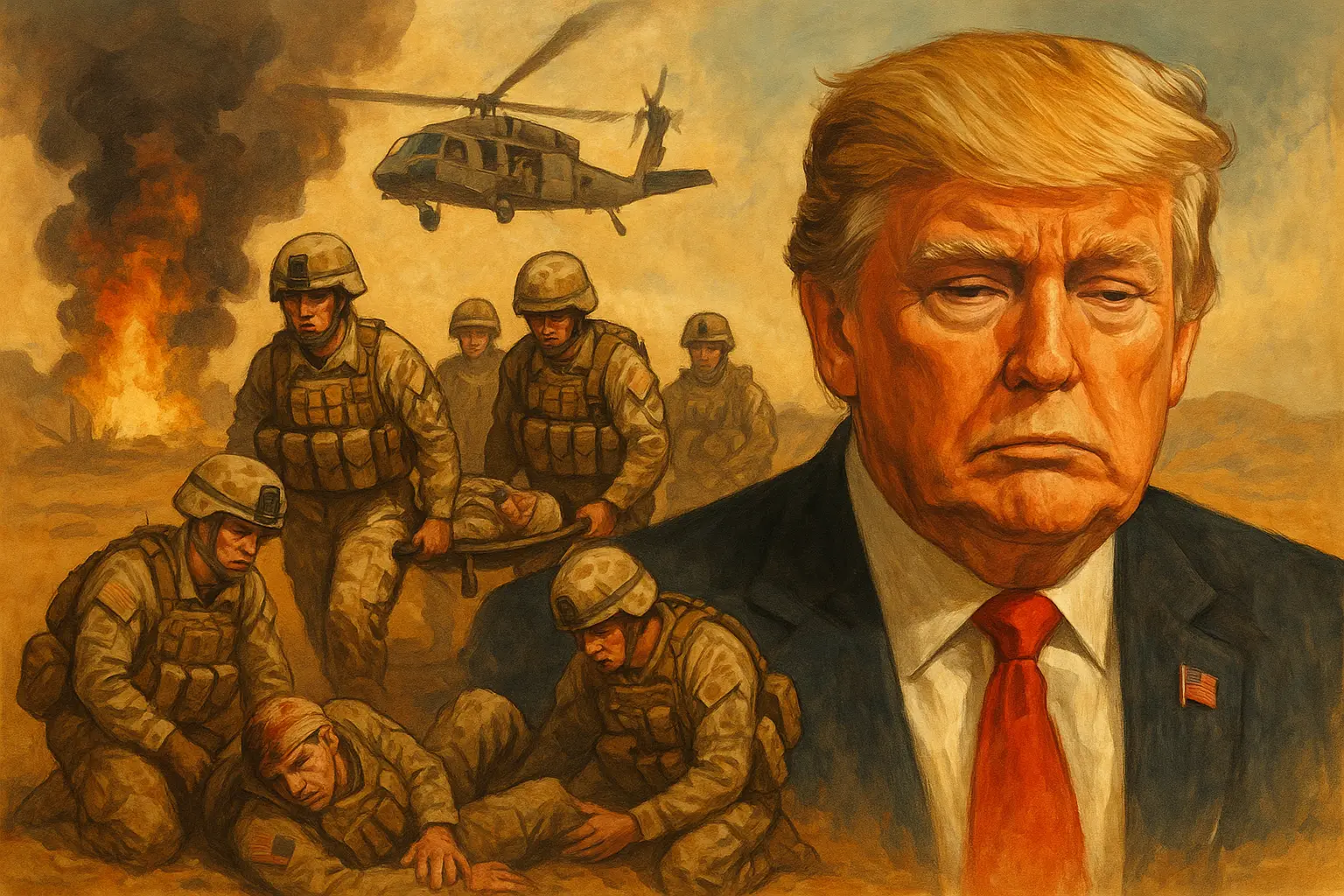
The U.S. Central Command confirmed on March 2 that 6 U.S. soldiers had been killed and 18 seriously injured in Operation Epic Rage; In an interview on the same day, U.S. President Trump made it clear that he would not rule out sending ground troops to Iran, saying that he would consider using them “if necessary,” and Defense Secretary Heggseth also refused to rule out the option of ground troops.
U.S. military casualties confirmed and the background of casualties from all parties to the conflict
Tim Hawkins, a spokesman for the U.S. Central Command, said on Monday afternoon that six U.S. soldiers were killed in the operation, two of whom were confirmed dead at facilities where Iran launched retaliatory strikes; As of that day, a total of 18 U.S. soldiers were seriously injured.
The number of casualties on the Iranian side is even larger. According to Iranian state media citing data from the Iranian Red Crescent Society, airstrikes across the country have killed at least 555 people, including more than 100 children who died when a girls’ primary school in the southern Iranian city of Minab was hit. The Lebanese Ministry of Health said on the same day that Israeli airstrikes have killed 31 people in Lebanon.
The operation, codenamed “Operation Epic Rage”, was launched by the US-Israeli coalition, and Iran’s Supreme Leader Ayatollah Khamenei was killed in the first round of strikes, becoming the first major target.
Trump’s contradictory timeline with ground forces options
In an interview with the New York Post, Trump made it clear that he did not “categorically rule out” sending ground troops into Iran like previous presidents, saying he “may” not need ground troops, but “will use them if necessary.”
However, Trump has given several conflicting claims about the duration of this military operation:
Trump’s multiple conflicting statements about the timeline for “Operation Epic Rage”
Saturday (at the time of announcement): called the operation “massive and ongoing” until all goals were achieved
Saturday (to Axios reporters): Implies that “it can be finished in two or three days”
Sunday (to the Daily Mail): “This is a four-week process, we estimate that it will be about four weeks”
Monday (Award Presentation Ceremony): Reiterated “four to five weeks”, but said “it may be longer”, saying “no matter how long it takes, no problem”
Defense Secretary Pete Hegseth also refused to give a clear answer to the question of ground forces at a Pentagon press conference, saying it was “stupid” to expect officials to publicly say “how far we will go.” This was Hegseth’s first public comment on the Iranian strike, and he was present at the press conference with the chief of the Joint Chiefs of Staff, General Dan Caine.
Frequently Asked Questions
How were the 6 killed soldiers and 18 seriously wounded of the US military confirmed?
Tim Hawkins, a spokesman for the U.S. Central Command, officially confirmed the above figures on social media on the afternoon of March 2. Two of the fallen soldiers were found and confirmed dead at a facility where Iran launched a retaliatory strike, and the rest have not been fully disclosed.
Trump does not rule out the statement of ground forces, what legal constraints will he face?
The War Powers Act requires the president to notify Congress after an armed conflict unfolds and seek authorization within a certain period of time. Currently, the U.S. Senate and House of Representatives are voting on a resolution to limit Trump’s further military actions in Iran, which, if passed, will put additional political pressure on the deployment of ground forces.
What is the credibility of the 555 deaths announced by the Iranian side and the attack on children’s schools?
This figure was released by Iranian state media citing data from the Iranian Red Crescent Society, and under wartime conditions, independent verification faces difficulties. If true, reports of a blow to a girls’ primary school in Minab and the death of more than 100 children would constitute serious civilian casualties and have attracted widespread attention from the international community.