


Total collapse! Taiwan stocks plummeted 1,300 points, South Korean stocks dropped 8% for two consecutive days with trading halts, and the Nikkei plunged over 2,100 points. Crude oil hit a one-year high.
Amid escalating chaos in the Middle East, Asian stock markets are suffering. The Taiwan stock index plummeted over 1,300 points in early trading, South Korea’s KOSPI triggered the second circuit breaker, and the Nikkei index wiped out 2,100 points. Brent crude oil futures hit a one-year high.
(Background: Iranian Revolutionary Guard: The Strait of Hormuz has been blocked! Any ships attempting to pass will be destroyed.)
(Additional context: Trump vows to “bomb until the goal is achieved,” calls for Iran’s surrender, and warns that over 200 oil tankers in the Persian Gulf are at risk; European Central Bank warns that dollar hedging is failing.)
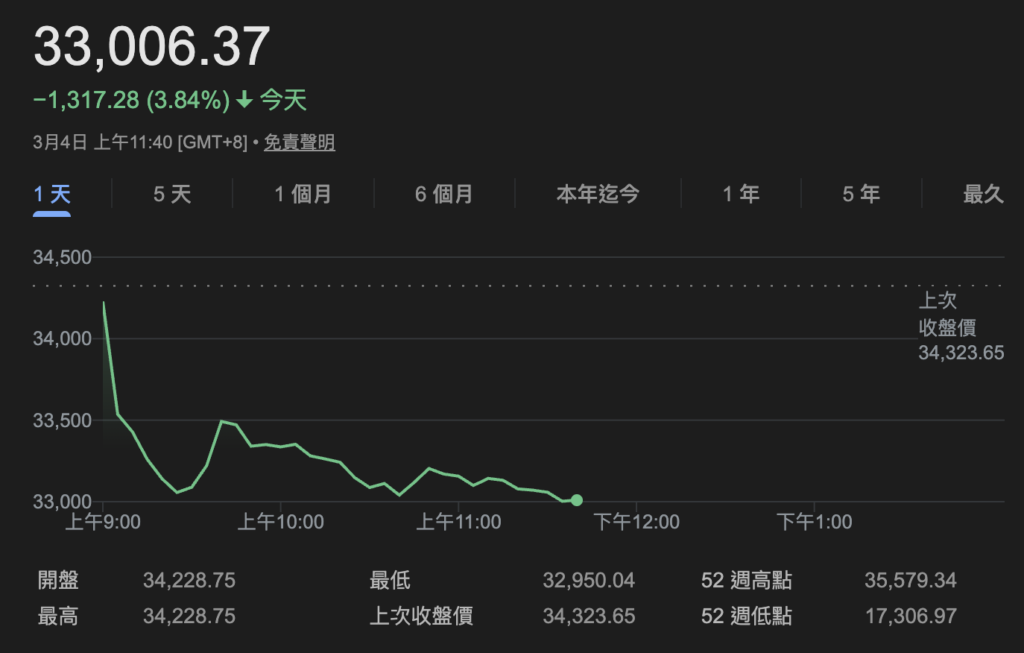
The rising tension in the Middle East has caused another bloodbath in Asian stock markets and a panic flight of capital. The Taiwan stock index plunged more than 1,300 points this morning, temporarily falling below the 33,000 mark. As of press time, it was at 33,006 points, down 3.84%.
TSMC (2330) opened below 1,900 NT dollars, with a low of 1,880 NT dollars. It is currently down 2.5%, with the top ten weighted stocks all in the red.
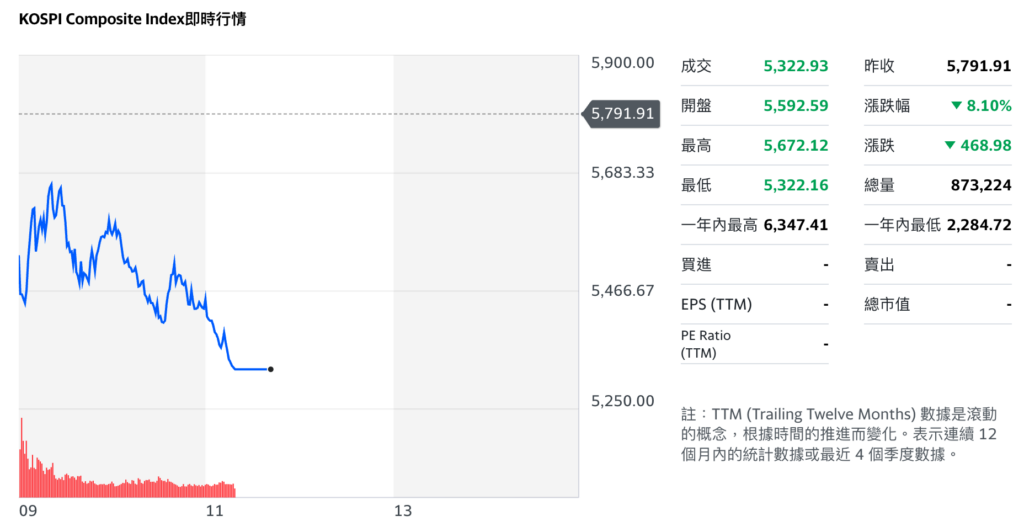
South Korea is hit even harder. The KOSPI index has dropped 8.1%, triggering the circuit breaker twice in two days and halting trading. Samsung Electronics and SK Hynix each fell over 6%. Since the peak on February 27, the KOSPI has declined over 15%, with no relief in sight.
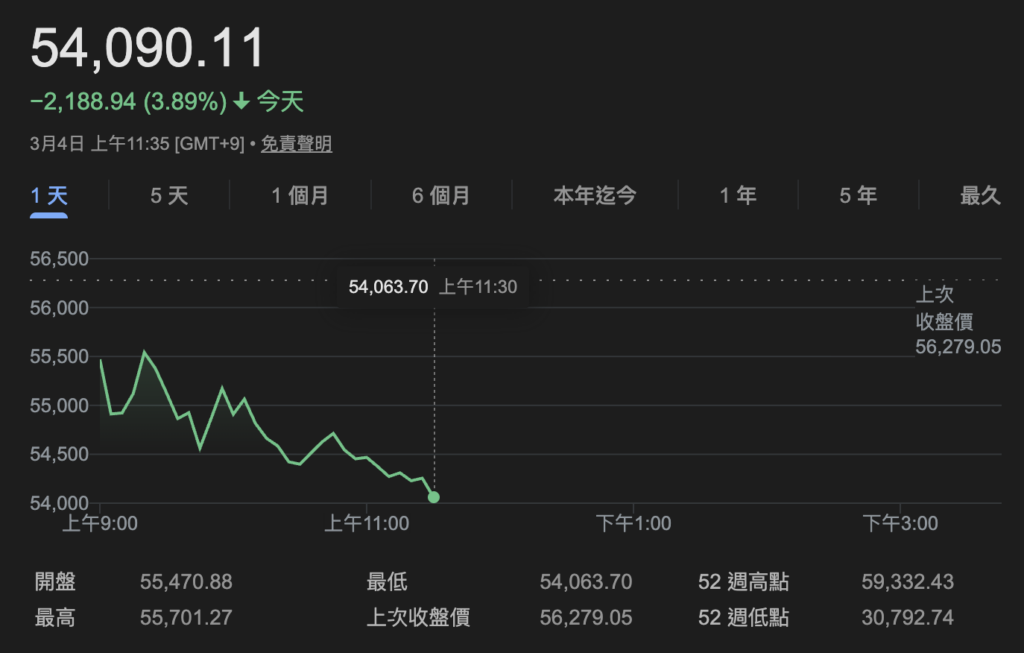
Japan is also not spared. The Nikkei index plunged 2,100 points in early trading, down more than 3.8% at the time of writing, with investors showing strong risk-averse sentiment.
Oil rises 4.7%, hitting a new one-year high
After the Iranian Revolutionary Guard announced on the 2nd that the Strait of Hormuz has been closed and stated, “No oil will be allowed to leave the area,” international oil prices surged 4.7% on the 3rd, with Brent crude futures closing at $81.40 per barrel. Since the outbreak of conflict last weekend, oil prices have risen a total of 12%.
U.S. President Trump responded to the surge in oil prices on Tuesday, clearly stating that he can tolerate higher prices “for a period of time” because it is more important to eliminate the “imminent” threat from Iran.