


The Strait of Hormuz is closed, paralyzing 84% of Asia's oil import routes
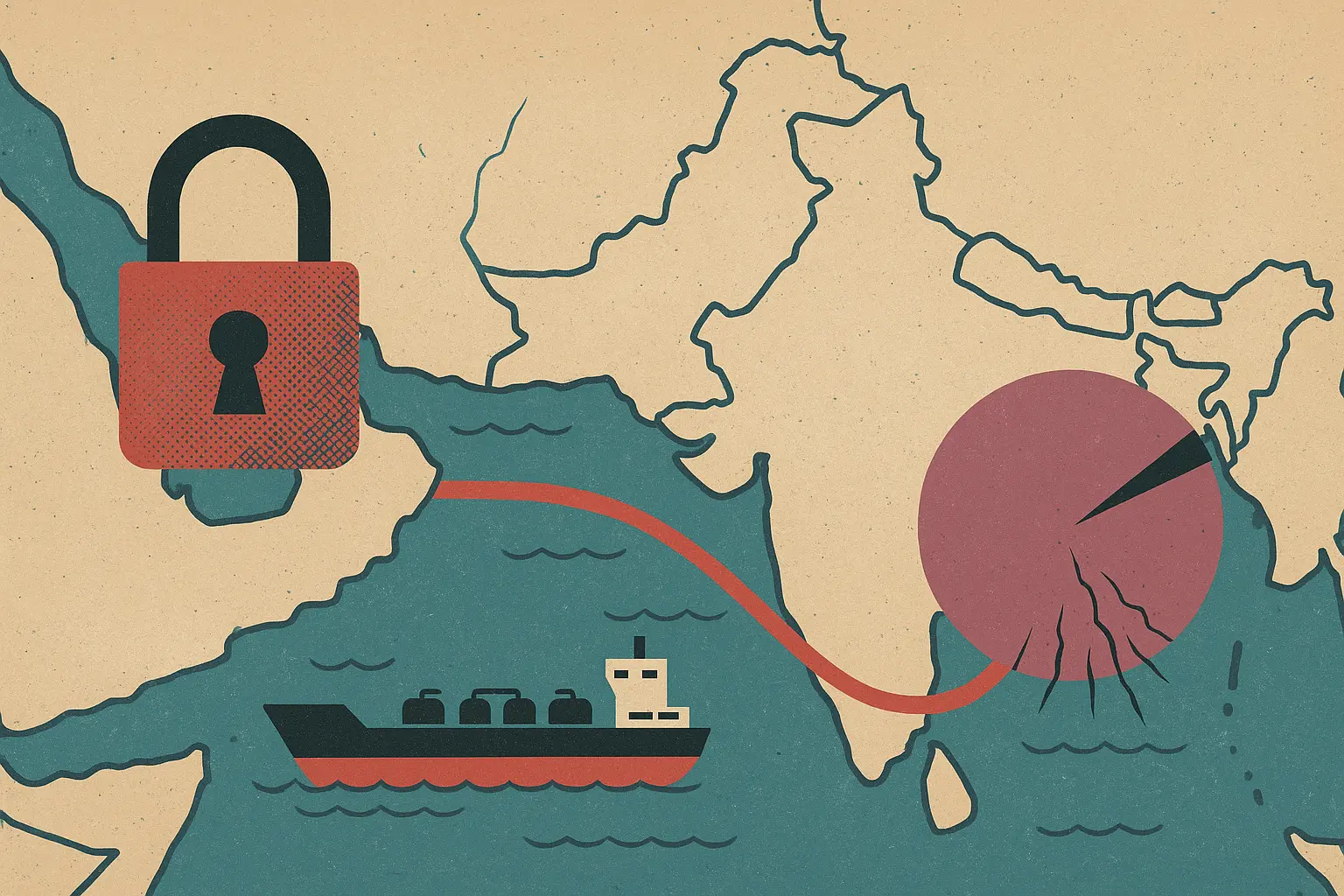
After the United States and Israel launched a joint attack on Iran, Iran’s Islamic Revolutionary Guard Corps (IRGC) announced the closure of the Strait of Hormuz and warned that it would fire on any ships trying to pass through. According to the U.S. Energy Information Administration (EIA), about 84% of crude oil and 83% of liquefied natural gas will flow through the Strait of Hormuz in 2024, causing an unprecedented impact on the world’s largest energy importing region.
Tanker traffic stalled: Western insurance withdrawal caused actual closure
Iran’s Supreme Leader Ayatollah Ali Khamenei was killed in a joint U.S.-Israeli airstrike on Saturday, and Tehran immediately launched retaliatory missile and drone attacks on U.S. military bases in Bahrain, Kuwait, Qatar and the United Arab Emirates, and the situation escalated rapidly. Supply chain analysis firm Kpler confirmed that commercial operators have completely withdrawn from shipping routes after insurance companies revoke war risk insurance, and only a few Iranian and Chinese flag-flagged ships - because they are not subject to Western insurance and classification societies - continue to pass.
According to data from the London Stock Exchange Group (LSEG), the cost of chartering supertankers to transport oil from the Middle East to China soared to a record high of more than $42.3 per day on Monday, doubling from last Friday.
Key impact data for the Strait of Hormuz crisis
The route is stalled: Major shipping lines and insurance companies withdraw, and commercial tanker traffic is effectively disrupted
Tanker charter: Supertanker fees from the Middle East to China exceeded $42.3M per day (doubling in a single week)
Asian dependence: About 75% of the world’s Hormuz oil flow goes to China, India, Japan, South Korea
oil price trends: Brent crude oil closed at about $78 a barrel on Monday (up about 9% from last Friday)
Oil price forecast: If the lockdown is short-lived, oil prices may be above $80; If it continues, analysts predict that it could reach $100 to $120
Alternative route gaps: Saudi Arabia and the UAE pipeline idle capacity of about 3.5 million barrels per day, less than 20% of the total blockade required
Asia’s energy vulnerability: Oil reserves are abundant but LNG is a fatal weakness
The Zero Carbon Analytics report ranks Japan as the most vulnerable country globally, with a vulnerability score of 6.4, followed by South Korea (5.3) and India (4.9). Japan relies on imported fossil fuels for 87% of its energy, compared to 81% in South Korea.
In terms of oil reserves, Japan’s public and private oil reserves can meet domestic consumption for about 254 days, while South Korea’s reserves can meet supply for more than 210 days, with relatively sufficient short-term buffers.
However, the situation with liquefied natural gas (LNG) is very different, and this is the most pressing vulnerability. According to data from the International Energy Agency (IEA), Japan does not have underground natural gas storage facilities, and its terminal capacity is only enough to sustain consumption for more than a month; South Korea is facing a similar LNG shortage. Given LNG’s critical role in power generation, a prolonged blockade of the Strait of Hormuz will pose a more immediate energy security threat than oil shortages.
On the Indian side, Kpler analysis pointed out that India faces the most severe short-term risks and may immediately turn to Russian crude oil; If the conflict continues, China may also abandon its recent restraint on Russian crude oil imports. The governments of Japan and South Korea have held separate emergency safety committee meetings to assess the situation.
Frequently Asked Questions
Why is the Strait of Hormuz so important?
The Strait of Hormuz is one of the world’s most critical energy chokepoints, with approximately 84% of Middle Eastern crude oil and 83% of liquefied natural gas flowing to Asia in 2024. China, India, Japan, and South Korea together account for about 75% of oil flows through the strait, and any prolonged disruption would have a systemic impact on energy markets in Asia and even globally.
How much impact does the Strait of Hormuz blockade have on oil prices?
Brent crude oil has risen about 9% to $78 a barrel on Monday. If the lockdown is only short-lived, analysts predict that oil prices may be above $80; If the impasse continues, the forecast ranges from $100 to $120 per barrel, coupled with a risk premium, which could further push oil prices far higher than the model predicts.
How did Japan and South Korea respond to the blockade of the Strait of Hormuz?
In terms of oil, Japan has about 254 days of reserves and South Korea has more than 210 days of reserves, and the short-term buffer is relatively sufficient. However, in terms of LNG, Japan does not have underground gas storage facilities, and the terminal capacity is only enough for more than a month, and the situation is similar in South Korea. Since LNG is the core fuel for power generation in both countries, the threat of LNG shortages will be more severe than oil shortages and will be more difficult to replace quickly.