


What could drive the price of Avalanche (AVAX) back up after a 94% drop from its all-time high?
Avalanche (AVAX), a layer-1 blockchain once expected to become a direct competitor to Ethereum in 2021, has experienced a significant decline, losing over 94% from its all-time high (ATH). By 2026, the big question is whether there are enough catalysts to help this altcoin regain its former glory.
Despite disappointing price performance, advancements in infrastructure and increasing adoption by major organizations are opening a promising path to recovery for the Avalanche ecosystem.
Japan’s Boost: $2 Billion in Assets Transferred “On-Chain” with Avalanche
One of the most important events strengthening Avalanche’s position is Progmat’s decision — Japan’s largest digital securities platform — to move all its assets onto this network.
Specifically, over $2 billion in real-world assets (RWA), including real estate and corporate bonds, will be migrated from the Corda platform to Avalanche.
According to Avalanche, Progmat currently accounts for about 63% of the total issuance volume and 53.8% of projects in Japan’s digital securities market, with total issuance exceeding ¥216.9 billion. It is forecasted that this market will reach a value of over ¥1.05 trillion (approximately $7 billion) by the end of 2026.
Progmat’s choice of Avalanche over competing platforms clearly demonstrates the superiority of Avalanche’s technology. The network not only supports financial institutions in creating compliant custom blockchains but also ensures high security through its connection to the mainnet.
VanEck’s Perspective: Why Does Avalanche Still Attract Investors?
In a recent report, investment firm VanEck explained why Avalanche continues to hold appeal for investors.
VanEck particularly highlighted the core consensus mechanism — Snowman. This allows blocks to be produced in just 1.2 seconds, with transactions nearly finalized instantly.
“While Ethereum — Avalanche’s competitor — takes 12 seconds to produce a block and 12.8 minutes to finalize a transaction, Avalanche only needs a few seconds to confirm a transaction. This provides a significant practical advantage for financial use cases,” VanEck’s report states.
Additionally, lower transaction fees compared to competitors are a major competitive edge for Avalanche. Notably, VanEck’s spot ETF for AVAX is currently the only AVAX ETF actively traded on the market.
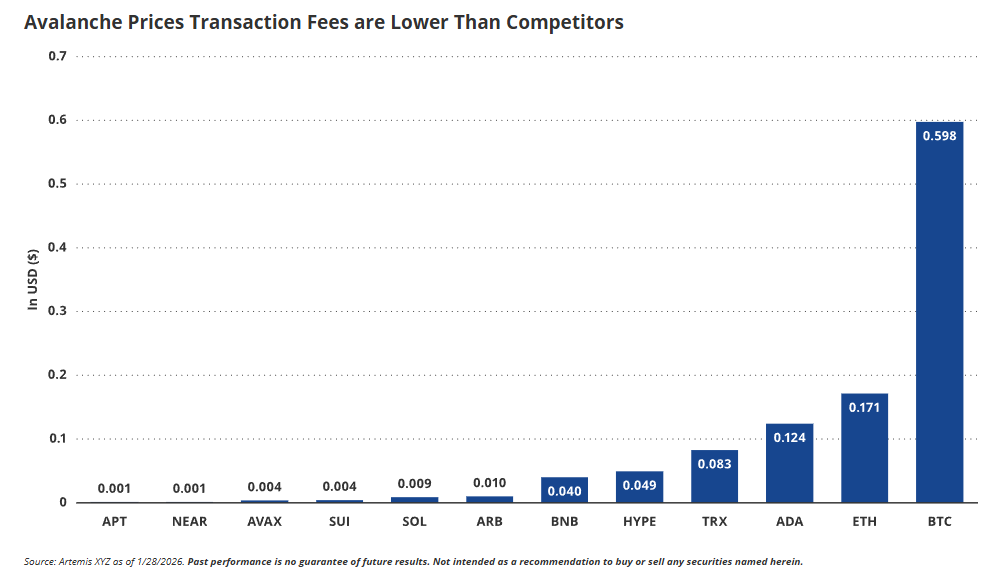 Avalanche’s transaction fees are lower than competitors | Source: VanEck However, data shows investor demand for this fund remains limited. After one month of trading, the fund’s total assets under management (AUM) reached only $11.5 million — a modest figure compared to other ETFs like LINK ($81 million) or SOL (over $800 million).
Recovery Outlook: Can AVAX Reach New Highs?
According to a CryptoRank report, among top altcoins, AVAX and DOT suffered the most severe declines, with losses exceeding 94%. This was a huge shock for many investors, raising doubts about AVAX’s ability to recover.
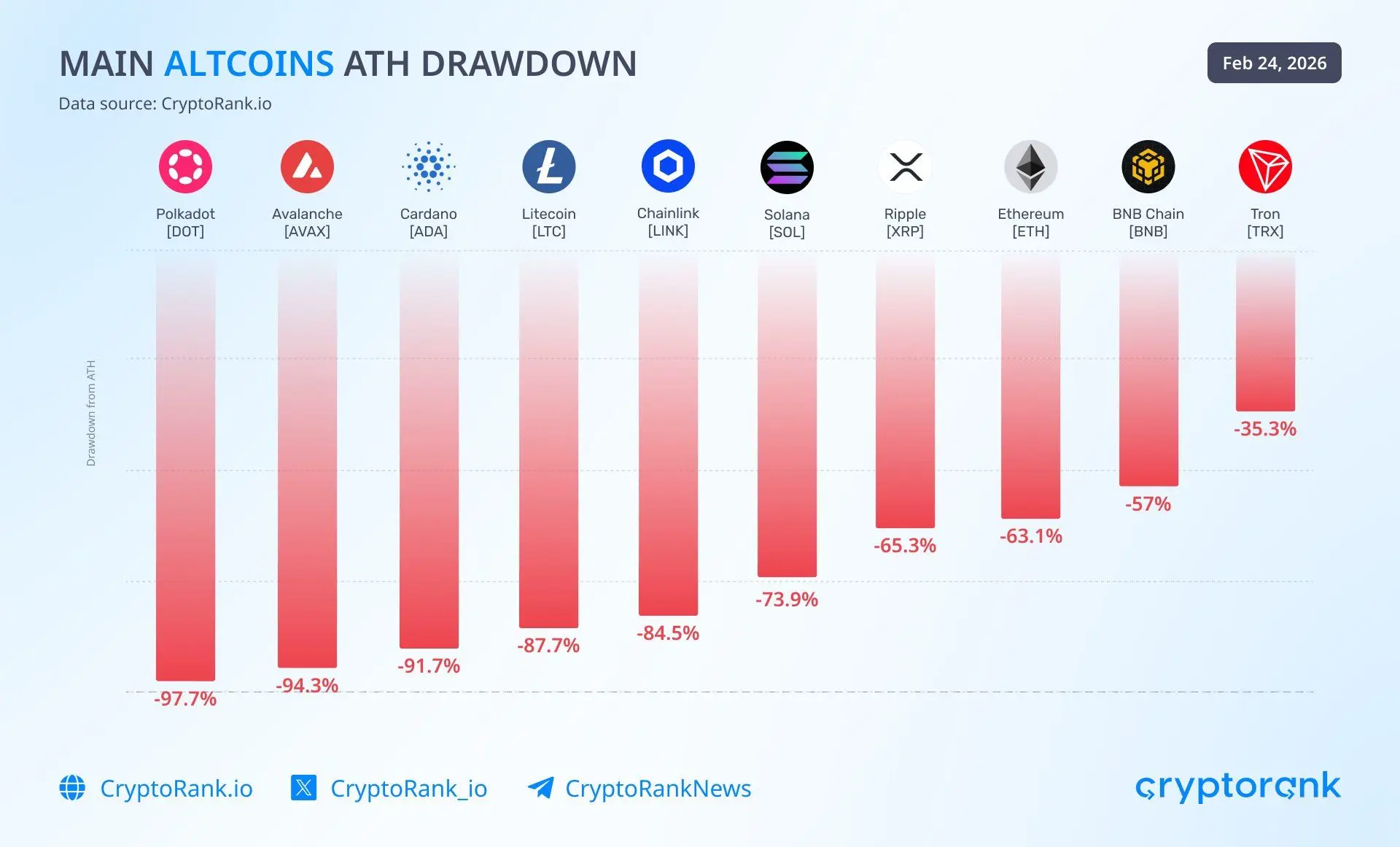 All-time low of Altcoin | Source: CryptoRank However, Avalanche data shows positive signs in February 2026, with a sharp increase in active users. The number of daily active addresses surpassed 1.3 million — the highest in the history of this layer-1 blockchain.
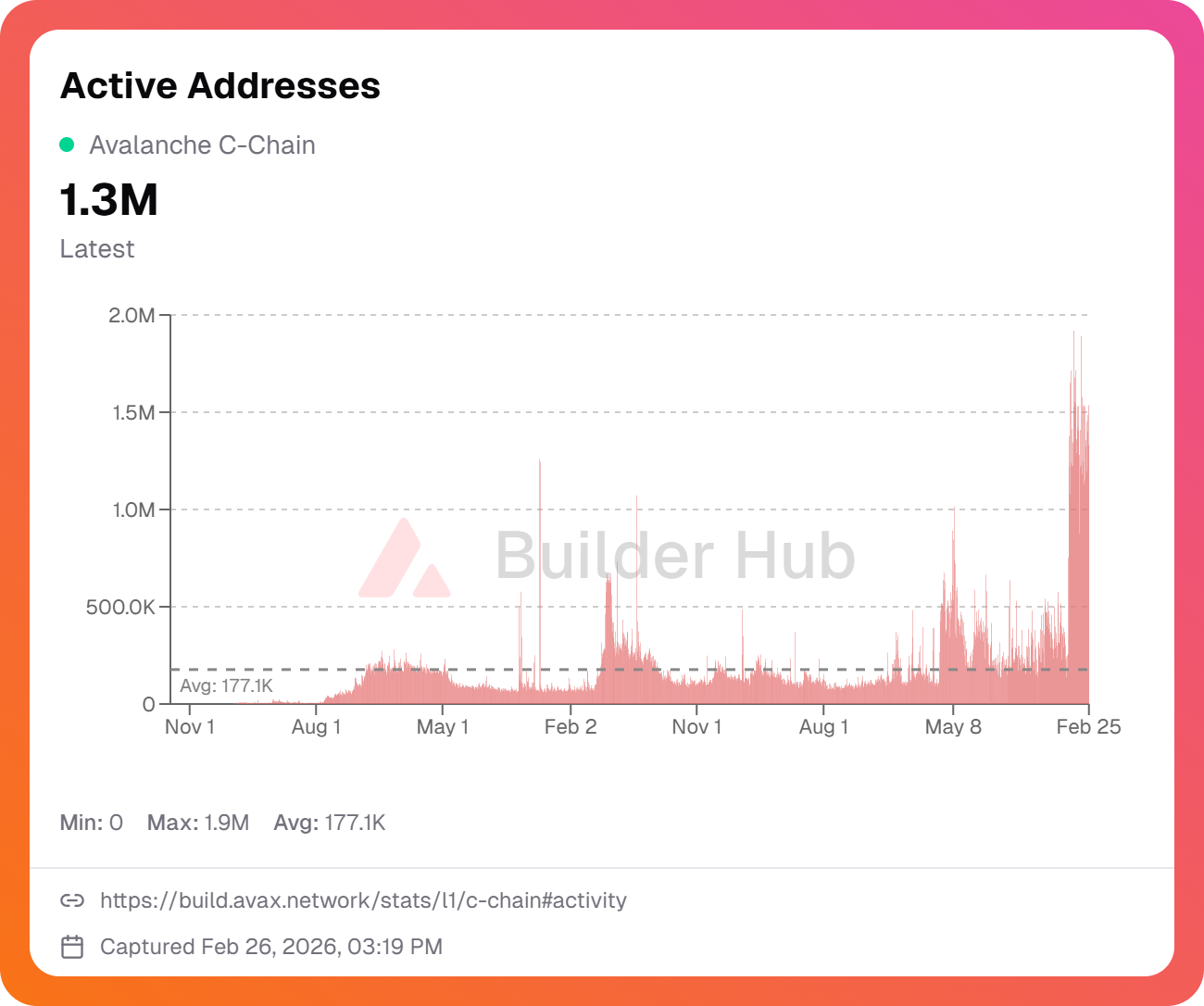 Daily active users on Avalanche’s C-Chain | Source: Avax Prominent investor Emperor Osmo commented: “The new slogan for AVAX should be: Trust the technology, not just the price.”
Furthermore, a report from BeInCrypto indicates that negative market sentiment still dominates, making many investors hesitant to deploy capital. However, as capital begins to flow back, projects with solid technological foundations like Avalanche could become top choices for investors.
Conclusion
Although facing numerous challenges, Avalanche still shows potential for recovery thanks to technological advancements and recognition from major organizations. With strategic partners like Progmat and clear competitive advantages, AVAX has every chance to regain its position in the crypto market. However, to achieve this, the ecosystem must continue to develop and strengthen its core elements.