


Aave loans surpass $1 trillion, aiming to integrate with banks and financial technology
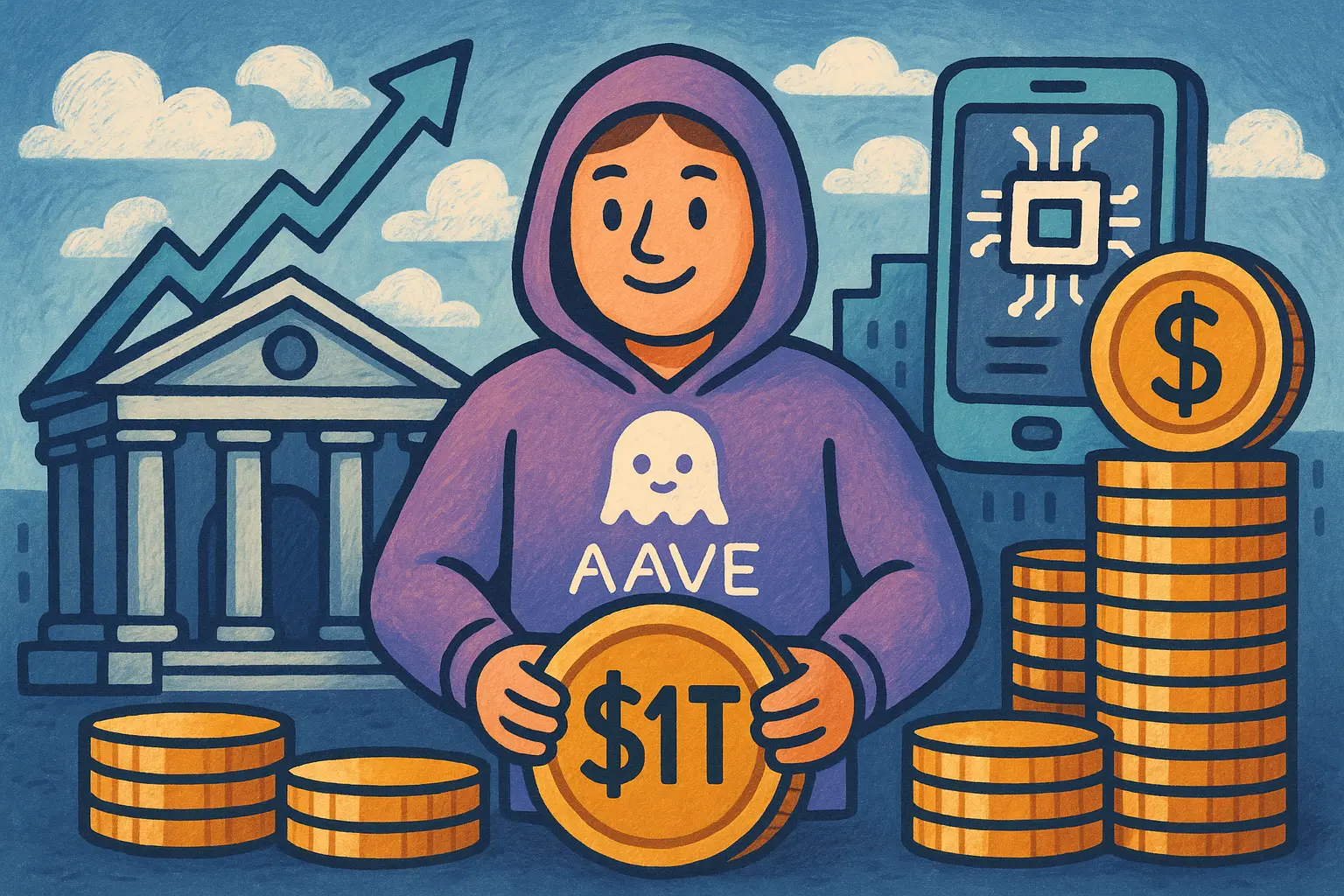
Decentralized lending protocol Aave announces that the total borrowed amount has surpassed $1 trillion, becoming the first DeFi protocol to reach this milestone. Aave Labs CEO Stani Kulechov stated on X platform Wednesday that this is a key milestone on Aave’s path to becoming the “world’s largest and most efficient liquidity network,” explicitly targeting banks and fintech companies as the core focus for the next phase of integration.
Behind the Milestone: Aave’s Scale Advantage and Cost Leadership
 (Source: Aave)
Aave’s leadership in the DeFi lending market is built on a continuously expanding scale moat, currently far ahead of competitors like Morpho, JustLend, SparkLend, Maple, Kamino Lend, and Compound Finance, all with total value locked (TVL) exceeding $1 billion.
Kulechov stated in a release: “Ten years ago, DeFi and Aave didn’t exist; they were just concepts. Today, Aave has become a pillar of on-chain lending, powering a new, open, globalized, and unstoppable financial system.”
Current Core Data of Aave
Total Borrowed Amount: Surpassed $1 trillion, a first in DeFi history
Total Value Locked (TVL): Over $27.2 billion
Fee Revenue in Past 30 Days: $83.3 million, about four times that of second-place Morpho
User Services: Provides core services of crypto asset staking, borrowing, and deposit interest
Foundation: Founded in November 2017 as ETHLend, renamed Aave in September 2018
Institutional Strategy and Future Vision: Integration with Banks, Fintech, and RWA
Aave’s next growth phase focuses on deep integration with traditional financial institutions. In August 2025, Aave Labs launched Aave Horizon, an institutional lending market deployed on Ethereum, allowing traditional finance companies and institutional investors to borrow stablecoins using real-world assets (RWA) as collateral. VanEck, WisdomTree, and Securitize are among the first participants.
Kulechov’s strategic vision is to make Aave the “default platform for builders, banks, and fintech companies, fundamentally improving liquidity and cost structures in global finance.” On February 15, he further stated that DeFi lending can benefit from tokenizing surplus assets like solar panels, energy storage batteries, and labor robots, with an estimated total value of such assets reaching $50 trillion by 2050.
This milestone also coincides with internal governance debates within the protocol. AAVE token holders are being asked to approve a proposal to allocate $42.5 million in stablecoins and 75,000 AAVE tokens to Aave Labs; in return, Aave Labs will transfer all revenue from branded products into the Aave DAO treasury under a DAO-funded operational framework. The proposal has sparked division within the community, centering on the boundaries of funding and decision-making power between Aave Labs and the DAO.
Frequently Asked Questions
What does the $1 trillion lending milestone mean for Aave?
Aave becoming the first DeFi protocol to surpass $1 trillion in total borrowed amount signifies that decentralized lending has moved from concept validation to a scalable global financial infrastructure. This figure demonstrates the competitive advantages of on-chain lending in liquidity, efficiency, and accessibility.
How does Aave Horizon serve institutional investors?
Aave Horizon is an institutional lending marketplace launched by Aave Labs, allowing traditional finance firms and institutional investors to borrow stablecoins using real-world assets (RWA) as collateral. It is designed to meet legal certainty and compliance needs for institutions, with VanEck, WisdomTree, and Securitize among the first to participate.
What is the core governance dispute between Aave DAO and Aave Labs?
The current controversy centers on a proposal to allocate $42.5 million in stablecoins and 75,000 AAVE tokens to Aave Labs. Supporters believe this aligns Aave Labs’ interests with the long-term development of the DAO; opponents worry that revenue control is overly concentrated in Labs, weakening the DAO’s decentralized governance.
Related Articles
TRON Network Targets AI Infrastructure as Top Priority for 2026
Solid Intel: AUDD obtains ASIC AFSL, compliant AUD stablecoin available for banks on XRPL
SoFi Becomes First Chartered Bank to Support Direct Solana Deposits
The Bridge plan will expand the stablecoin payment card service to 100 countries.
Neo's two main founders have disagreements again, with Zhang Zhengwen questioning the existence of embezzlement of public funds.