


Solo Bitcoin Miner Earns $200,000 Block Reward from $75 Hashrate Rental in Rare Event
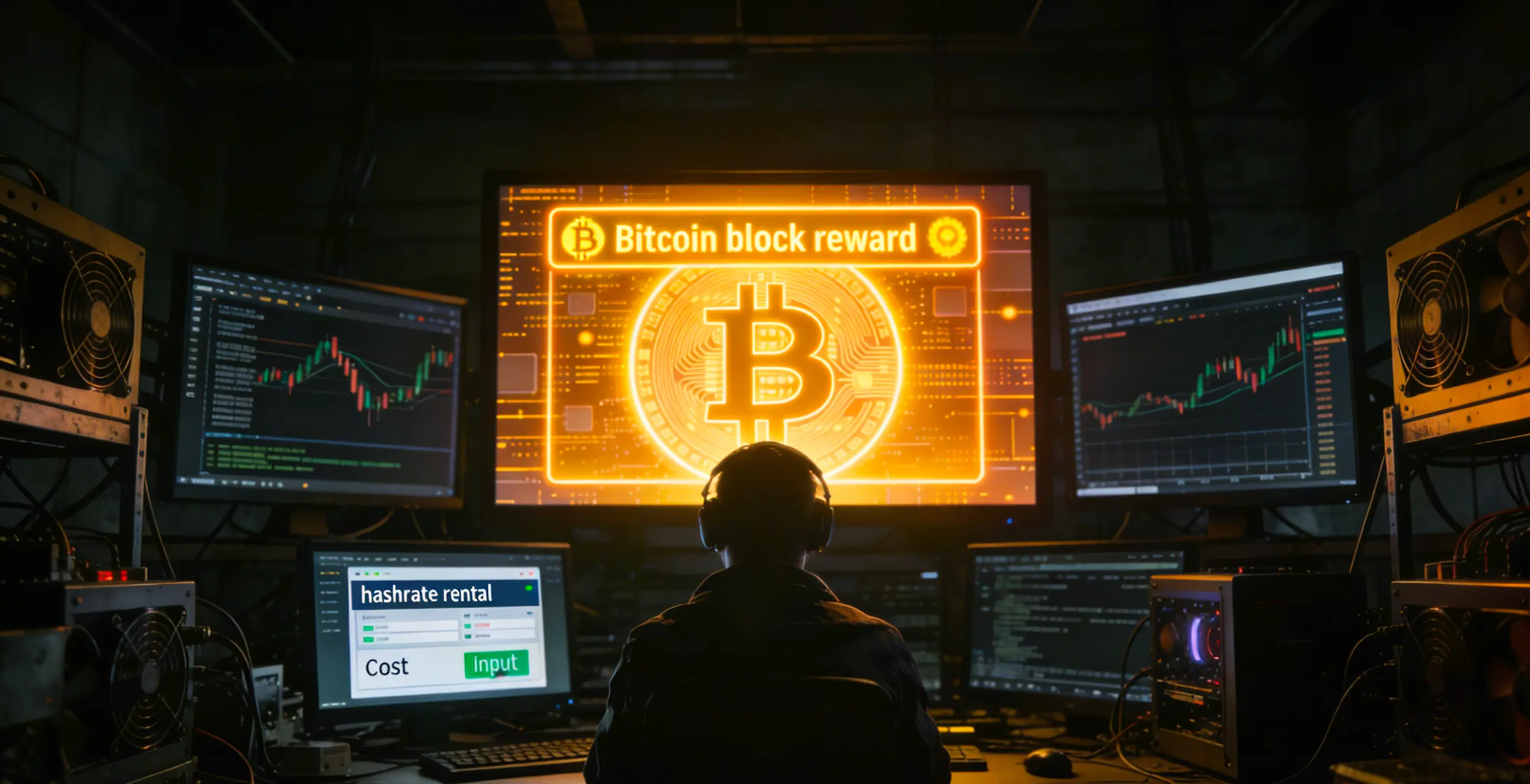
A solo Bitcoin miner successfully validated block 938092 on February 24, 2026, earning the full 3.125 BTC block subsidy valued at approximately $200,000 after renting just 1 petahash per second (PH/s) of mining capacity for approximately $75 through the Braiins hashrate marketplace.
The event represents an extreme statistical outlier in Bitcoin mining, with solo mining success at this hashpower level estimated to occur approximately once every 1.1 million blocks, equivalent to roughly 21 years of continuous mining based on current network hashrate . The miner coordinated the operation through CKPool, a platform enabling solo miners to broadcast block solutions while retaining full rewards.
Mining Mechanics and Economic Dynamics
Rented Hashrate Model
The miner utilized Braiins’ on-demand hashrate marketplace, which allows users to rent Bitcoin mining capacity directly from the company without installing or operating physical hardware . The rental cost of approximately 119,000 satoshis (about $75) provided 1 PH/s of computational power directed toward solo mining .
This cloud-based mining model enables smaller operators and hobbyists to participate in Bitcoin mining without the substantial capital expenditure required for purchasing and operating mining equipment . Users rent SHA-256 compute power for specified periods and point it toward mining pools or network targets of their choosing .
Solo Mining vs. Pool Mining
Most Bitcoin blocks are discovered and rewarded to large mining pools that aggregate massive computational power from numerous participants, dramatically improving the probability of solving blocks and distributing rewards proportionally among members . Solo miners retain the full block reward upon success but face extremely low probabilities of finding blocks independently .
According to data aggregator Bennet, only 21 solo miners successfully found blocks over the past year, earning approximately 66 BTC valued at roughly $4.1 million at current prices . This represents approximately one solo block every 17.2 days on average, a fraction of the thousands of blocks produced daily across the Bitcoin network .
Statistical Rarity and Probability Analysis
Odds Calculation
Based on the current Bitcoin network hashrate exceeding 1.1 zettahash per second (ZH/s) on average daily, a miner operating at 1 PH/s faces success probability of approximately 1 in 1.1 million blocks, according to estimates from SoloChance.com . This translates to an expected waiting period of roughly 21 years of continuous mining at that capacity .
The network’s total computational power has increased approximately 61 percent from 730 exahash per second (EH/s) in February 2025, further compounding the difficulty of solo mining success .
Recent Solo Mining Wins
The February 2026 event follows several similar solo mining successes in recent months. In January 2026, two solo miners each earned more than 3.1 BTC in respective rewards worth approximately $300,000 at the time . In December 2025, another solo miner secured a reward exceeding $282,000 based on Bitcoin’s then-prevailing price .
These events, while statistically rare, occur with sufficient frequency to maintain interest among hobbyist miners, despite industry experts characterizing solo mining participation as analogous to “playing the lottery” .
Network Context and Mining Difficulty Dynamics
Hashrate Growth and Geographic Shifts
Bitcoin’s network hashrate has demonstrated sustained growth, with current daily average above 1.1 ZH/s compared to approximately 730 EH/s one year prior . This 61 percent increase reflects ongoing mining infrastructure expansion despite market volatility .
North American mining pools experienced a declining share of global computational power during 2025, with some portion attributable to pools and miners redirecting attention from Bitcoin mining toward growing demand for artificial intelligence compute infrastructure . Publicly traded Bitcoin miners including Bitfarms have wound down mining operations, while investors have urged firms such as Riot Platforms to capitalize on AI infrastructure opportunities .
Difficulty Volatility and Market Conditions
The solo mining success occurred amid recent volatility in Bitcoin mining difficulty. Following significant downward pressure from winter storms that temporarily offline hashrate in key mining regions, difficulty rebounded sharply with an approximately 15 percent increase to 144.4 trillion in the latest adjustment .
This rebound followed an earlier 11 percent difficulty drop tied to weather-related outages, described as the sharpest decline in network hashrate since China’s 2021 mining crackdown . Difficulty adjustments, occurring approximately every 2,016 blocks (roughly two weeks), maintain the network’s average block time near 10 minutes and calibrate computational requirements for block discovery .
Large swings in network hashrate—whether from weather disruptions, miner shutdowns, or equipment turnover—can temporarily create conditions where lower-cost, rented hashrate strategies face improved probability compared to stable network conditions .
Mining Economics and Market Structure
Hashrate Marketplaces
Platforms such as Braiins’ hashrate marketplace facilitate direct rental of Bitcoin mining capacity, enabling users to access computational power without hardware ownership or operational responsibility . These services have emerged as infrastructure supporting both pool mining participation and speculative solo mining attempts .
The model represents a democratization of mining access, though the statistical realities of network hashrate concentration ensure that solo success remains exceptionally rare regardless of access mechanisms .
Industry Transition Dynamics
The broader Bitcoin mining industry continues navigating transitions between cryptocurrency-focused operations and emerging AI compute demand. Some publicly traded miners have diversified into AI infrastructure, reducing available hashrate for Bitcoin mining while creating new revenue streams .
These shifts contribute to ongoing hashrate redistribution among geographic regions and operational models, though the overall network hashrate trajectory remains upward, progressively increasing the computational barrier for successful solo mining .
Frequently Asked Questions
How did a solo miner earn $200,000 from a $75 rental?
The miner rented 1 PH/s of hashrate through Braiins’ marketplace for approximately $75 and successfully validated Bitcoin block 938092, earning the full 3.125 BTC block subsidy. This represents an extreme statistical outlier, with success probability estimated at approximately 1 in 1.1 million blocks at current network hashrate.
What are the odds of successfully solo mining a Bitcoin block?
Based on current network hashrate exceeding 1.1 ZH/s, a miner operating at 1 PH/s faces success probability of approximately once every 1.1 million blocks, equivalent to roughly 21 years of continuous mining. Only 21 solo miners successfully found blocks in the past year, representing approximately one solo block every 17.2 days against thousands of total blocks produced daily.
What is rented hashrate and how does it work for Bitcoin mining?
Rented hashrate refers to cloud-based mining services that allow users to lease SHA-256 computational power for specified periods without purchasing or operating physical mining hardware. Platforms like Braiins’ marketplace enable users to direct rented hashrate toward mining pools or solo mining operations, paying only for the computational capacity used.
How does Bitcoin mining difficulty affect solo mining probability?
Bitcoin’s difficulty adjusts approximately every two weeks to maintain 10-minute average block times. Higher difficulty increases the computational work required to find blocks, reducing solo mining probability. Recent difficulty has reached 144.4 trillion following a sharp rebound from weather-related outages, representing a 61 percent increase in network hashrate compared to February 2025.
Are solo mining wins becoming more or less common?
Solo mining wins remain exceptionally rare and are becoming statistically less common as network hashrate continues growing. However, periodic successes occur—approximately 21 in the past year—maintaining hobbyist interest. These events are analogous to lottery wins rather than indicative of any broader shift in mining strategy viability.
Related Articles
Data: 220 BTC transferred from an anonymous address, routed through intermediaries, and sent to another anonymous address
March 3, 2026 Top Cryptocurrencies Overview, Top Three in Popularity: Bitcoin, Ethereum, XRP
Steak 'n Shake Launches 21-Cent-Per-Hour Bitcoin Bonus for Employees
Bitcoin's Soul Battle: The First Block Supporting BIP-110 Is Born, On-Chain Data Limit Disputes Intensify