


Microsoft AI CEO: AI will automate white-collar jobs within 18 months, but may also lead to major cybersecurity incidents
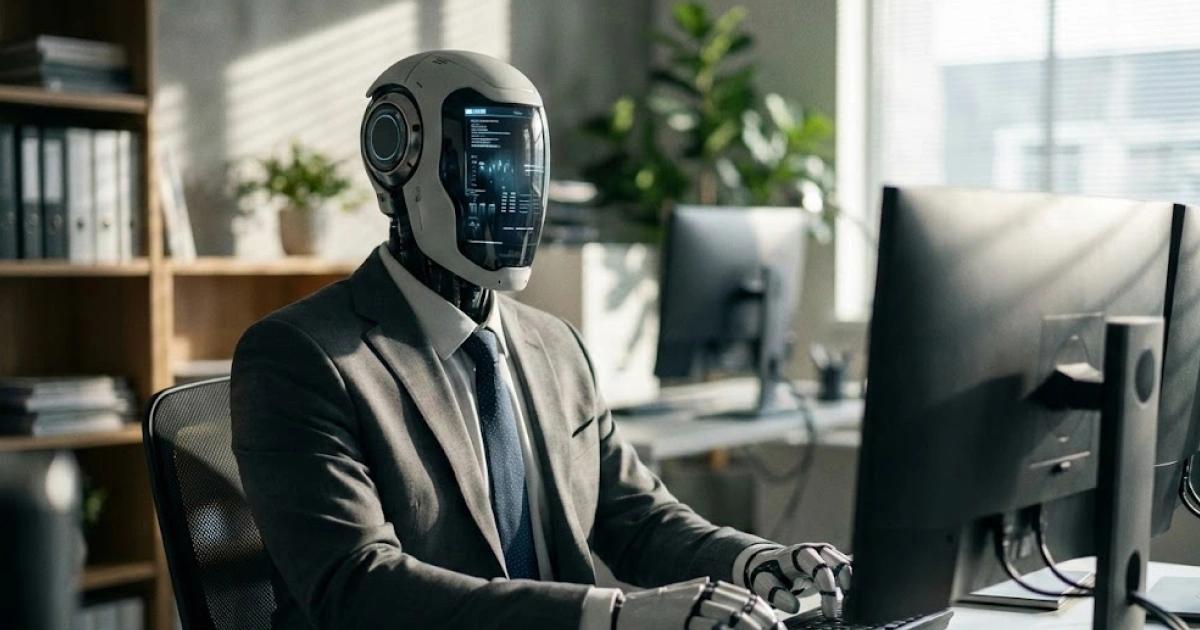
Microsoft AI CEO predicts that white-collar jobs will be automated within 18 months and warns of major safety incidents potentially occurring in the next two to three years. Despite significant productivity improvements brought by AI technology, it also raises concerns about cognitive fatigue among software engineers and job displacement risks.
Microsoft AI CEO: AI to Automate White-Collar Work Within 18 Months
Mustafa Suleyman, CEO of Microsoft AI, recently told the Financial Times that AI will be capable of handling the vast majority of white-collar jobs within the next 12 to 18 months, achieving human-level performance on most professional tasks.
This means that any profession involving working at a computer—whether lawyer, accountant, project manager, or marketing personnel—could see most of their work fully automated by AI.
Suleyman stated that the trend of AI-assisted work is becoming increasingly evident in software engineering. Currently, Microsoft engineers are using AI to assist in writing the majority of code, changing the interaction between humans and technology. He believes that with substantial increases in computing power, AI models will outperform most programmers.
- Further reading: AI Dumps Garbage into Open Source Communities! Some Projects Suspend External Contributions, Shitcode Like DDoS Attacks
Anthropic CEO Warns Half of Entry-Level White-Collar Jobs May Disappear
As AI technology demonstrates its potential to replace human labor, renowned computer scientist and AI authority Stuart Russell, co-author of influential works on AI, stated in an interview last year that traditional high-level positions face the prospect of AI causing up to 80% unemployment, affecting a wide range of roles from surgeons to CEOs, all at risk of being replaced.
Additionally, Dario Amodei, CEO of Anthropic, recently warned that AI could cause half of entry-level white-collar jobs to be lost.
AGI Is Coming, Humanity Must Ensure Its Dominance
While Microsoft AI CEO Suleyman remains optimistic about the future of white-collar automation, he also worries that with the imminent arrival of artificial general intelligence (AGI), the lack of regulatory mechanisms could lead to significant AI safety incidents within the next two to three years.
Suleyman emphasized that as AI systems become more autonomous, it is essential to ensure humans retain full control and that these systems operate in a subordinate manner.
He believes that such powerful systems should only be introduced into the world when it is certain that humans remain at the top of the food chain and that these tools are designed to enhance human well-being and serve humans, not surpass them.

Image source: Wikimedia Commons, photo by Christopher Wilson Microsoft AI CEO: AI to Automate White-Collar Work Within 18 Months
- Further reading: AI Competition Consumes Large Amounts of Energy! Microsoft CEO: AI Must Quickly Benefit More People, Otherwise It’s a Bubble
AI Productivity Paradox? Engineers Face AI Fatigue
Although entrepreneurs and experts in the AI field predict that white-collar jobs will be replaced by AI, a recent report by Business Insider highlights that the software engineering community is experiencing AI fatigue. While AI tools have indeed unlocked higher productivity, they also lead to worker exhaustion.
Software engineer Siddhant Khare, who has been deeply involved in AI infrastructure, wrote that although AI tools help him produce more code, they make the work more difficult than ever.
He describes his role as having shifted from “engineer” to “reviewer,” feeling like he’s on an endless assembly line, constantly stamping and approving AI-generated code.
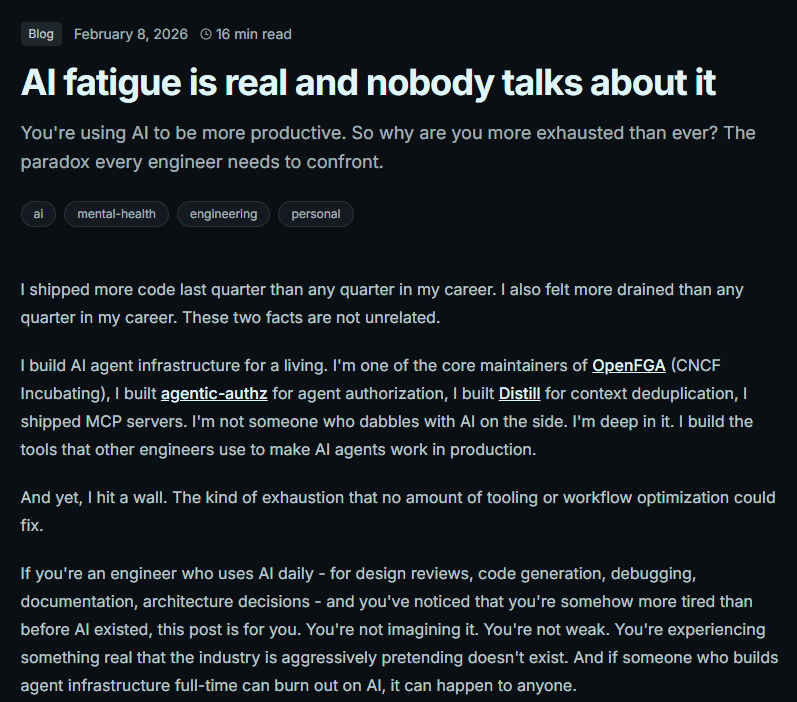
Image source: Siddhant Khare Software engineer Siddhant Khare notes that while AI tools help him produce more code, they make the work more challenging than before.
The significant automation brought by AI paradoxically reduces productivity, as AI lowers production costs but greatly increases coordination, review, and decision-making costs. Engineers are forced to switch contexts among multiple issues, causing immense cognitive load, and this fatigue and burnout lack effective solutions at present.
- Further reading: SingularityNET: Human Brain Advantages Diminish, AI Strategic Thinking Capabilities to Surpass Humans in 2 Years