


The world's first fully bionic human Moya! Real touch with a body temperature of 32°C, launching in 2026
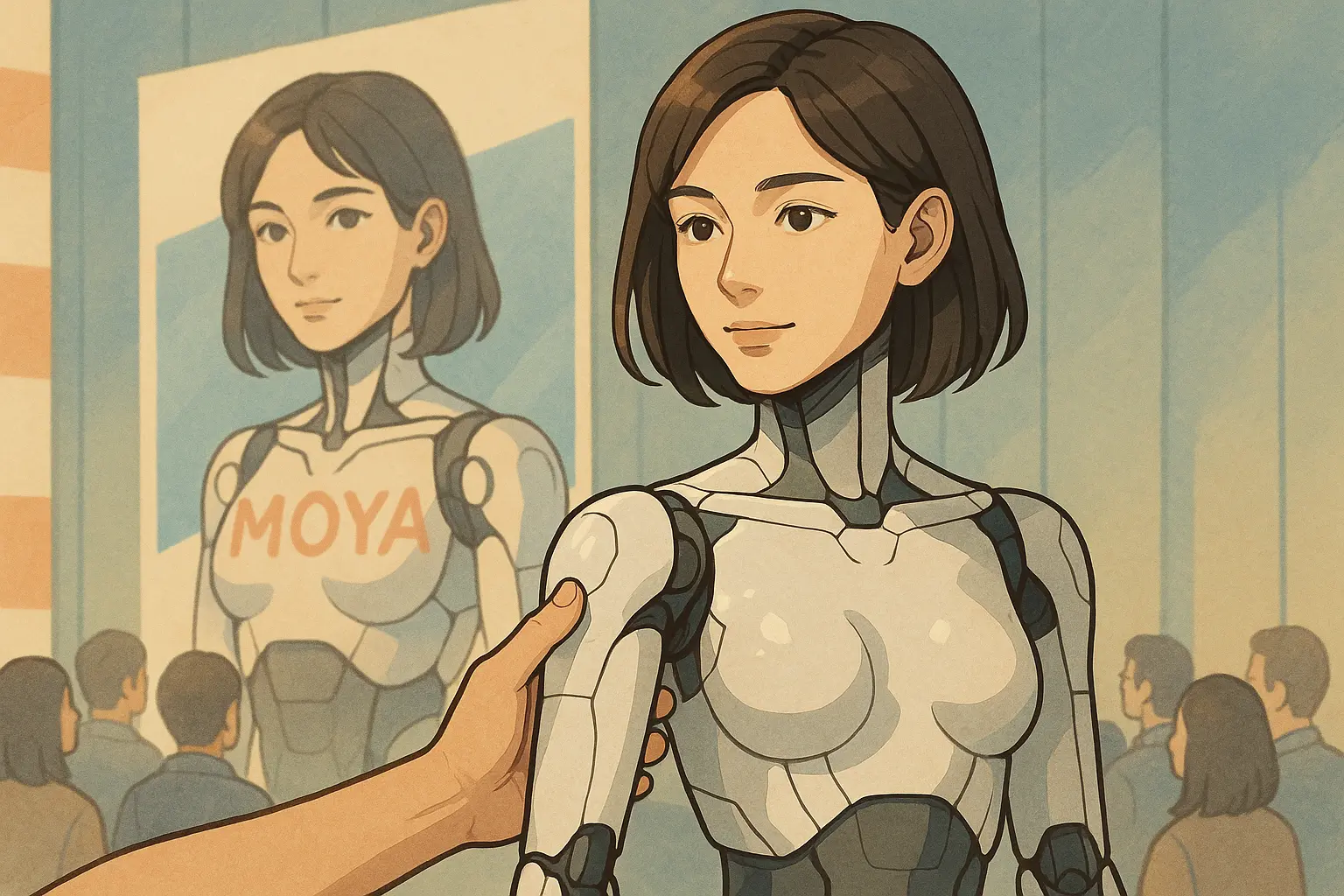
Chinese robotics company Zhuoyide released Moya at the end of January, claiming it to be the world’s first fully bionic robot. Standing 165 centimeters tall and weighing 31 kilograms, it features a silicone skin with added muscle-like filling layers and simulated rib structures, providing a tactile feel close to that of a human. Positioned as a medical companion and social partner, it is priced at approximately $173,000 USD, with plans to launch in the second half of 2026.
$173,000 Bionic Breakthrough: Moya Reshapes Robot Imagination
According to Dexerto, Moya is about 165 centimeters tall and weighs around 31 kilograms. The major technological breakthrough of this product is its highly customizable modular design, allowing users to swap parts to adjust the robot’s gender features, body shape, and hairstyle. Such modularity is rare in consumer-grade robots, typically seen only in industrial or military equipment.
To break the traditional “steel figure” image of humanoid robots, Zhuoyide added muscle-like filling layers beneath Moya’s silicone skin and even constructed simulated rib structures, making its tactile sensation more human-like. This multi-layered bionic design far surpasses current humanoid robots on the market. While Tesla’s Optimus and Boston Dynamics’ Atlas are highly capable in movement, their appearance and touch are clearly mechanical. Moya aims to achieve a “realistic” level in appearance, tactile feel, and temperature.
In terms of perception systems, Moya’s eyeballs are embedded with cameras capable of environmental tracking and human interaction. It also has a built-in heating system to maintain a body temperature between 32 and 36 degrees Celsius, mimicking human physiological warmth. Slightly lower than normal human body temperature (36.5 to 37.5°C), this may be for safety or technical reasons but is sufficient to provide a warm tactile experience.
Li Qingdu, founder of Zhuoyide, stated in an interview with Shanghai Eye, “Robots truly serving human life should have temperature, capable of forming a connection like living beings. This is fundamentally different from cold metal machinery.” This design philosophy elevates robots from tools to “companions,” implying their application is not only task completion but also providing emotional value.
The high-end bionic robot is priced at about $173,000 USD (roughly NT$5.5 million), with a planned release in late 2026. This price is 5 to 8 times higher than Tesla’s estimated $20,000–$30,000 USD for Optimus, positioning Moya in the high-end market. The NT$5.5 million price exceeds many luxury cars, accessible only to a small number of high-net-worth individuals or institutions.
Five Major Technological Breakthroughs of Moya
- Realistic Skin System: Multi-layer silicone + filling layers simulate authentic touch
- Skeletal Structure Simulation: Built-in simulated ribs and structures enhance realism
- Body Temperature Control: Heating system maintains 32–36°C physiological temperature
- Visual Tracking Capability: Camera-equipped eyeballs enable environment perception and interaction
- Modular Design: Replaceable gender features, body shapes, and appearance components
Achieving integration of these functions presents significant technical challenges. Precise heating systems and temperature sensors are needed to provide warmth without overheating. The realistic skin must balance softness, durability, and visual authenticity. The skeletal structure must offer tactile realism without hindering joint movement. The maturity and reliability of these technologies will be tested once the product is commercially available in 2026.
Medical Companion Positioning: Solution for Aging Society or Ethical Dilemma?
Based on this concept, Zhuoyide positions Moya as a “social companion,” with plans to promote it in healthcare, providing services for those needing care or emotional support. This social value emphasis also sparks ethical debates.
Target markets include elderly care, support for autism patients, and psychological therapy. In countries with severe aging populations like China and Japan, caregiver shortages are critical. If Moya can truly offer human-like companionship, it could alleviate some issues—for example, dementia patients might benefit from stable companionship and interaction, and lonely seniors could find emotional comfort through communication.
However, with a price tag of NT$5.5 million, mass deployment in nursing homes is unlikely; it is more likely a luxury item for affluent families. The “social companion” role remains somewhat ambiguous. For individuals with loneliness, social difficulties, or special needs, Moya could provide a pressure-free interaction partner. But questions remain: Is this artificial companionship healthy? Could it deepen social isolation? These ethical issues are currently unresolved.
Japan already has phenomena like “virtual idol marriages,” indicating some people are willing to form emotional bonds with non-human entities. Moya pushes this trend into physical form. When robots look, feel, and have temperature close to humans, people may develop emotional dependence more easily. Whether this dependence is positive (offering emotional support) or negative (replacing genuine human relationships) remains debated in academia.
From a regulatory perspective, products like Moya currently exist in a legal gray area. There are no specific laws targeting “bionic humans.” They are not human and thus not protected by human rights, but their high realism could cause social issues like identity confusion. As technology matures and commercialization advances, governments may need to establish relevant regulations.
China’s Robot Industry’s Global Ambition
Chinese robot companies continue to develop the bionic industry. Earlier, another Shanghai startup, Agibot Innovations, set a Guinness World Record in 2025 by walking 100 kilometers unaided with its humanoid robot, demonstrating China’s rapid progress in humanoid robotics technology and industrialization.
The launch of Moya could trigger a new phase in the global bionic race. As China showcases such highly realistic products, robot companies in the US, Japan, and Korea may accelerate similar developments. This competition will drive technological progress but also raise ethical, legal, and social concerns. When robots are indistinguishable from humans in appearance, touch, and behavior, the boundaries of human-machine relationships will be fundamentally blurred.
From a business strategy perspective, Zhuoyide’s choice of an “ultra-realistic” bionic focus is a high-risk, high-reward gamble. If the market accepts and is willing to pay a premium for high realism, Moya could create a new category. If excessive realism causes discomfort or ethical concerns, it may face resistance. The market response in late 2026 will determine the success of this gamble.
Looking at the global robot industry landscape, China is leading in the “humanoid” direction, while the US focuses more on “functional” applications (such as Tesla’s factory robots). This divergence likely stems from differing market demands and cultural backgrounds. China’s large aging population and one-child policy have created a natural market for companionship robots, whereas the US emphasizes robots for labor shortages.