


2026 Year of the Fire Horse: Japan's First Bitcoin ETF & 20% Tax Revolution
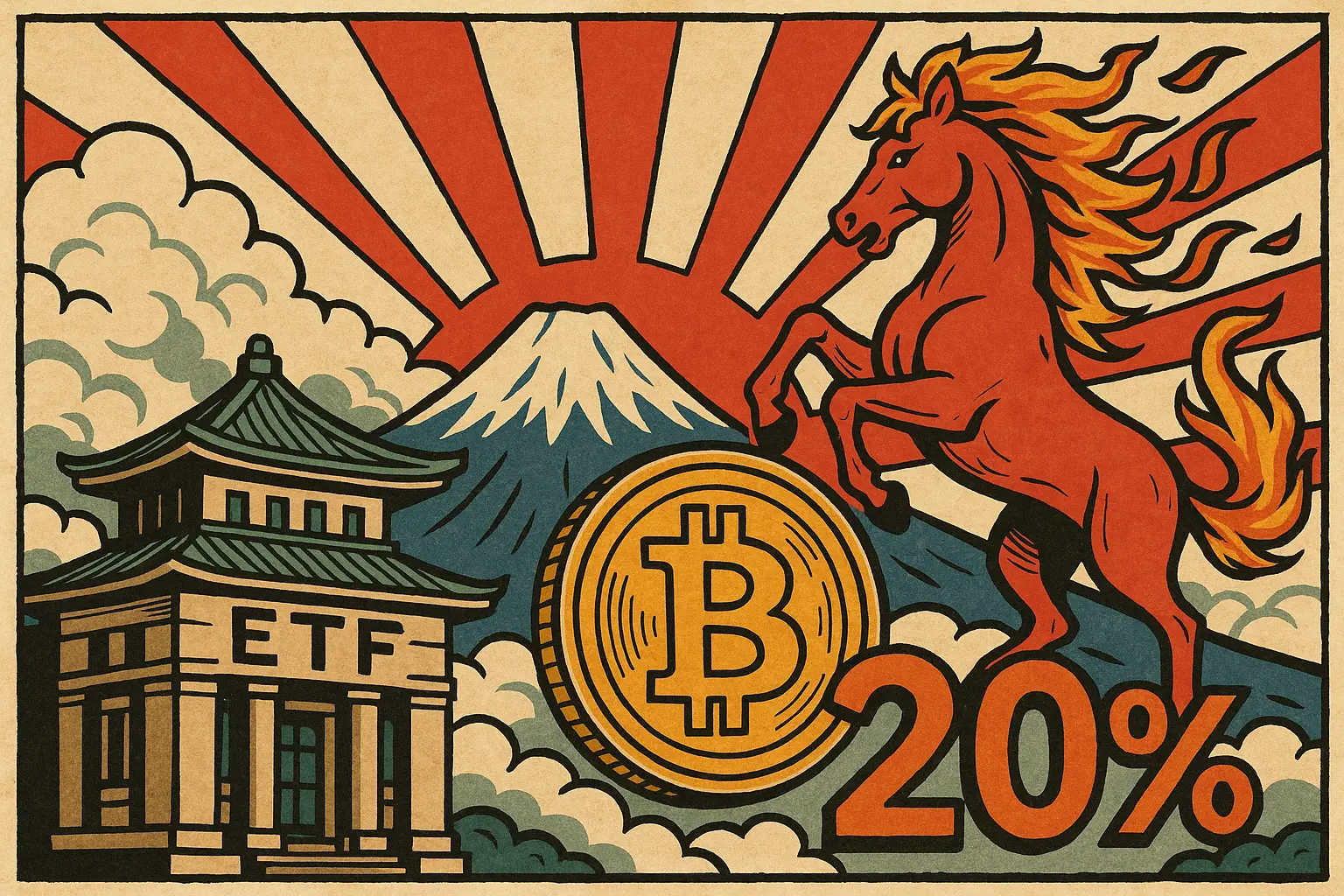
The Year of the Fire Horse arrives in 2026 with Japan’s crypto revolution: tax slashed from 55% to flat 20% with three-year loss carryforward. SBI Holdings filed for Japan’s first Bitcoin/XRP ETFs, while megabanks MUFG, SMBC, and Mizuho advance Project Pax stablecoin infrastructure. Metaplanet’s “21 Million Plan” targeting 21,000 BTC creates blueprint for corporate Bitcoin adoption.
The Fire Horse Legend: Once Every 60 Years
In ancient rhythm of Japanese zodiac, there are years of patience and years of labor. But once every sixty years, the cycle delivers something far more volatile: the Hinoe Uma—the Fire Horse. In Japanese folklore, the Fire Horse is creature of legend, feared for its unpredictability but revered for its unbridled, explosive energy. It is said the Fire Horse does not just arrive; it consumes the old to clear path for the new.
The last time this fierce spirit galloped through Japan was 1966, a year that fueled ignition of post-war economic miracle. Now, as dawn breaks on 2026, the Fire Horse has returned. For Japan’s digital economy, this fire was long overdue. For decade, innovation was trapped under ice of punitive taxes and regulatory hesitation—a long, cold “crypto winter” that left Tokyo watching from sidelines as rest of world raced ahead.
But this week, that era ended. The government has not just opened door; they have torn it off hinges. The regulatory thaw is over, and season of radical growth has begun. If you have been waiting for sign that sleeping giant of Asia is waking up, this is it.
The 20% Tax Revolution: Unlocking the Floodgates
For nearly decade, single biggest barrier to crypto adoption in Japan was tax code. Treating crypto gains as “miscellaneous income” subjected traders to progressive rates as high as 55%. It was suffocating cap on growth that drove talent and capital offshore to Singapore and Dubai. That wall is crumbling.
The 2026 Tax Reform Outline confirmed shift to Separate Self-Assessment Taxation, capping tax rate at flat 20% for spot trading, derivatives, and crypto ETFs. This aligns digital assets with traditional stocks and forex, signaling government no longer views crypto as gamble but as legitimate financial instrument.
The real game-changer is introduction of three-year loss carryforward mechanism. This allows investors to offset future profits against past losses, drastically de-risking market for serious traders. Previously, investors who lost money in 2024 bear market couldn’t use those losses to reduce 2025 or 2026 tax bills. Now they can, creating powerful incentive to re-enter markets.
Tax Reform Impact on Japanese Crypto Markets
From 55% to 20%: Progressive rates slashed to flat tax matching traditional securities
Loss Carryforward: Three-year window to offset gains against losses de-risks trading
Retail Liquidity Unlocked: Trillions of yen in low-yield savings accounts gain tax-efficient crypto pathway
Offshore Capital Returns: Japanese traders who fled to Singapore/Dubai incentivized to return
We are about to see “unlocking” of Japanese retail liquidity. Trillions of yen sitting in low-yield savings accounts now have tax-efficient path into digital asset market. For ecosystem, this means higher volumes, deeper liquidity, and massive influx of new retail participants who were previously sidelined by tax fears. The Year of the Fire Horse’s energy manifests through this capital unleashing.
The Institutional Stampede: ETFs and Stablecoins
If 2025 was year of planning, 2026 is year of execution for Japan’s financial giants during the Year of the Fire Horse. The “smart money” is no longer watching from sidelines; they are building infrastructure. Leading charge is SBI Holdings, which filed for Japan’s first cryptocurrency ETFs, including Bitcoin/XRP fund and hybrid “Digital Gold” product.
This is Japan’s “BlackRock moment.” By wrapping crypto in familiar, regulated ETF structure, SBI is opening door for pension funds and conservative institutional investors to gain exposure without technical risks of self-custody. Japanese pension funds managing trillions in assets can now allocate to crypto through regulated vehicles meeting their fiduciary standards.
Simultaneously, three megabanks—MUFG, SMBC, and Mizuho—are moving forward with “Project Pax” stablecoin infrastructure. This isn’t just about trading; it’s about settlement. These pilots integrate stablecoins with SWIFT for cross-border payments, creating seamless bridge between traditional yen and digital economy.
The integration with SWIFT is particularly significant. Rather than competing with traditional banking rails, Project Pax augments them, allowing banks to offer 24/7 settlement while maintaining compliance with existing frameworks. This pragmatic approach accelerates adoption by reducing disruption to established workflows.
Institutional Infrastructure Development
SBI Crypto ETFs: Bitcoin/XRP fund and Digital Gold product pending regulatory approval
Project Pax: Three megabanks piloting stablecoin settlement integrated with SWIFT
Pension Fund Access: Regulated ETF structures enable conservative institutional allocation
Cross-Border Settlement: Stablecoins slash transaction fees and eliminate multi-day delays
The impact is legitimacy. When country’s largest banks and asset managers stamp approval on asset class, it removes “reputational risk” that held back corporate adoption. The Year of the Fire Horse’s explosive energy manifests through this institutional validation transforming crypto from fringe speculation to mainstream financial infrastructure.
The Metaplanet Model: Bitcoin as Corporate Standard
Perhaps most bullish signal for the Year of the Fire Horse is shift in corporate treasury strategy. Japanese companies realize holding depreciating fiat currency is liability, and they are turning to Bitcoin as pristine reserve asset. The torchbearer for this movement is Metaplanet.
Their aggressive “21 Million Plan”—targeting accumulation of 21,000 BTC by end of 2026—is masterclass in modern treasury management. By issuing low-cost yen debt to acquire scarce, appreciating asset, they created blueprint that other Tokyo Stock Exchange-listed companies are closely watching. With yen trading near ¥156 to dollar, incentive to hedge against currency devaluation is stronger than ever.
Metaplanet has proven it can be done; expect wave of “copycat” strategies from other Japanese corporates seeking to fortify balance sheets. This transforms Bitcoin from speculative trading tool into strategic corporate asset, creating steady, price-agnostic demand floor supporting entire market.
The Metaplanet Model addresses specific Japanese corporate pain point: yen weakness. As Bank of Japan maintains accommodative monetary policy while Federal Reserve holds rates elevated, yen depreciates against dollar. Companies holding yen cash reserves lose purchasing power internationally. Bitcoin, with its fixed supply and global liquidity, provides hedge against this currency depreciation without requiring complex forex strategies.
What This Means for Corporations and Startups
The convergence of these three trends—tax incentives, institutional infrastructure, and corporate adoption—creates distinct, high-value opportunities for different market players during the Year of the Fire Horse.
For Corporations: Treasury and Infrastructure Pivot
Established enterprises should view 2026 as year to fortify balance sheets and modernize financial operations. Following Metaplanet precedent, corporations should actively evaluate allocating reserves percentage to Bitcoin or regulated digital assets hedging against yen volatility and inflation.
Payment modernization opportunities abound with new banking stablecoin infrastructure coming online. Corporations dealing in cross-border trade should pilot stablecoin settlements to slash transaction fees and eliminate multi-day settlement delays. This isn’t theoretical—Project Pax pilots are operational, providing proven integration paths.
Asset tokenization represents longer-term opportunity. Real estate developers and heavy asset holders should eye new Real World Asset (RWA) frameworks. Tokenizing property or infrastructure can unlock liquidity from illiquid assets, opening them to new class of digital-native investors. The Year of the Fire Horse’s consuming energy clears path for these innovative financing structures.
For Startups: Innovation and Talent Renaissance
For Web3 and fintech founders, regulatory thaw eliminates “Japan discount” that previously drove talent offshore. Tax-efficient retention becomes possible as end of unrealized gains tax on corporate crypto holdings means startups can finally hold own tokens without facing bankruptcy-level tax bills. This is green light to issue utility tokens and build robust, token-incentivized ecosystems.
Global capital access improves dramatically. With Japanese VCs and institutions entering space via regulated ETFs and funds, local funding environment is set to explode. Startups should prepare “institutional-grade” diligence materials to tap into this new capital pool eager for exposure but demanding professional standards.
Building the “missing middle” presents massive opportunity. There is gap for middleware and applications bridging new banking stablecoins (Project Pax) with consumer-facing apps. Startups building user-friendly interfaces for this new financial plumbing will capture immense value as adoption scales.
The Year of the Fire Horse rewards speed and decisiveness. Corporations moving now to implement treasury strategies, payment modernization, and tokenization pilots will establish competitive advantages over slower peers. Startups launching during this regulatory honeymoon period will benefit from favorable conditions before market saturates.
Why the Fire Horse Metaphor Fits Perfectly
The Year of the Fire Horse metaphor captures 2026’s energy precisely. The Fire Horse does not just arrive; it consumes old to clear path for new. Japan’s crypto spring is consuming decade-old punitive tax regime, clearing regulatory uncertainty, and burning away hesitation that kept institutions sidelined.
The explosive energy characteristic of Fire Horse manifests through rapid policy implementation. Rather than gradual reforms over years, Japan compressed transformation into single tax reform package and coordinated institutional push. This concentrated energy creates momentum that self-reinforces—early movers validate market, attracting followers, creating network effects that accelerate adoption beyond initial catalyst.
The unpredictability element also fits. While policy changes are clear, market response remains uncertain. Will Japanese retail truly flood into crypto markets? Will corporate treasury strategies follow Metaplanet en masse? Will SBI’s ETFs attract pension fund allocations? These questions won’t be answered through analysis but through market action in coming months.
The Fire Horse’s once-every-60-years rarity underscores historic nature of this moment. The last Fire Horse year, 1966, saw Japan’s post-war economic miracle accelerate. The 2026 Year of the Fire Horse could mark similar inflection point for Japan’s digital economy, transforming from laggard to leader through decisive policy action and institutional commitment.
FAQ
What is the Year of the Fire Horse in Japanese culture?
The Year of the Fire Horse (Hinoe Uma) occurs once every 60 years in Japanese zodiac. It symbolizes explosive, unpredictable energy that consumes old structures to clear path for new. The last Fire Horse year was 1966, which fueled Japan’s post-war economic miracle.
How did Japan’s crypto tax change in 2026?
Japan slashed crypto tax from progressive rates up to 55% to flat 20% rate, aligning with traditional securities taxation. The reform also introduced three-year loss carryforward, allowing investors to offset future gains against past losses.
What are SBI’s crypto ETFs?
SBI Holdings filed for Japan’s first cryptocurrency ETFs including Bitcoin/XRP fund and hybrid “Digital Gold” product. These regulated vehicles allow pension funds and conservative institutions to gain crypto exposure without self-custody risks.
What is Project Pax?
Project Pax is stablecoin infrastructure pilot by Japan’s three megabanks (MUFG, SMBC, Mizuho) integrating stablecoins with SWIFT for cross-border payments, creating bridge between traditional yen and digital economy with 24/7 settlement.
What is Metaplanet’s 21 Million Plan?
Metaplanet’s “21 Million Plan” targets accumulating 21,000 BTC by end of 2026 by issuing low-cost yen debt to acquire Bitcoin as treasury reserve asset, creating blueprint for other Japanese corporates hedging against yen depreciation.
Why is 2026 significant for Japanese crypto?
2026 combines Year of the Fire Horse’s symbolic energy with concrete regulatory reforms: 20% flat tax, institutional ETF launches, megabank stablecoin pilots, and corporate Bitcoin adoption. This convergence creates historic inflection point transforming Japan from crypto laggard to potential leader.
Related Articles
BlackRock Loads Up $767M in Bitcoin — Institutions Step In Big
Michael Saylor Declares End of Bear Market, Sees $1M Bitcoin
Bitcoin supply approaches the 20 million milestone! The final 1 million coins are expected to be mined in 114 years.
US, Iran, Israel War: What Happens To Bitcoin And Altcoins If The Conflict Escalates?