


Jailed Former FTX co-CEO Ryan Salame’s Social Media Push for a Trump Pardon: Will It Work?
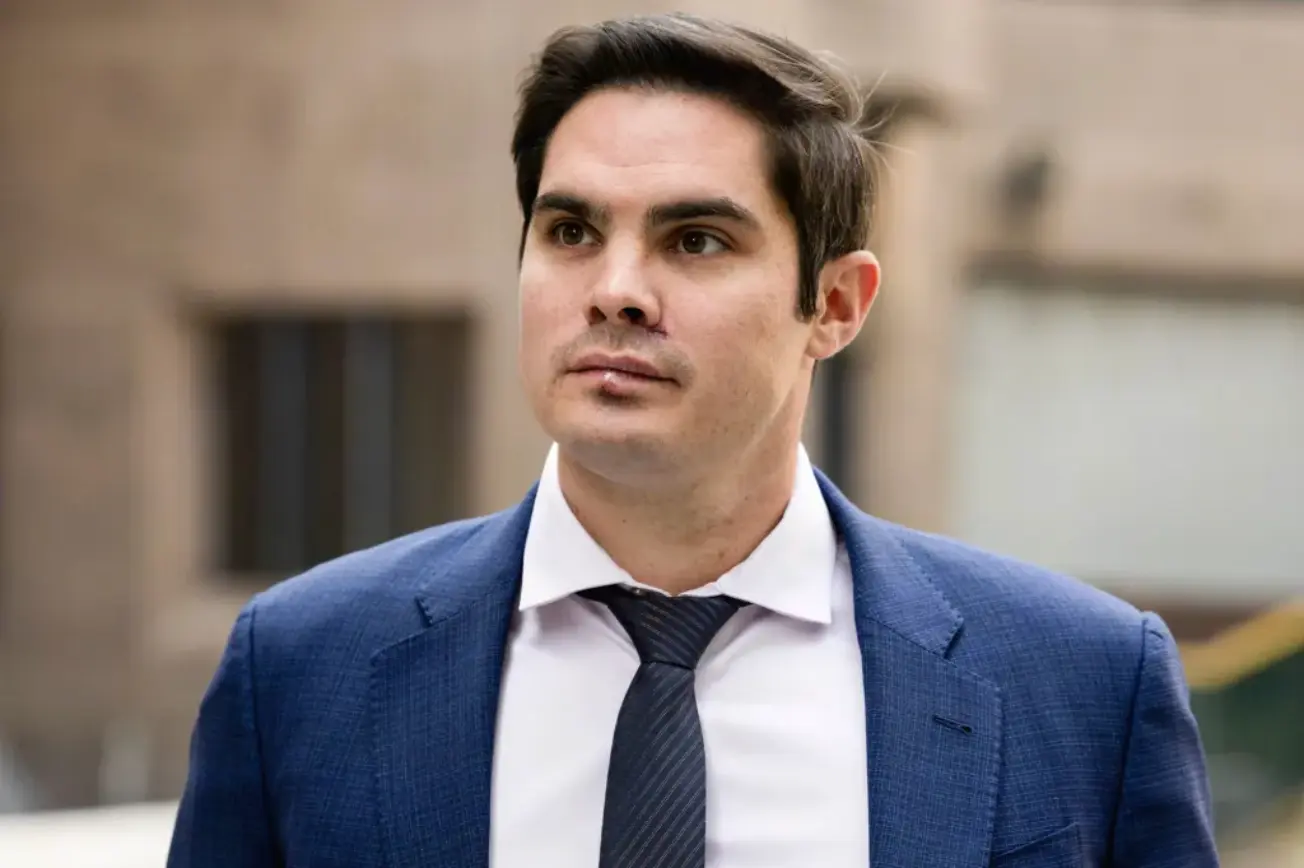
Former FTX co-CEO Ryan Salame, currently serving a 90-month federal prison sentence, has launched a conspicuous public campaign seemingly aimed at securing a presidential pardon.
Using third parties to post on social media platform X, Salame has published a stream of messages vocally aligning with Donald Trump’s political agenda, attacking prosecutors, and reframing his conviction as a political persecution. This public relations effort from behind bars is a significant development as it represents a novel strategy intertwining political loyalty with clemency appeals in a landmark crypto crime case. For the industry, it highlights the complex, ongoing entanglement of cryptocurrency’s biggest scandal with the highest levels of political power, raising questions about accountability and the potential precedent it sets.
The Unlikely Prisoner-Pundit: A Social Media Campaign from Confinement
From within a medium-security federal prison, Ryan Salame has transformed into an active political commentator. His verified account on X has become a platform for a sustained, partisan messaging campaign that transcends personal reflection and enters the realm of public lobbying. The posts are direct, designed for viral appeal, and leave little ambiguity about their intended audience.
The content consistently praises core Republican priorities and launches pointed attacks on Democrats, meticulously echoing the rhetoric of Donald Trump. In one particularly attention-grabbing post, Salame offered to spend the remainder of his sentence “working as an ICE agent” if granted clemency. He has also waded into the heated debate over voter ID laws, framing the discussion in terms favorable to Trump’s “election integrity” narrative. This is not passive observation; it is active participation. Since federal inmates are strictly prohibited from direct access to social media, these posts are universally understood to be published by third parties—associates, family, or hired aides—acting as conduits for Salame’s voice, a known workaround for inmates seeking to maintain a public presence.
Echoing the Presidential Playbook: Salame’s Calculated Political Alignment
Salame’s strategy extends beyond general political support into precise narrative alignment. He has directly adopted the specific grievances that form the cornerstone of Trump’s political identity, particularly regarding the justice system. In several posts, Salame has attacked the Department of Justice (DOJ) prosecutors who secured his guilty plea, claiming coercion and misconduct.
By framing his conviction for campaign finance violations and operating an unlicensed money-transmitting business as an act of “politically motivated” prosecution, Salame attempts a profound identity shift. He seeks to move public perception from “convicted FTX executive” to “political prisoner of a weaponized DOJ.” This language mirrors Trump’s broader critique of federal law enforcement and serves a clear purpose: it positions a potential pardon not as an act of forgiveness for a crime, but as a righteous correction of a partisan injustice. In doing so, Salame aims to make his clemency a symbolic victory for Trump’s political movement, not just a personal reprieve.
A Strategy Forged in Timing: The “Crypto Pardon” Precedent
Salame’s very public campaign is strategically timed. It unfolds against a backdrop of Donald Trump’s active and well-publicized use of presidential clemency powers, which has included several commutations and pardons for individuals convicted of financial and crypto-related crimes. This has established a tangible precedent, a category some commentators call the “crypto pardon.”
This context transforms Salame’s gambit from a long-shot plea into a calculated bid within a recognized framework. The emerging, unwritten rules for such clemency appear to include: unequivocal political loyalty, a willingness to publicly attack shared institutional adversaries (like the FBI or DOJ), and a narrative that fits the “victim of regulatory overreach” archetype. Salame’s social media activity is a checklist for these criteria. He is leveraging his remaining notoriety to demonstrate his value as a vocal political ally from prison, offering his platform to amplify pro-Trump messaging. In essence, he is campaigning for a job on the Trump team—the job of a freed supporter.
The Anatomy of a Prison-Cell Campaign: Salame’s Three-Pronged Approach
1. Narrative Reconstruction: The primary battle is over the story. Salame is actively working to overwrite the legal narrative of his guilt with a political narrative of victimhood, shifting focus from his crimes to the system that prosecuted him.
2. Demonstrating Political Utility: He is converting his infamous association with FTX into an asset, using his platform to generate content and show loyalty on key issues like immigration and election security, thus proving his ongoing worth to a political movement.
3. Capitalizing on the Clemency Cycle: His campaign is perfectly synchronized with an administration actively granting pardons, making his public appeal a timely “application” submitted directly into a receptive process.
The Crypto Industry’s Uneasy Watch
For the broader cryptocurrency sector, Salame’s spectacle provokes deep discomfort and complex reactions. A segment of the industry has long argued that U.S. regulatory and prosecutorial approaches have been overly aggressive. From this perspective, any pushback against perceived overreach might be welcomed.
However, Salame embodies the industry’s most painful scandal. Since the collapse of FTX, legitimate crypto companies have invested immense effort in rebuilding trust with regulators, lawmakers, and the public, championing compliance, transparency, and ethical building. Salame’s public bid for a political pardon threatens to reframe the post-FTX narrative from “bad actors have been held accountable” to “crypto criminals can bypass justice through political connections.” This could undermine years of rehabilitation work, providing ammunition to proponents of stricter regulation and reinforcing negative public stereotypes. The industry is thus caught in a difficult position, wary of state overreach but desperate to distance itself from the ghosts of its past.
The Path to Prison: Revisiting Salame’s Crimes
Understanding the gravity of Salame’s campaign requires recalling the crimes that led to his 90-month sentence. As co-CEO of FTX Digital Markets, Salame was a central figure in Sam Bankman-Fried’s empire. In 2023, he pleaded guilty to serious federal charges.
His admissions were substantial: conspiracy to make unlawful political contributions and conspiracy to operate an unlicensed money-transmitting business. Prosecutors detailed how he acted as a “straw donor,” funneling millions in corporate funds from FTX into U.S. political campaigns to illegally influence politics while concealing the money’s source. He also facilitated the movement of customer funds outside of lawful financial channels. These were not victimless or technical crimes; they struck at the integrity of the U.S. political system and financial regulatory framework. His current public campaign is a direct, post-sentencing effort to seek a political resolution, acknowledging that his legal appeals are largely exhausted.
Will It Work? Assessing the Odds of a Pardon
The critical question is whether this transparent, media-driven strategy can succeed. While unpredictable, Salame has intelligently improved his prospects by creating a visible, public case that aligns with the current administration’s political interests.
Factors in his favor include his demonstrated vocal support, which has tangible political value, and his fit within an existing pattern of pardons for financial crime defendants claiming overreach. As a subordinate to Sam Bankman-Fried, he may also be perceived as a less culpable, and therefore less risky, candidate for clemency compared to the figurehead of the fraud.
Significant headwinds remain, primarily the colossal scale and global notoriety of the FTX fraud. Granting clemency to any core FTX figure risks a potent political backlash, framed as being soft on criminals who devastated millions of ordinary customers. Furthermore, the brazenness of his campaign could be seen as too cynical, even by allies. The decision will ultimately hinge on a cold political calculus: whether the administration values Salame’s continued, public loyalty more than it fears the backlash from pardoning a key player in one of history’s great financial frauds.
What Was the FTX Collapse? The Scandal That Started It All
To fully grasp the context of Salame’s situation, one must understand the foundational event: the collapse of FTX.
What was FTX? FTX was once one of the world’s largest and most prestigious cryptocurrency exchanges, founded by Sam Bankman-Fried (SBF). It offered sophisticated trading products and was backed by major venture capital firms and celebrities.
The Collapse: In November 2022, a liquidity crisis triggered by a CoinDesk report revealed that FTX’s sister trading firm, Alameda Research, was heavily leveraged and holding a large portion of its assets in FTX’s own illiquid token, FTT. This sparked a bank run, and within days, FTX filed for bankruptcy. Billions in customer funds were missing.
The Fraud Revealed: Subsequent investigations and trials uncovered that customer deposits on the FTX exchange were not safeguarded. Instead, they were secretly funneled to Alameda Research to cover risky bets, pay off loans, and fund venture investments and political donations. This amounted to a massive, multi-billion dollar fraud. SBF was convicted on multiple counts of fraud and conspiracy and is serving a 25-year sentence. Ryan Salame’s crimes, while distinct, were part of this broader ecosystem of misconduct that enabled the fraud.
Conclusion: A New Blueprint for Seeking Clemency?
Ryan Salame’s prison-cell pardon campaign is more than a political curiosity. It is a real-time experiment testing the boundaries between justice, politics, and digital media in the post-crypto crash era. He is pioneering a method where a convicted executive uses a social media platform and overt political fealty as primary tools to challenge a federal sentence.
Regardless of the outcome, his effort establishes a potential playbook. It signals to other white-collar defendants that the path to clemency may increasingly run through the court of public and political opinion, managed via social media, rather than solely through the traditional legal process. For the cryptocurrency industry, it is a stark reminder that the fallout from its most infamous failure remains alive, capable of resurfacing in the political arena with unpredictable consequences. The final judgment on Salame’s campaign will be delivered not by a judge, but by a president, offering a telling verdict on the evolving relationship between accountability, mercy, and political utility in the 2020s.