


Mining companies turn into AI gold mines! Black Pearl Compute bonds are oversubscribed by 6.5 times
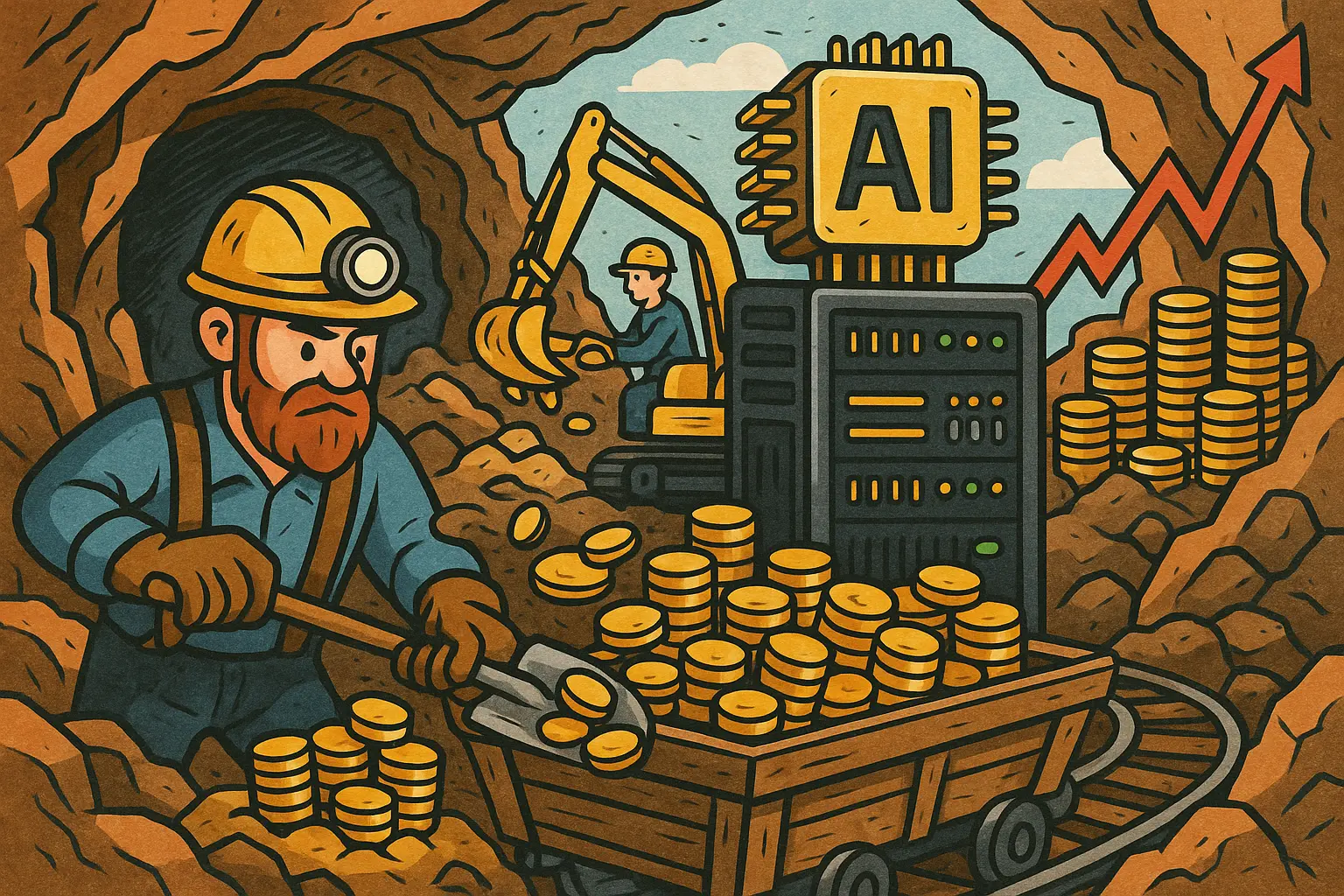
Cipher subsidiary Black Pearl Compute issues $2 billion in bonds, with $13 billion oversubscribed at 6.5 times. The funds will be used to build a data center in Texas, leasing to AWS for 15 years totaling $5.5 billion, with a yield of 6.125%. The company holds a 5.4% stake from Google. Despite a 12% drop in stock price, the shift of mining companies to AI has sparked a financing boom.
$13 Billion Oversubscription Shows AI Computing Power Hunger
According to Bloomberg, Bitcoin mining company Cipher Mining’s AI-focused subsidiary Black Pearl Compute issued $2 billion in junk bonds on Tuesday, which received overwhelming demand, with orders reaching $13 billion. This oversubscription of 6.5 times is rare in the current weak capital markets, indicating investors’ intense demand for AI infrastructure.
The funds will finance the construction of Black Pearl Data Center in Texas. The data center was leased to Amazon Web Services (AWS) last November, with a minimum 15-year lease. The deal with AWS is valued at about $5.5 billion, with a capacity of 300 MW. This long-term lease provides bond investors with stable cash flow expectations, significantly reducing the risk of high-yield bonds.
As crypto mining companies diversify into high-performance computing and AI infrastructure needs grow urgent, there is great interest in Cipher’s debt financing. Bloomberg quotes anonymous sources saying that Black Pearl Compute’s new 5-year bonds priced Wednesday have a yield of 6.125%. Compared to the average yield of BB-rated junk bonds at 5.56%, this rate offers about 56 basis points of premium, reflecting higher project risk but still viewed as highly attractive by the market.
Three Major Attractions of Black Pearl Compute Bonds
AWS Long-term Backing: $5.5 billion contract locks in cash flow, reducing default risk
AI Computing Power Scarcity: Global AI computing demand far exceeds supply, data centers in short supply
6.125% High Yield: 56 basis points above average, attractive risk-adjusted return
These senior notes are secured by “almost all assets” of the issuer and guarantor, as well as Black Pearl Compute’s equity, as first priority collateral. This full-asset collateral structure offers strong protection for bondholders; even if the company performs poorly, creditors can recover investments through asset and equity sales. Besides other corporate needs, the funds will also be used to repay Cipher’s previous approximately $232.5 million equity investment in Cipher Black Pearl.
From Bitcoin Mining to AI Computing Power: A Glamorous Transformation
The successful financing of Black Pearl Compute is a recent example of crypto mining companies transforming into AI infrastructure providers. Cipher Mining was originally a publicly listed Bitcoin mining company, but with Bitcoin prices crashing and mining profits shrinking, the company decisively shifted into AI computing rental. This transformation is not accidental but based on the high similarity of infrastructure: both Bitcoin mining and AI computing require large amounts of electricity, cooling systems, and high-density data centers.
Mining companies have raised billions of dollars in debt financing for acquisitions, facility upgrades, and other capital-intensive AI projects. For example, last year Galaxy Digital raised $1.4 billion, while TeraWulf sought $3 billion in financing. This wave of financing shows strong market recognition of the business model shift from mining to AI, with willingness to provide large-scale funding.
In September, Cipher signed a 10-year lease agreement with FluidStack for 168 MW of capacity, expected to generate up to $7 billion in revenue. At the same time, Cipher plans to issue $1.1 billion in convertible preferred bonds, maturing in 2031. This deal is supported by Google, which acquired a 5.4% stake in Cipher. FluidStack also signed a similar Google-backed agreement with TeraWulf.
Deep involvement from cloud giants Google and AWS provides strong backing for Cipher’s transformation. Their choice to partner with former mining companies rather than build data centers themselves shows urgency. AI model training requires enormous computing power, and global supply is severely constrained. Leveraging existing mining infrastructure—power facilities and data center space—can significantly shorten data center construction cycles, highly attractive to tech giants in need of computing power.
According to data from The Block, Cipher’s stock closed down 12.36% at $14.25 on Wednesday, impacted by continued sell-off of crypto tokens and stocks. Cipher is the fourth-largest Bitcoin mining company by market cap. This stock decline contrasts sharply with the hot demand for bonds, indicating market skepticism about Cipher’s Bitcoin mining business but strong optimism for its AI transition. Investors are voting with their feet: selling stocks to express pessimism about mining, while subscribing to bonds to favor AI.
Mining Companies’ Shift to AI Becomes Industry Trend
The case of Black Pearl Compute is not isolated but a microcosm of the entire mining industry’s transformation. When Bitcoin prices plummeted from $126,000 to $73,000, and mining profits hit historic lows, miners faced survival crises. Their power contracts, cooling systems, and data center spaces—core assets—are highly transferable to AI data centers. This asset flexibility offers miners a second life.
From a financial perspective, AI leasing offers clear advantages. Bitcoin mining profits are highly dependent on coin prices, which can lead to losses when prices crash. In contrast, AI data center leasing provides long-term stable cash flow. The 15-year, $5.5 billion contract with AWS implies about $367 million in annual stable revenue, a key attraction for bond investors.
Strategically, partnering with tech giants like AWS and Google allows miners to shift from cyclical crypto markets into growing AI industries. AI computing demand is expected to grow exponentially in the coming years, with applications like large language models, autonomous driving, and robotics. Computing power demand could increase tenfold or even a hundredfold. Early positioning in this sector could yield returns far beyond mining’s long-term prospects.
However, this transformation also carries risks. Competition in AI computing markets is intensifying, with traditional data center operators, cloud providers, and startups all vying for market share. While miners have advantages in power and space, they still lag in AI-specific technical expertise, customer relationships, and operational experience. Without securing long-term major clients, the transition could fail. Moreover, although 15-year contracts offer stability, they also lock in inflexibility; if AI technology directions change significantly, fixed contracts could become burdensome.