


AI competitions consume a lot of energy! Microsoft CEO: AI needs to quickly benefit more people, otherwise it will be a bubble.
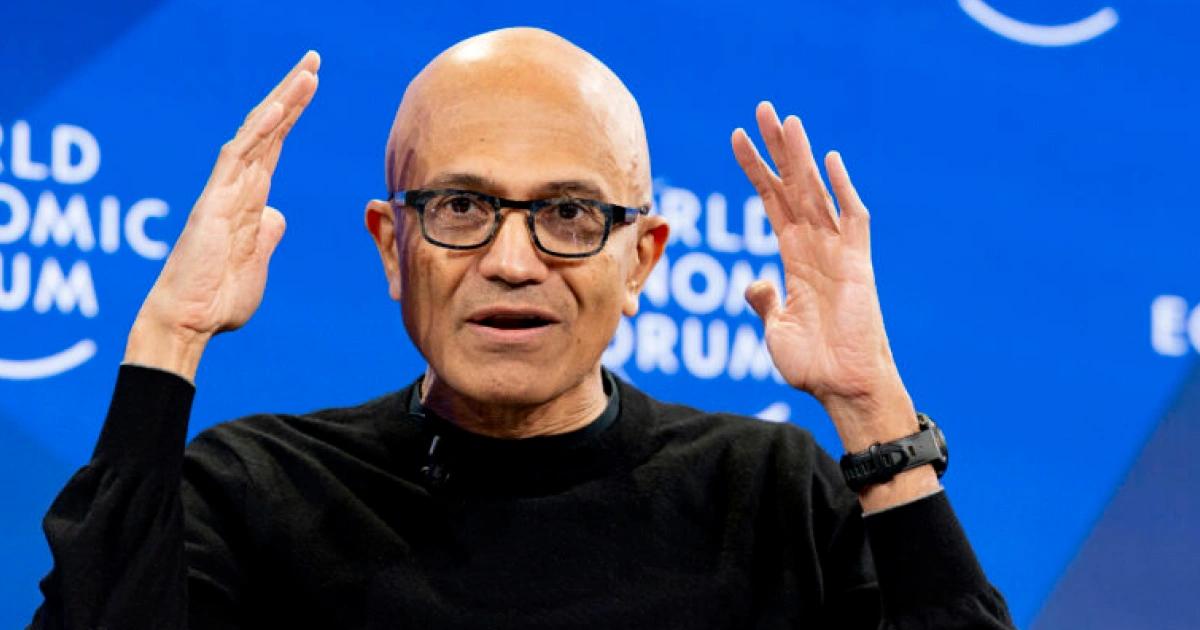
Microsoft CEO Warns AI Will Face Bubble and Loss of Social License if Not Rapidly Beneficial to Humanity. Currently, AI competitions consume vast amounts of water, electricity, and memory resources worldwide, but surveys show only 10% of companies profit from implementing the technology.
Microsoft CEO Discusses AI Bubble Crisis
In recent years, the tech industry has been “competing” in AI, raising concerns about a potential AI bubble. Microsoft CEO Satya Nadella, at the 2026 World Economic Forum (WEF), unusually addressed the AI bubble issue, stating that AI must create broader impact; if it cannot quickly benefit more of humanity, it may lose social license and trigger a bubble crisis.
Nadella emphasized at the forum that the public’s admiration for AI should not be confined to abstract technology; the global community must leverage AI to produce tangible results that truly change humanity, communities, and nations.
He stated that if companies use scarce resources like energy for AI computations but fail to improve health, education, public sector efficiency, or private sector competitiveness, they will soon lose the social license granted by the public.
Focusing solely on tech companies when discussing AI is a bubble
Regarding market concerns about an AI bubble, Nadella said that the key indicator for judging a bubble is the extent of technology diffusion.
If discussions about AI are limited to the tech companies themselves, it is merely a supply-side topic and likely a bubble. Technology must be evenly spread across other industries to have real significance.
He cited the pharmaceutical industry as an example, where AI is currently used to accelerate clinical trial processes and improve related efficiencies, rather than solely for discovering new molecules. This practical application is the key to avoiding a bubble.
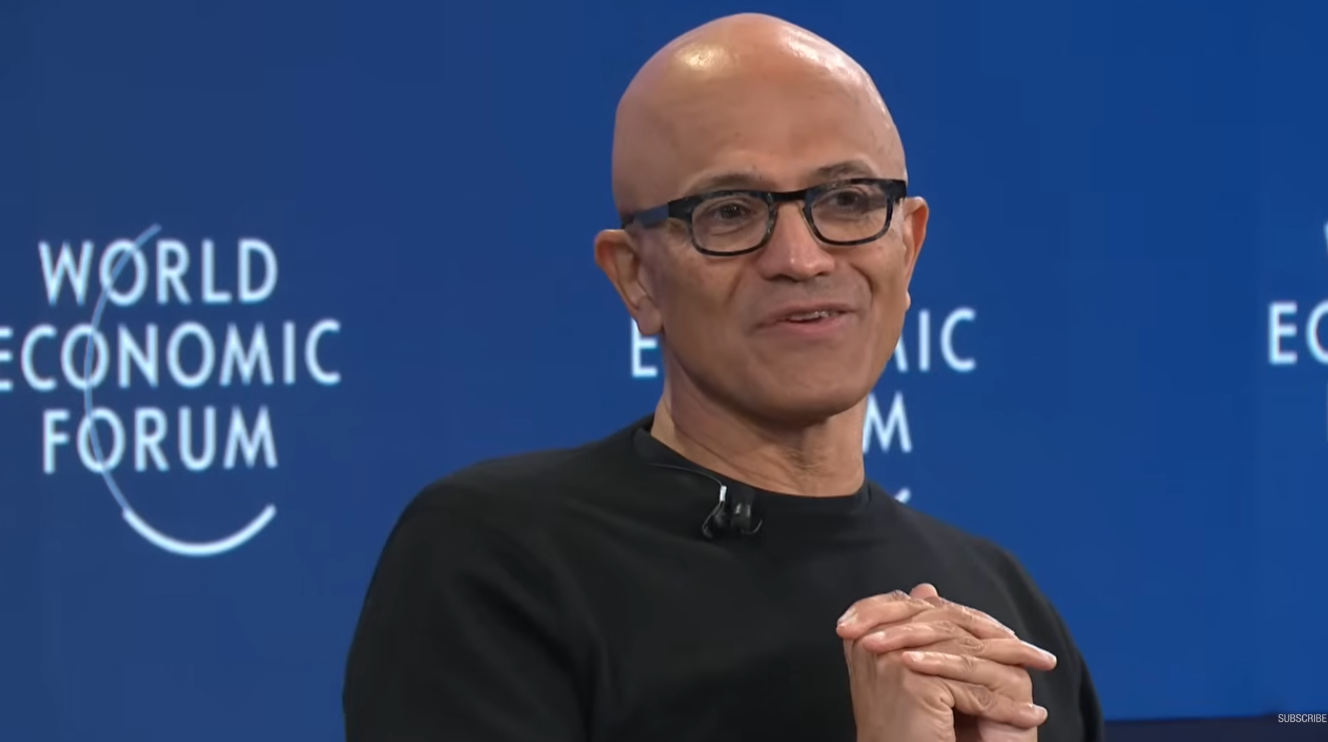
Image source: WEF YouTube Microsoft CEO discusses AI bubble issue at 2026 World Economic Forum (WEF)
Intense AI Competition and Severe Energy and Memory Supply Shortages
As tech giants compete to build AI infrastructure, several critical global resources are under enormous pressure.
Foreign media outlet Tom’s Hardware pointed out that due to the surge in demand for high-bandwidth memory (HBM) for AI graphics processing units (GPUs), a global memory chip shortage has occurred.
It is estimated that up to 70% of memory chips produced this year will be consumed by data centers. This shortage has gone beyond RAM modules and SSDs, beginning to impact the supply of smartphones and other GPU products.
Related reports:
DDR5 32G Breaks 10,000 Yuan! AI Demand Concentrates on Memory, Phison: First Industry Cycle in 25 Years
AI’s Memory Grab Causes Shortages, Affecting Gaming Consoles! Rumors suggest PS6 and New Xbox May Be Delayed
Power and water resources are also in crisis. In the past five years, wholesale electricity prices in some US regions have surged by 267%, and average electricity prices in some states have increased by 36%.
Additionally, high-performance processors for AI data centers require large amounts of water cooling, with water usage reportedly exceeding the total bottled water consumed globally in a year.
The resource consumption driven by AI has attracted high-level attention in US politics. Democratic senators are demanding tech giants disclose energy usage, while President Trump has publicly called on AI companies to pay for their electricity consumption.
PwC: Low Profitability from AI Adoption in Companies
Despite widespread AI applications, actual results remain challenging.
According to Fortune magazine citing a global CEO survey by accounting giant PwC, only 10% to 12% of companies report revenue or cost benefits from AI implementation, with up to 56% seeing no gains. Data further shows that by August 2025, 95% of generative AI pilot projects had failed.
PwC Global Chairman Mohamed Kande pointed out that many CEOs currently lack confidence in AI; companies should return to fundamentals, focusing on execution and management. Only by establishing a solid foundation can the true value of AI technology be realized.