


This is why professional traders remain cautious despite ETH reaching the $3,400 mark
The price of Ether (ETH) has recorded a 4% correction over two consecutive days after reaching the $3,400 mark on Wednesday. This development caught buyers off guard, triggering a wave of liquidations worth $65 million from ETH long position futures contracts. Notably, according to derivatives indicators, professional traders remain neutral to bearish despite ETH reaching its highest level in two months.
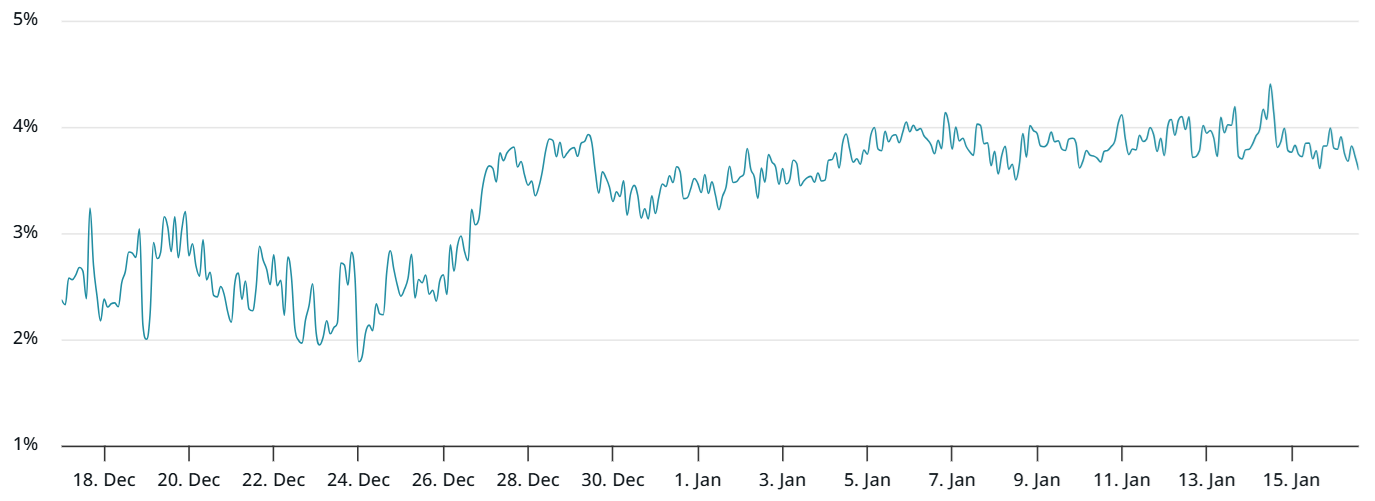 The 2-month ETH futures basis | Source: laevitas.chOn Friday, the one-month ETH futures contract traded at an annualized basis of 4% compared to the spot market. A basis below 5% is often seen as a negative sign, as sellers typically demand higher premiums to compensate for the extended settlement period. This lack of confidence partly stems from the strong downtrend across the entire cryptocurrency market, while gold and the S&P 500 index are setting new highs in 2026.
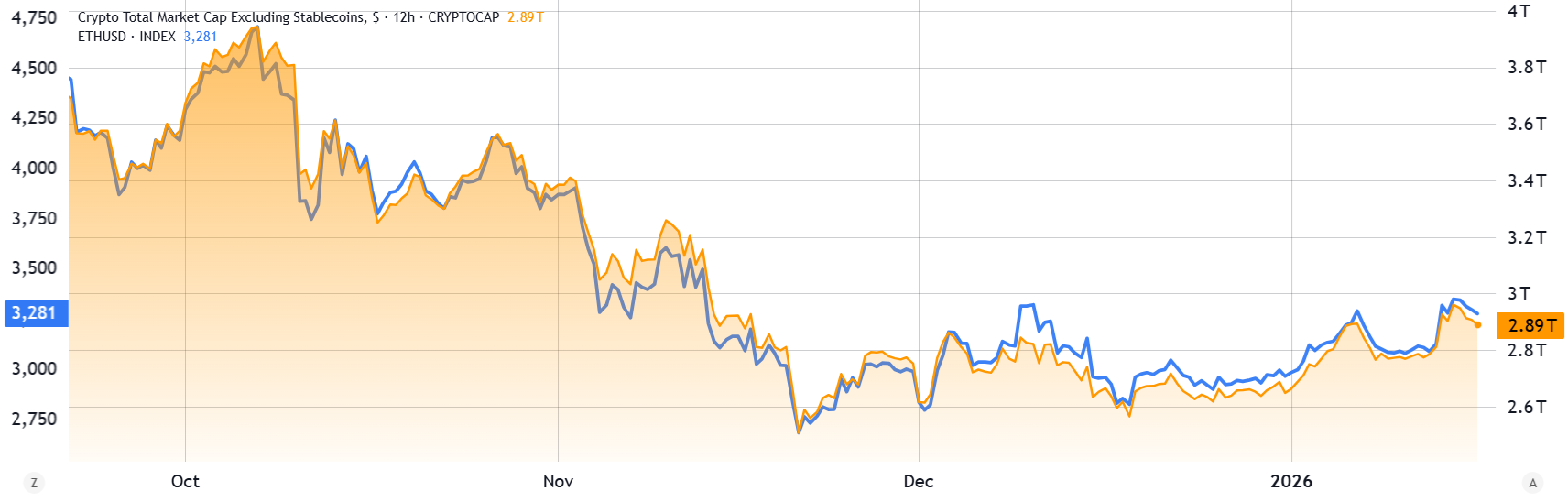 ETH/USD exchange rate (left) versus total cryptocurrency market capitalization (right) | Source: TradingViewThe drop of ETH to $3,280 reflects a nearly 28% decline in the total cryptocurrency market cap since October 6, 2025. The decreased demand for decentralized applications (DApps) has put downward pressure on prices, especially after a wave of launches and trading of memecoins weakened. Attracting new users remains a key factor to drive blockchain activity, increase transaction fees, and boost demand for the native token.
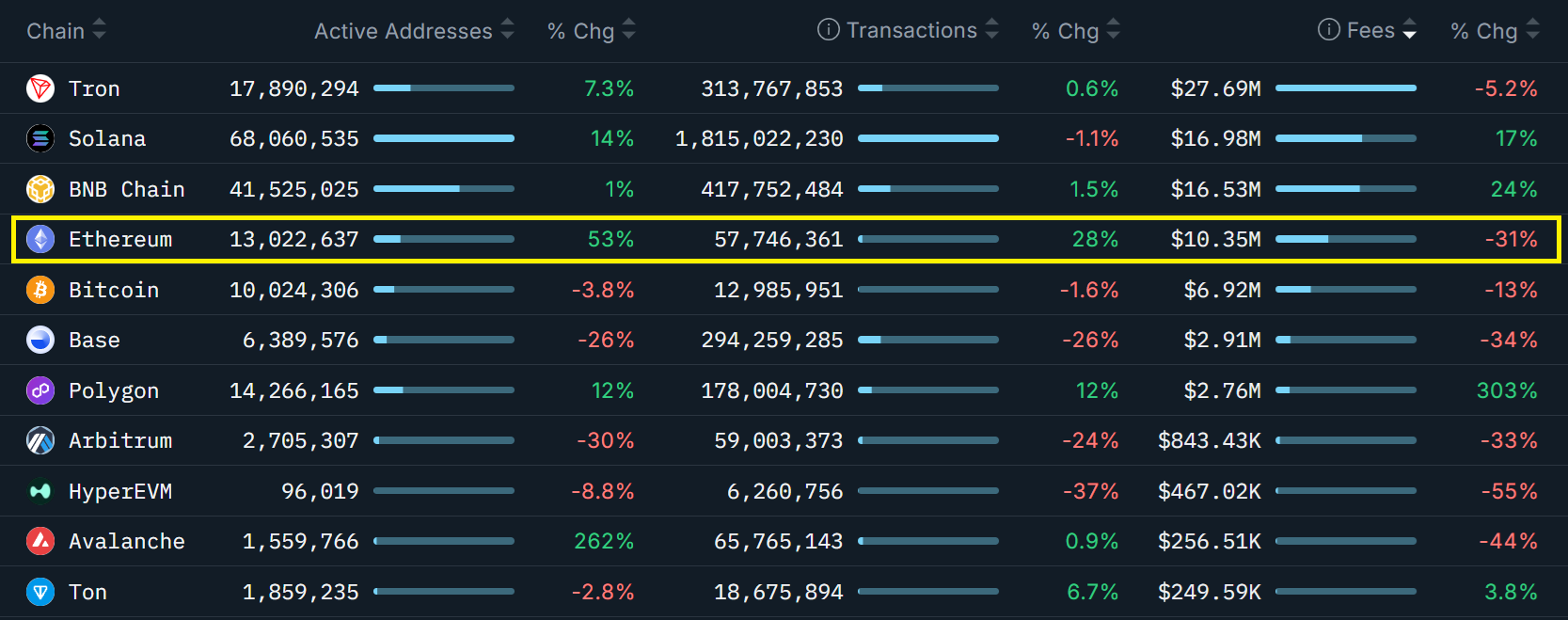 Top blockchains ranked by 30-day network fees, USD | Source: NansenOver the past 30 days, transaction volume on Ethereum’s layer 1 increased by 28%, but total network fees decreased by 31% compared to the normalized average. Conversely, activity on competing platforms like Solana and BNB Chain remained stable, while average fees increased by 20%. More concerning, Ethereum’s largest scaling solution, Base, recorded a 26% decrease in transaction count during the same period.
ETH growth momentum weakens due to low transaction fees, declining DApp demand, and staking risks
Whales and market makers are particularly sensitive to network usage levels, as Ethereum has an automatic ETH burn mechanism that activates when blockchain data processing demand rises. When network activity declines, ETH staking yields also decrease, making long-term holders less inclined to keep their positions. Currently, about 30% of the total ETH supply remains locked in staking contracts.
Although the lack of bullish catalysts for ETH may stem from weak DApp demand, trader confidence is unlikely to recover as institutional capital remains neutral. US-based spot ETH ETFs have only seen modest net inflows of $123 million since January 7, while most publicly listed companies buying ETH are facing losses.
The market capitalization of Bitmine Immersion (BMNR US) is currently 13% lower than the $13.7 billion worth of ETH it holds in reserves. Similarly, Sharplink (SBET US) owns $2.84 billion worth of ETH, but its market cap is only $2.05 billion. Despite these companies continuing to buy ETH at current prices, investor confidence in the cryptocurrency continues to decline.
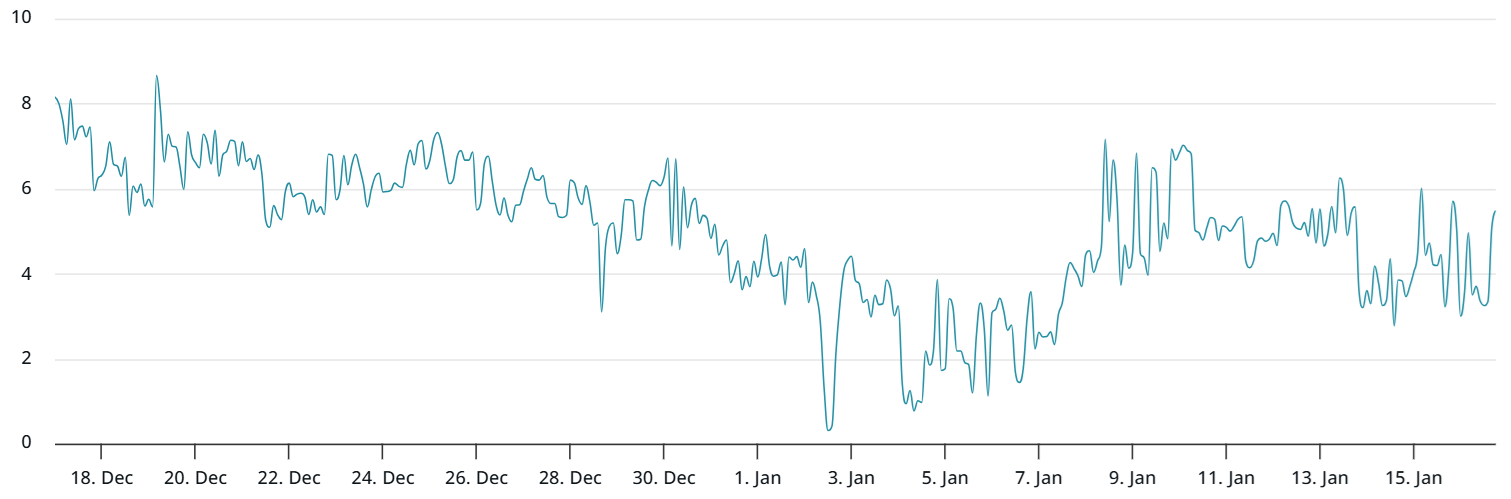 30-day delta options chart for ETH (call-put options) at Deribit | Source: laevitas.chPut options (put) for ETH are trading at premiums 6% higher than call options (call) on Friday, a threshold indicating a neutral to bearish market. Professional traders seem unwilling to accept downside risk, suggesting that expectations for a short-term surge to $4,100 are quite low.
Continued declines in network fees further diminish the ability to sustain bullish momentum. Overall, ETH’s current price largely depends on external factors rather than intrinsic developments within the Ethereum ecosystem. The skepticism among professional traders clearly reflects weak demand for DApps and concerns about potential capital outflows from ETH’s staking program.
Related Articles
【Morning Market Brief】 Cryptocurrency market fluctuates... Bitcoin $68,929, Ethereum $2,041
Data: If ETH falls below $1,931, the total long liquidation strength on mainstream CEXs will reach $1.135 billion.
ETH 15-minute sharp decline of 1.23%: leveraged long liquidations and on-chain capital outflows resonate, intensifying volatility
ETH short-term increase of 1.01%: ETF capital net inflow and ecological upgrade expectations resonate to drive a rebound