


The "CLARITY Act" Hidden Secrets! 278 Pages of Rules Favoring Large Crypto Companies
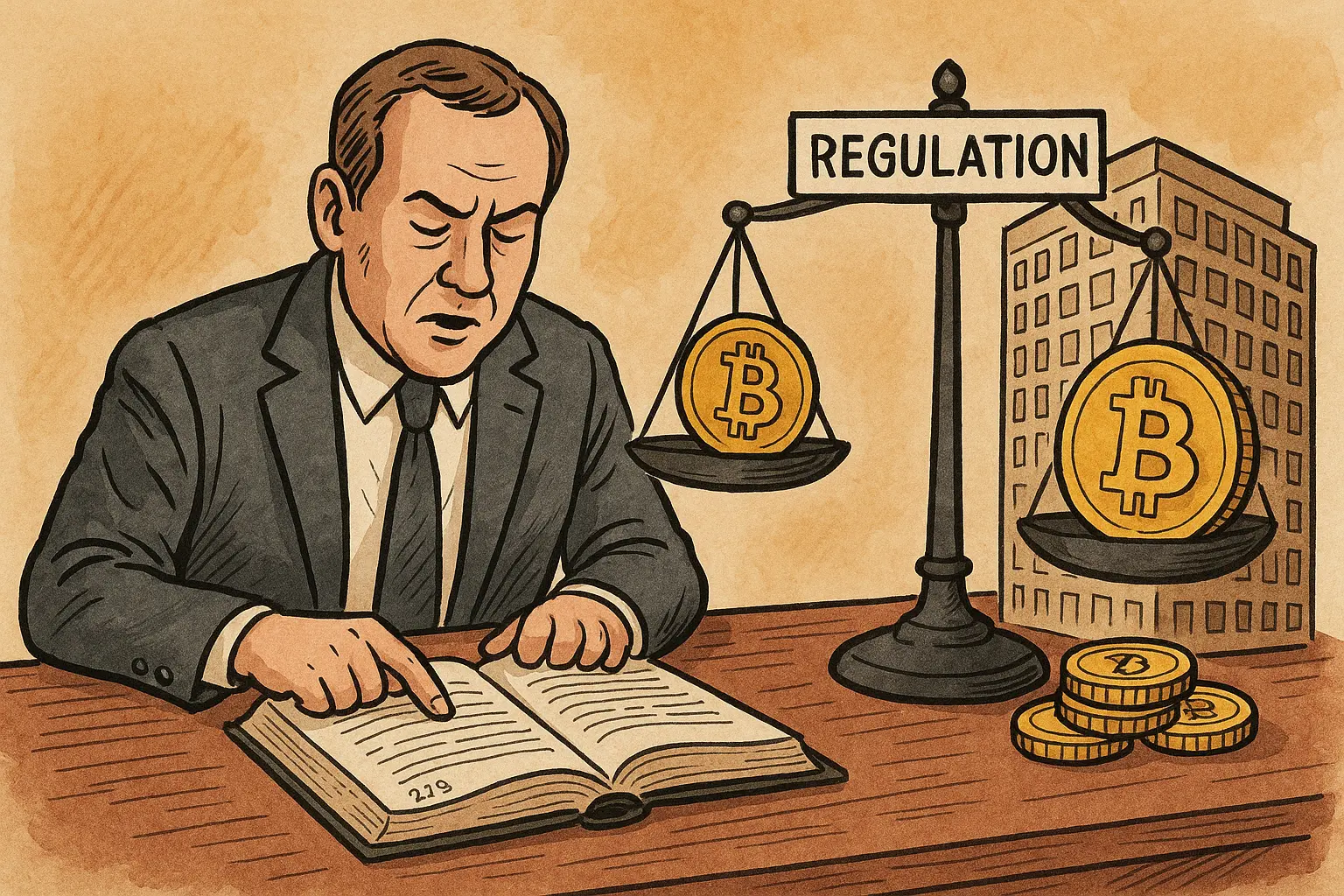
Senate releases 278-page “CLARITY Act,” introducing real-time monitoring and mandatory custody significantly increasing compliance costs. Critics point out that the biggest beneficiaries are Coinbase, Circle, and Chainalysis, while smaller exchanges and DeFi face structural disadvantages. DeFi’s first requirement for developers to register with federal authorities undermines the permissionless ethos. The Bitcoin cypherpunk philosophy is eroding, with transaction monitoring reconstructing the banking architecture.
278 Pages of Text Sparks Outrage in Crypto Community
The jointly proposed cryptocurrency market structure bill released on Monday has left most members of the crypto community dissatisfied. After months of negotiations, Senate Banking Committee Chairman Tim Scott announced the negotiated bill text, outlining a framework for the cryptocurrency market. This marks another step forward in the passage of the CLARITY Act, aimed at establishing clearer rules for digital asset markets.
Scott stated in a release: “This bill reflects the serious work, ideas, and concerns of the committee over the past months, providing the American public with the protections and certainty they deserve.” However, what should have been a celebratory moment was quickly overshadowed by strong opposition, as influential figures began scrutinizing the 278-page proposal.
Most critics blame banking lobby groups, especially regarding provisions on stablecoin yields. The latest draft restricts companies to pay interest only based on account balances and limits the scope of rewards. This is seen as a restriction imposed by banks to protect their deposit business. However, some argue that the true beneficiaries are large crypto companies that were initially expected to represent broader industry interests.
Early criticism focused on provisions widely perceived as favoring banking interests, which have long clashed with crypto advocates over concerns that digital assets could erode traditional market share. Yet, as critics delved into the details, they uncovered deeper issues: high compliance costs could become insurmountable barriers for small firms and innovators.
Regulatory Boon for Coinbase, Circle, and Chainalysis
The CLARITY Act introduces extensive compliance obligations, including real-time transaction monitoring, expanded registration requirements, and mandatory use of qualified custodians. These measures collectively significantly raise operational costs in the U.S. crypto market. Aaron Day, a long-time crypto entrepreneur and critic of regulation, believes only mature crypto firms can bear these upfront costs, while smaller companies will face structural disadvantages from the start.
Three Major Beneficiaries of the ‘CLARITY Act’
Coinbase: Spent years and millions of dollars building regulatory relationships; the bill codifies its competitive advantage
Circle: Stablecoin provisions favor mature, fully regulated issuers; USDC’s backing company Circle stands to benefit the most
Chainalysis: Mandatory transaction monitoring means ongoing demand for blockchain analysis tools; every exchange will need their services
Day told BeInCrypto: “What infrastructure Coinbase already has, a garage startup simply cannot afford. Coinbase has spent years and millions of dollars establishing regulatory relationships. This bill effectively enshrines their competitive edge into law.” This sharp observation highlights that when compliance costs reach hundreds of thousands or even millions of dollars, only established players like Coinbase can afford it, shutting out new entrants entirely.
Day added that Circle would similarly benefit. He believes the stablecoin provisions favor mature, fully regulated issuers. If the bill passes in its current form, the company behind USDC, Circle, will be the biggest winner. When laws require stablecoin issuers to hold specific types of reserves, undergo regular audits, and adhere to strict redemption rules, these are routine for Circle but insurmountable hurdles for startups trying to challenge USDC.
At the same time, the proposal also mandates transaction monitoring. Under these rules, every exchange must implement real-time surveillance. “Chainalysis wins because mandatory regulation means ongoing demand for their blockchain analysis tools. Now every exchange needs their products. This isn’t conspiracy; it’s how regulatory capture works,” Day added. He emphasized that this dynamic reflects a broader pattern: regulatory frameworks tend to entrench existing power structures rather than dismantle them. “Incumbents participate in rulemaking, and those rules happen to favor incumbents.”
Death of DeFi and Bitcoin’s Original Vision
Smaller participants will face tough choices, with decentralized finance (DeFi) being the most vulnerable sector. Day states that small exchanges will have to choose between spending huge sums to meet compliance or exiting the market altogether. As for DeFi, the bill’s provisions may require protocol developers to register with federal regulators for the first time. This effectively treats developers as regulated entities rather than neutral software creators.
“DeFi’s whole point is that anyone can build or participate without permission. If you need government approval to deploy smart contracts, you fundamentally destroy what makes it attractive,” Day told BeInCrypto. While the bill doesn’t outright ban DeFi, Day warns it could create enough legal uncertainty that U.S. developers might simply choose to develop elsewhere.
The most shocking aspect of the proposal may be its direct conflict with Satoshi Nakamoto’s original vision for Bitcoin. Bitcoin was designed as a peer-to-peer electronic cash system, aiming to eliminate reliance on trusted intermediaries. Satoshi’s pseudonym and the cypherpunk origins of Bitcoin highlight the importance of financial privacy as a core principle rather than a secondary feature. “When every transaction is monitored, reported, and potentially shared with foreign regulators, you’re reconstructing the traditional banking surveillance architecture on the blockchain. You retain the technology but abandon the philosophy,” Day said.
Related Articles
PengoPay Expands Stablecoin Payments With $USDT and $USDC
Cardano Launches USDCx Stablecoin Backed by Circle’s USDC
Circle Earnings Surge as Allaire Ties AI to Stablecoins
Don't worry, the public chains of USDC and USDT won't shake Ethereum.