


Stock to Buy for 2026 and Beyond: My Top 2 Picks Right Now
When searching for the best stock to buy heading into 2026 and beyond, two names consistently rise to the top: Apple (NASDAQ: AAPL) and Berkshire Hathaway (NYSE: BRK.B / BRK.A).
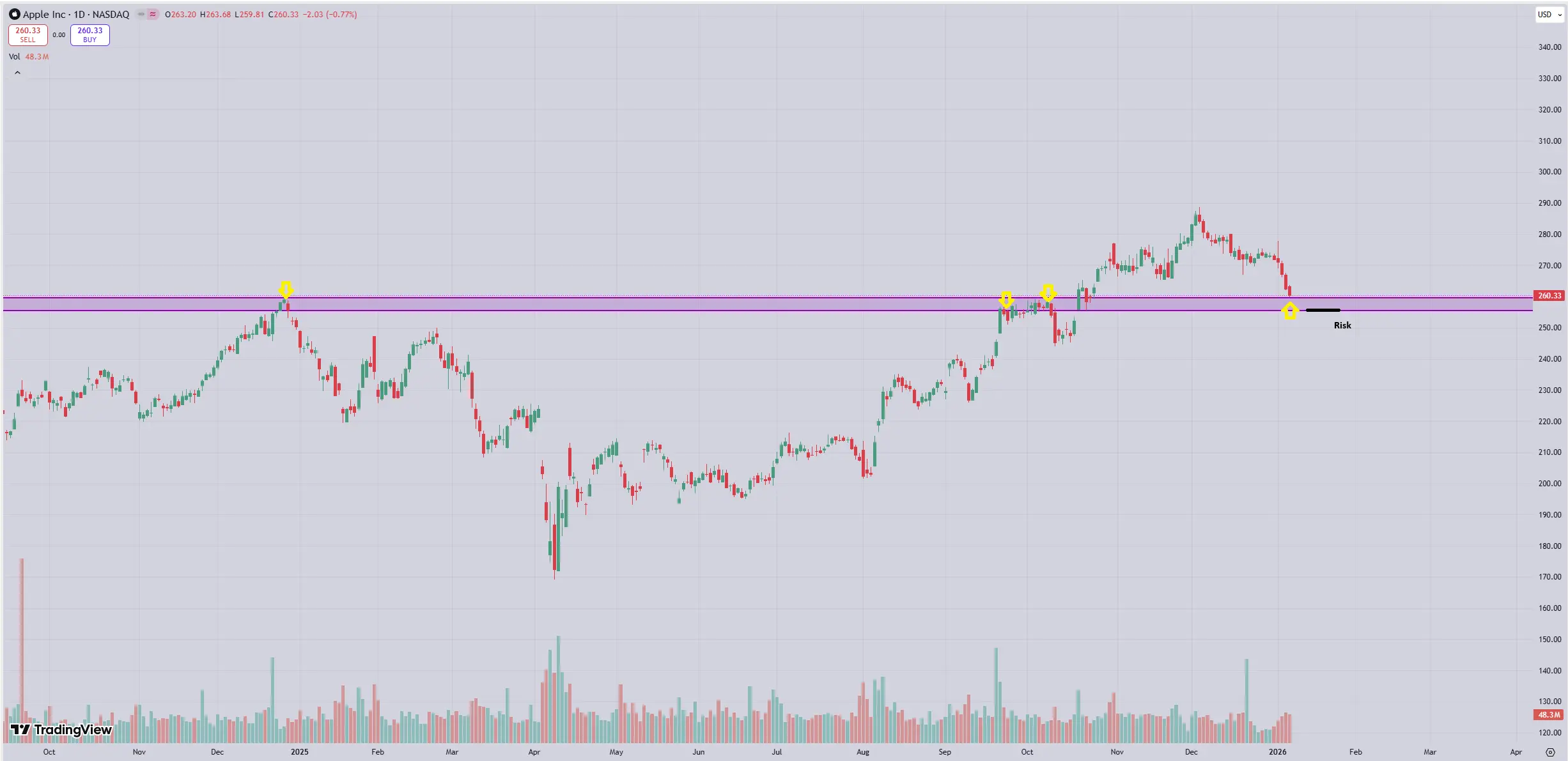
(Sources: TradingView)
These Two Stocks Offer the Perfect Blend of Growth Momentum and Defensive Optionality
Together, they deliver a compelling combination—Apple provides exposure to accelerating technology growth and premium services momentum, while Berkshire offers a massive cash fortress and diversified operating businesses that can act as a portfolio anchor during uncertainty. Apple trades at a growth-oriented premium, while Berkshire remains relatively undervalued with significant dry powder ready to deploy. Here’s why these two stand out as top stock to buy candidates for the long term.
Apple: Accelerating Momentum in Devices and Services
Apple capped fiscal 2025 with impressive results, posting 8% year-over-year revenue growth in Q4 (ended September 27) and driving services revenue up 15%—outpacing the full-year services growth rate of 13.5%. This acceleration in high-margin services, combined with a record installed base across all product categories and geographies, underscores that Apple remains firmly in growth mode.
CFO Kevan Parekh highlighted the strength: “Our September quarter results capped off a record fiscal year, with revenue reaching $416 billion, as well as double-digit EPS growth.” Strong free cash flow enabled $90.7 billion in share repurchases during the year, further supporting shareholder returns.
Looking ahead, management guided for 10–12% revenue growth in the critical holiday quarter, fueled by a robust iPhone cycle and continued double-digit services expansion. Even at a forward P/E of 33, the accelerating business trajectory and ecosystem loyalty justify the valuation for long-term holders. Apple remains one of the strongest stock to buy stories in large-cap tech.
Berkshire Hathaway: The Ultimate Defensive Growth Play
Berkshire Hathaway offers the counterbalance: a conservatively valued conglomerate with over $350 billion in cash, cash equivalents, and short-term Treasuries. At roughly 1.6× book value, BRK.B trades at a meaningful discount to intrinsic value and provides powerful downside protection alongside upside participation.
The massive liquidity position positions Berkshire to capitalize on market dislocations—whether through acquisitions, opportunistic investments, or share repurchases. The underlying businesses remain robust: insurance operations generate significant float, the railroad and energy segments provide steady cash flows, and the diversified portfolio spans consumer goods, manufacturing, and utilities.
While Warren Buffett has transitioned to chairman and Greg Abel now leads operations, the company’s decentralized structure and proven capital allocation discipline remain intact. Berkshire continues to be one of the most reliable long-term stock to buy names for investors seeking stability with growth potential.
Risks to Consider
Both stocks carry risks worth noting:
- Apple: Heavy reliance on iPhone sales makes it vulnerable to smartphone cycle slowdowns. Geopolitical exposure (especially China) and a premium valuation require consistent execution in 2026.
- Berkshire: Leadership transition introduces execution risk. Deploying such a large cash pile productively will be critical—under-deployment could weigh on returns.
Despite these risks, the complementary strengths—Apple’s high-growth tech momentum and Berkshire’s defensive cash optionality—make this pair exceptionally well-suited for a diversified, long-term portfolio.
Final Thoughts: The Best Stock to Buy Pairing for the Next Decade
If you’re looking for a stock to buy that balances growth and resilience, Apple and Berkshire Hathaway stand out as a powerful duo. Apple captures the upside of technology and services expansion, while Berkshire provides ballast and opportunistic firepower. Whether markets grind higher steadily or experience volatility, this combination offers exposure to both offense and defense.
Before adding either to your portfolio, consider whether they align with your risk tolerance and time horizon. For many long-term investors, these two remain among the most compelling stock to buy ideas entering 2026 and beyond.