


Iran's biggest upheaval since 1979? Can the Middle East regime change reshape the global landscape
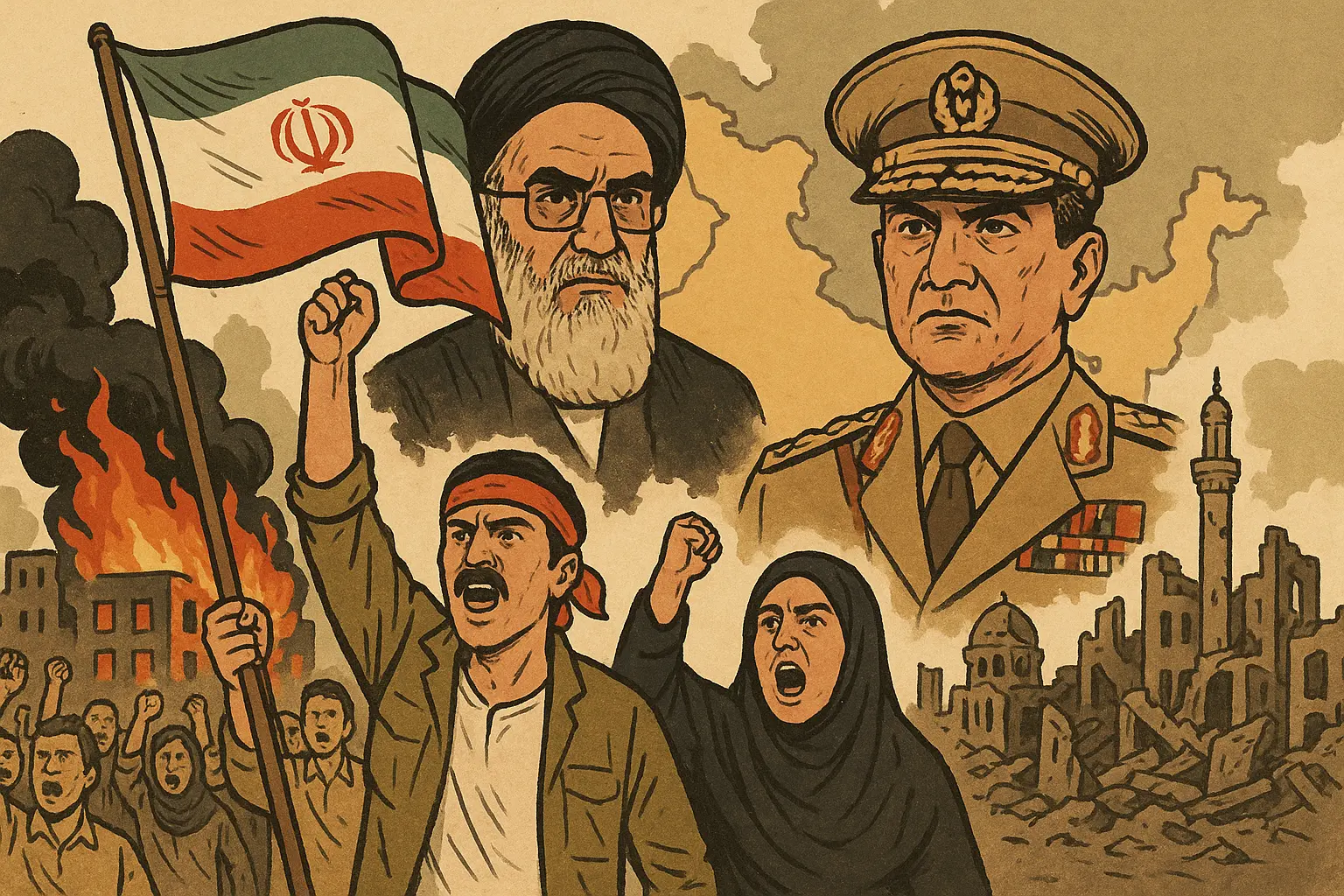
Bloomberg exclusive report: Iran protests have spread to dozens of cities over two weeks, with 500 dead and 10,000 arrested. Brent crude oil has risen 5% to $63 due to supply risks. A former CIA analyst says this is the most significant moment since 1979, with the window for the Khamenei regime narrowing. After Trump’s arrest of Maduro, he threatened to strike Iran, and the White House has informed military options.
Why the protests and suppression have spread nationwide
Bloomberg News reported exclusively on Monday that as protesters flood the streets of Iran night after night, leaders across the Middle East and around the world are grappling with a possible scenario: that this Islamic Republic might be overthrown. This milestone event could fundamentally change global geopolitics and energy markets. The regime led by Supreme Leader Khamenei has weathered protest waves multiple times, but the demonstrations that began two weeks ago are spreading.
According to the US-based human rights activist communication agency, over 500 people have died in the past two weeks, and more than 10,000 have been arrested amid currency crises and economic collapse protests. The focus of the protests has now shifted to the regime itself. Last weekend, hundreds of thousands of people defied government threats and brutal suppression, taking to the streets in dozens of cities from Tehran to a country with a population of 90 million.
Since last Thursday, Iranian authorities have been attempting to block internet and phone networks to suppress growing anger over government corruption, economic mismanagement, and oppressive rule. Several foreign airlines have canceled flights to the country. On Sunday, Trump said he would discuss with billionaire Elon Musk about using his “Starlink” service to help restore internet communications.
Key data on the scale of protests and repression
Death toll: Over 500 in the past two weeks, the bloodiest crackdown in recent years
Arrest numbers: Over 10,000 detained, indicating regime panic
Protest cities: Spread from Tehran to dozens of cities, covering 90 million people
Network shutdowns: Internet and phone cutoffs since last Thursday, severing external communications
International isolation: Several foreign airlines canceled flights, diplomatic isolation deepening
William Usher, a former senior Middle East analyst at the CIA, said: “This is the most important moment for Iran since 1979.” He refers to the revolution that led to the Islamic Republic — which upended regional power balances and caused decades of confrontation and resentment between Tehran and the US and its allies. Usher added: “The regime is in a very difficult situation right now, mainly driven by the economy. I believe their window to regain control is closing, and their available options are decreasing.”
Trump’s post-Maduro threats aimed at Iran
Shortly after arresting Venezuela’s Maduro, US President Trump cheered on Iranian protesters. Recently, Trump has repeatedly threatened to strike Iran, implying the US is back on the path of regime change. Leaders and investors worldwide are closely watching. According to a White House official, US military commanders have briefed Trump on military strike options.
Trump said on Sunday that he is closely monitoring the Iran situation. He told reporters aboard Air Force One: “We are taking this very seriously. The military is also paying attention, and we are considering some very strong options. We will make a decision.” Trump repeatedly warned Iran: if they kill peaceful protesters, the US will strike. Meanwhile, Trump is escalating disruptions to the post-World War II global order in a shocking display of US power — including claiming control over Venezuela’s oil after Maduro’s arrest and threatening to take Greenland from NATO ally Denmark.
This return to regime change has heightened tensions in Middle Eastern countries. The 2003 US invasion of Iraq to overthrow Saddam Hussein is still fresh in memory. Although that war toppled a dictator, it also plunged Iraq into a decade-long civil war and the rise of extremist groups. If the US were to take military action against Iran, the consequences could be even more severe, given Iran’s larger population, territory, and military strength.
Israel, in a 12-day air campaign supported by the US last June, heavily damaged Iran. An anonymous European senior official said Israel is maintaining close communication with European governments regarding the local situation. The official also added that if the regime falls, it would deal a blow to Russian President Putin — after Maduro’s case this month and Assad’s overthrow in Syria over a year ago, Putin would lose another overseas ally.
Chain reactions in oil markets and geopolitics
As investors price in the risk of supply disruptions from OPEC’s fourth-largest oil producer, Brent crude surged over 5% last Thursday and Friday, rising above $63 per barrel. For oil traders, the risks are significant. It remains unclear whether the key oil-producing province of Khuzestan is experiencing unrest, and so far, there are no signs of reduced oil exports.
Arne Lohmann Rasmussen, Chief Analyst at A/S Global Risk Management, said: “The market’s focus has now shifted to Iran. There is increasing concern that under Trump’s administration, the US might exploit the chaos to try to overthrow the regime — similar to what we saw in Venezuela.”
Iran produces about 3-3.5 million barrels of oil daily. If supply is truly disrupted, the global oil market could face severe shocks. Although current oil prices are relatively low, geopolitical premiums could quickly push prices higher. Historically, the 1979 Iranian Revolution caused global oil prices to jump from $15 to $39 within two years, triggering a global recession. If history repeats, Brent crude could break the $100 mark.
From a geopolitical perspective, regime collapse in Iran would drastically alter the Middle East power structure. Iran is the core Shia power supporting Hezbollah in Lebanon, the Houthi rebels in Yemen, and Shia militias in Iraq. If Iran’s regime falls, these proxy armed groups would lose funding and weapons sources. Sunni countries like Israel and Saudi Arabia would gain strategic advantages. For Putin, losing Iran as an ally after Syria’s Assad and Venezuela’s Maduro would mark another decline in Russia’s global influence.