


The Identity Crisis and Governance Paradox of Bitcoin
Bitcoin is facing a fundamental identity crisis, shifting from a peer-to-peer electronic cash system to a store of value. The tension between different visions reveals deep governance challenges that could define Bitcoin’s future, as the foundation of decentralization faces potential collapse. This article is based on an article by Bitcoin Magazine Pro, compiled, edited, and written by Plain Blockchain.
(Previous context: Female stock goddess predicts the US: Trump will buy 1 million BTC as Bitcoin’s national reserve)
(Additional background: 17th anniversary of the Bitcoin white paper release: Satoshi Nakamoto’s decentralization dream is being redefined by power)
Table of Contents
- What is Bitcoin?
- The Spam Paradox
- The Block Size War
- The Node Dilemma
- Conclusion
The foundation of decentralization is facing collapse. Bitcoin is experiencing a fundamental identity crisis that goes far beyond technical debates about block size or data storage. The core issue is not just about what Bitcoin “is,” but what it “should be.” Is it peer-to-peer electronic cash, a settlement layer, an immutable ledger, or a store of value?
This distinction is crucial because design choices around these questions will determine its long-term viability, degree of decentralization, and resistance to censorship. The tension between different visions exposes deep governance challenges that could shape Bitcoin’s future.
What is Bitcoin?
Essentially, Bitcoin is information. When you send Bitcoin, you are not physically moving objects through space. You are moving data: strings of numbers and letters, and unspent transaction outputs (UTXOs) transferred from one address to another. Because this information represents stored energy and value, we call it currency.
Bitcoin’s functionality depends on how you use it. Since Bitcoin is a protocol with a limited scripting language capable of storing data, it can be used for many purposes. This flexibility is both its greatest advantage and the root of its identity crisis.
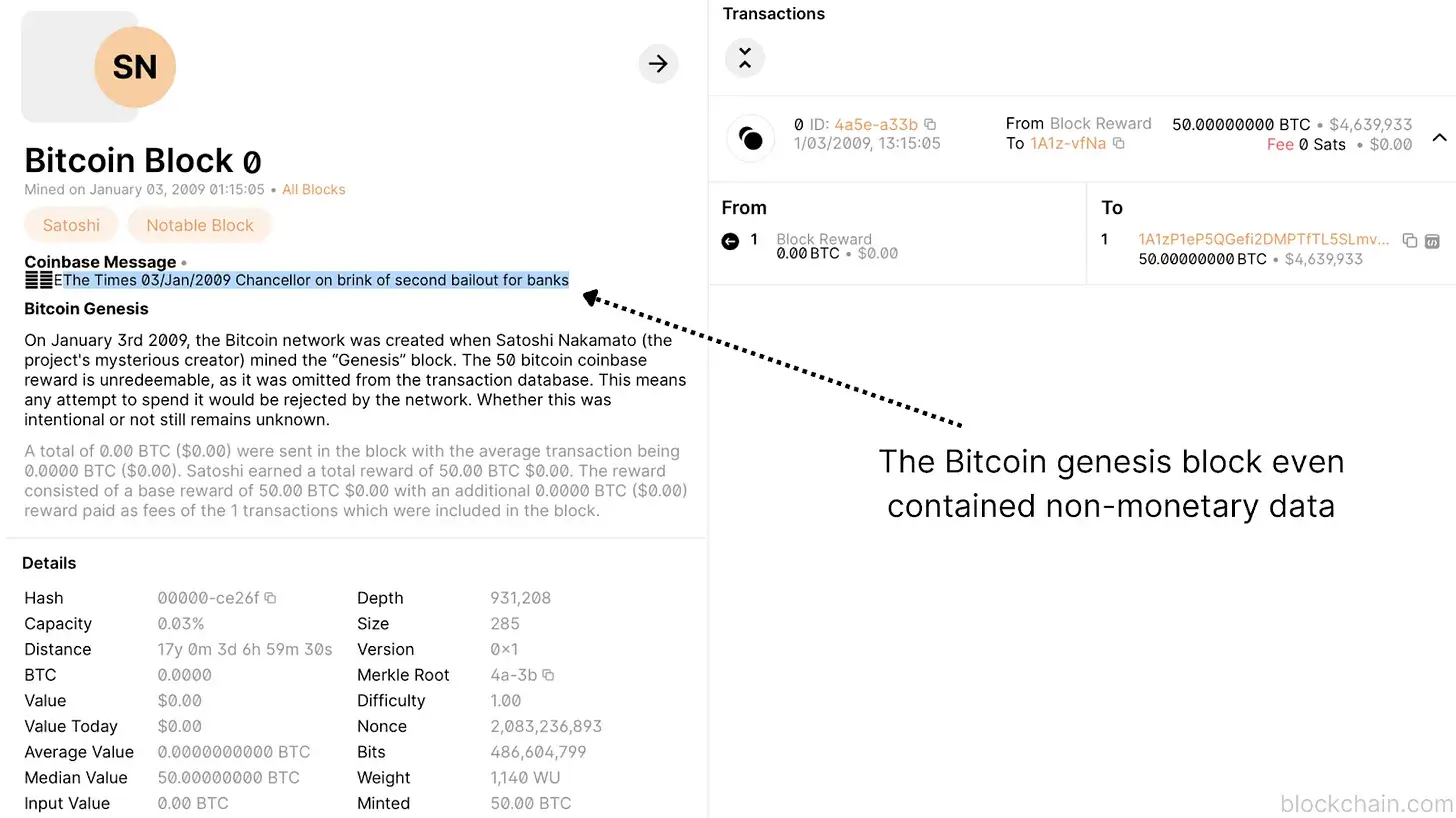
The Bitcoin white paper begins by declaring itself as “a peer-to-peer electronic cash system.” Its intent is clear: Bitcoin aims to facilitate the flow of monetary information and transfer of value. But Bitcoin has never been limited to monetary information. Its protocol is non-discriminatory; it simply records information.
Over the years, this has not been controversial. But recently, we see more and more non-monetary data stored on Bitcoin: JPEG images, videos, websites, and other unrelated information permanently added to the blockchain. Some praise this as a victory for “censorship resistance” and “information preservation,” while others call it “spam,” arguing that these useless data cause blockchain bloat.
The Spam Paradox
The core issue is not the images or data contained in the blockchain itself, but the purpose and positioning of Bitcoin. Is Bitcoin primarily a payment network designed for financial transactions, or a permanent, tamper-proof ledger capable of storing any information based on market demand?
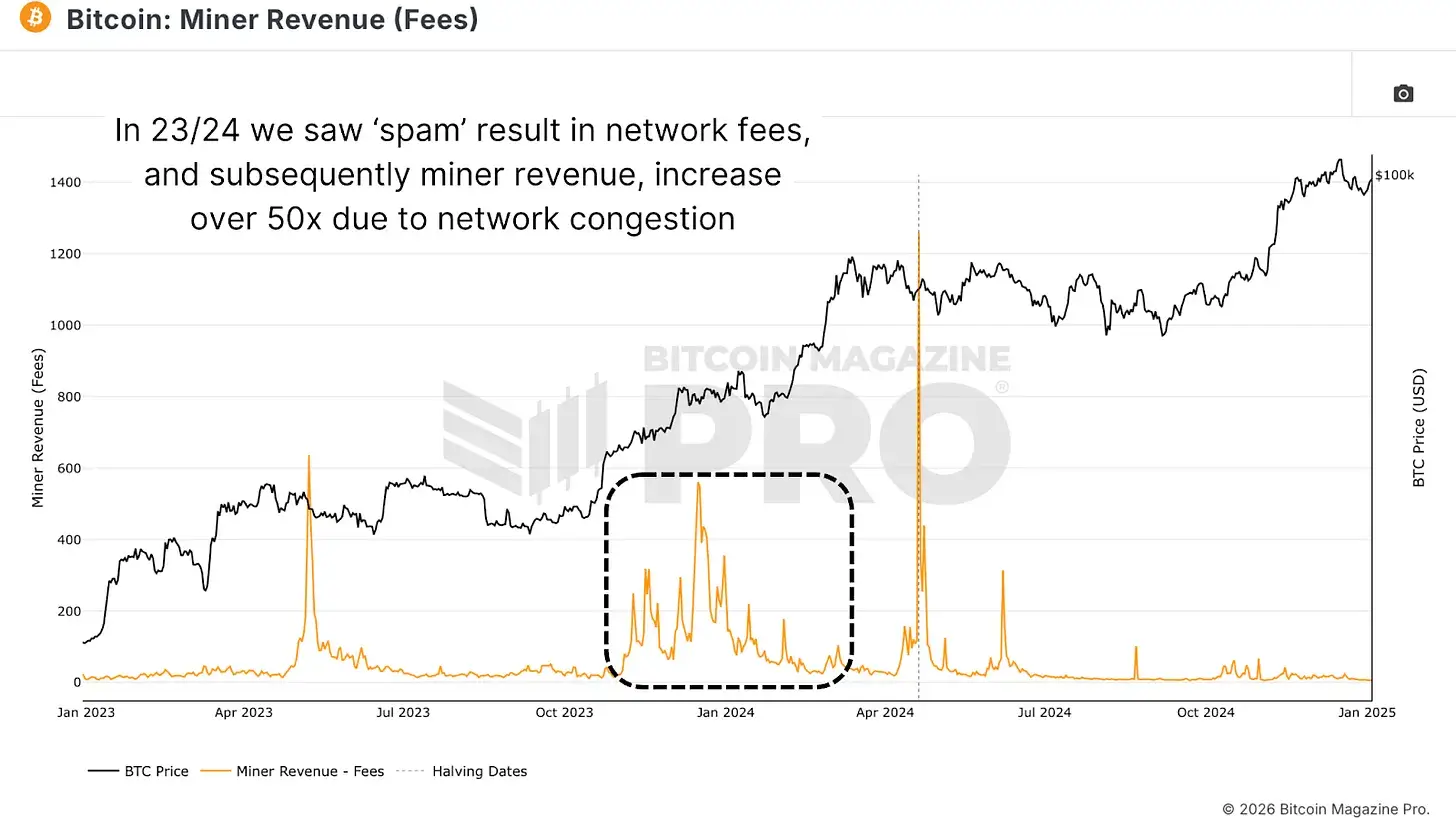
The Bitcoin protocol can handle arbitrary data and OP_Return, but this can be abused. However, proof-of-work (PoW) ensures that attacking the network with spam incurs high costs. If you want to do such operations, you must pay the price.
Currently, there is no sufficient evidence that long-term storage of non-monetary data harms the network enough to threaten other users, nor is there evidence that running nodes would entail legal liabilities.
The Block Size War
This is not Bitcoin’s first identity crisis. As early as 2015, Bitcoin faced a real philosophical split.
The Big Block camp: Some developers and miners advocated for larger blocks to accommodate more transactions, aiming to make Bitcoin a mainstream currency with scalability similar to Visa or Mastercard.
The Small Block camp: Many opposed this proposal. They wanted to keep blocks small to maintain decentralization and relied on other layers (Layer 2) to handle transactions. They believed Bitcoin’s primary responsibilities were security and finality, not transaction speed.
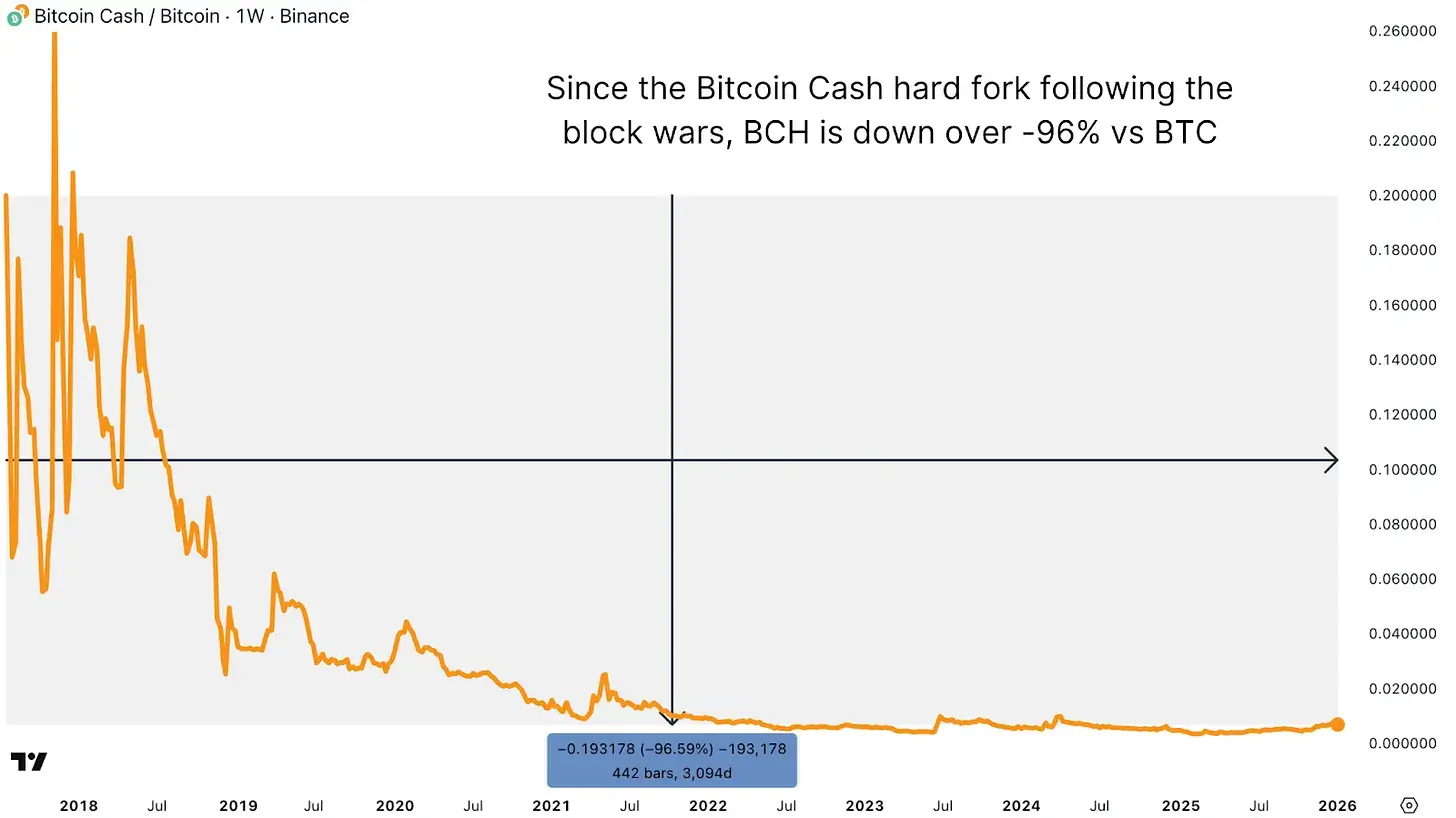
These positions are irreconcilable. Ultimately, Bitcoin forked. Bitcoin Cash emerged as an alternative with a big-block vision, while Bitcoin retained its small-block network.
In the end, the market and users decided Bitcoin’s direction. This precedent shows that Bitcoin’s governance is inherently chaotic and anarchic: anyone can freely use any code and attempt to enforce their governance claims.
The Node Dilemma
This is crucial for Bitcoin’s future: Bitcoin’s decentralization depends on node operators, who verify every transaction and check every rule. Nodes are at the core of decentralization.
However, the economic incentives for running nodes have always been unclear. Miners receive block rewards and fees; users need to verify their transactions. But for those who run nodes purely out of conviction, it is a voluntary act of altruism.
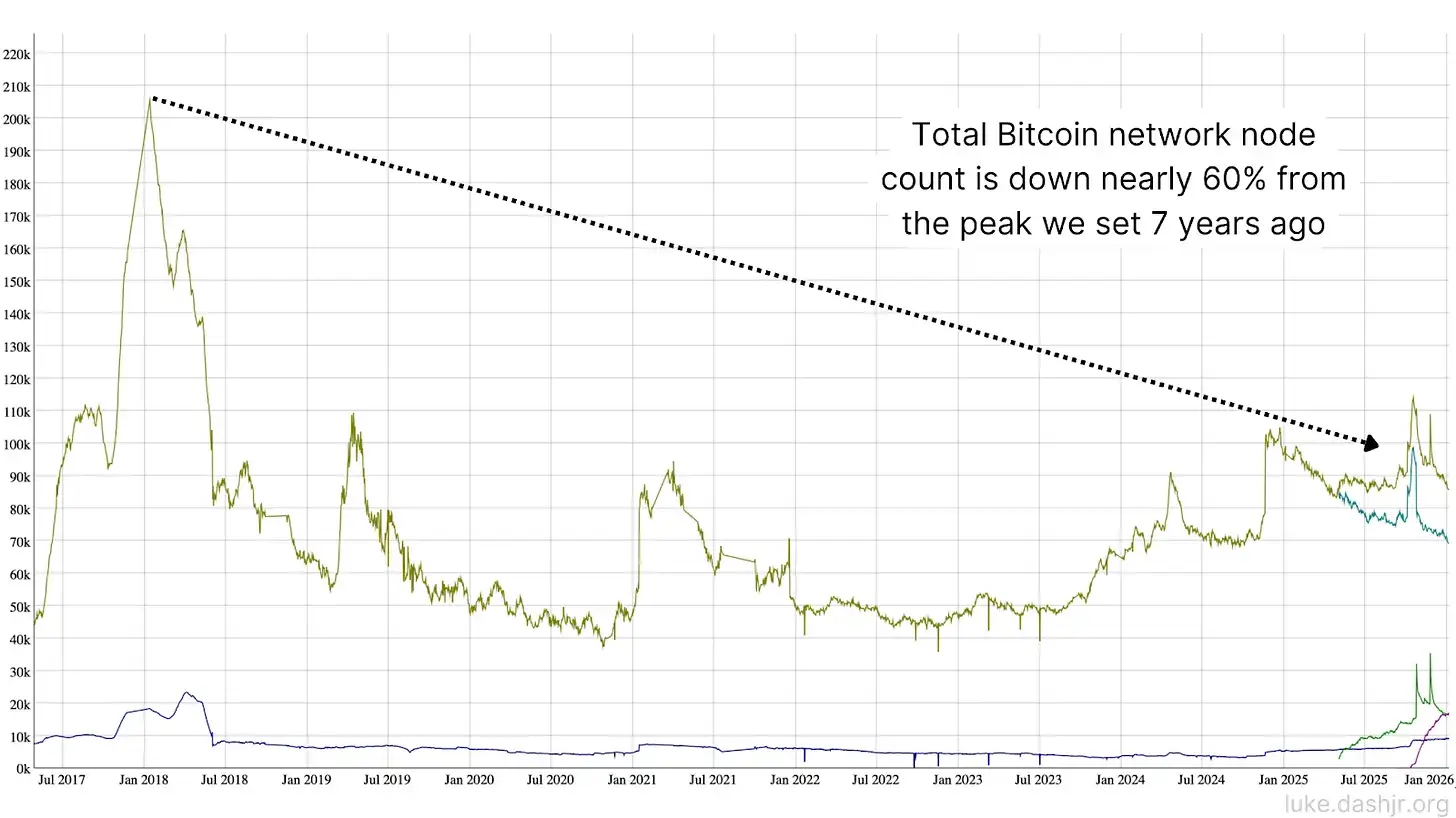
This poses a long-term threat. Bitcoin’s decentralization relies on ordinary people willing to verify the network for free. But human nature tends to favor centralization through specialization and outsourcing to trusted third parties, which is especially evident in Bitcoin custody services. If most of the ecosystem moves toward custodial solutions, it could lead to significant centralization risks and systemic vulnerabilities.
Conclusion
Bitcoin’s identity and governance challenges are not only about code but also about how to balance the interests of various stakeholders. It is an art of compromise: users want low transaction fees, node operators want a small blockchain, developers want an easy-to-develop base layer, and miners need economic incentives to maintain network security.
The block size war did not fully resolve this debate, nor did the discussions about spam and Ordinals. The current censorship resistance paradox also cannot fully address these deep contradictions.

Related Articles
Altcoin attention drops to a two-year low, market funds shift to Bitcoin. When will the next altcoin season arrive?
Bitcoin Experiences Bullish Pump Reclaiming $73,000 in the Last 24 Hours and Sparking Hope
Billionaire Chamath Palihapitiya warns Bitcoin lacks privacy for central bank reserves.
Data: 159 BTC transferred out from Wintermute, worth approximately $11.52 million
US Facilitates Venezuela Gold Deal, Bitcoin and Gold Rebound on Geopolitical and Macro Data