


Pi Network's top recommendation: multi-signature wallets! The end of single-key era to prevent hacking upgrades
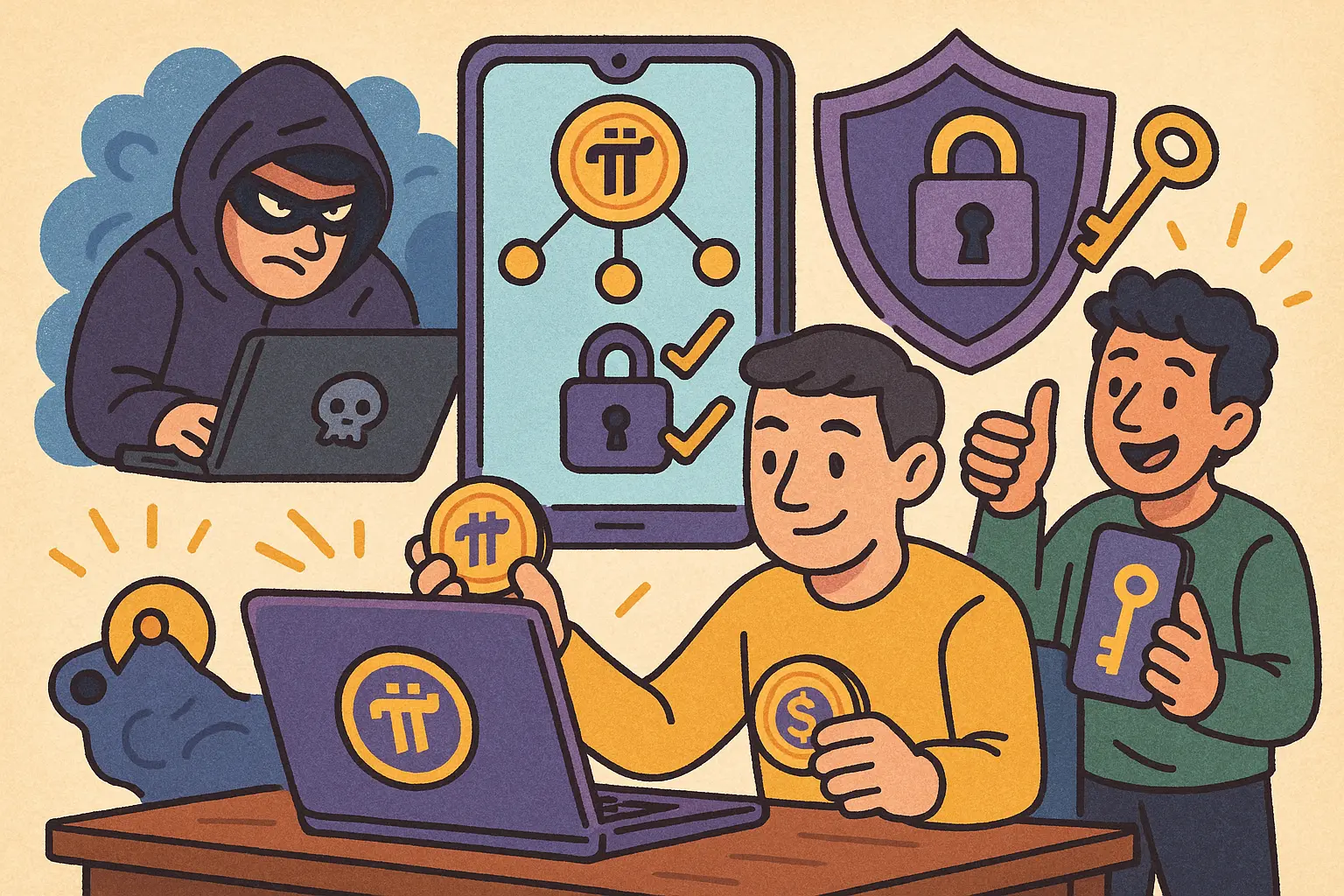 Pi Network launches the first multi-signature wallet, marking a significant upgrade in ecosystem security. The new wallet requires multiple keys to authorize transactions, eliminating the vulnerability where a single key theft results in complete asset loss. Using the ed25519 encryption standard, it supports testing transactions within the ecosystem. Developers and enterprises can securely manage shared funds, and community governance will also benefit. The multi-signature mechanism introduces additional authentication points to prevent unauthorized access, ensuring assets are protected even if some keys are lost.
The End of the Fatal Flaw of Single-Key Wallets
Many security vulnerabilities in cryptocurrencies originate from private key theft. Single-key wallets pose security risks; once the private key is compromised, hackers can immediately transfer all assets, and blockchain transactions are irreversible, making it impossible for victims to recover losses. This “one key determines life or death” design has caused countless tragedies in the crypto world—from exchange hacks to phishing personal wallets—making private key security the weakest link.
Pi Network’s multi-signature wallet eliminates this vulnerability and introduces additional authentication points. The new wallet requires multiple keys to authorize transactions; transferring funds individually does not require a single key. This structure reduces risk, prevents unauthorized access, and helps avoid losses caused by wallet damage.
The specific operational mechanism typically adopts an “M-of-N” model, for example, a 2-of-3 multi-signature wallet requires any 2 of 3 keys to sign a transaction. Suppose a company uses a 2-of-3 multi-signature wallet, with the CFO, CEO, and CTO each holding one key. Any transfer requires approval from two of them; no single person can unilaterally move funds. Even if one key is lost or stolen, the remaining two can still control the wallet, preventing assets from being permanently locked.
Four Major Security Advantages of Multi-Signature Wallets
Prevent Single Point of Failure: Loss or theft of a single key does not lead to total asset loss; risk only arises if multiple keys are compromised simultaneously.
Prevent Internal Fraud: In corporate or DAO scenarios, a single member cannot transfer funds alone; consensus from multiple parties is required.
Increase Hacker Barriers: Attackers must compromise multiple devices or accounts simultaneously, exponentially increasing difficulty.
Disaster Recovery Capability: If some keys are lost, remaining key holders can still regain control through social recovery or reset mechanisms.
The Significance of Pi Network Using ed25519 Encryption Standard
Pi Network created this wallet using current encryption standards, adopting ed25519 signing keys. ed25519 is one of the most advanced elliptic curve digital signature algorithms, used by Signal, Tor, and numerous blockchain projects. Compared to traditional RSA or ECDSA, ed25519 offers higher security, faster signing speeds, and smaller signature sizes.
This technical choice demonstrates Pi Network’s serious attitude toward security architecture. ed25519 can resist various known cryptographic attacks, including side-channel attacks and quantum threats (though quantum threats are still years away, early preparation is wise). For long-term development of blockchain projects, adopting the most advanced encryption standards is fundamental to building trust.
The wallet supports ecosystem testing transactions, allowing developers to experiment with more secure transaction models. This release benefits developers and enterprises; it supports shared wallets and helps teams securely handle finances. Additionally, it enables Pi Network to be applied in enterprise scenarios. Community governance will also benefit, as decentralized autonomous organizations (DAOs) can use multi-signature wallets to manage treasury funds, ensuring major decisions require approval from multiple members.
Application Potential in Developer and Enterprise Scenarios
This release benefits developers and enterprises; it supports shared wallets and helps teams securely manage finances. Enterprise use cases are among the most practical fields for multi-signature wallets. Traditional companies handling large sums often require multi-party approval processes for internal controls. Multi-signature wallets bring this governance logic onto the blockchain, making fund management more transparent and tamper-proof.
For example, an e-commerce platform based on Pi Network could use a 3-of-5 multi-signature wallet to manage operational funds, with five board members each holding a key. Major expenditures require approval from at least three members. This design prevents single directors from misconduct and ensures that even if two directors suddenly leave or their keys are lost, the company can still operate normally.
Community governance will also benefit from this development. Although Pi Network has experienced some delays—such as slow KYC verification progress causing skepticism among some users—the launch of the multi-signature wallet is a tangible technical advancement, showing the team’s ongoing infrastructure development.
Initial reactions remain positive; security features are highly praised, and developers see new possibilities. Critics want to see actual application cases, but both sides agree on the importance of security. Pi Network’s first multi-signature wallet is undoubtedly a major upgrade, enhancing resistance to common crypto risks and strengthening the ecosystem’s technical foundation. Its true value depends on actual use cases.
Overall, Pi Network’s launch of the multi-signature wallet is an important step toward mainstream adoption. The enhanced security will attract more enterprises and institutions to consider building applications on Pi, beyond just individual speculative holdings.
Related Articles
Pi Network Celebrates One Year of Open Network: A Look at the 2026 Key Metrics
Pi Network Rolls Out Phase 2 Protocol Upgrades With Mandatory Node Deadline
Pi Network Urges Mainnet Node Operators to Upgrade Before Key Deadline
Best Crypto to Buy Now: Whales Earn $17K Per Month Staking Pepeto While $460 Million Gets Liquidated, Sui and Pi Network Bleed
Why Is Crypto Crashing: Whales Knew the War Was Coming and Sold Days Before You Did, Pepeto Presale Surges as Sui and Pi Network Collapse