Tether has launched a new compliant stablecoin, USAT, fully adhering to the requirements of the GENIUS Act: its reserves consist entirely of cash and short-term U.S. Treasuries, it undergoes independent monthly audits, and it is managed by a U.S.-regulated custodian. The goal of USAT is to provide institutional users with transparency and legitimacy, while retaining the flexibility and widespread adoption that USDT enjoys in global markets.
2026-03-24 11:57:55
A comprehensive analysis of the architecture and application scenarios of the Plasma blockchain, exploring how it leverages a native Bitcoin bridge, zero-fee stablecoin channels, and a customizable gas model to build the next-generation Layer 1 infrastructure tailored for global payments.
2026-03-24 11:57:46
This article examines policy directives alongside soaring stock prices, compares the rollout pace of the U.S. "GENIUS Act," and provides an in-depth analysis of how "license scarcity" and "concept premium" are fueling market bubbles.
2026-03-24 11:57:40
In 2025, stablecoins reached a market capitalization of $250 billion, with annual on-chain transaction volume already twice that of Visa. Investors capture significant yield spreads by purchasing 5% U.S. Treasuries with non-interest-bearing liabilities. However, these profits are completely exposed to the risk of interest rate cuts by the Federal Reserve.
2026-03-24 11:57:40
The article offers a thorough analysis of both the speed and specifics of policy developments across different countries, and uses concrete case studies to highlight how each nation has forged its own distinct approach and strategy in regulating stablecoins.
2026-03-24 11:57:38
The real challenge in B2B payments does not lie in the movement of funds itself, but in the complex workflows behind it. This article provides a systematic analysis of the value of stablecoins in cross-border B2B payments, emphasizing the need for tight integration with data collection, compliance checks, tax processing, and approval chains. Through five industry case studies, it highlights the necessity and vast potential of workflow-driven stablecoin payments.
2026-03-24 11:57:15
Circle is developing an open technology platform powered by USDC. Building on the U.S. dollar's strength and widespread adoption, the platform taps into the internet's scale, speed, and low cost to drive network effects and practical applications for financial services.
2026-03-24 11:56:17
Yala inherits the security and decentralization of Bitcoin while using a modular protocol framework with the $YU stablecoin as a medium of exchange and store of value. It seamlessly connects Bitcoin with major ecosystems, allowing Bitcoin holders to earn yield from various DeFi protocols.
2026-03-24 11:55:44
It’s been a decade since Tether launched the first USD-backed, crypto-enabled digital currency. Since then, stablecoins have become one of the most widely adopted products in crypto, with a market cap of nearly $180 billion. Despite this remarkable growth, stablecoins continue to face significant challenges and limitations.
2026-03-24 11:55:42
There are over $160 billion worth of stablecoins used in transactions worldwide. This article explores the recent history of stablecoins and the banking industry, and provides a detailed evaluation of three types of tokens: fiat-backed stablecoins, asset-backed stablecoins, and strategy-backed synthetic dollars.
2026-03-24 11:55:41
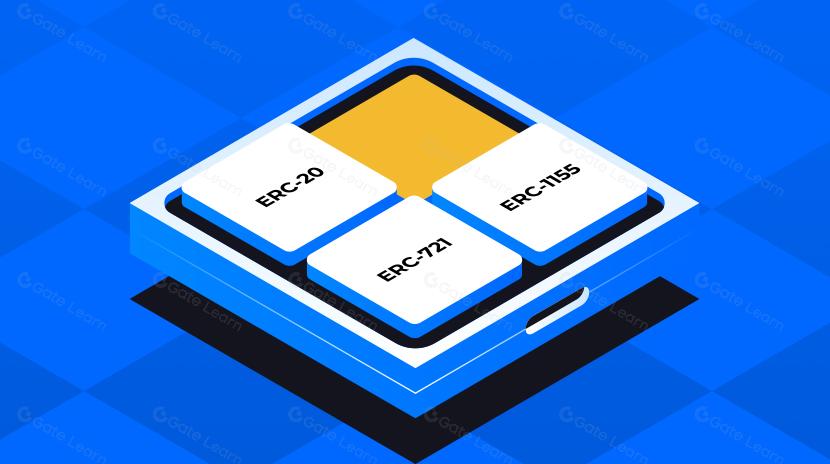
Ethereum, as a leading blockchain platform, has introduced various token standards to cater to different use cases. The three most prominent standards are ERC-20, ERC-721, and ERC-1155. We’ll explore the differences between these standards, their use cases, and why they are essential for the blockchain industry.
2026-03-24 11:54:44
This article mainly introduces the liquid staking structure.
This article mainly introduces the liquid staking structure.
2026-03-24 11:53:47