This comprehensive guide explores PinLink (PIN), a decentralized marketplace connecting users with tokenized computing resources for AI and machine learning tasks. Launched in November 2024 on Gate.com, PinLink bridges artificial intelligence, real-world assets, and decentralized physical infrastructure networks. The article covers its blockchain architecture leveraging Ethereum's ERC-20 standard, market performance with 24,918 token holders, and ecosystem applications including GPU rental and RWA tokenization. It examines technical innovations, competitive challenges, and community engagement while providing practical guidance for participation through Gate.com, wallet management, and ecosystem exploration. Ideal for developers, enterprises, and crypto investors seeking to understand decentralized computing infrastructure and tokenized resource allocation.
PinLink's Positioning and Significance
In 2024, the PinLink team launched PinLink (PIN), aiming to address fragmented access to computing resources and inefficiencies in leveraging decentralized physical infrastructure for AI and machine learning tasks.
As a bridge connecting artificial intelligence (AI), real-world assets (RWA), and decentralized physical infrastructure networks (DePin), PinLink plays a key role in the AI computing and DePin sectors.
As of 2026, PinLink has established itself as a marketplace connecting users with tokenized computational resources, with over 24,900 holders and an active developer community.
This article will delve into its technical architecture, market performance, and future potential.
Origin and Development History
Birth Background
PinLink was created by its founding team in 2024, aiming to solve the inefficiency and lack of accessibility in global compute power distribution for AI, machine learning, and intensive computational tasks.
It emerged during the rapid expansion of AI technology and growing demand for decentralized infrastructure solutions, with the goal of providing efficient, secure, and decentralized access to high-performance computing resources through RWA tokenization to transform the landscape.
The launch of PinLink brought new possibilities to developers, enterprises, and AI researchers seeking affordable and accessible computing power.
Important Milestones
- November 2024: Official launch on Gate.com, establishing its presence in the crypto market with an initial price of $0.058.
- January 2025: Reached a significant price milestone, climbing to $3.84, reflecting growing market interest in DePin and AI-related projects.
- 2025: Ecosystem expansion, with PinLink connecting users to diverse tokenized GPUs, miners, and cloud storage solutions.
- 2026: Continued development of the RWA tokenization model, enabling broader participation in the compute power marketplace.
With support from its community and development team, PinLink continues to optimize its technology, security, and real-world applications.
How PinLink Works?
No Central Control
PinLink operates on a decentralized network of global computing resources and nodes, free from control by banks or governments.
These nodes collaborate to validate transactions and resource allocations, ensuring system transparency and attack resistance, granting users greater autonomy and enhancing network resilience.
Blockchain Core
PinLink's blockchain is a public, immutable digital ledger that records every transaction and resource allocation.
Transactions are grouped into blocks and linked through cryptographic hashes to form a secure chain.
Anyone can view the records, establishing trust without intermediaries.
The platform leverages ERC-20 standard on the Ethereum blockchain to ensure compatibility and security for its tokenized assets.
Ensuring Fairness
PinLink adopts Ethereum's Proof of Stake (PoS) consensus mechanism to validate transactions and prevent fraudulent activities such as double-spending.
Validators maintain network security through staking and validating transactions on the Ethereum network, receiving rewards in return.
Its innovation lies in connecting users with tokenized computing resources through a decentralized marketplace model, enabling efficient resource discovery, rental, and trading.
Secure Transactions
PinLink uses public-private key cryptography to protect transactions:
- Private keys (similar to secret passwords) are used to sign transactions
- Public keys (similar to account numbers) are used to verify ownership
This mechanism ensures fund security while transactions maintain pseudonymous privacy on the blockchain.
The platform's RWA tokenization model adds an additional layer of security by representing physical computing assets as digital tokens, enabling transparent and verifiable ownership and usage rights.
Circulation Overview
As of January 26, 2026, PinLink (PIN) has a circulating supply of 80,000,000 tokens, with a total supply of 100,000,000 tokens. The maximum supply is capped at 100,000,000 tokens, indicating a fixed supply model.
The current circulating supply represents 80% of the total supply, with a market capitalization to fully diluted valuation ratio of 80%.
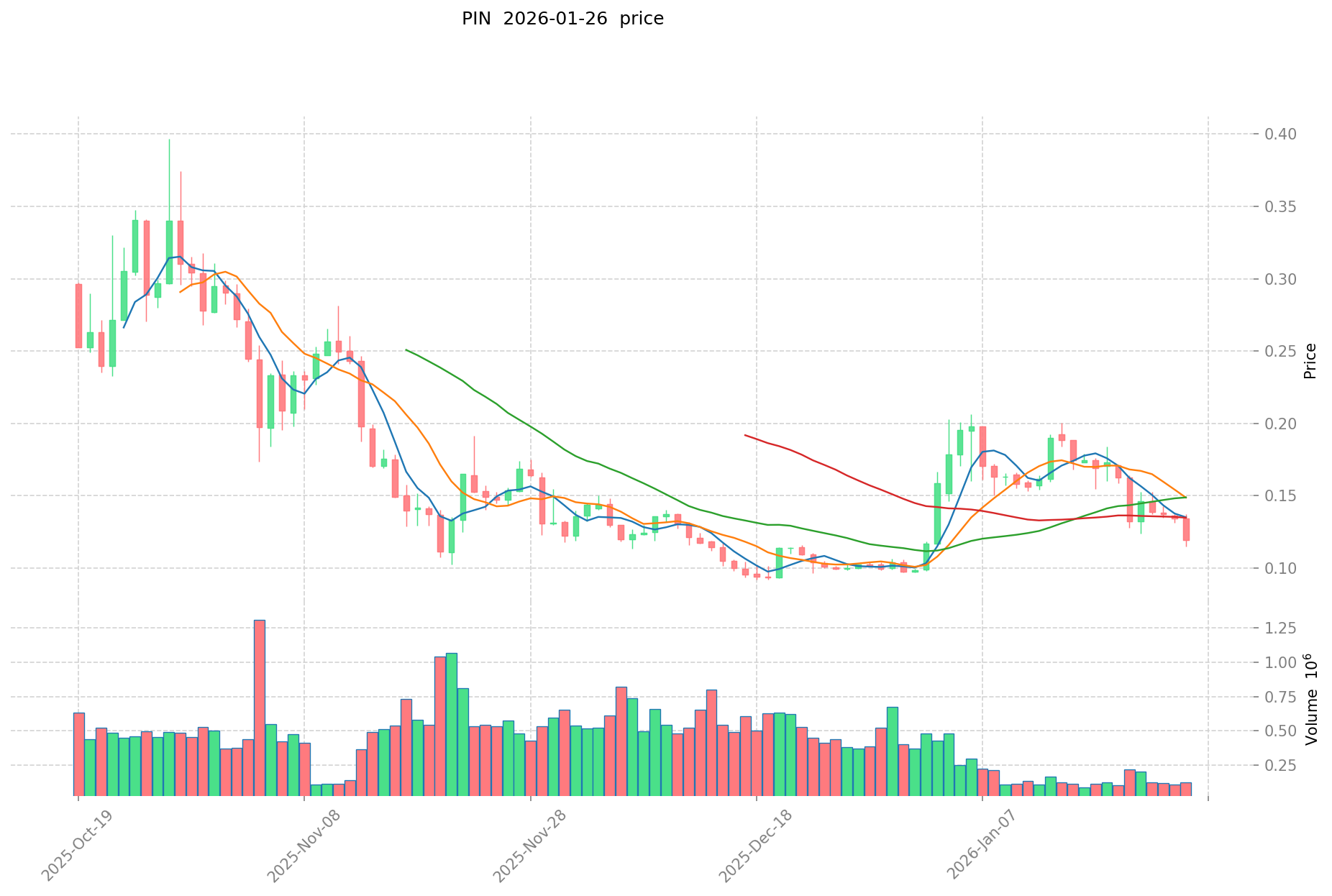
Price Fluctuations
PIN reached a notable price level of $3.8399 on January 6, 2025, driven by market dynamics during that period.
The token's lower price point was recorded at $0.09176 on December 19, 2025, reflecting market adjustments and trading activity during that timeframe.
These price movements demonstrate the token's response to market sentiment, adoption patterns, and various external influences.
Click to view current PIN market price
On-Chain Metrics
- Token Holders: 24,918 addresses hold PIN tokens, indicating the level of distribution across the network
- 24-Hour Trading Volume: $18,154.71, reflecting current market activity
- Market Dominance: 0.00040%, showing PIN's position within the broader cryptocurrency market
PinLink Ecosystem Applications and Strategic Partnerships
Core Use Cases
PinLink's ecosystem supports multiple applications across the intersection of AI, RWA, and DePin:
- Decentralized Computing Resources: PinLink marketplace connects users with tokenized GPUs, miners, and cloud storage, providing efficient access to high-performance computing power for AI and machine learning tasks.
- RWA Tokenization: The platform enables tokenization of real-world computing assets, allowing developers and enterprises to rent, tokenize, and trade computational resources in a decentralized manner.
Strategic Collaborations
While specific partnership details were not provided in the available materials, PinLink's positioning at the convergence of AI, RWA, and DePin sectors suggests potential for collaborations that enhance its technical capabilities and market reach. These relationships could provide a foundation for PinLink's ecosystem expansion.
Challenges and Considerations
PinLink faces several challenges in its development:
- Market Competition: The decentralized computing and RWA tokenization space is becoming increasingly competitive with emerging blockchain solutions.
- Technical Complexity: Integrating AI workloads with blockchain infrastructure requires sophisticated technical solutions to ensure performance and scalability.
- Regulatory Landscape: The tokenization of real-world assets operates in an evolving regulatory environment that may impact platform operations.
These factors have generated ongoing discussions within the community and continue to drive innovation efforts.
PinLink's community shows growing interest, with the token holding 24,918 holders as of the latest data. The project maintains an active presence on X platform through its official account, where updates about platform development and ecosystem growth are shared regularly.
Sentiment on X displays varied perspectives:
- Supporters highlight PinLink's innovative approach to decentralized computing and RWA tokenization, viewing it as a bridge between traditional computational resources and blockchain technology.
- Critics focus on price volatility and market performance, particularly given the token's significant decline from earlier price levels.
Recent trends indicate mixed sentiment as the market adjusts to broader crypto sector dynamics.
Discussion Topics
X users discuss PinLink's tokenization model, computing marketplace functionality, and positioning within the DePin sector, reflecting both enthusiasm for its technological approach and concerns about market adoption challenges.
- Official Website: Visit PinLink's official site for features, use cases, and latest developments.
- Documentation: PinLink GitBook provides detailed information about the platform's architecture, goals, and vision.
- X Updates: On X platform, PinLink operates through @PinLinkAi, sharing posts about technical developments, marketplace updates, and ecosystem news.
PinLink Future Development
- Platform Enhancement: Continue development of the RWA tokenization marketplace to improve accessibility and efficiency for computing resource transactions.
- Ecosystem Goals: Expand the range of tokenized computing assets and increase developer and enterprise adoption.
- Long-term Vision: Establish PinLink as a leading platform connecting AI computational needs with decentralized infrastructure.
How to Participate in PinLink?
- Purchase Options: PIN token is available on Gate.com and other cryptocurrency exchanges.
- Storage Solutions: Use compatible Ethereum wallets such as MetaMask or hardware wallets to securely store PIN tokens.
- Explore the Ecosystem: Visit the official documentation to learn about marketplace functionality and available computing resources.
- Stay Informed: Follow official channels for updates on platform development and new features.
Summary
PinLink leverages blockchain technology to create a marketplace for decentralized computing resources, offering tokenization of GPUs, miners, and cloud storage for AI and machine learning applications. Its positioning at the intersection of AI, RWA, and DePin sectors represents an innovative approach to computational resource allocation. With an active community and clear focus on bridging traditional computing infrastructure with decentralized technology, PinLink presents an interesting development in the crypto space. Despite facing market volatility and competitive pressures, the platform's unique value proposition makes it noteworthy for those interested in decentralized computing and RWA tokenization. Whether you're new to crypto or an experienced participant, PinLink offers a distinctive perspective on the future of computational resource markets.
FAQ
What is a crypto PIN and what is its purpose?
A crypto PIN is a personal security code that protects your digital wallet and cryptocurrency assets. It serves as an additional layer of authentication, preventing unauthorized access to your funds and ensuring only you can approve transactions and transfers.
How do I set up and manage my crypto PIN securely?
Create a strong, unique PIN combining numbers, letters, and symbols. Store it offline in a secure location. Enable two-factor authentication for added protection. Never share your PIN, and change it regularly to maintain security.
What happens if I forget my crypto PIN or it gets compromised?
If you forget your PIN, use the recovery options provided by your wallet. If compromised, immediately change your PIN and enable additional security measures like two-factor authentication. Contact your wallet provider's support for emergency account recovery assistance.
How is a crypto PIN different from a private key or seed phrase?
A crypto PIN is a shorter security code you create for quick access to your wallet. Unlike private keys or seed phrases that grant full control of funds, a PIN only enables specific actions like transfers or confirmations, offering an extra security layer without exposing your complete wallet credentials.
Can a crypto PIN protect my digital wallet from unauthorized access?
Yes, a crypto PIN adds an essential security layer to your digital wallet. It requires a personal identification number to authorize transactions, preventing unauthorized access even if someone obtains your private keys or recovery phrases. This multi-factor authentication significantly reduces unauthorized transfer risks.
* The information is not intended to be and does not constitute financial advice or any other recommendation of any sort offered or endorsed by Gate.