Pullback vs. Retracement vs. Reversal: What Are The Differences?


What is Pullback?
A pullback refers to a temporary halt or decline in a cryptocurrency's overall uptrend. This phenomenon occurs due to various market dynamics and trader behaviors. Existing position holders may choose to take profits after substantial gains, or market participants might lose confidence following shifts in economic conditions or regulatory developments.
Despite the temporary price decline, pullbacks are generally viewed as strategic opportunities for traders to enter positions in cryptocurrencies that have experienced significant upward price movements. This perspective stems from the belief that the underlying project fundamentals remain strong, and technical indicators suggest that the uptrend will likely resume after this brief consolidation period.
Pullbacks typically do not alter the fundamental upward trajectory of a cryptocurrency and are considered normal occurrences within a healthy uptrend. For example, Bitcoin (BTC) experienced several pullbacks during a historical uptrend period, demonstrating that temporary price corrections are part of natural market cycles.
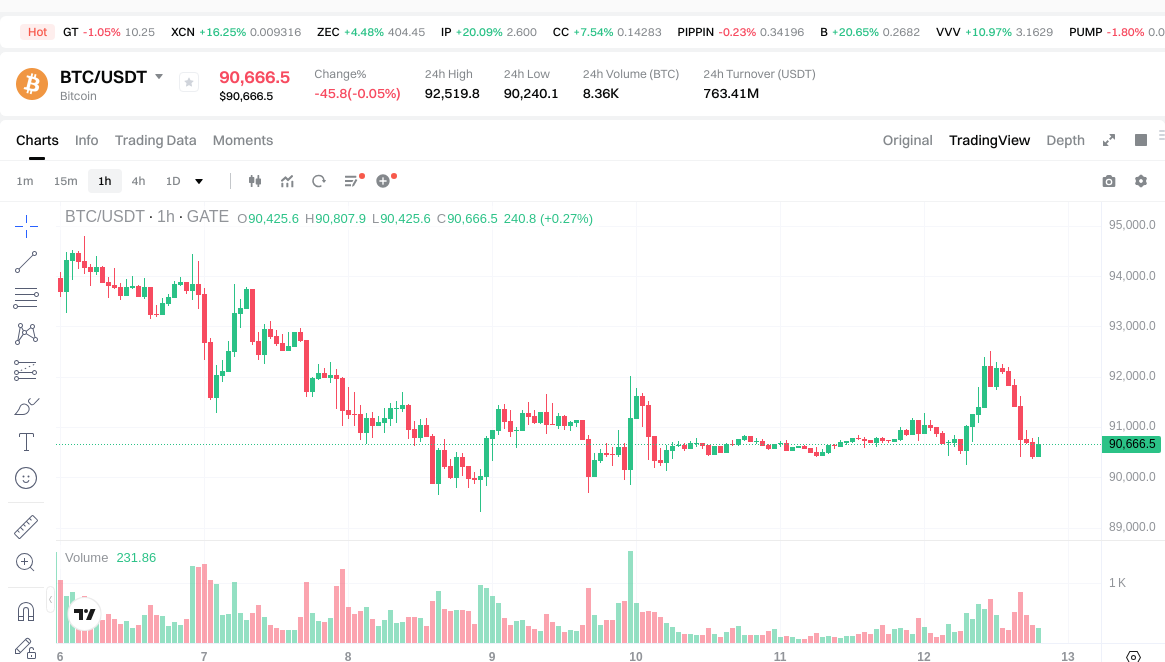
However, traders must exercise caution as pullbacks can occasionally signal an actual trend reversal, which may result in substantial losses. To distinguish between a temporary pullback and a genuine reversal, traders can utilize technical indicators such as moving averages and pivot points. These analytical tools help identify critical support levels for a particular cryptocurrency. When a pullback breaches established support levels, it increases the probability that a reversal is occurring rather than a simple pullback.
What is Retracement?
The term "retracement" shares significant similarities with "pullback" and is often used interchangeably in trading discussions. A retracement represents a minor pullback or, more comprehensively, a temporary counter-trend movement in a cryptocurrency's price action. This means that a temporary price increase during an overall downtrend also qualifies as a retracement, making the concept applicable to both bullish and bearish market conditions.
For instance, Bitcoin's price has shown brief upward movements at various points during overall downtrend periods, illustrating how retracements occur in both directions. These temporary counter-movements are natural market behaviors as traders take profits or new participants enter positions.
A retracement by itself does not provide definitive information about the true market direction. Instead, traders need to employ technical indicators such as moving averages and Relative Strength Index (RSI) to assess whether the current trend is likely to continue or if a significant reversal is imminent. Combining multiple indicators provides a more comprehensive view of market conditions and helps traders make informed decisions about position entry and exit points.
What is Reversal?
A reversal represents a fundamental turnaround in the price direction of a cryptocurrency, marking a significant shift in market sentiment and trend. This phenomenon can apply to both uptrends transitioning to downtrends and downtrends transitioning to uptrends. In technical analysis terminology, a reversal is sometimes referred to as a trend reversal to emphasize its significance.
Reversals manifest across various timeframes. While they frequently occur in intraday trading and can develop relatively quickly within hours, they can also unfold over extended periods spanning days, weeks, months, or even years. The timeframe of a reversal often correlates with its significance, with longer-term reversals typically indicating more substantial shifts in market fundamentals.
Technical tools and indicators such as moving averages, trend lines, and chart patterns help traders identify potential reversals before they fully develop. For example, when Bitcoin's price initially rises in an uptrend, it creates a pattern of higher highs and higher lows. A reversal becomes evident when the price breaks below the established trendline and begins forming lower highs and lower lows as it declines. Although some retracements may appear during this process, the persistent downward trend confirms that a genuine reversal has occurred rather than a temporary pullback.
How to Differentiate Pullbacks and Retracements from Reversals?
Distinguishing between pullbacks, retracements, and reversals is a critical skill that separates successful traders from those who experience significant losses and missed opportunities. Many newer traders struggle with this differentiation, which can lead to premature position exits during healthy pullbacks or holding positions too long during actual reversals.
The following table outlines several key differences that help traders identify the nature of price movements:
| Parameter | Retracement | Reversal |
|---|---|---|
| Factor | Profit taking by retail traders (smaller trades) | Institutional selling (large trades) |
| Money Flow | Considerable buying interest during a decline | Very little buying interest |
| Chart Patterns | Few, or hardly any patterns – usually limited to candles | Several reversal patterns – usually chart patterns (e.g., double top) |
| Short Interest | No shift in short interest | Rising short interest |
| Time Frame | Short-term | Long-term |
| Fundamentals | No change in project fundamentals | A shift or speculation of a shift in project fundamentals |
| Recent Activity | Usually happens right after huge profits | Can happen at any time |
| Candlesticks | "Indecisive" candles with typical long tops and bottoms (spinning tops) | Reversal candles – including engulfing, soldiers, and other similar patterns |
Understanding these differences enables traders to make more informed decisions about position management. For instance, if a price decline shows considerable buying interest and occurs after substantial gains without fundamental changes, it likely represents a retracement rather than a reversal. Conversely, if the decline is accompanied by rising short interest, reversal chart patterns, and fundamental project changes, it suggests a genuine trend reversal.
How to Trade Retracements?
Successfully trading retracements requires a solid understanding of technical indicators that help identify these temporary price movements. Before executing retracement trades, traders should familiarize themselves with the following common technical tools:
Fibonacci Retracement Levels: Fibonacci retracement levels are created by connecting two significant price points, typically the highest high and lowest low within a trend. These horizontal lines indicate potential support and resistance levels based on mathematical ratios derived from the Fibonacci sequence. The key percentages used are 23.6%, 38.2%, 61.8%, and 78.6%. Although 50% is not technically a Fibonacci ratio, it is widely used in price analysis due to its psychological significance. Historical price action demonstrates that retracements generally pause or reverse around the 38.2%, 50%, and 61.8% Fibonacci levels before the overall trend resumes. Traders often place limit orders near these levels to capitalize on potential bounces.
Pivot Point: The pivot point is calculated as the average of the intraday high, intraday low, and closing price from the previous trading day. This central pivot point serves as the foundation for calculating multiple support and resistance levels. Retracements typically occur when prices reverse near these calculated pivot points. When prices approach support levels during an uptrend, it often signals a buying opportunity. Conversely, if the price breaks through either support or resistance points with significant volume, it may indicate that a reversal is developing rather than a simple retracement.
Trendlines: Trendlines serve as visual representations of the prevailing trend direction. When a major trendline remains intact and prices bounce off it, the price movement is likely a retracement within the existing trend. However, when a well-established trendline is decisively broken, particularly with increased volume, it suggests that a reversal may be in effect. Traders should draw trendlines connecting at least three significant price points to ensure reliability.
Moving Averages: Moving averages smooth out price data to help identify trend direction and potential reversal points. Traders commonly use various timeframes such as 200-day MA, 50-day MA, and 20-day MA. In a downtrend, retracements can be identified when prices rise to touch the moving average at peaks before resuming the downward movement. In an uptrend, retracements occur when prices decline to touch the moving average at troughs before bouncing upward. The interaction between price and moving averages provides valuable insights into trend strength and potential entry points.
How to Trade Reversals?
Trading reversals requires careful analysis and confirmation from multiple technical indicators. Understanding these tools helps traders identify potential trend changes before they fully develop:
Moving Averages: As mentioned in retracement trading, moving averages play a crucial role in reversal identification. When shorter-term moving averages cross above longer-term moving averages (golden cross), it signals a potential bullish reversal. Conversely, when shorter-term moving averages cross below longer-term moving averages (death cross), it indicates a potential bearish reversal. The 50-day and 200-day moving average crossovers are particularly significant for identifying major trend reversals.
Bollinger Bands: Bollinger Bands consist of three lines that adapt to market volatility. The middle line represents a moving average, while the upper and lower bands are calculated as standard deviations from this average. During an uptrend, prices typically remain between the upper and middle bands, with occasional touches of the upper band indicating strong momentum. When prices consistently move between or along the lower bands, it signals a downtrend. A reversal may be developing when prices break through the middle band and begin consistently trading on the opposite side.
Moving Average Convergence and Divergence (MACD): MACD is a momentum oscillator derived from the relationship between two exponential moving averages. This indicator consists of the MACD line, signal line, and histogram. A reversal can be confirmed when the MACD line crosses above or below the signal line, particularly when this crossover occurs near extreme levels. Divergence between MACD and price action also provides strong reversal signals—when prices make new highs but MACD fails to do so (bearish divergence), or when prices make new lows but MACD doesn't (bullish divergence).
Stochastic Oscillator: The Stochastic Oscillator consists of two lines, %K and %D, which oscillate between 0 and 100 to identify overbought and oversold conditions. Readings above 80 typically indicate overbought conditions, while readings below 20 suggest oversold conditions. Reversals may be observed when the indicator reaches these extreme levels and the %K line crosses the %D line in the opposite direction. This crossover in extreme zones provides a stronger reversal signal than crossovers in neutral territory.
Relative Strength Index (RSI): RSI measures the magnitude of recent price changes to evaluate overbought or oversold conditions. The indicator oscillates between 0 and 100, with traditional overbought and oversold levels set at 70 and 30, respectively. Reversals often occur when RSI reaches these extreme levels and begins moving back toward the middle range. Additionally, divergence between RSI and price action serves as a powerful reversal signal, similar to MACD divergence.
Trendlines: As previously mentioned, the breaking of a major, well-established trendline often signals that a reversal may be in effect. For confirmation, traders should look for a decisive break accompanied by increased volume and a subsequent retest of the broken trendline from the opposite side. This retest-and-rejection pattern provides stronger evidence of a genuine reversal.
Conclusion
Pullback and reversal trading can generate substantial profits when traders successfully identify and differentiate between these price movements using the technical indicators and analytical methods discussed above. Understanding that pullbacks and retracements are temporary, short-lived phenomena that do not indicate shifts in the major trend is fundamental to successful trading. These movements represent natural market breathing patterns and often present optimal entry opportunities for trend-following strategies.
In contrast, reversals represent long-term turnarounds in asset prices that frequently involve changes in project fundamentals, market sentiment, or broader economic conditions. Recognizing reversals early allows traders to protect profits, exit losing positions, or position themselves for new trend opportunities.
However, like all trading strategies, both pullback and reversal trading involve inherent risks that traders must acknowledge and manage. One of the most significant challenges in pullback trading is that what appears to be a temporary pullback could actually be the beginning of a genuine reversal, leading to substantial losses if positions are held too long. Similarly, identifying a reversal at its initial stage presents difficulties, as early reversal signals can prove false, and the original trend may resume.
False signals and inappropriate use of technical indicators represent additional challenges that trouble both novice and experienced traders. No single indicator provides perfect accuracy, and market conditions can produce misleading signals that result in poor trading decisions. Therefore, traders are strongly encouraged to thoroughly understand the limitations of pullback and reversal trading strategies before implementing them with significant capital.
To maximize success and minimize risk, traders should employ a combination of multiple technical indicators rather than relying on a single tool. This multi-indicator approach provides confirmation and reduces the likelihood of acting on false signals. Additionally, traders should practice extensively with these tools using demo accounts or small position sizes before deploying them in real-life trades with substantial capital. Continuous learning, disciplined risk management, and emotional control are essential components of successful pullback and reversal trading strategies.
FAQ
What are Pullback, Retracement, and Reversal? What are the core differences between them?
Pullback is a temporary price decline within an uptrend; retracement is a partial price correction from recent extremes; reversal indicates a fundamental shift in trend direction. Key difference: pullbacks are brief, retracements are moderate corrections, reversals are significant directional changes.
How to identify Pullback and Retracement in actual trading? What practical technical indicators or methods are available?
Use trend lines and moving averages as support levels. Confirm with RSI and MACD indicators. Set stop-loss below trend lines or moving averages. Monitor trading volume and price action patterns like long lower wicks. Wait for price to test support before entering, ensuring lower risk entry with higher reward potential.
What is the difference between Reversal and Retracement? How to judge whether the price is retracing or truly reversing?
Reversal indicates a fundamental shift in trend direction, while retracement is a temporary pullback within the existing trend. Identify reversals by sustained price movements breaking key support or resistance levels; retracements typically stay within the established trend range and reverse quickly.
In an uptrend, pullbacks typically retrace to what price levels?
In an uptrend, pullbacks typically retrace 5%-10% from the recent high. This decline is temporary, and prices usually find support quickly before rebounding upward to continue the uptrend.
How should traders utilize Pullback and Retracement to formulate trading strategies?
Traders should use Pullback and Retracement to identify potential entry and exit points. Apply Fibonacci retracement levels to determine support and resistance zones, enabling more precise strategy formulation and risk management in trend-following trades.
Reversal发生前通常会有什么警示信号或技术特征?
Reversal typically shows warning signals including divergence between price and indicators, weakening momentum, breakdown of support levels, increased trading volume at resistance, and bearish candlestick patterns like engulfing or shooting star formations.
Fibonacci回撤位在识别Retracement中有什么作用?
Fibonacci回撤位帮助识别潜在的支撑和阻力水平。主要比率包括23.6%、38.2%、50%和61.8%,用于预测价格可能反弹或下跌的位置,辅助判断回调深度和交易机会。
How to differentiate between a normal pullback and an upcoming reversal?
A pullback stays within the trend with strong support holding, while a reversal breaks key support levels with increased trading volume. Watch for trend line breaks and failed recovery attempts to confirm reversal signals.
Share
Content
How to Buy Cryptocurrency


Trending Cryptocurrencies



2025 SUI coin: price, buying guide, and Staking rewards

How to Trade Bitcoin in 2025: A Beginner's Guide

Shiba Inu Coin Price and News Update: 2025 Market Analysis

How to Buy Crypto: A Step-by-Step Guide with Gate.com
Spot Trading vs Futures Trading: Which Crypto Assets Strategy Is More Suitable for You?

Pi Coin Price in 2025: Current Value and Market Analysis

Gate Ventures Weekly Crypto Recap (March 2, 2026)
Gate Ventures Weekly Crypto Recap (February 23, 2026)

Gate Ventures Weekly Crypto Recap (February 9, 2026)

What is AIX9: A Comprehensive Guide to the Next Generation of Enterprise Computing Solutions

What is KLINK: A Comprehensive Guide to Understanding the Revolutionary Communication Platform