Beginner’s Guide to Candlestick Charts

2026-01-01 10:49:48
Crypto Trading
Crypto Tutorial
K-line
Spot Trading
Trading Bots
Article Rating : 4
52 ratings
Master reading candlestick charts for cryptocurrencies as a beginner. Uncover how to interpret candlestick patterns, apply technical analysis using candlesticks, and develop trading strategies on Gate. This is your complete guide for traders.
Beginner’s Guide to Candlestick Charts

Introduction

For newcomers to trading or investing, chart reading can seem daunting. Many rely on hunches and make investment decisions based on intuition. However, trading and investing are fundamentally about probability and risk management. That's why understanding how to read candlestick charts is essential for nearly any investment approach, no matter your experience level.

What Is a Candlestick Chart?

A candlestick chart is a financial chart that visually displays an asset’s price movement over a defined time interval. Each chart consists of candles, with each candle representing the same duration. Candles can depict any timeframe—ranging from seconds to years—making them versatile tools for different analytical strategies.

Candlestick charts trace back to the 17th century. They are widely credited to a Japanese rice trader named Homma, who used them to analyze rice prices. His concepts likely formed the foundation for today’s modern candlestick charts, which are now a cornerstone of technical analysis.

How Do Candlestick Charts Work?

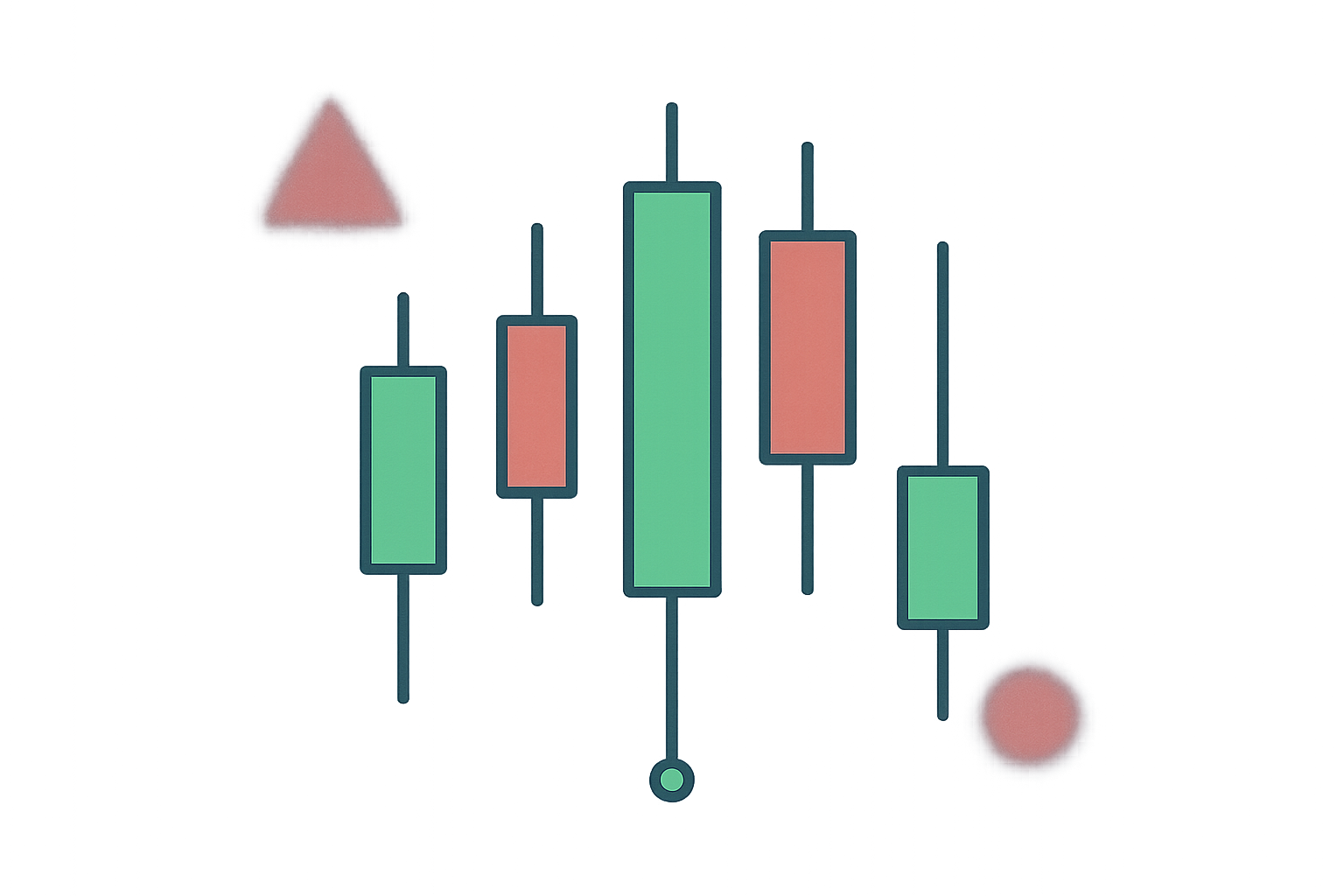
Candlestick charts display four key price points within a specific timeframe. Each candle is constructed using these data points:

  1. Open — The initial trading price of the asset in the timeframe.
  2. High — The highest trading price of the asset recorded in the timeframe.
  3. Low — The lowest trading price of the asset recorded in the timeframe.
  4. Close — The final trading price of the asset in the timeframe.

The distance between the open and close forms the “body,” while the space between these points and the high or low is known as the wick or shadow. This structure enables traders to quickly assess price direction and volatility for the analyzed period.

How to Read Candlestick Charts

Most traders find candlestick charts easier to interpret than traditional bar or line charts. Each candle reflects the struggle between buyers (bulls) and sellers (bears) within a specific period. A longer body signals stronger buying or selling momentum during that timeframe.

The color of the candle is crucial for reading market direction. A green body means the asset closed higher than it opened, indicating upward (bullish) pressure. Conversely, a red body shows the price fell during the period, with the close below the open, signaling downward (bearish) pressure. Wicks also offer insights into price rejection or reversal attempts.

What Candlestick Charts Don’t Reveal

While candlesticks give a useful overview of price action, they don’t offer every detail for thorough analysis. They only show the open and close distance, not the full price action between those points. This means significant price swings within the period may go unrepresented by the candle’s appearance.

Candlestick charts can also introduce substantial market noise, especially on shorter timeframes. This noise can trigger false signals that mislead less experienced traders. As a result, many analysts combine candlestick charts with other technical indicators and analysis tools for a more comprehensive market perspective.

Heikin-Ashi Candles

Heikin-Ashi, which translates to “average bar” in Japanese, refers to a modified candlestick chart that calculates candles using average price data. This approach distinguishes Heikin-Ashi from traditional Japanese candlesticks. Its main purpose is to smooth price movements and filter out market noise, giving a clearer view of underlying trends.

Traders frequently use Heikin-Ashi candles alongside standard candlesticks to avoid false signals and improve market trend detection. Green Heikin-Ashi candles without lower wicks generally signal a strong uptrend, while red candles without upper wicks can indicate a strong downtrend. This combination helps analysts pinpoint trend reversals with greater accuracy.

Conclusion

Candlestick charts are foundational tools for traders and investors aiming to understand market dynamics. They not only provide a clear visual record of an asset’s price action, but also allow flexible analysis across multiple timeframes, supporting a range of trading strategies.

Systematic study of candlestick charts and patterns, paired with analytical thinking and hands-on practice, can give traders a decisive edge. Mastering this core skill is a key step toward building a robust and profitable investment strategy.

FAQ

What is a candlestick chart and how does it work?

A candlestick chart visualizes price quotes using geometric shapes. The body shows the gap between open and close (green for rises, red for declines). Wicks mark the period’s highest and lowest prices, helping you analyze market moves.

What are the main components of a candlestick (open, close, high, low)?

Each candlestick consists of four key elements: open (starting price), close (ending price), high (maximum price), and low (minimum price) within a given period. These elements create the candle’s body and wicks.

What’s the difference between a bullish (green) and a bearish (red) candle?

A bullish (green) candle means the price closed above the open, indicating buyer strength. A bearish (red) candle means the price closed below the open, showing seller control.

A hammer pattern signals a bullish reversal after a drop; an inverted hammer points to a bearish reversal; a doji indicates market indecision when open and close are nearly equal. Always use these in conjunction with other analytical tools.

Which timeframes should beginners use to read candlestick charts?

As a beginner, start with 5- to 15-minute timeframes. These intervals highlight clear trends without overloading your analysis. Once comfortable, progressively move to longer timeframes like hourly or daily charts.

What are the most basic buy and sell signals in candlestick charts?

Basic buy signals include hammers at support levels, while shooting stars at resistance suggest sells. Also, look for small bodies with long wicks and shifts in trading volume to confirm trend changes.

* The information is not intended to be and does not constitute financial advice or any other recommendation of any sort offered or endorsed by Gate.
Related Articles
How to Withdraw Money from Crypto Exchanges in 2025: A Beginner's Guide

How to Withdraw Money from Crypto Exchanges in 2025: A Beginner's Guide

Navigating the crypto exchange withdrawal process in 2025 can be daunting. This guide demystifies how to withdraw money from exchanges, exploring secure cryptocurrency withdrawal methods, comparing fees, and offering the fastest ways to access your funds. We'll tackle common issues and provide expert tips for a smooth experience in today's evolving crypto landscape.

2025-08-14 05:17:58
Hedera Hashgraph (HBAR): Founders, Technology, and Price Outlook to 2030

Hedera Hashgraph (HBAR): Founders, Technology, and Price Outlook to 2030

Hedera Hashgraph (HBAR) is a next-generation distributed ledger platform known for its unique Hashgraph consensus and enterprise-grade governance. Backed by leading global corporations, it aims to power fast, secure, and energy-efficient decentralized applications.
2025-08-14 05:17:24
Jasmy Coin: A Japanese Crypto Tale of Ambition, Hype, and Hope

Jasmy Coin: A Japanese Crypto Tale of Ambition, Hype, and Hope

Jasmy Coin, once hailed as “Japan’s Bitcoin,” is staging a quiet comeback after a dramatic fall from grace. This deep dive unpacks its Sony-born origins, wild market swings, and whether 2025 could mark its true revival.
2025-08-14 05:10:33
IOTA (MIOTA) – From Tangle Origins to 2025 Price Outlook

IOTA (MIOTA) – From Tangle Origins to 2025 Price Outlook

IOTA is an innovative crypto project designed for the Internet of Things (IoT), using a unique Tangle architecture to enable feeless, miner-free transactions. With recent upgrades and the upcoming IOTA 2.0, it is moving toward full decentralization and broader real-world applications.
2025-08-14 05:11:15
Bitcoin Price in 2025: Analysis and Market Trends

Bitcoin Price in 2025: Analysis and Market Trends

As Bitcoin's price soars to **$94,296.02** in April 2025, the cryptocurrency market trends reflect a seismic shift in the financial landscape. This Bitcoin price forecast 2025 underscores the growing impact of blockchain technology on Bitcoin's trajectory. Savvy investors are refining their Bitcoin investment strategies, recognizing the pivotal role of Web3 in shaping Bitcoin's future. Discover how these forces are revolutionizing the digital economy and what it means for your portfolio.
2025-08-14 05:20:30
How to Trade Bitcoin in 2025: A Beginner's Guide

How to Trade Bitcoin in 2025: A Beginner's Guide

As we navigate the dynamic Bitcoin market in 2025, mastering effective trading strategies is crucial. From understanding the best Bitcoin trading strategies to analyzing cryptocurrency trading platforms, this comprehensive guide will equip both beginners and seasoned investors with the tools to thrive in today's digital economy.
2025-08-14 05:15:07
Recommended for You
Gate Ventures Weekly Crypto Recap (March 2, 2026)

Gate Ventures Weekly Crypto Recap (March 2, 2026)

Stay ahead of the market with our Weekly Crypto Report, covering macro trends, a full crypto markets overview, and the key crypto highlights.
2026-03-02 23:20:41
Gate Ventures Weekly Crypto Recap (February 23, 2026)

Gate Ventures Weekly Crypto Recap (February 23, 2026)

Stay ahead of the market with our Weekly Crypto Report, covering macro trends, a full crypto markets overview, and the key crypto highlights.
2026-02-24 06:42:31
Gate Ventures Weekly Crypto Recap (February 9, 2026)

Gate Ventures Weekly Crypto Recap (February 9, 2026)

Stay ahead of the market with our Weekly Crypto Report, covering macro trends, a full crypto markets overview, and the key crypto highlights.
2026-02-09 20:15:46
What is AIX9: A Comprehensive Guide to the Next Generation of Enterprise Computing Solutions

What is AIX9: A Comprehensive Guide to the Next Generation of Enterprise Computing Solutions

AIX9 is a next-generation CFO AI agent revolutionizing enterprise financial decision-making in cryptocurrency markets through advanced blockchain analytics and institutional intelligence. Launched in 2025, AIX9 operates across 18+ EVM-compatible chains, offering real-time DeFi protocol analysis, smart money flow tracking, and decentralized treasury management solutions. With over 58,000 holders and deployment on Gate, the platform addresses inefficiencies in institutional fund management and market intelligence gathering. AIX9's innovative architecture combines multi-chain data aggregation with AI-driven analytics to provide comprehensive market surveillance and risk assessment. This guide explores its technical foundation, market performance, ecosystem applications, and strategic roadmap for institutional crypto adoption. Whether you are navigating complex DeFi landscapes or seeking data-driven financial intelligence, AIX9 represents a transformative solution in the evolving crypto ecosystem.
2026-02-09 01:18:46
What is KLINK: A Comprehensive Guide to Understanding the Revolutionary Communication Platform

What is KLINK: A Comprehensive Guide to Understanding the Revolutionary Communication Platform

Klink Finance (KLINK) is a revolutionary Web3 advertising and affiliate marketing infrastructure launched in 2025 to address monetization inefficiencies in decentralized ecosystems. Operating on the BSC blockchain as a BEP-20 token, KLINK enables transparent, token-based advertising infrastructure connecting platforms with global partners. This comprehensive guide explores KLINK's technical framework utilizing decentralized consensus mechanisms, market performance metrics including 85,288 token holders and real-time pricing data available on Gate.com, and strategic applications in platform monetization and reward distribution. The article examines the ecosystem's growth trajectory, community engagement dynamics, current market challenges including price volatility, and future roadmap objectives. Whether you're a cryptocurrency newcomer or experienced investor, this guide provides essential insights into KLINK's positioning within the evolving Web3 advertising landscape and practical participation strategies t
2026-02-09 01:17:10
What is ART: A Comprehensive Guide to Understanding Assisted Reproductive Technology and Its Impact on Modern Fertility Treatment

What is ART: A Comprehensive Guide to Understanding Assisted Reproductive Technology and Its Impact on Modern Fertility Treatment

LiveArt is an AI-powered RWAfi protocol launched in 2025 that transforms illiquid investment-grade collectibles—including art, watches, cars, and wine—into programmable financial instruments on blockchain. Operating across 17 networks with over 13 million connected wallets and a $200+ million asset pipeline, LiveArt addresses the $10 trillion collectibles market's accessibility challenge through decentralized infrastructure and AI-driven asset verification. The platform combines blockchain's transparency with smart contract automation, enabling secure tokenization and yield-generating opportunities for investors seeking alternative asset exposure. Key metrics show 356 million circulating ART tokens with active trading on Gate and other exchanges. While facing market volatility and early-stage adoption challenges, LiveArt's innovative approach to RWA tokenization and DeFi integration positions it as a distinctive player in democratizing access to cultural wealth and transforming how collectibles enter decentra
2026-02-09 01:13:48