





#USMayCPIHits3YearHigh
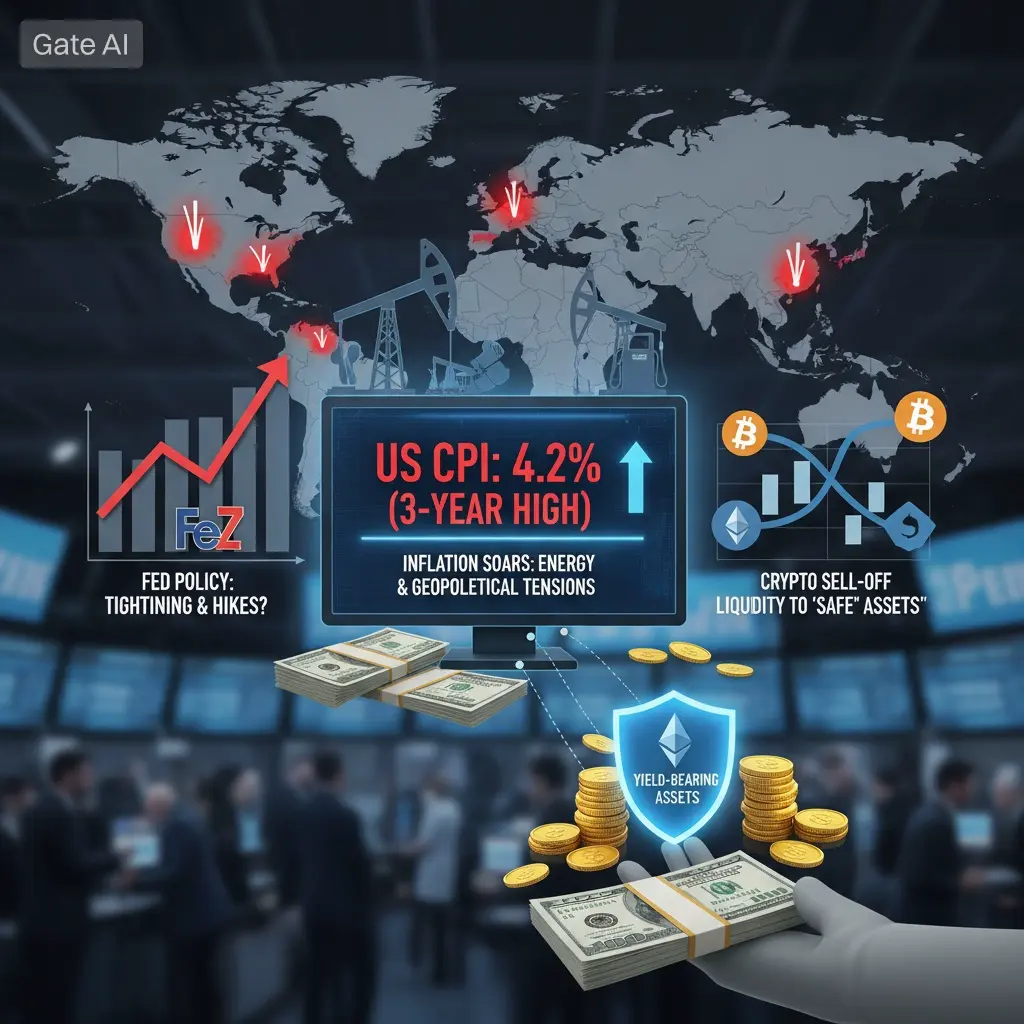
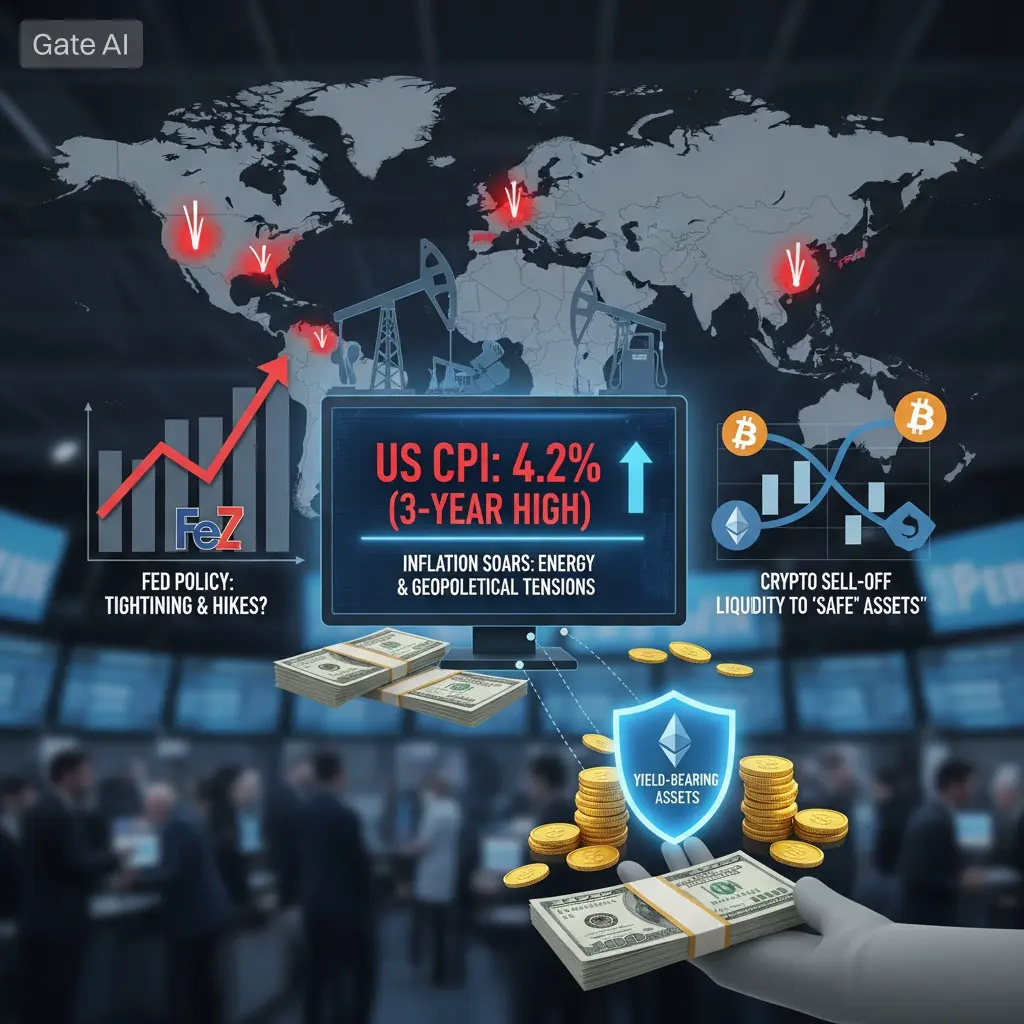
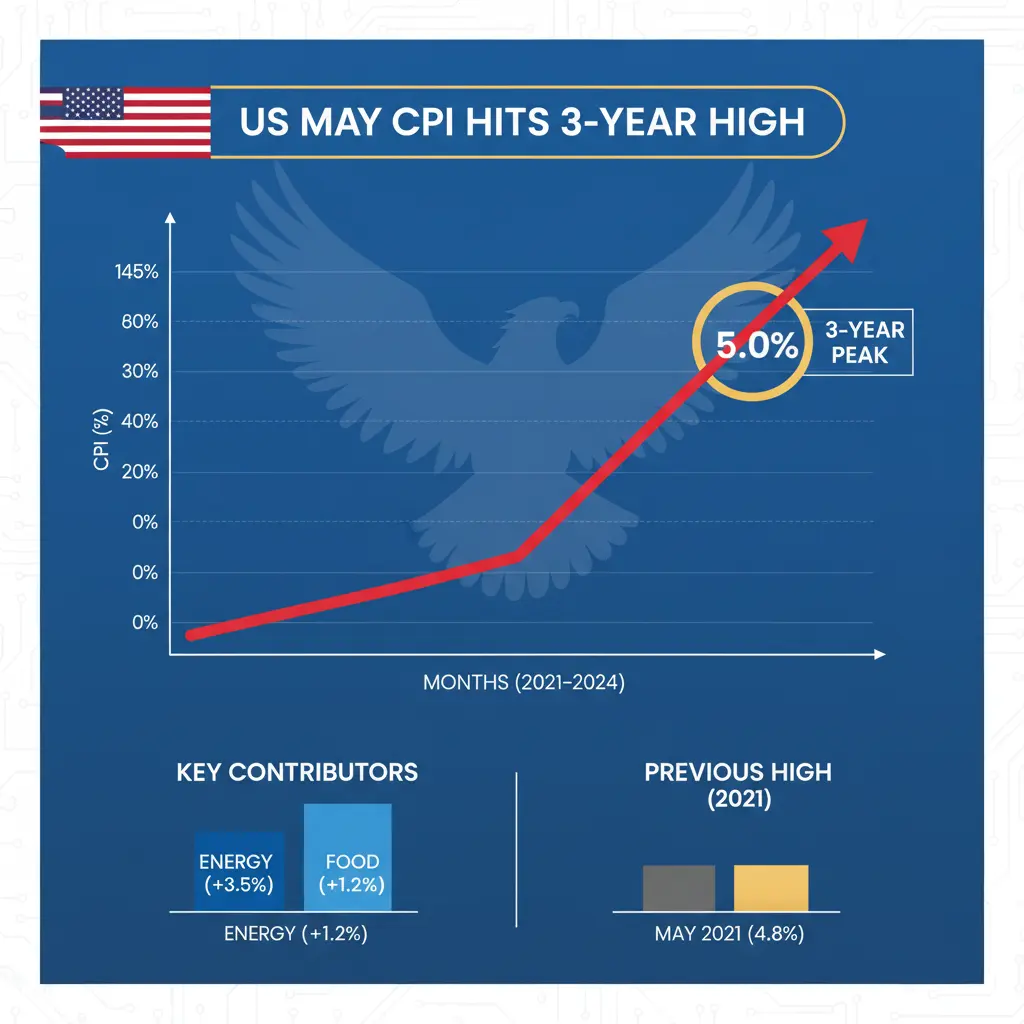
On June 10, 2026, the US Bureau of Labor Statistics released the May Consumer Price Index report that sent shockwaves through global markets. The CPI surged to an annual rate of 4.2%, up from 3.8% in April, marking the highest inflation reading since April 2023. This is not just a number on a government spreadsheet. It is a signal that the economic landscape has fundamentally shifted, and the ripple effects are already crashing into the cryptocurrency market at a time when it is already under siege from geopolitical conflict, rising interest rate expectations, and extreme volatility. Let us break down the ten critical points that explain what this means and how deeply it will affect crypto.
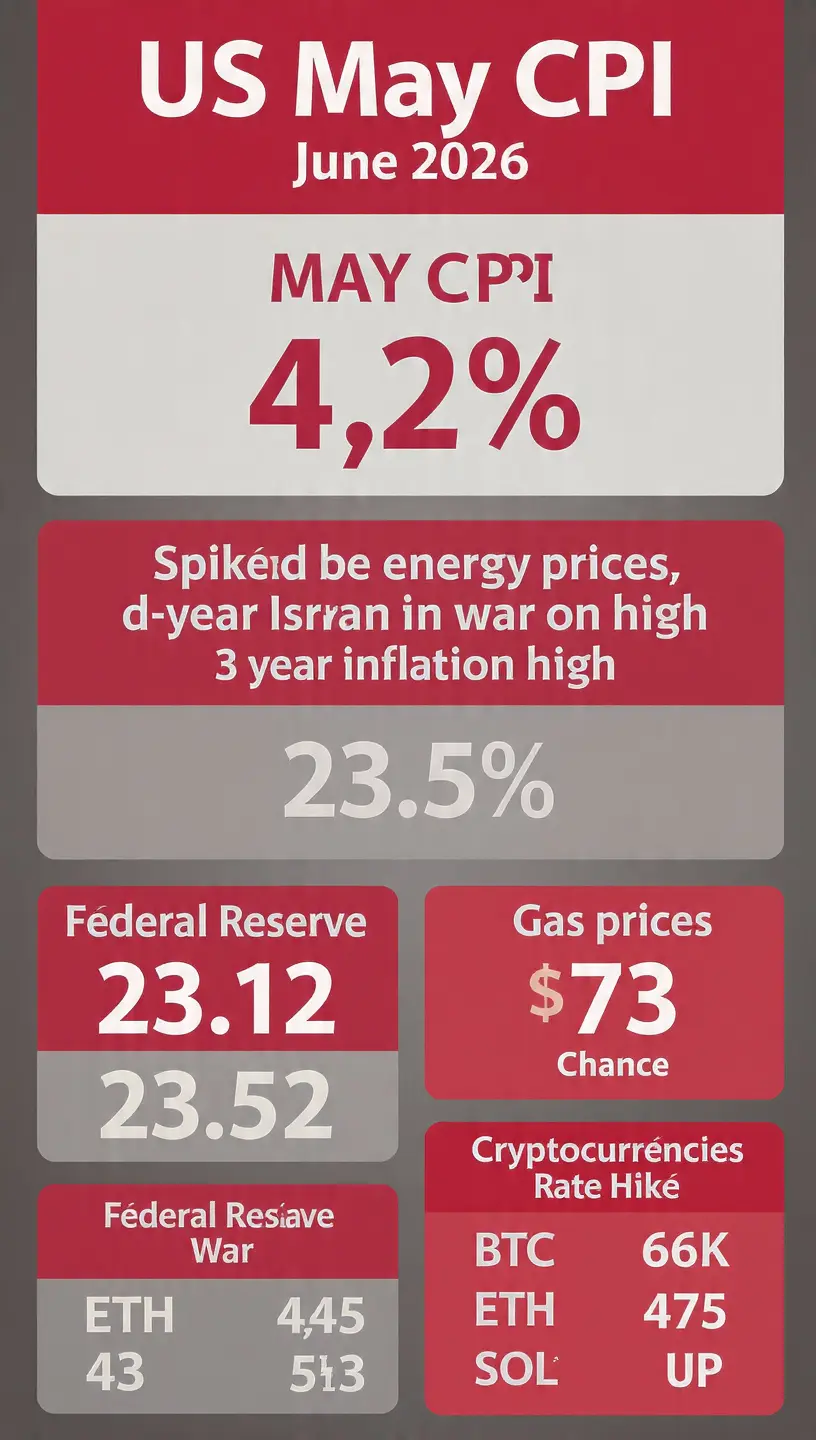
Point 1: US May CPI = 4.2% Annual Inflation Rate. The headline CPI figure of 4.2% year-over-year is the most significant inflation reading in over three years. On a monthly basis, prices rose 0.5% in May, slightly below the 0.6% monthly increase seen in April, but still a substantial acceleration. The CPI, which tracks the cost of a basket of goods and services that typical American consumers purchase, has been climbing steadily since January 2026, when the annual rate was just 2.4%. That means inflation has nearly doubled in just five months. This rapid ascent has caught the attention of every market participant from Wall Street to crypto traders, because it signals that the Federal Reserve's battle against inflation is far from won.
Point 2: CPI is the Consumer Price Index, the primary gauge that measures inflation across the US economy. It tracks price changes across hundreds of categories including housing, food, transportation, medical care, education, and recreation. When CPI rises, it means the cost of living is increasing. Every dollar you hold buys less than it did before. For investors, especially those in assets like Bitcoin and Ethereum that do not yield interest or dividends, rising CPI erodes the real value of holdings unless the asset price appreciates faster than inflation. A 4.2% CPI means that any crypto asset sitting flat is actually losing 4.2% in real purchasing power each year.
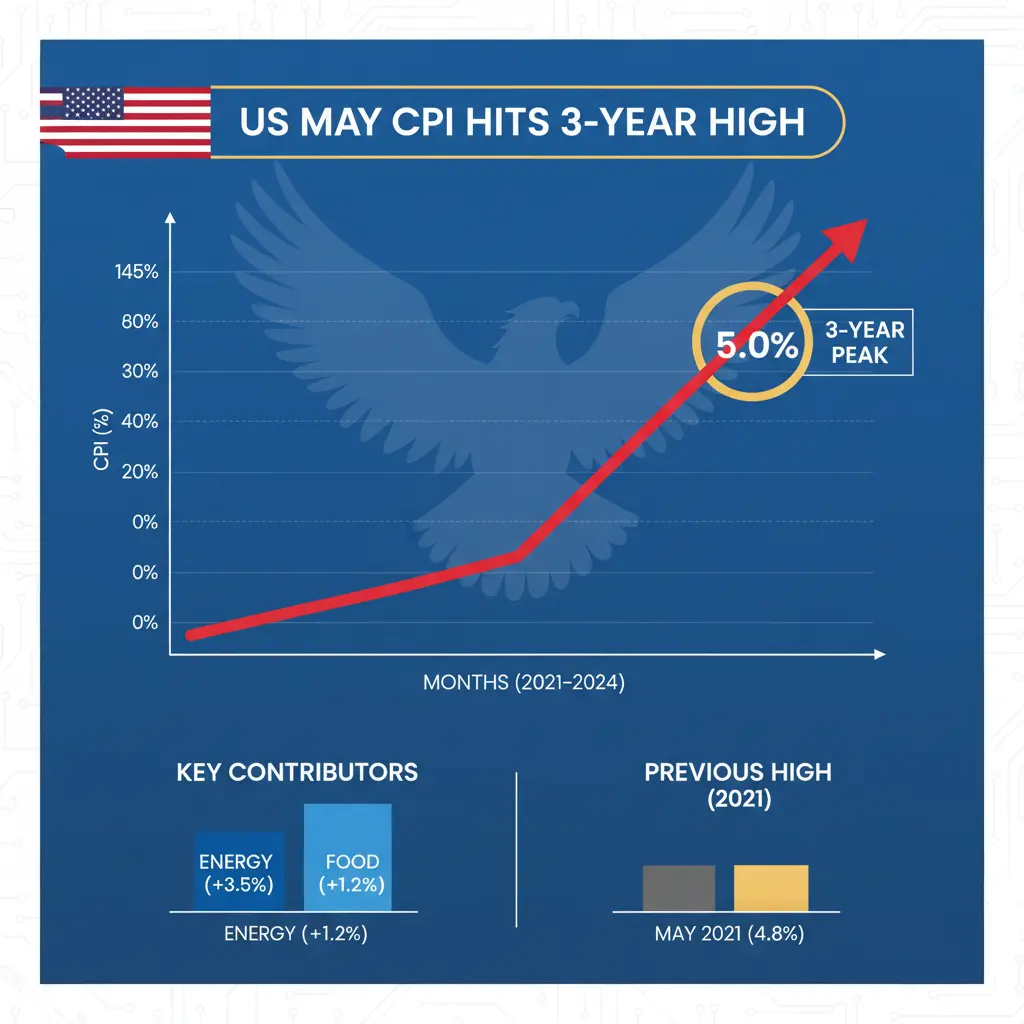
Point 3: This CPI reading hits a 3-year high, surpassing every reading since April 2023 when inflation was 4.9%. The significance of crossing the 4% threshold cannot be overstated. For the past two years, inflation had been gradually declining from its 2022 peaks, giving markets hope that the Federal Reserve would eventually cut interest rates. That hope is now shattered. The trajectory from 2.4% in January to 3.3% in March, to 3.8% in April, and now 4.2% in May shows an unmistakable upward trend that is moving in the wrong direction relative to the Fed's 2% target.
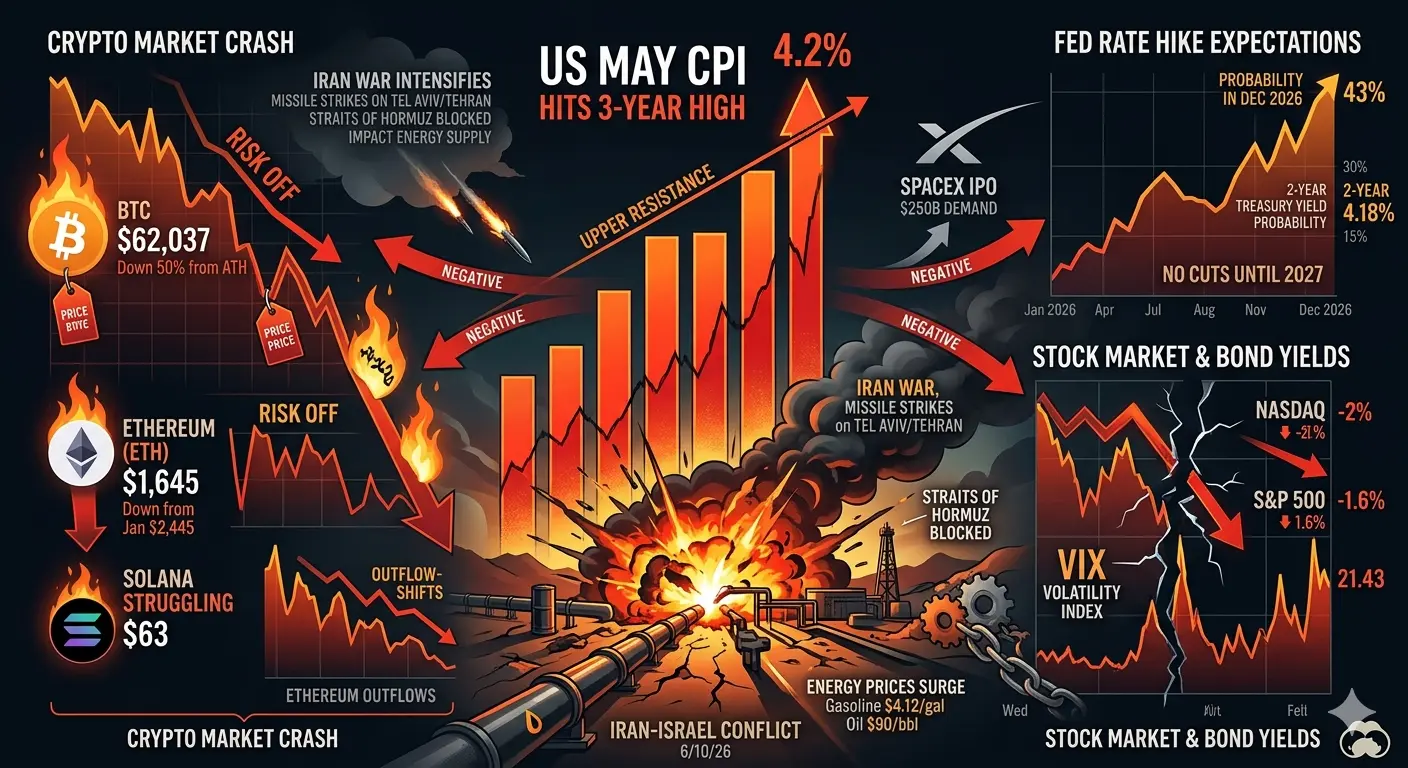
Point 4: Higher inflation means things are getting more expensive. Energy prices accounted for more than 60% of the monthly CPI increase in May. US energy inflation surged to 23.5% year-over-year, driven by gasoline prices that have skyrocketed due to the Iran war disrupting global oil supplies. The national average for unleaded gas has risen over $1.20 per gallon since the war began, reaching $4.12 per gallon according to AAA. Electricity costs have also jumped significantly. Beyond energy, "supercore" services inflation, which excludes energy services and housing, recorded its worst month-to-month surge in over two years, indicating that price pressures are spreading beyond just oil and gas into the broader economy.
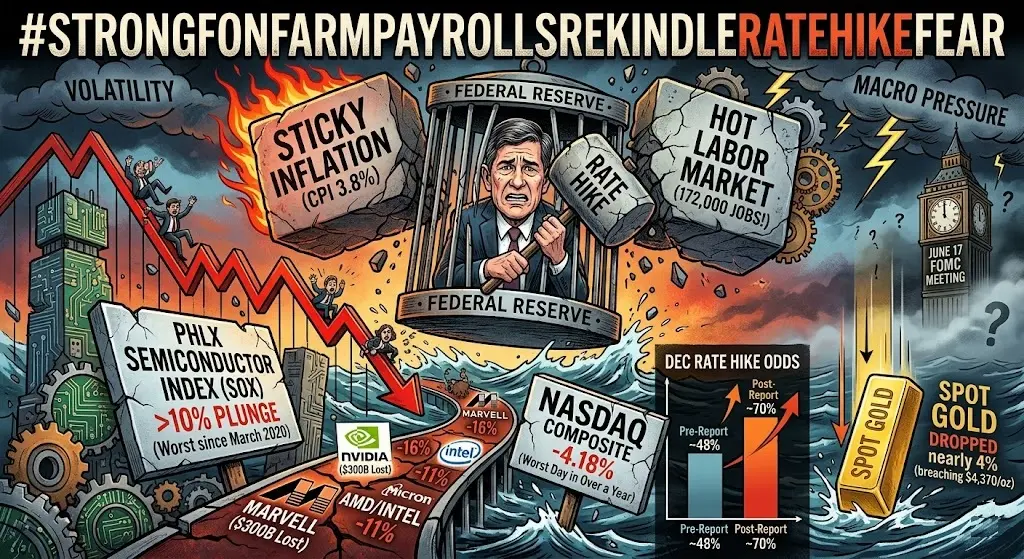
Point 5: The direct impact on the stock market has been severe. On June 10, the S&P 500 dropped 1.6%, the Dow Jones Industrial Average sank 1.9%, and the Nasdaq composite lost 2%. The VIX volatility index surged 7.85% to 21.43, reflecting heightened fear among investors. Tech stocks and semiconductor shares led the decline, with the PHLX Semiconductor Index falling 5%. AI-related stocks that had been the market leaders throughout 2026 experienced a sharp sell-off. When equities fall, risk appetite shrinks, and capital tends to rotate out of speculative assets like cryptocurrencies into safer havens or cash.
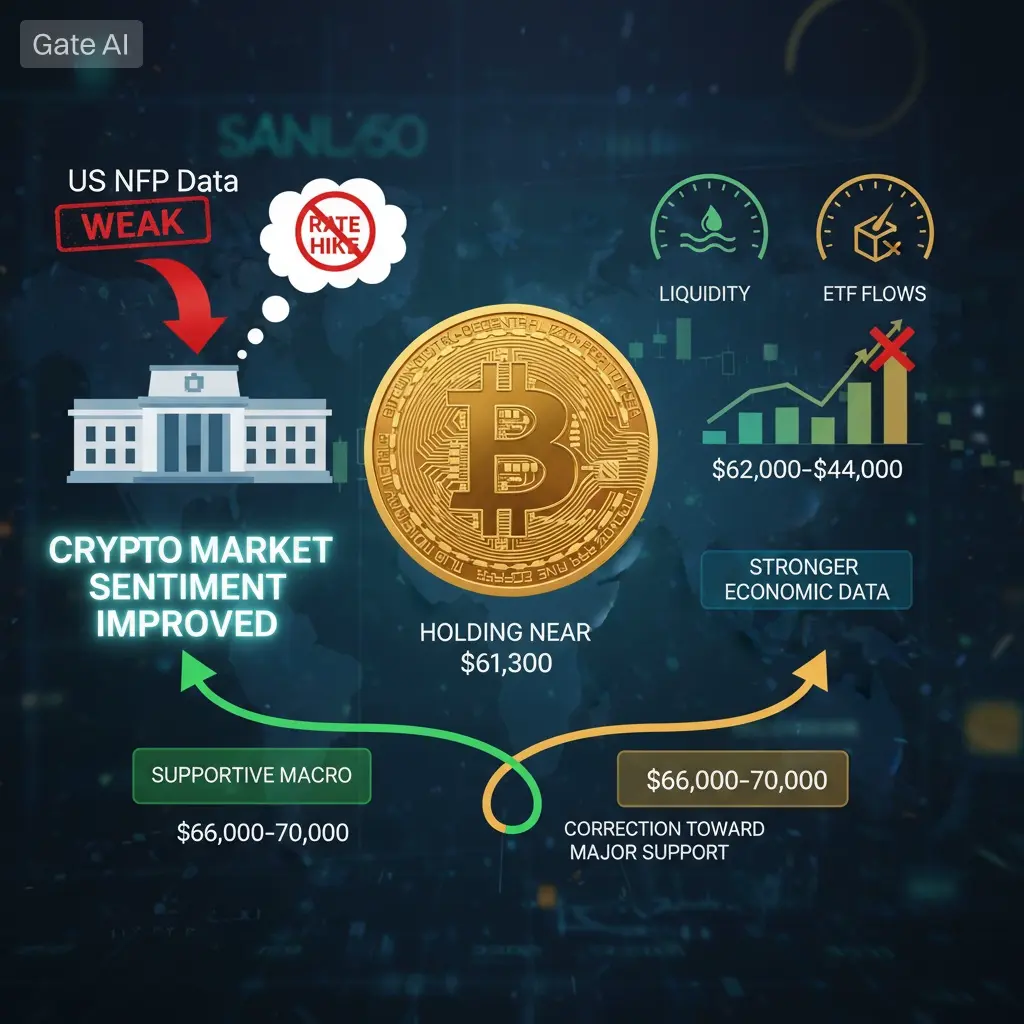
Point 6: The crypto market is directly affected because digital assets are classified as risk assets, similar to tech stocks and growth equities. Bitcoin is currently trading around $62,037, down roughly 50% from its all-time high of $126,080. Ethereum has collapsed to approximately $1,645, a dramatic decline from its October 2025 level near $3,847 and its January 2026 price of $2,445. Solana is around $63, struggling to hold above critical support levels. The total crypto market is under extreme pressure, and a hot CPI report only intensifies the selling pressure by reinforcing the narrative that tighter monetary policy is ahead.
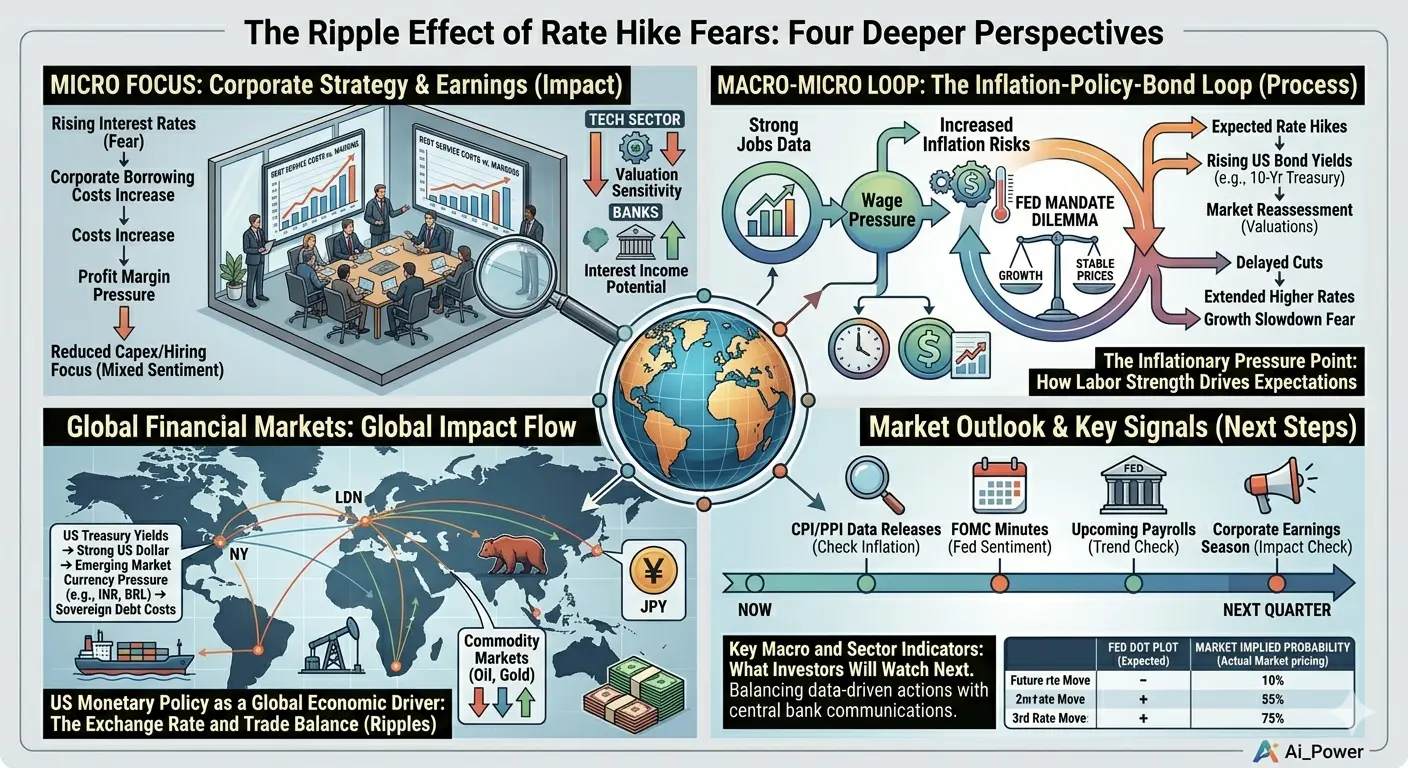
Point 7: When CPI is already elevated and rising, the probability of interest rate hikes increases dramatically. Before the May CPI data, bond traders had already begun pricing in a Fed rate hike by year-end. After the report, CME Group's FedWatch tool showed a 43% probability of a 25-basis-point rate hike by December, versus a 32% chance that rates would stay unchanged. Some FOMC members have already floated the possibility that rates may need to rise later this year. The two-year Treasury yield touched 4.18%, the highest since February 2025. Reuters reported that the Federal Reserve is now expected to hold rates unchanged into 2027, with rate cuts all but priced out for 2026. Higher interest rates make borrowing more expensive, reduce liquidity in the financial system, and make yield-bearing assets like bonds more attractive relative to non-yielding assets like Bitcoin and Ethereum.
Point 8: Market volatility is escalating across all asset classes. Oil prices are extremely volatile, with WTI crude trading around $89.82 per barrel and Brent crude around $91 to $92.55, swinging wildly on every geopolitical development. Gold, which initially saw a relief rally after the CPI data came in line with expectations, is trading around $4,142 to $4,192 per ounce, down significantly from its January peak of $5,608. Silver has plunged 44% from its high above $121 to around $67.30. The VIX is elevated, and crypto volatility is equally intense. Bitcoin has been oscillating between $61,800 and $63,000 with no clear directional trend, reflecting a market caught between macro headwinds and institutional accumulation.
Point 9: Investors are pulling money from risk assets. The data is unmistakable. Gold has shed 23% from its January 2026 peak, losing hundreds of billions in market value alongside silver, despite conditions that traditionally push precious metals higher. Crypto markets have seen similar outflows. Ethereum's monthly average price dropped from $2,445 in January to $2,256 in April, and then collapsed to approximately $1,619 in June. When inflation surges and rate hikes loom, capital allocators shift from risk-on positions to risk-off or yield-bearing alternatives. This rotation directly drains liquidity from crypto markets, suppressing prices and extending bearish trends.
Point 10: The combined effect of 3-year-high inflation and the Iran-Israel conflict creates a uniquely hostile environment for crypto. The Iran war, which reignited on June 7-8 with Iran launching missiles at Israel and Israel retaliating with airstrikes on central and western Iran, has triggered the largest oil supply disruption in history. The Strait of Hormuz, which carried about 15.6 million barrels of crude per day before the war, is now nearly paralyzed. Only about 2.1 to 2.9 million barrels per day are leaking through via clandestine routes. On June 9, Iran shot down a US Army Apache helicopter near the Strait, and the US launched retaliatory strikes on June 10. Trump warned that Iran would "pay the price" for taking too long to negotiate. The EIA projects the war will slash world petroleum production from 106.1 million barrels per day in 2025 to an average of 99 million barrels per day in 2026. Meanwhile, the SpaceX IPO on June 12 is drawing $250 billion in investor demand, potentially pulling even more capital away from crypto markets. Bitcoin at $62,250, Ethereum at $1,640, gold at $4,110, and oil near $90 paint a picture of a market under simultaneous pressure from inflation, war, monetary tightening, and capital rotation. The path forward for crypto depends on whether the Iran conflict deescalates allowing energy prices and CPI to retreat, or whether further escalation pushes inflation even higher and triggers an actual Fed rate hike that could drive Bitcoin toward the $60,000 support level and Ethereum toward $1,500 or below.
In summary, the US May CPI at 4.2% is not merely an economic data point. It is the convergence point where inflation, geopolitics, and monetary policy collide with maximum force on the crypto market. The inflation surge driven by the Iran war's energy shock, combined with rising rate hike expectations and already battered crypto prices, creates a deeply challenging environment. Traders and investors should monitor three key variables going forward: the trajectory of the Iran conflict and its impact on oil and CPI, the Federal Reserve's response at the June 17 FOMC meeting, and institutional capital flows particularly around the SpaceX IPO. Each of these factors will determine whether the crypto market stabilizes or faces further downside pressure in the weeks ahead.
@Gate_Square #MyGateTradeStory #Web3SecurityGuide #StrongNonfarmPayrollsRekindleRateHikeFear #USIranConflictEscalates
On June 10, 2026, the US Bureau of Labor Statistics released the May Consumer Price Index report that sent shockwaves through global markets. The CPI surged to an annual rate of 4.2%, up from 3.8% in April, marking the highest inflation reading since April 2023. This is not just a number on a government spreadsheet. It is a signal that the economic landscape has fundamentally shifted, and the ripple effects are already crashing into the cryptocurrency market at a time when it is already under siege from geopolitical conflict, rising interest rate expectations, and extreme volatility. Let us break down the ten critical points that explain what this means and how deeply it will affect crypto.
Point 1: US May CPI = 4.2% Annual Inflation Rate. The headline CPI figure of 4.2% year-over-year is the most significant inflation reading in over three years. On a monthly basis, prices rose 0.5% in May, slightly below the 0.6% monthly increase seen in April, but still a substantial acceleration. The CPI, which tracks the cost of a basket of goods and services that typical American consumers purchase, has been climbing steadily since January 2026, when the annual rate was just 2.4%. That means inflation has nearly doubled in just five months. This rapid ascent has caught the attention of every market participant from Wall Street to crypto traders, because it signals that the Federal Reserve's battle against inflation is far from won.
Point 2: CPI is the Consumer Price Index, the primary gauge that measures inflation across the US economy. It tracks price changes across hundreds of categories including housing, food, transportation, medical care, education, and recreation. When CPI rises, it means the cost of living is increasing. Every dollar you hold buys less than it did before. For investors, especially those in assets like Bitcoin and Ethereum that do not yield interest or dividends, rising CPI erodes the real value of holdings unless the asset price appreciates faster than inflation. A 4.2% CPI means that any crypto asset sitting flat is actually losing 4.2% in real purchasing power each year.
Point 3: This CPI reading hits a 3-year high, surpassing every reading since April 2023 when inflation was 4.9%. The significance of crossing the 4% threshold cannot be overstated. For the past two years, inflation had been gradually declining from its 2022 peaks, giving markets hope that the Federal Reserve would eventually cut interest rates. That hope is now shattered. The trajectory from 2.4% in January to 3.3% in March, to 3.8% in April, and now 4.2% in May shows an unmistakable upward trend that is moving in the wrong direction relative to the Fed's 2% target.
Point 4: Higher inflation means things are getting more expensive. Energy prices accounted for more than 60% of the monthly CPI increase in May. US energy inflation surged to 23.5% year-over-year, driven by gasoline prices that have skyrocketed due to the Iran war disrupting global oil supplies. The national average for unleaded gas has risen over $1.20 per gallon since the war began, reaching $4.12 per gallon according to AAA. Electricity costs have also jumped significantly. Beyond energy, "supercore" services inflation, which excludes energy services and housing, recorded its worst month-to-month surge in over two years, indicating that price pressures are spreading beyond just oil and gas into the broader economy.
Point 5: The direct impact on the stock market has been severe. On June 10, the S&P 500 dropped 1.6%, the Dow Jones Industrial Average sank 1.9%, and the Nasdaq composite lost 2%. The VIX volatility index surged 7.85% to 21.43, reflecting heightened fear among investors. Tech stocks and semiconductor shares led the decline, with the PHLX Semiconductor Index falling 5%. AI-related stocks that had been the market leaders throughout 2026 experienced a sharp sell-off. When equities fall, risk appetite shrinks, and capital tends to rotate out of speculative assets like cryptocurrencies into safer havens or cash.
Point 6: The crypto market is directly affected because digital assets are classified as risk assets, similar to tech stocks and growth equities. Bitcoin is currently trading around $62,037, down roughly 50% from its all-time high of $126,080. Ethereum has collapsed to approximately $1,645, a dramatic decline from its October 2025 level near $3,847 and its January 2026 price of $2,445. Solana is around $63, struggling to hold above critical support levels. The total crypto market is under extreme pressure, and a hot CPI report only intensifies the selling pressure by reinforcing the narrative that tighter monetary policy is ahead.
Point 7: When CPI is already elevated and rising, the probability of interest rate hikes increases dramatically. Before the May CPI data, bond traders had already begun pricing in a Fed rate hike by year-end. After the report, CME Group's FedWatch tool showed a 43% probability of a 25-basis-point rate hike by December, versus a 32% chance that rates would stay unchanged. Some FOMC members have already floated the possibility that rates may need to rise later this year. The two-year Treasury yield touched 4.18%, the highest since February 2025. Reuters reported that the Federal Reserve is now expected to hold rates unchanged into 2027, with rate cuts all but priced out for 2026. Higher interest rates make borrowing more expensive, reduce liquidity in the financial system, and make yield-bearing assets like bonds more attractive relative to non-yielding assets like Bitcoin and Ethereum.
Point 8: Market volatility is escalating across all asset classes. Oil prices are extremely volatile, with WTI crude trading around $89.82 per barrel and Brent crude around $91 to $92.55, swinging wildly on every geopolitical development. Gold, which initially saw a relief rally after the CPI data came in line with expectations, is trading around $4,142 to $4,192 per ounce, down significantly from its January peak of $5,608. Silver has plunged 44% from its high above $121 to around $67.30. The VIX is elevated, and crypto volatility is equally intense. Bitcoin has been oscillating between $61,800 and $63,000 with no clear directional trend, reflecting a market caught between macro headwinds and institutional accumulation.
Point 9: Investors are pulling money from risk assets. The data is unmistakable. Gold has shed 23% from its January 2026 peak, losing hundreds of billions in market value alongside silver, despite conditions that traditionally push precious metals higher. Crypto markets have seen similar outflows. Ethereum's monthly average price dropped from $2,445 in January to $2,256 in April, and then collapsed to approximately $1,619 in June. When inflation surges and rate hikes loom, capital allocators shift from risk-on positions to risk-off or yield-bearing alternatives. This rotation directly drains liquidity from crypto markets, suppressing prices and extending bearish trends.
Point 10: The combined effect of 3-year-high inflation and the Iran-Israel conflict creates a uniquely hostile environment for crypto. The Iran war, which reignited on June 7-8 with Iran launching missiles at Israel and Israel retaliating with airstrikes on central and western Iran, has triggered the largest oil supply disruption in history. The Strait of Hormuz, which carried about 15.6 million barrels of crude per day before the war, is now nearly paralyzed. Only about 2.1 to 2.9 million barrels per day are leaking through via clandestine routes. On June 9, Iran shot down a US Army Apache helicopter near the Strait, and the US launched retaliatory strikes on June 10. Trump warned that Iran would "pay the price" for taking too long to negotiate. The EIA projects the war will slash world petroleum production from 106.1 million barrels per day in 2025 to an average of 99 million barrels per day in 2026. Meanwhile, the SpaceX IPO on June 12 is drawing $250 billion in investor demand, potentially pulling even more capital away from crypto markets. Bitcoin at $62,250, Ethereum at $1,640, gold at $4,110, and oil near $90 paint a picture of a market under simultaneous pressure from inflation, war, monetary tightening, and capital rotation. The path forward for crypto depends on whether the Iran conflict deescalates allowing energy prices and CPI to retreat, or whether further escalation pushes inflation even higher and triggers an actual Fed rate hike that could drive Bitcoin toward the $60,000 support level and Ethereum toward $1,500 or below.
In summary, the US May CPI at 4.2% is not merely an economic data point. It is the convergence point where inflation, geopolitics, and monetary policy collide with maximum force on the crypto market. The inflation surge driven by the Iran war's energy shock, combined with rising rate hike expectations and already battered crypto prices, creates a deeply challenging environment. Traders and investors should monitor three key variables going forward: the trajectory of the Iran conflict and its impact on oil and CPI, the Federal Reserve's response at the June 17 FOMC meeting, and institutional capital flows particularly around the SpaceX IPO. Each of these factors will determine whether the crypto market stabilizes or faces further downside pressure in the weeks ahead.
@Gate_Square #MyGateTradeStory #Web3SecurityGuide #StrongNonfarmPayrollsRekindleRateHikeFear #USIranConflictEscalates