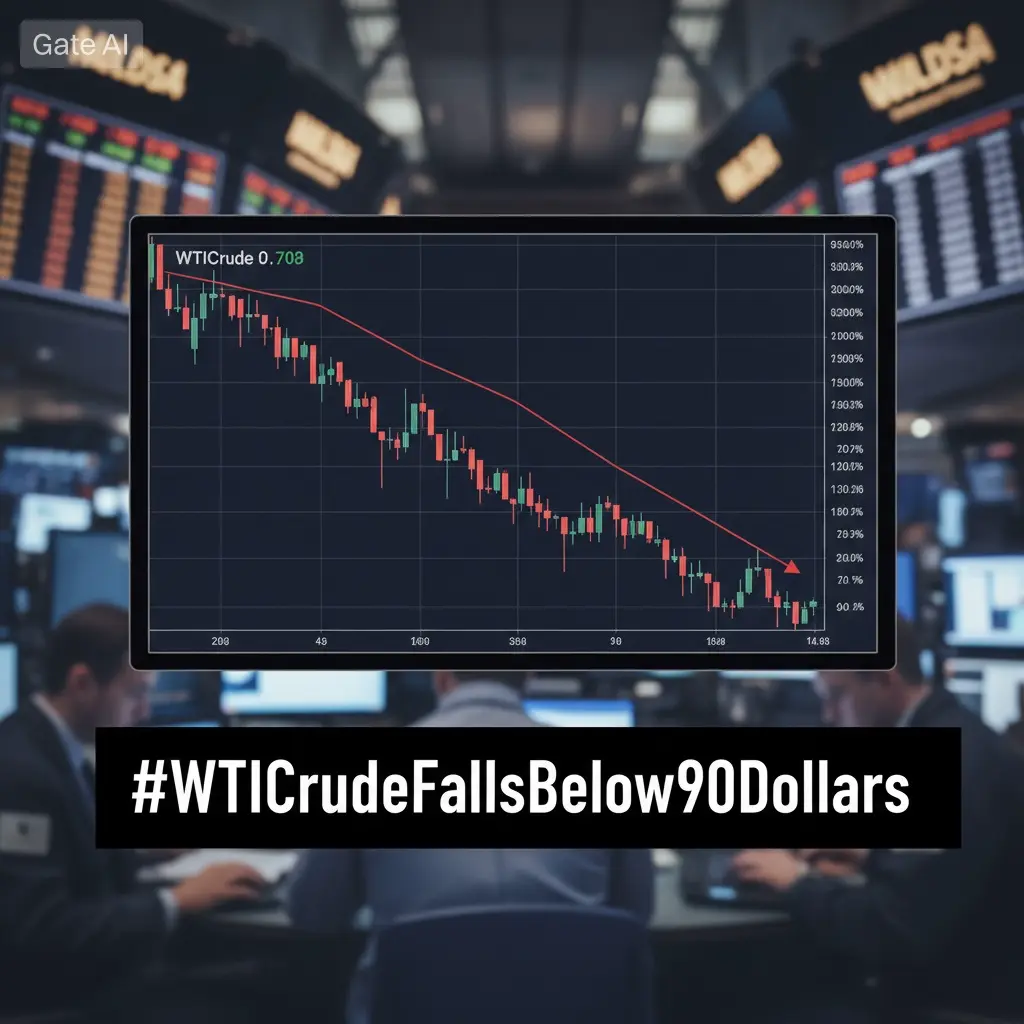




#WTICrudeFallsBelow90Dollars
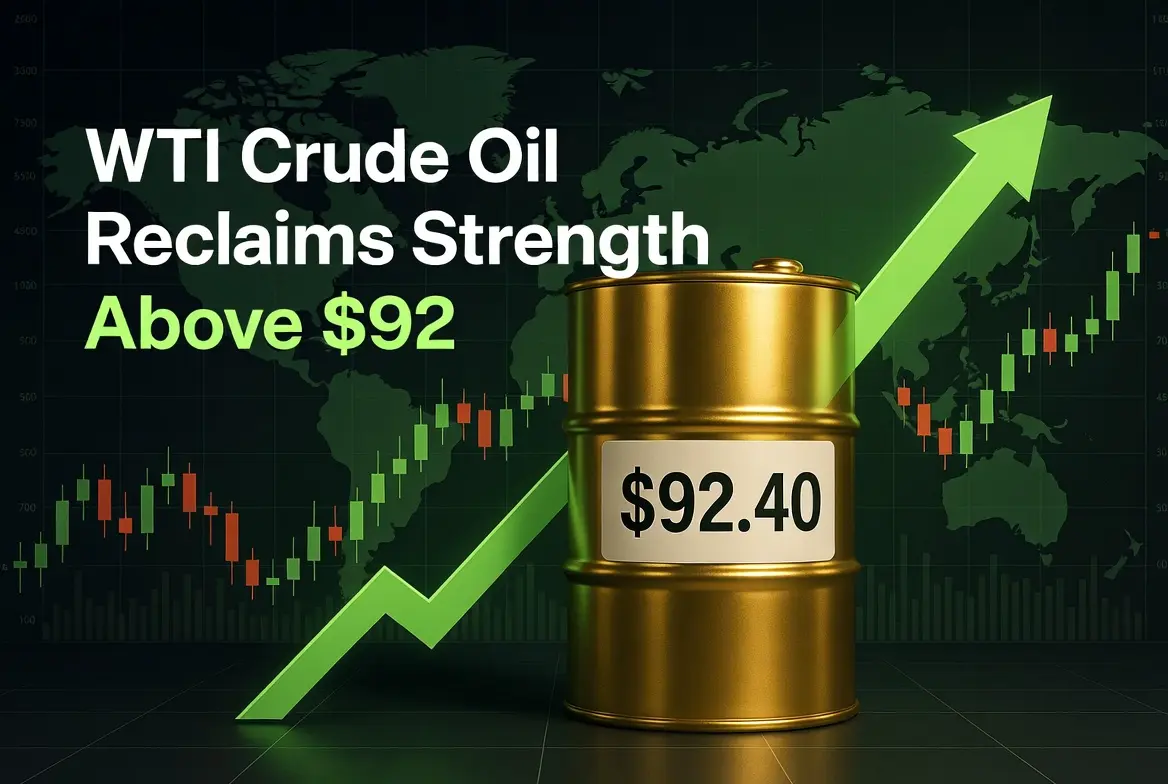
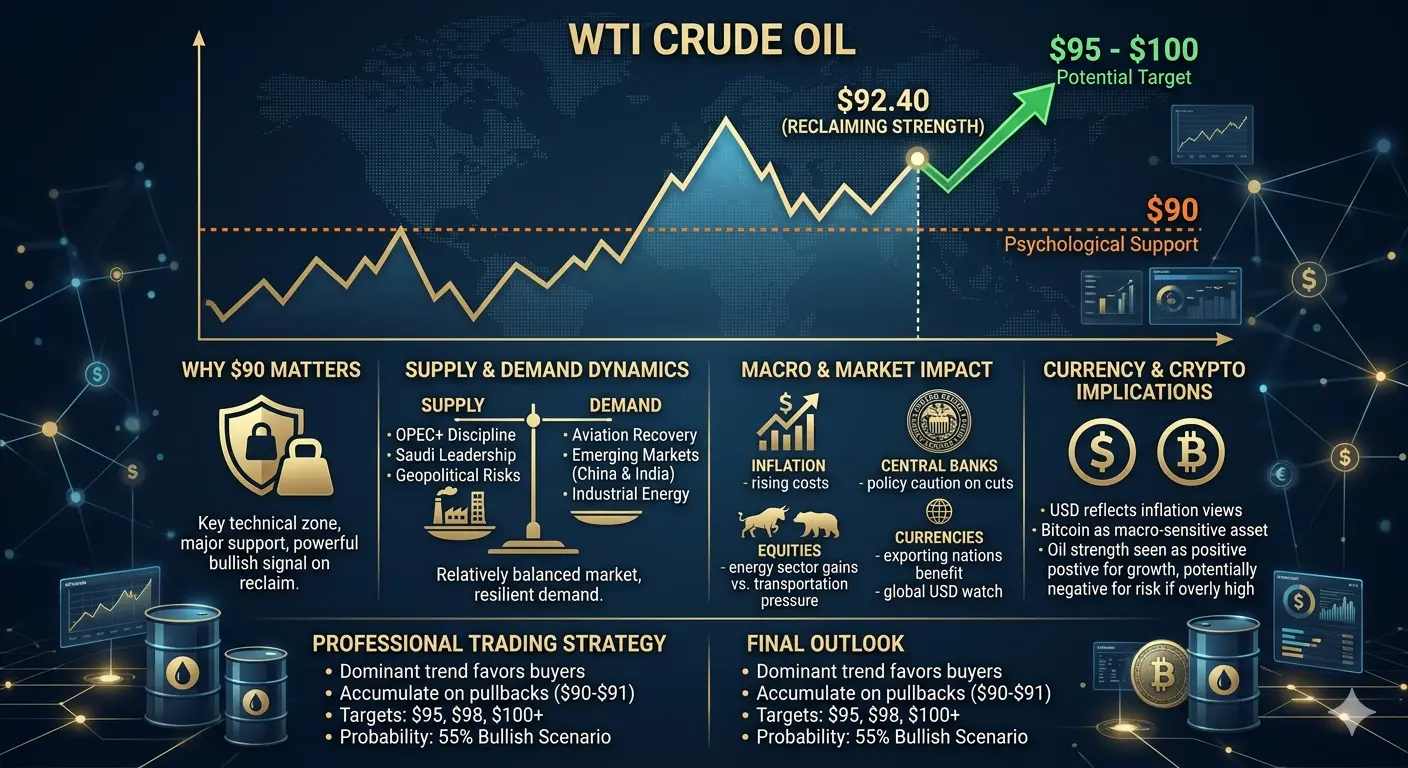
WTI crude oil trading near $92.40 per barrel marks an important shift in market sentiment and suggests that the recent weakness below the $90 level may have been temporary rather than the beginning of a prolonged bearish trend. The recovery above key support levels demonstrates that buyers remain active and that underlying supply-demand dynamics continue to provide a foundation for higher prices.
Crude oil remains one of the most influential assets in global financial markets because it affects inflation, transportation costs, industrial production, central bank policy, corporate earnings, government budgets, and investor sentiment. Every significant move in oil prices creates ripple effects across stocks, bonds, currencies, commodities, and cryptocurrencies.
The current advance toward the mid-$90 region reflects a market that is balancing resilient global demand against persistent supply constraints. While economic growth in some regions has moderated, energy consumption remains historically strong and inventories are not showing the type of surplus conditions that would justify a sustained collapse in prices.
Why the $90 Level Matters
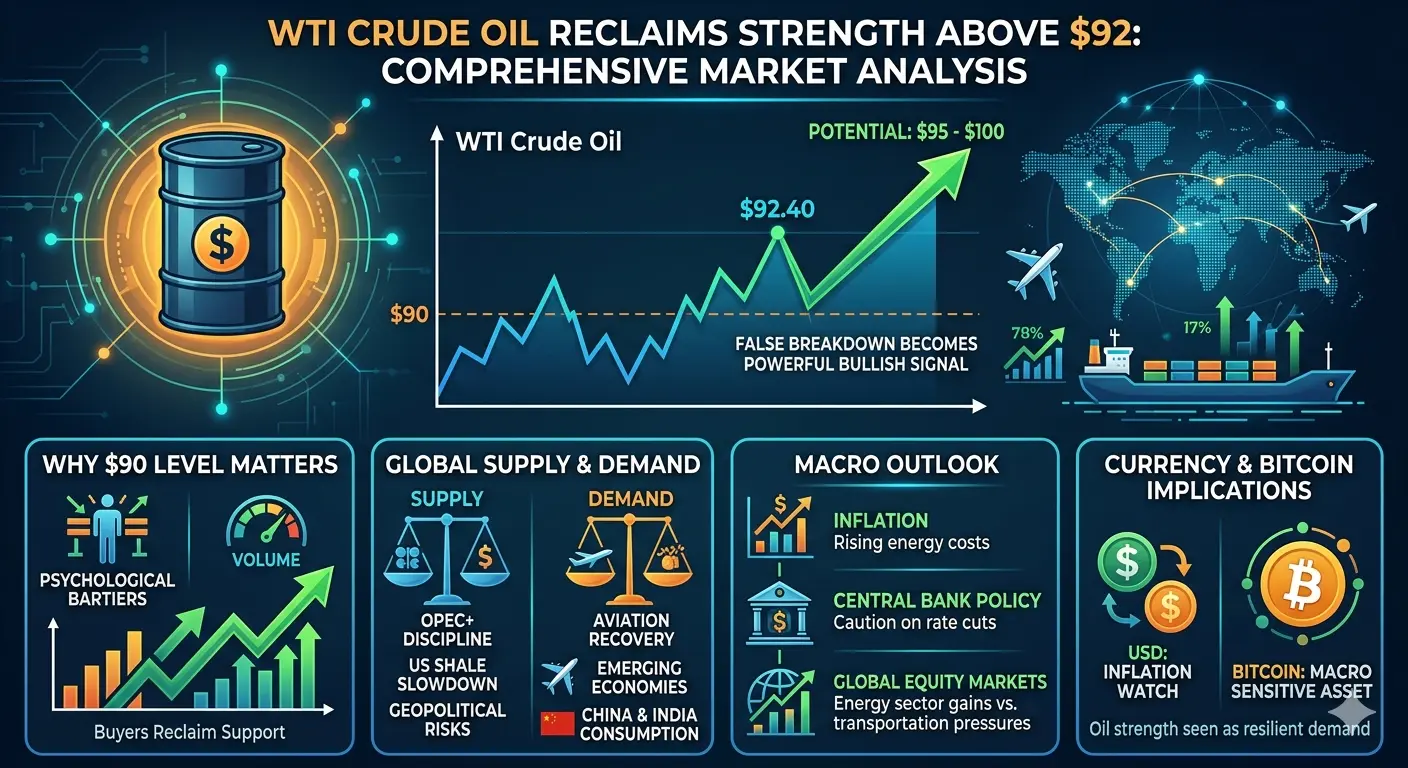
The $90 level is more than a simple number. It is a major psychological barrier, a key technical zone watched by institutions, and an area where large trading volumes have historically occurred.
When WTI briefly moved below $90, many traders interpreted it as a bearish breakdown. However, the market's ability to reclaim lost ground and climb back above that level suggests that buyers viewed the weakness as an opportunity rather than a warning sign.
False breakdowns often become powerful bullish signals because traders who sold during the decline are forced to buy back positions as prices recover. This process can accelerate upside momentum and create stronger rallies than would otherwise occur.
The successful defense of the broader $88-$90 zone has improved market confidence and shifted attention back toward higher resistance levels.
Global Supply Conditions
One of the primary reasons oil remains supported is the ongoing discipline among major producing nations.
OPEC+ continues to play a critical role in balancing the market. Although production quotas have gradually evolved, the group remains focused on preventing oversupply conditions that could push prices significantly lower.
Saudi Arabia remains the most influential player within the alliance. The kingdom has repeatedly demonstrated its willingness to adjust production when necessary to stabilize prices and protect long-term market conditions.
Meanwhile, geopolitical risks continue to create uncertainty across several energy-producing regions. Any disruption involving shipping routes, export terminals, pipelines, sanctions, or regional conflicts can immediately affect supply expectations and trigger rapid price movements.
While US shale production remains strong, growth rates have slowed compared with previous expansion cycles. Rising costs, shareholder demands for capital discipline, and operational constraints have reduced the aggressive production growth seen in earlier years.
As a result, the market remains relatively balanced rather than excessively supplied.
Demand Remains Stronger Than Expected
Despite concerns regarding global economic growth, energy demand continues to surprise many analysts.
The aviation sector remains one of the strongest contributors to fuel consumption growth. International travel continues expanding, airline capacity is increasing, and jet fuel demand remains elevated.
Emerging economies continue driving incremental consumption. Countries throughout Asia, the Middle East, and parts of Latin America are experiencing ongoing industrialization, urbanization, and infrastructure development, all of which require substantial energy inputs.
China remains the most closely watched demand center. While economic growth has moderated compared with previous years, the country's manufacturing base, transportation network, and industrial sector continue consuming enormous volumes of crude oil.
India has become another major source of demand growth. Rising incomes, expanding transportation networks, and industrial development continue supporting long-term consumption trends.
These factors help explain why oil has remained resilient despite periodic concerns about economic slowing.
Inflation and Central Bank Implications
Oil prices above $90 create important implications for inflation expectations.
Energy costs directly influence transportation, logistics, manufacturing, agriculture, and consumer spending. When oil rises, the cost of moving goods and services throughout the economy generally increases.
Higher crude prices can slow the progress central banks have made in reducing inflation. This is particularly important for the Federal Reserve, which continues monitoring inflation data closely.
If oil remains above $90 and pushes toward $95-$100, policymakers may become more cautious regarding future interest-rate reductions. Higher energy prices can delay disinflation and potentially keep monetary policy tighter for longer.
This relationship creates one of the most important macro themes for investors. Oil strength supports energy producers but may simultaneously reduce expectations for aggressive monetary easing.
Impact on Global Equity Markets
Rising oil prices create both winners and losers.
Energy companies are the most direct beneficiaries. Higher crude prices typically improve revenues, profitability, cash flow generation, and shareholder returns for exploration and production firms.
Integrated oil giants often experience stronger earnings expectations when crude remains above $90 because their upstream operations become significantly more profitable.
Oil service providers, drilling companies, equipment manufacturers, and energy infrastructure businesses also tend to benefit from stronger industry conditions.
However, sectors heavily dependent on fuel face greater pressure.
Airlines, transportation firms, shipping companies, and certain manufacturers may experience margin compression as operating costs increase.
Consumer-facing businesses can also face challenges if higher energy expenses reduce discretionary spending power.
The overall stock market impact depends on whether investors view higher oil prices as a sign of strong economic activity or as a source of inflationary pressure.
Currency Market Reactions
Oil prices have a powerful influence on currency markets.
Energy-exporting nations often benefit from stronger oil prices because higher export revenues improve trade balances and support government finances.
Oil-importing countries may experience the opposite effect as energy costs increase.
The US dollar's reaction depends largely on inflation expectations and Federal Reserve policy. If rising oil prices increase inflation concerns, markets may expect higher interest rates for longer periods, potentially supporting the dollar.
Currency traders closely monitor these relationships because oil often acts as a leading indicator for broader macroeconomic trends.
Bitcoin and Cryptocurrency Implications
The relationship between oil and cryptocurrency is becoming increasingly important as digital assets mature.
Bitcoin is no longer driven solely by crypto-native developments. Institutional participation has transformed it into a macro-sensitive asset that reacts to liquidity conditions, interest-rate expectations, and global risk sentiment.
When oil rises because economic activity remains healthy, risk assets can continue performing well. Strong growth supports corporate earnings, investment activity, and capital flows into speculative markets.
However, excessively high oil prices can create challenges.
If crude approaches $100 or higher, inflation concerns may intensify. This could reduce expectations for monetary easing and temporarily pressure risk assets, including cryptocurrencies.
For Bitcoin, the ideal environment is often moderate economic growth combined with manageable inflation and improving liquidity conditions.
Current market conditions suggest that oil strength is being interpreted primarily as evidence of resilient demand rather than runaway inflation. This distinction is important because it supports a constructive outlook for both equities and crypto.
Bitcoin could continue attracting institutional capital if investors believe economic activity remains strong while financial conditions gradually improve.
Technical Analysis and Key Price Levels
WTI has regained bullish momentum after successfully defending major support zones.
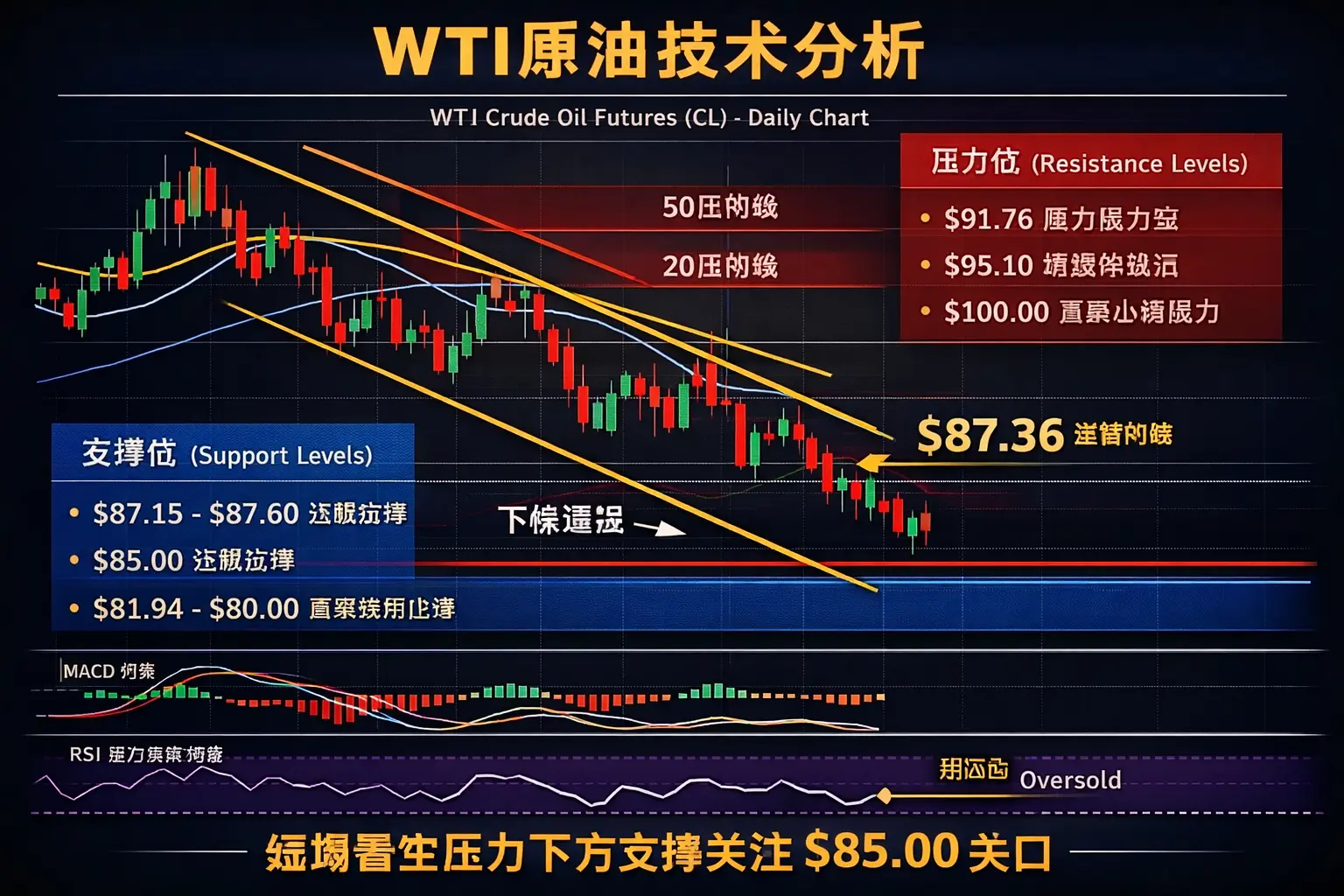
Immediate support now sits between $90 and $91. This area previously acted as resistance and should attract buyers during pullbacks.
Below that, stronger support exists near $88 and then around $85.
On the upside, the first major resistance zone appears near $94-$95. A breakout above this region could trigger accelerated buying activity and open the path toward $98.
The psychological $100 level remains the ultimate bullish target and would likely attract substantial market attention if reached.
Bullish Scenario
Probability: 55%
The bullish case assumes continued demand resilience, disciplined production management, stable economic conditions, and no significant deterioration in global growth.
Under this scenario, WTI advances toward $95, then challenges $98, and potentially reaches $100-$105 over the coming months.
Institutional buyers would likely remain active under this environment, supporting higher prices.
Neutral Scenario
Probability: 25%
Oil consolidates between $90 and $95 while markets evaluate economic data, inventory trends, and central bank policy developments.
This outcome would create range-trading opportunities but delay a decisive directional breakout.
Bearish Scenario
Probability: 20%
The bearish case would require weaker global demand, rising inventories, disappointing Chinese data, or unexpectedly strong supply growth.
In this scenario, WTI could revisit $90 and potentially test $88-$85 support zones.
However, as long as prices remain above key support levels, the broader structure remains constructive.
Professional Trading Strategy
The dominant trend currently favors buyers.
Accumulation becomes attractive during pullbacks toward the $90-$91 region while maintaining disciplined risk management.
A break above $95 would strengthen bullish momentum and could trigger institutional trend-following flows targeting the $100 region.
Conservative traders should focus on confirmation signals, inventory reports, OPEC communications, and macroeconomic releases before increasing exposure.
Risk management remains essential because oil markets can react violently to geopolitical developments, policy announcements, or unexpected supply disruptions.
WTI crude oil trading near $92.40 reflects a market that continues to benefit from resilient global demand, disciplined supply management, and ongoing geopolitical uncertainty. The recovery above $90 has strengthened the bullish narrative and shifted market attention back toward higher resistance zones.
The most likely path currently favors continued consolidation followed by another attempt to challenge the $95-$100 region. Rising oil prices support energy-sector earnings, influence inflation expectations, shape central-bank decisions, and affect sentiment across equities, currencies, and cryptocurrencies.
For traders and investors, the key levels to monitor remain $90 as major support and $95-$100 as the primary upside target zone. As long as crude remains above support, the broader outlook remains constructive, and further gains cannot be ruled out.@Gate_Square @Gate广场_Official
WTI crude oil trading near $92.40 per barrel marks an important shift in market sentiment and suggests that the recent weakness below the $90 level may have been temporary rather than the beginning of a prolonged bearish trend. The recovery above key support levels demonstrates that buyers remain active and that underlying supply-demand dynamics continue to provide a foundation for higher prices.
Crude oil remains one of the most influential assets in global financial markets because it affects inflation, transportation costs, industrial production, central bank policy, corporate earnings, government budgets, and investor sentiment. Every significant move in oil prices creates ripple effects across stocks, bonds, currencies, commodities, and cryptocurrencies.
The current advance toward the mid-$90 region reflects a market that is balancing resilient global demand against persistent supply constraints. While economic growth in some regions has moderated, energy consumption remains historically strong and inventories are not showing the type of surplus conditions that would justify a sustained collapse in prices.
Why the $90 Level Matters
The $90 level is more than a simple number. It is a major psychological barrier, a key technical zone watched by institutions, and an area where large trading volumes have historically occurred.
When WTI briefly moved below $90, many traders interpreted it as a bearish breakdown. However, the market's ability to reclaim lost ground and climb back above that level suggests that buyers viewed the weakness as an opportunity rather than a warning sign.
False breakdowns often become powerful bullish signals because traders who sold during the decline are forced to buy back positions as prices recover. This process can accelerate upside momentum and create stronger rallies than would otherwise occur.
The successful defense of the broader $88-$90 zone has improved market confidence and shifted attention back toward higher resistance levels.
Global Supply Conditions
One of the primary reasons oil remains supported is the ongoing discipline among major producing nations.
OPEC+ continues to play a critical role in balancing the market. Although production quotas have gradually evolved, the group remains focused on preventing oversupply conditions that could push prices significantly lower.
Saudi Arabia remains the most influential player within the alliance. The kingdom has repeatedly demonstrated its willingness to adjust production when necessary to stabilize prices and protect long-term market conditions.
Meanwhile, geopolitical risks continue to create uncertainty across several energy-producing regions. Any disruption involving shipping routes, export terminals, pipelines, sanctions, or regional conflicts can immediately affect supply expectations and trigger rapid price movements.
While US shale production remains strong, growth rates have slowed compared with previous expansion cycles. Rising costs, shareholder demands for capital discipline, and operational constraints have reduced the aggressive production growth seen in earlier years.
As a result, the market remains relatively balanced rather than excessively supplied.
Demand Remains Stronger Than Expected
Despite concerns regarding global economic growth, energy demand continues to surprise many analysts.
The aviation sector remains one of the strongest contributors to fuel consumption growth. International travel continues expanding, airline capacity is increasing, and jet fuel demand remains elevated.
Emerging economies continue driving incremental consumption. Countries throughout Asia, the Middle East, and parts of Latin America are experiencing ongoing industrialization, urbanization, and infrastructure development, all of which require substantial energy inputs.
China remains the most closely watched demand center. While economic growth has moderated compared with previous years, the country's manufacturing base, transportation network, and industrial sector continue consuming enormous volumes of crude oil.
India has become another major source of demand growth. Rising incomes, expanding transportation networks, and industrial development continue supporting long-term consumption trends.
These factors help explain why oil has remained resilient despite periodic concerns about economic slowing.
Inflation and Central Bank Implications
Oil prices above $90 create important implications for inflation expectations.
Energy costs directly influence transportation, logistics, manufacturing, agriculture, and consumer spending. When oil rises, the cost of moving goods and services throughout the economy generally increases.
Higher crude prices can slow the progress central banks have made in reducing inflation. This is particularly important for the Federal Reserve, which continues monitoring inflation data closely.
If oil remains above $90 and pushes toward $95-$100, policymakers may become more cautious regarding future interest-rate reductions. Higher energy prices can delay disinflation and potentially keep monetary policy tighter for longer.
This relationship creates one of the most important macro themes for investors. Oil strength supports energy producers but may simultaneously reduce expectations for aggressive monetary easing.
Impact on Global Equity Markets
Rising oil prices create both winners and losers.
Energy companies are the most direct beneficiaries. Higher crude prices typically improve revenues, profitability, cash flow generation, and shareholder returns for exploration and production firms.
Integrated oil giants often experience stronger earnings expectations when crude remains above $90 because their upstream operations become significantly more profitable.
Oil service providers, drilling companies, equipment manufacturers, and energy infrastructure businesses also tend to benefit from stronger industry conditions.
However, sectors heavily dependent on fuel face greater pressure.
Airlines, transportation firms, shipping companies, and certain manufacturers may experience margin compression as operating costs increase.
Consumer-facing businesses can also face challenges if higher energy expenses reduce discretionary spending power.
The overall stock market impact depends on whether investors view higher oil prices as a sign of strong economic activity or as a source of inflationary pressure.
Currency Market Reactions
Oil prices have a powerful influence on currency markets.
Energy-exporting nations often benefit from stronger oil prices because higher export revenues improve trade balances and support government finances.
Oil-importing countries may experience the opposite effect as energy costs increase.
The US dollar's reaction depends largely on inflation expectations and Federal Reserve policy. If rising oil prices increase inflation concerns, markets may expect higher interest rates for longer periods, potentially supporting the dollar.
Currency traders closely monitor these relationships because oil often acts as a leading indicator for broader macroeconomic trends.
Bitcoin and Cryptocurrency Implications
The relationship between oil and cryptocurrency is becoming increasingly important as digital assets mature.
Bitcoin is no longer driven solely by crypto-native developments. Institutional participation has transformed it into a macro-sensitive asset that reacts to liquidity conditions, interest-rate expectations, and global risk sentiment.
When oil rises because economic activity remains healthy, risk assets can continue performing well. Strong growth supports corporate earnings, investment activity, and capital flows into speculative markets.
However, excessively high oil prices can create challenges.
If crude approaches $100 or higher, inflation concerns may intensify. This could reduce expectations for monetary easing and temporarily pressure risk assets, including cryptocurrencies.
For Bitcoin, the ideal environment is often moderate economic growth combined with manageable inflation and improving liquidity conditions.
Current market conditions suggest that oil strength is being interpreted primarily as evidence of resilient demand rather than runaway inflation. This distinction is important because it supports a constructive outlook for both equities and crypto.
Bitcoin could continue attracting institutional capital if investors believe economic activity remains strong while financial conditions gradually improve.
Technical Analysis and Key Price Levels
WTI has regained bullish momentum after successfully defending major support zones.
Immediate support now sits between $90 and $91. This area previously acted as resistance and should attract buyers during pullbacks.
Below that, stronger support exists near $88 and then around $85.
On the upside, the first major resistance zone appears near $94-$95. A breakout above this region could trigger accelerated buying activity and open the path toward $98.
The psychological $100 level remains the ultimate bullish target and would likely attract substantial market attention if reached.
Bullish Scenario
Probability: 55%
The bullish case assumes continued demand resilience, disciplined production management, stable economic conditions, and no significant deterioration in global growth.
Under this scenario, WTI advances toward $95, then challenges $98, and potentially reaches $100-$105 over the coming months.
Institutional buyers would likely remain active under this environment, supporting higher prices.
Neutral Scenario
Probability: 25%
Oil consolidates between $90 and $95 while markets evaluate economic data, inventory trends, and central bank policy developments.
This outcome would create range-trading opportunities but delay a decisive directional breakout.
Bearish Scenario
Probability: 20%
The bearish case would require weaker global demand, rising inventories, disappointing Chinese data, or unexpectedly strong supply growth.
In this scenario, WTI could revisit $90 and potentially test $88-$85 support zones.
However, as long as prices remain above key support levels, the broader structure remains constructive.
Professional Trading Strategy
The dominant trend currently favors buyers.
Accumulation becomes attractive during pullbacks toward the $90-$91 region while maintaining disciplined risk management.
A break above $95 would strengthen bullish momentum and could trigger institutional trend-following flows targeting the $100 region.
Conservative traders should focus on confirmation signals, inventory reports, OPEC communications, and macroeconomic releases before increasing exposure.
Risk management remains essential because oil markets can react violently to geopolitical developments, policy announcements, or unexpected supply disruptions.
WTI crude oil trading near $92.40 reflects a market that continues to benefit from resilient global demand, disciplined supply management, and ongoing geopolitical uncertainty. The recovery above $90 has strengthened the bullish narrative and shifted market attention back toward higher resistance zones.
The most likely path currently favors continued consolidation followed by another attempt to challenge the $95-$100 region. Rising oil prices support energy-sector earnings, influence inflation expectations, shape central-bank decisions, and affect sentiment across equities, currencies, and cryptocurrencies.
For traders and investors, the key levels to monitor remain $90 as major support and $95-$100 as the primary upside target zone. As long as crude remains above support, the broader outlook remains constructive, and further gains cannot be ruled out.@Gate_Square @Gate广场_Official